


31 Jul 2026
It’s OK To Say founder and CEO Stacey Turner, considers what our city would be like if it was an actual person…
Have you ever wondered what St Albans would be like if it were a person? I have.
And if you’ve been reading my recent columns, you may have noticed something I hadn’t actually intended to create. Recently, I’ve written about time, the moments we don’t always realise are precious until we pause and notice them.
Then I wrote about home, the places we carry with us, and the understanding that home isn’t always one single place, but the people and memories that make us feel we belong.
And now, I find myself writing about community. It seems I have unintentionally created a trilogy. Time. Home. Community.
Perhaps because, when we really think about what makes life meaningful, those three things are so deeply connected.
The moments we share. The places we belong. And the people who make those places feel like home.
Which brings me to St Albans and what it would be like if it were a person. I found myself thinking about it recently while walking through the city centre, coffee in hand, narrowly avoiding spending money I didn’t intend to spend and wondering how a quick trip into town had somehow turned into three separate conversations and a bag full of things I definitely didn’t need.
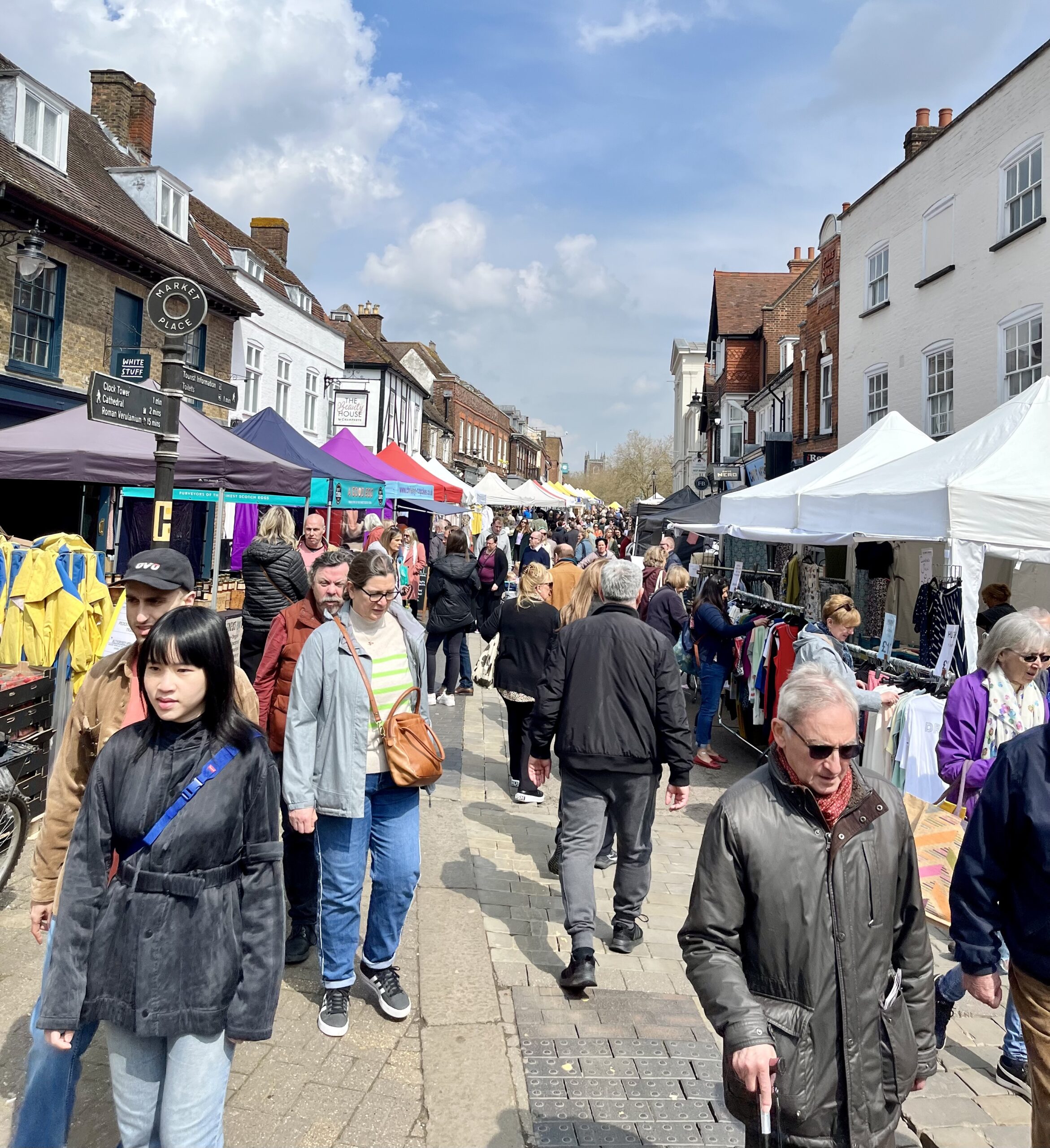
The market is one of those places where the city’s personality is impossible to miss – vibrant, diverse, a little bit chaotic in the best possible way, and full of conversation.
It would also be impossibly friendly. The kind of person who can’t walk down the street without stopping to say hello to at least six people.
The kind of person who pops out for milk and returns two hours later after bumping into neighbours, old school friends, someone from the gym and a local business owner who just wanted a quick chat.
Actually, now I think about it, perhaps that’s why so many of us love living here.
St Albans has mastered something many places struggle to achieve. It feels like a city, but somehow still behaves like a village.
Take the food scene, for example. If St Albans were a person, it would absolutely have a favourite bakery, a preferred brunch spot and a strong belief that independent coffee tastes better.
It would know exactly which café does the best flat white and would happily give visitors a 10 minute explanation about where they should eat, drink and wander first.
Then there’s the history. St Albans would be the friend who casually drops Roman facts into conversation and somehow makes you feel genuinely excited about ancient walls and medieval streets.
But the personality trait that stands out most to me is the social side of this city.
In fact, one of the most “St Albans” moments I’ve had recently happened in the famous Boot. I was standing there, minding my own business, when I noticed a woman with a tattoo that read: “Too much but never enough.”
Now, anyone who knows me knows I’m a magnet for conversations with strangers. I commented on the tattoo, and within minutes we were chatting as though we’d known each other for years.
We spoke about life, emotions, the pressure many people feel to be everything for everyone, and the complicated relationship many of us have with feeling “too much”.
Before we went our separate ways, we hugged.
A genuine, heartfelt hug between two people who had been complete strangers only moments earlier.
Because if St Albans were a person, it wouldn’t be someone you could easily describe.
It would be equal parts history buff, foodie, social butterfly and overachiever.
It would know the story behind every Roman wall, insist on supporting independent businesses, have very strong opinions about coffee and somehow manage to fit three social engagements, a charity fundraiser, a yoga class and a wander around the market into a single afternoon.
And of course, it would absolutely love the market.
If St Albans were a person, the market would be its happy place.
It would wander through the stalls with no particular shopping list, stop to sample something delicious, taste the fruit at the fruit and vegetable stalls, admire the colours and scents of the flowers, bump into at least three people it knows, have a chat, and probably end up carrying far more than it originally intended, while trying not to spill said coffee.
And if you’re local, you’ll know exactly what happens on market days. You’ll know which routes to take, the little back ways that help you avoid the busiest parts, and the unofficial shortcuts that somehow everyone seems to know about.
Of course, only if you want to avoid the crowds, because sometimes the crowds are the best part.
Because before you know it, you’re no longer just “popping to the market”. You’re catching up with someone you haven’t seen for ages, having a conversation with a stall holder, wandering a little longer than planned… and quite possibly stopping in for a drink along the way.
And I remember walking away thinking, this is exactly what I love about St Albans. The diversity of people, stories and experiences is incredible.
You can walk into a pub, café, market or shop and find yourself in a conversation with someone whose life is completely different from your own, yet somehow discover a shared piece of humanity in the space of a few minutes.
Perhaps because of the work I do with It’s OK To Say, I notice those moments of mental health and wellbeing everywhere.
A stranger opening up. Someone feeling seen. A brief interaction that reminds another person they’re not alone.
When I spot those moments, St Albans feels even more special to me.
Perhaps that’s why I love this city so much. Because, for me, St Albans has always been about people, connection and the moments that matter. The unexpected conversations. The familiar faces. The small acts of kindness. The moments where someone feels seen, heard and valued.
Those are the moments that turn a place into something more. They’re the moments that make a city feel like home.
And perhaps that’s the thing about this city.
It’s easy to talk about the beautiful cathedral, the history, the parks, the independent businesses, the bustling high street and the market that has been at the heart of the city for centuries.
But if St Albans really were a person, none of those things would be its defining characteristic. Its greatest strength would be its people. The volunteers who quietly give their time. The local businesses that know their customers by name.
The stallholders who greet regulars with a smile. The neighbours who stop to chat. The community groups that bring people together. The familiar faces that make a city feel smaller and a difficult day feel lighter.
So if St Albans had a personality, I think it would be warm, welcoming, slightly busy, occasionally expensive, proudly independent and endlessly community-minded.
And honestly? I think we’d all quite like being friends with it.
If you’ve been affected by any of the themes or experiences shared in this article, please don’t hesitate to reach out to It’s OK To Say. We’re always here for you. You matter. Mental health matters.
