31 Oct 2026
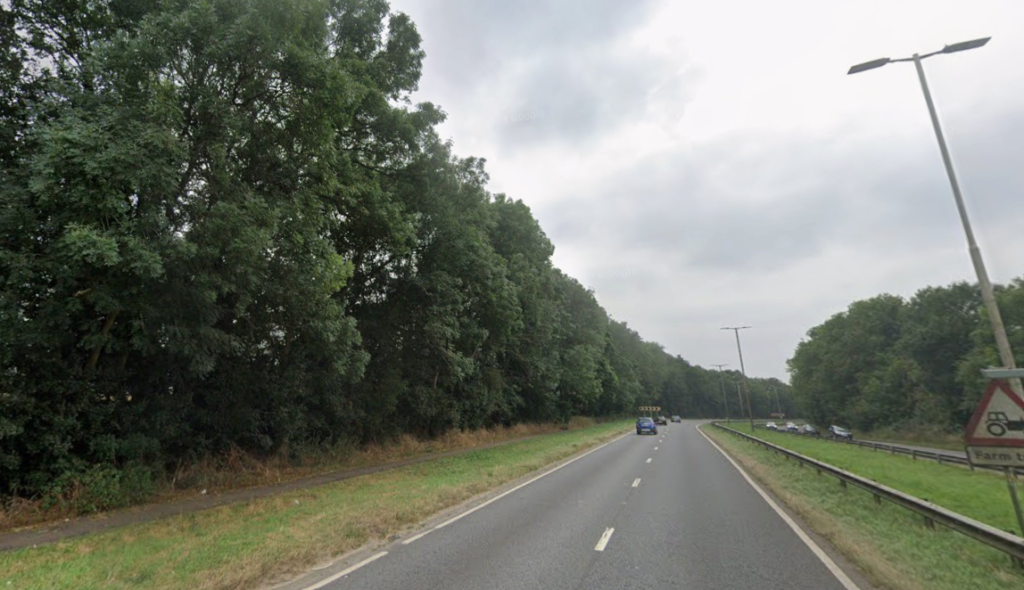
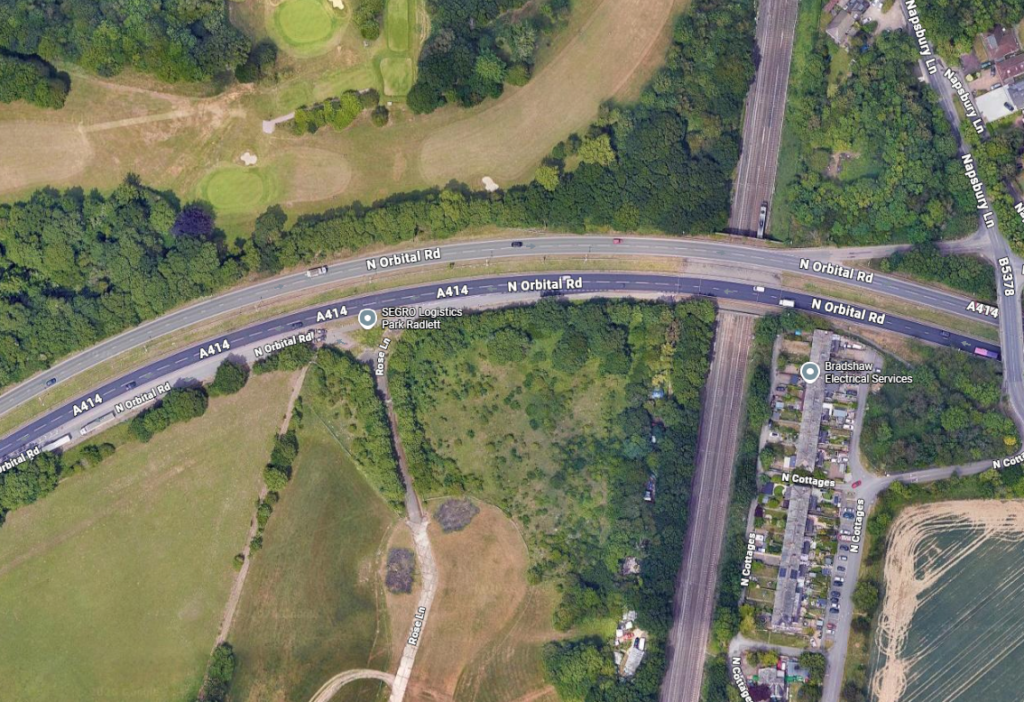
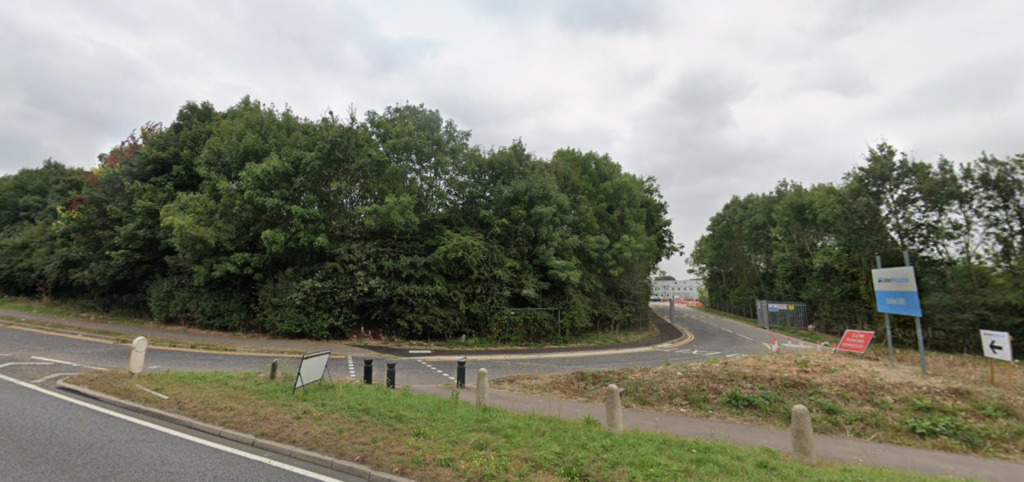
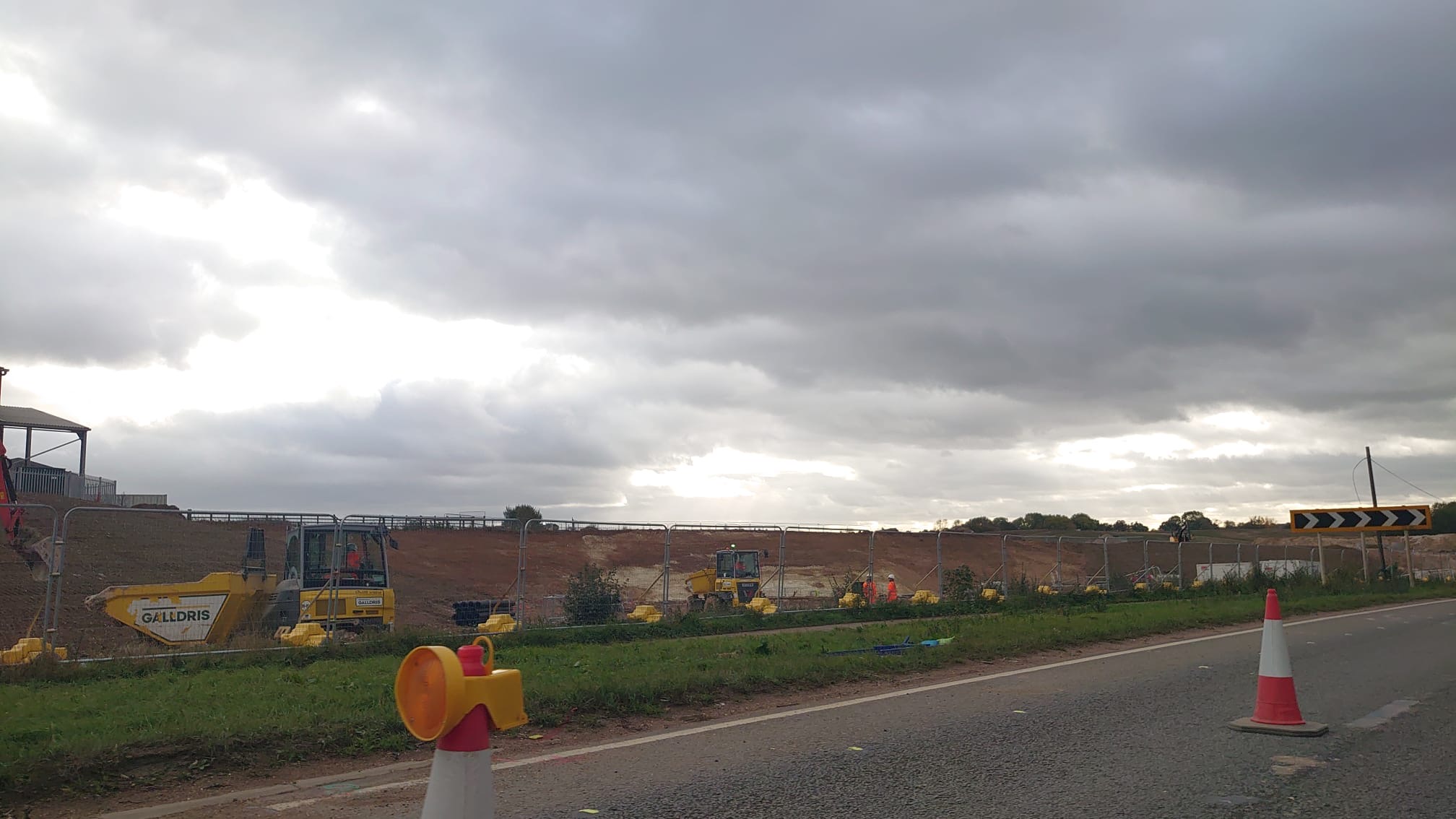
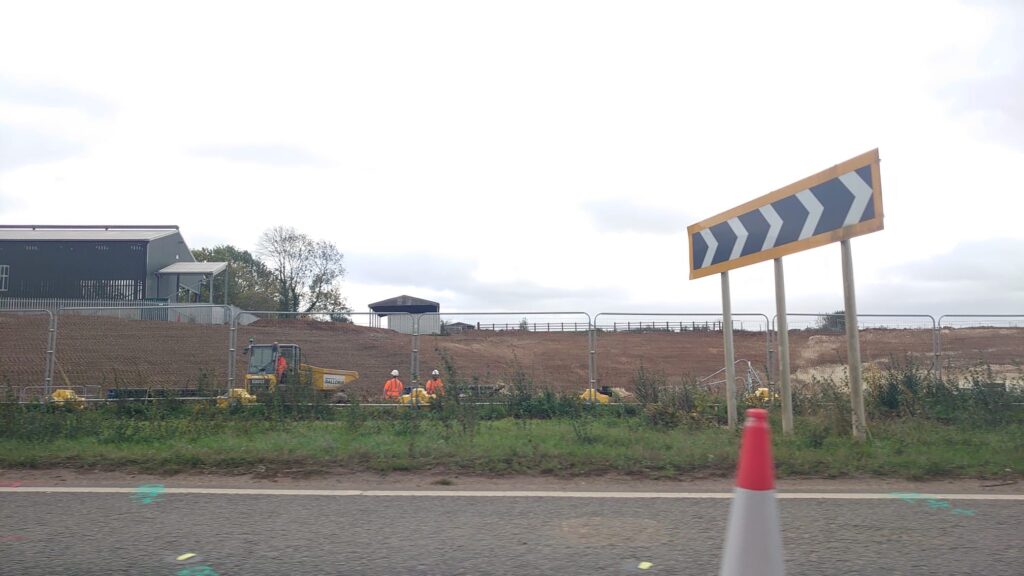
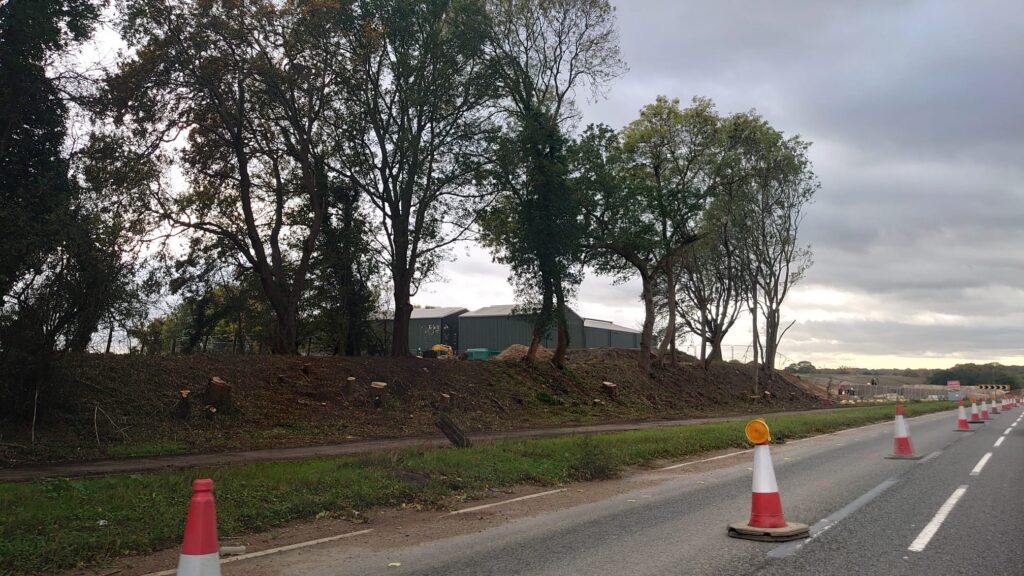
The environmental cost of the controversial Park Street rail freight depot continues to mount up, as dozens of mature trees have been chopped down to allow access to the site from the A414.
Between 60 to 70 trees on what was once Hedges Farm have been destroyed by Herts county council contractors to enable the construction of the strategic rail freight development (SRFI) on the former Radlett Aerodrome, despite developers SEGRO submitting plans which could have saved them.
The company’s community liaison team told local residents: “SEGRO and its design team carefully considered whether the existing trees at the new development entrance could be retained through amendments to the approved highway design. An alternative option was developed and submitted to the highways authority for consideration.
“Following detailed discussions and a review of the alternative proposal, the highways authority confirmed that the original approved design should be implemented. The alternative would have required changes to the original approved highway design and further technical assessments, approvals and safety reviews. The authority concluded that it did not satisfactorily address highway visibility, operational and long-term maintenance requirements.”
A spokesperson for Hertfordshire County Council said: “Our priority is the safety of road users, and unfortunately these trees need to be removed to provide a safe level of visibility for traffic approaching the A414.
“The design of the junction has to meet the planning permission granted by the Secretary of State, and national design standards, which limits what changes are possible. We have discussed the possibility of leaving more trees in place with SEGRO, but we are not satisfied that any revised design would actually be safe.”
They added that SEGRO will be planting equivalent new trees to offset those which have been removed, however no details have been provided on numbers, location, and the size and type of these replacements.
Environmental campaigner Helen Twining, who lives near the site, said: “I think the ‘necessary’ work is the cheapest option.
“Companies should be working with the natural environment and trying to save as much as possible during construction. At least I can say I tried to do the right thing by nature and saving the planet. Can they?”
Her mother Gill Hoplin added: “I noticed that when SEGRO removed the trees by the Hedges Farm entrance towards the Park Street roundabout last year, drivers were no longer protected from the sun shining directly into their eyes. I guess the removal of the next ones will have the same effect.
“One mature tree absorbs enough carbon dioxide to provide oxygen for four people hence felling 71 trees deprives 284 people of some form of clean air.”
We asked HCC how much would have actually needed to be changed in the roundabout design to save some or all of the trees, whether any of them had Tree Preservation Orders and if so would the replacement trees be of an appropriate size and species?
As County Hall would have known about the roundabout design since well before planning permission was granted in 2014, we wanted to know why the SRFI S278 agreement – the legally binding contract between the local authority and the developer – did not require that new trees were planted then, allowing them to establish before the mature trees were chopped down? Why was the loss of these trees not in the public domain until now?
As SEGRO’s policy is to plant whips, not trees, unfortunately almost all of these have died in the country parks around the rail freight development. We asked if HCC was enforcing a different strategy going forwards, and when anything would actually be planted given we’re now approaching winter?
HCC failed to answer any of these follow-up questions about the works.
Campaigner Andy Love added: “HCC said that SEGRO will plant equivalent trees but no details have been provided on the number of trees to be planted, where they are to be planted, the size and type of trees that are being described by HCC as equivalent to those removed and how they will be maintained to survive our hot and dry summers.
“SEGRO, the roundabout designers and HCC have had years to prepare for this S278 work and only when residents raise concerns about the culling of trees did they look at alternative designs.
“HCC make a big thing about their tree giveaway to communities in Hertfordshire [Your Tree Our Future is a well-publicised campaign which aims to distribute 10,000 free trees across the county] but at the same time they are allowing these priceless mature trees to be torn down because they haven’t previously fully considered the impact it will have on the wildlife and local communities. A very sad and unnecessary situation to be witnessing.”