


19 Apr 2026
The rise of the Liberal Democrats in St Albans arguably began in May 2019, when the party experienced a resurgence after eight years in opposition, wresting six seats from the Conservatives, including that of then-leader Alec Campbell.
Although the party did not have majority control over SADC, it was now the biggest political group, and was able to steer the local agenda by working alongside other parties.
The election of Daisy Cooper as MP later that year continued the Lib Dems’ upward momentum, but it was in 2021 that they finally took overall control of the council, seizing seats from long-standing Labour councillors and beginning to encroach on traditionally blue Harpenden.
The following year cemented their position, as they completely wiped out Labour and left the Tories barely holding on with just four seats.
With an overwhelming majority of 50 out of 56 councillors, there was no longer any viable challenge to Lib Dem hegemony, and the party has dominated the council ever since, despite subsequent wins for Green candidates in St Peter’s ward and Labour in London Colney.
But it hasn’t all been plain sailing. The party has faced criticism over a lack of transparency and debate, for ignoring public consultations over controversial issues like on-street parking charges, and for allowing the budget for capital projects to soar.
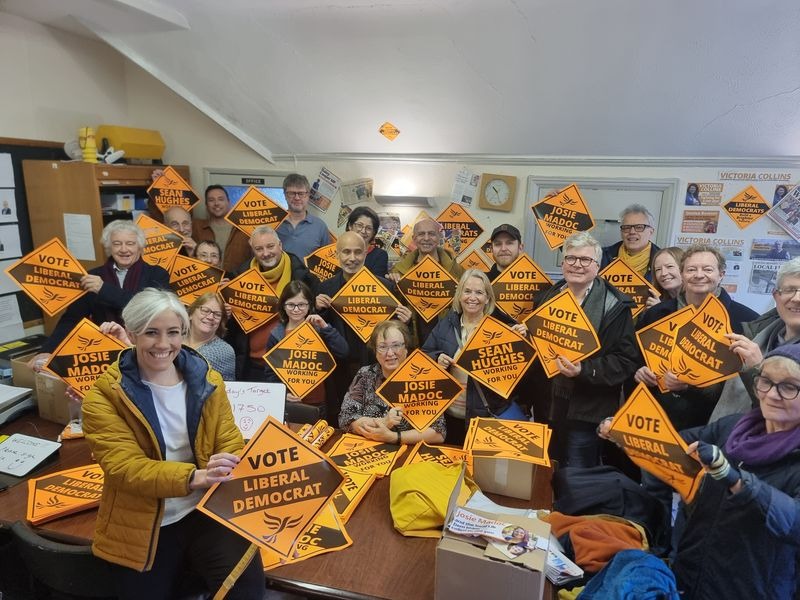
With what will be the last significant district council elections just a few weeks away, we wanted to speak to local Lib Dem activists to learn why they were supporting the party, what challenges and successes they believed worthy of highlighting, and where they see the future heading, both as we move towards local government reorganisation and also on the national stage.
This article concludes a series focusing on politics in the St Albans district which have previously focused on the Greens, Conservatives, Reform and Labour by giving the dominant party their opportunity to have a say.
Our diverse selection of local supporters includes long-standing and more recent members, with a mix of ages and backgrounds, united in their belief that the Liberal Democrats are the right party for them.
Jack Ingram, 27, a recruiter from London Colney, has been a member since he was 18: “Obviously Brexit was an ongoing process at that time and that was a big contributing factor for me, but I was already attracted to the party anyway. In my view the other major parties have pretty poor records on individual liberty and that’s always been a major concern of mine.”
Jennifer Sitrin Caminsky, a 56-year-old part-time diet consultant who lives near the city centre, became actively involved with the Lib Dems about three years ago: “I was initially involved since my son started working for the party, and the more I got to know the councillors and see their dedication the more I wanted to help.”
Consultant Mihir Magudia, 42, who lives in Marshalswick and was born in St Albans, has a longer association with the party, joining just after university: “The Iraq war had started while I was studying and the Liberal Democrats were the only major party to stand up against it. I admired their courage to argue for what was right even if it was unpopular at the time.”
Claire Alderson, who is in her mid-fifties and lives in St Peter’s ward, is retired from the corporate world where she worked in procurement and supply chain for a number of global companies in logistics, manufacturing and hospitality.
“My first volunteering for the Lib Dems was in 1993 when I delivered leaflets for a friend who was standing in a council by-election in Leeds.
“In St Albans I became involved in April 2019 when, instead of shouting at the TV, I wanted to campaign to keep the UK in Europe and get rid of the awful Conservative Government. I had an MP who was pushing for a hard Brexit and was not going to be ‘cowed by her constituents’. I started delivering leaflets and telling for the local and European elections and later that summer became more involved.”
Part-time Harpenden business psychologist Kate Netherton, who is in her early 60s, is on the executive committee for Lib Dems for the Harpenden and Berkhamsted constituency.
“I joined the Lib Dems around the time of Brexit because of the Lib Dem position on Europe and because of their progressive politics more widely.
“I now deliver leaflets and I also go out knocking on doors locally, canvassing and talking to residents in the area.”
Finally, we have 19-year-old Bristol University student Leo Godbee, who lives in the Roundwood area of Harpenden.
“I have been involved with the Lib Dems since 2023 when I undertook some word experience with Cllr Paul de Kort. Brexit was the main issue that politicised me, with the Lib Dems’ strong pro-EU stance pushing me to join, but the fact that the local party is so large and well organised has helped me to get really involved. This includes campaigning for them during the last general election, only a few days after my A levels finished.”

Having controlled the district council since 2021, the Lib Dems obviously haven’t got it right all of the time. So what do they think were the party’s successes and mistakes along the way?
Jack said: “I think our work on the high streets has been pretty fantastic. We hear about the high street dying in the news all the time and I don’t think that’s reflected in St Albans, the market’s doing really well, I’m a huge fan of the cultural institutions like the museum and it feels good and busy. Given the state of local government funding across the country I think that’s a massive achievement.
“Every party gets things wrong when they’re in power, we’re no different there. In my view the more pertinent thing is do we get it right the majority of the time, and I’d say that we do.”
Jennifer focused on two major issues for motorists: “They’re very good at filling reported potholes! Unfortunately the weather has made them way too abundant.
“Although I know why it was done, I was initially disappointed with the parking charges in Harpenden! Thankfully, the availability of some one-hour free parking spots helps!”
Mihir is full of praise for the party’s acheivements: “Locally, the Liberal Democrats have shown what effective, community-led government actually looks like.
“They’ve stood up for residents in planning decisions – protecting green spaces and pushing back against developments that don’t meet the needs of the community, while still supporting sensible growth that keeps St Albans thriving.
“They’ve focused on the basics that matter: reliable local services, well-maintained streets, and a council that people can actually get hold of when something goes wrong. That might not always grab headlines but it’s what people notice day to day – and it’s a clear step up from what came before.
“They’ve also taken a more honest approach to council finances. At a time when many councils are struggling, the leadership has been open about the pressures, made responsible decisions, and prioritised protecting services rather than chasing short-term headlines.
“Above all, Lib Dem councillors are present. They’re part of their communities, they listen, and they act. That’s why people trust them – and why support has grown so strongly.
“No council gets everything right, but there’s a clear difference between a party that listens and learns, and one that doesn’t. What I see locally is a council that engages with residents, takes feedback seriously, and is willing to adjust when needed.
That culture of accountability is one of the reasons people have such confidence in the Liberal Democrats.”
Claire highlighted the difficulties in running a district council after 14 years of reduced funding under the previous Conservative Government: “There’s limited leeway for action as statutory services are determined by the Government and policies such as planning are dictated centrally, so essentially SADC are about who can manage the services best with ever-reducing resources and if there is freedom for action it’s about the values and approach of the councillors.
“Therefore I’d like to highlight the decision to change the plan for the CCOS [City Centre Opportunity Site South, now Jubilee Square] to create 100+ housing association and affordable homes and new office space in the centre of St Albans rather than a city centre regeneration where the housing provision was million pound plus houses.
“It’s great that residents from the St Albans housing waiting list have an opportunity to live in the city centre with modern and energy efficient homes.”
She proved an advocate for a somewhat controversial policy: “A personal view is that I’d have liked to have seen the pedestrianisation of High Street as part of an ambitious plan to revitalise the area along with investment in alternative routes for car drivers. I know my view was heard and I understand why it didn’t happen as the decision makers had to take into account the views of other residents.”
Kate said her perception was that the party has brought a greater focus on environmental issues: “These include the district tree planting programme and installation of solar panels to save energy costs, the work to improve road safety including making it easier to introduce 20mph speed zones as well as the increased building of social housing to help meet the needs of families on lower incomes.
“Of course, not everybody will agree with every policy of ours but the great things about the Lib Dems is that we are out knocking on doors and hearing from our communities on a regular basis. This is an important feedback channel and gives an opportunity for people to tell us what they like and things that are issues for them.”
Leo said: “I’d personally highlight the push made to better insulate social housing, which has allowed SADC to unlock further grants to support this project. It’s a good example that shows that the Lib Dems care about the environment as well as cutting down on the cost of living (by cutting energy bills).
“I would also would like to raise the work with Mencap to provide more disabled adults with the opportunity to live independently, specifically in council-owned properties.
“Whilst I am personally in favour of the parking charges, I think that some of the communications around the changes could have been better.
“It’s part of a general problem that councils all around the country do not have enough revenue to fund their expenditure. That additional revenue has to be generated from somewhere, and that means making decisions which might be unpopular.”

It is said that with great power comes great responsibility, so what checks and balances do the panel think there should be on the district council given its huge Liberal Democrat majority and do they think the administration adequately reflects the wishes of their electorate?
Jack said: “It’s tough when you’ve got a majority of this sort of size, I do think the councillors have managed it well.
“The reality is the party is not a monolith and we’re capable of serving as a check on ourselves as necessary, the actual mechanisms that are in place give a good, healthy voice to the parties in opposition as well through committees and the like. When it comes to the wishes of the electorate we enjoy the trust of over half of the electorate in most of the seats we hold, and strong majorities in most of the others, and that’s been true even in elections after we secured that majority on the council.”
Jennifer suggested other parties should take some responsibility: “Even though the Greens have councillors in central St Albans they seem to be opposition in name only as they haven’t provided any criticism to Lib Dem policies. Why fix it if it’s working?”
Mihir thought the party has always been rooted in local government, and this is demonstrated here in St Albans: “Strong scrutiny, active local campaigns, and engaged residents all play an important role – but ultimately the most important check is the culture of the party itself. Lib Dem councillors tend to be deeply embedded in their communities, and that creates a level of accountability you don’t always see elsewhere.
“People sometimes joke about the Lib Dems being the party that fixes the church roof -but I think that’s something to be proud of. It means you’re focused on the real, practical things that make people’s lives better.”
Kate suggested it was down to the electorate to keep the party accountable: “With regards to checks and balances, the primary mechanism for ensuring that all councillors, Lib Dem or otherwise, are held accountable to the electorate are elections, with at least one councillor in each ward up for re-election each year.
“In addition, as a party we stay engaged by canvassing throughout the year, not just before elections, which means that we are visible in the community and on the doorstep and we’re up to date on local issues and concerns.”
While Leo proposed a shift away from the current voting system might be warranted: “I don’t think there is much you can really do to implement checks and balances without serious changes to the voting system. It is pretty unusual for St Albans to have one party with such a large majority on the council but that does show the overall popularity of the Lib Dems locally.
“There could probably be greater power given to town/parish councillors when implementing policies specifically to their local area as well as managing very local services such as parking – where there have been disagreements.
“The position that the previous Conservative Government has put councils around the country in has been tough with budget reductions. The general population never wants tax rises but also wouldn’t want council spending cuts. Trade-offs have to be made, and they will be unpopular whatever they are.
“Sometimes tough choices have to be made, even if they annoy your local party and a proportion of the electorate.”

The popularity of St Albans’ MP has led many people to suggest the local party is riding on the coat-tails of ‘the Daisy Cooper effect’, winning elections simply by association.
Most of our activists agreed that she has contributed to the upsurge in Liberal Democrat support locally, but said it was also a backlash against years of Conservative control.
Jack said: “There are so many factors that influence how people vote, the reality is Daisy is a fantastic local MP and people were upset at years of Conservative mismanagement at council level, add into that the fact that the Lib Dem councillors and candidates we have are doing a great job and you get the sort of surge in support we’ve seen.”
Jennifer agreed: “I was very disappointed in Anne Main and her disregard for the people of St Albans. Daisy Cooper is just amazing! She works so hard and really cares, she makes a difference and is an excellent representative for the people of St Albans. If that means more Lib Dems why should that be a bad thing?”
Mihir said: “Daisy is a fantastic local MP, a champion for the city and very well thought of amongst my friends and neighbours. Of course her campaigning and popularity are a huge asset to the
the local party and one that it is incredibly pleased to have. You do also see that locally Lib Dem control has improved the area and we’re in a far better position now than when other parties were in charge.”
Claire said she had become involved with the Lib Dems in St Albans before hearing about Daisy as their values matched her own: “I wanted to see change locally and supported the Lib Dem position on Europe. The Labour Party was ambivalent on Europe and heading further to the left and the Conservatives wanted a hard Brexit regardless of the consequences.
“I see St Albans as an area with progressive, liberal values supporting freedoms but also accepting responsibilities.
“Daisy is an inspiration and has inspired and motivated a huge number of local people from across the political spectrum, including me, people have wanted to get involved, be it support the party, volunteer locally or stand for office as they want to be part of this team.”
Kate said: “I do think that Daisy Cooper has increased the visibility of the Lib Dems, particularly since becoming deputy leader, and she’s been a highly effective and popular MP. Similarly, since Victoria Collins was elected in 2024 she’s been working hard to champion our community on both a local and national level – from campaigning to tackle sewage in our chalk streams, to championing national legislation improving online safety.
“However with both MPs, their success in getting elected was also the outcome of building the party at a local level – without which it’s very difficult to get an MP elected. In both instances there was also a desire for change locally, and there’s no doubt that Lib Dem councillors work very hard in getting out talking to residents and addressing their issues.”
Leo added: “Over the last decade, there has been a real backlash against the various Conservative Prime Ministers and Governments. The turmoil over the course of the previous Parliament definitely allowed the Lib Dems to completely dominate the St Albans and Harpenden area, but that doesn’t give enough credit to the local party for the way that they’ve built up their operation and gradually turned the local area into a stronghold.
“Daisy Cooper’s campaigns in 2017 and 2019, playing very much on the issue of Brexit, helped to build Lib Dem support back up locally after years of Conservative domination, paving the way for us to sweep control of SADC in 2022.
“This in turn played a significant role in helping Victoria Collins become Harpenden’s MP in 2024. Harpenden and Berkhamsted having the highest turnout of any constituency in the UK wasn’t just down to simply wanting to get the Tories out, it was a response to the positive campaign run by the Lib Dems and a general enthusiasm for wanting to have a young energetic MP whom people felt would truly represent them.
“The ‘Daisy Cooper effect’ may be a too specific term, but the groundwork laid by the Lib Dems over the past decade at multiple different levels has allowed the Lib Dems to turn the local area into a stronghold. Whilst the failure of the Tories has contributed, it is not the main reason.”

In St Albans specifically, the Green Party has proved the major opposition to the Liberal Democrats, with the Conservatives having more impact in Harpenden and Labour in London Colney. But with Reform coming second in the divisions of St Albans East, North and South and St Stephen’s in last year’s county council elections, their presence cannot be ignored.
So which parties do our panellists think prove the biggest challenge to the Lib Dems locally, and how do they see the future of this country evolving politically?
Jack said he thought the Greens and Reform both posed a threat: “They both employ a shockingly similar approach to politics that I find distasteful, the Greens certainly have a stronger presence as things stand but you can’t ignore Reform, especially in the villages like London Colney.
“We’re at a major crossroads right now as a country, and it really worries me. The Greens and Reform are both engaging in Trumpian populism and the other major parties seem blind to the risks of that beyond the threat to their own positions. We already live in a divided society and that can only get worse if this style of politics keeps making headway. There’s light at the end of the tunnel though, the reality is the majority of voters do find both the Green and Reform flavour of populism distasteful. We have to harness that energy more and restore a more serious, more trustworthy sense of politics, and I like to be an optimist with these things.”
Jennifer said she was worried about the rise in extremist politics in the UK: “I’m American and can’t even vote here but I’ll do whatever I can to prevent this country from mirroring mine and electing someone like Nigel Farage!”
Mihir said: “Reform are not just a threat locally, they’re a threat to the country. Their brand of divisive politics, placing blame on others rather than attempting to solve real problems hurts communities and creates a toxic political environment.
“By contrast, the Liberal Democrats are focused on practical solutions, community cohesion, and evidence-based policy. That’s the kind of politics I think people in St Albans respond to.
“Extremism from the left or the right might make a small group of people feel better while they’re chanting slogans, but it doesn’t solve any problems. Politicians who magic up ways to solve all of your problems are not to be trusted. I wish there were a wand to wave but there isn’t and we certainly don’t get there by targeting particular groups of people.
“I am a second generation immigrant. My children are mixed race. I was born in St Albans City Hospital before the Conservatives closed the maternity ward, and my youngest son was born at home here in Marshalwick. I have lived in St Albans almost all of my life. Yet extremists would argue that we somehow don’t belong or aren’t as equal as they are because we look a little different to them.
“Britain is at its best when it celebrates diversity and multiculturalism and the right wing extremist approach of blaming people who are different makes me concerned for the future of my family.”
Claire said a Reform Government would pose a huge threat to people here in St Albans: “The events of the last couple of years appear to be signalling the end of the two party politics and the importance of third and fourth parties to bring a centrist consensus to politics, but this relies on people exercising their right to vote. Extremism worries me a lot, I did think that the institutions of this country (courts, civil service, military, security, media) would hold strong and protect our way of life but as we have seen in America, with its written Constitution and Supreme Court, these safeguards can be swept away and an authoritarian regime benefitting a few implemented within a matter of months.”
Kate said she didn’t see the Greens as a threat to the Lib Dems locally: “I think our interests are aligned in some areas, particularly on environmental issues, whereas Reform’s track record with local councils over the last years inspires no confidence that they could deliver anything for local residents.
“I have concerns about those who benefit from the politics of division and that is not good at all for local communities or for us as a country. We have to question what motivates them, whether it is the monetisation of their messaging or whether they are representing the views of their donors. However, I remain optimistic for the future of progressive politics in the UK as I believe ultimately that most people want a fairer society for all.”
Leo added: “It’s not surprising that the Greens have picked up seats in by-elections, due to the extent of the Lib Dems’ majority meaning that seats changing hands does not impact the balance of power.
“Reform is a significant threat to liberal values nationally, but I believe that local voters do not agree with their nationalistic brand of politics. As recent election results have shown, the St Albans area holds more progressive views than what Reform offer. If we, as the Lib Dems, continue to demonstrate that there is a more positive and less divisive alternative, I am hopeful that local voters will resoundingly reject them at the ballot box in future elections.”
However, he believes the country is in for a seismic shakeup of the political system over the next few years: “The death of the two-party system will really test how well first-past-the-post works as a voting system. There is a real danger that with five parties now strongly contesting a large number of seats across the country, that freak results are produced at the next election.
“You could easily have an MP winning a seat with less than 25 per cent of the vote, and that could be really problematic if, for example, a left-wing constituency has a right-wing MP because the progressive vote is split. This could create a crisis of legitimacy for some MPs and only strengthen calls for a more proportional system of elections.
“The rise of extremist politics on both the left and the right is worrying, although I would say the right is more dangerous for the country. I believe the UK is fundamentally a moderate country with a minority of the population having views that fall on the more extreme ends of both spectrum, but if Labour and the Conservatives can’t show that their brand of politics works best, then people might be more willing to tolerate more radical politics.
“The Greens are not as dangerous as Reform as their social attitudes are not as toxic, and nor are they anywhere near as popular in the polls. The main danger with Reform isn’t necessarily their policies- as I think they will struggle to implement their most right-wing ones – but more the incompetence of the people who may end up appearing in Farage’s Cabinet. Figures like Lee Anderson or Sarah Pochin are too useless to be running Government departments, and if that’s the best that Reform has to offer then the country could be in for a rough ride over the next decade or so.
“I personally believe that this trend of radical politics in the UK will have died down before the next election, with Labour having recovered some of their support. My main hope is that the Lib Dems are needed in a coalition with Labour after the next election, and that Reform does not permanently overtake the Conservatives as the main right-wing party in the UK.”

With the clock now ticking towards the demise of SADC, perhaps now isn’t the right time to ask whether any of them would consider a political career in this uncertain future, or is it?
Jack is open to the idea: “I’d certainly consider it, but only if I think I can do a service to my community. The team we have in place across the district is absolutely fantastic from top to bottom so I don’t necessarily feel the need to jump in in that way, but what a brilliant opportunity it would be if it did come my way.
“The average age of a local councillor in the UK is about 60, for MPs it’s trending down but still close to 50, I don’t think that makes for a healthy state of affairs. Beyond that we’re seeing evidence day-in and day-out that leading politicians focus their attention on older voters, you can’t blame them because they’re far more likely to go out and vote. If young people want to change that trend they have to get more involved.”
Despite having no immediate plans, Mihir wouldn’t rule it out: “There comes a point where supporting others isn’t enough – you have to be willing to step forward yourself and take responsibility for making a difference locally. That’s something the Liberal Democrats have always encouraged, and it’s one of the reasons I’m proud to be part of the party.”
As would Leo: “I would because I genuinely believe that we need a new young generation of politicians to fight for policies that will make a positive impact on our future workforce. The fact that we are the first generation for which our parents predict that we will be worse off than them in the future shows that we need the Government to focus on solutions that help us, instead of just increasing handouts to pensioners.
“There’s obviously criticism about career politicians who go into politics from a young age without much real-world experience, but that might be what’s necessary to really affect our futures.”
If you’ve missed any of our previous articles about local political parties, check out the links below:
Labour: https://stalbanstimes.co.uk/feature/the-labour-exchange-is-the-red-flag-still-flying-in-st-albans/
Conservatives: https://stalbanstimes.co.uk/feature/holding-the-thin-blue-line-can-st-albans-conservatives-stage-a-comeback/

