



20 Jan 2026
It’s been two decades since St Albans had a Labour MP, and the party’s representation in SADC has been in steady decline for years, with no councillors at all serving between 2022-23.
But in May 2024 the situation started to change, with decisive victories in London Colney for Emma Turnbull and Mike Hobday suggesting there might be a renaissance for Labour in the district.
Yet despite the party’s landslide triumph in the following July’s General Election, Labour’s profile in St Albans remains overshadowed by the dominating Liberal Democrats, battling to be heard amidst other outspoken opposition groups.
Labour failed to take any divisions in last May’s county elections, with all candidates polling behind Reform apart from Mike Hobday, who was the runner-up in London Colney.
So what can Labour do to change its fortunes locally and once again pose a considerable force in district politics before the abolition of SADC in a few years’ time?
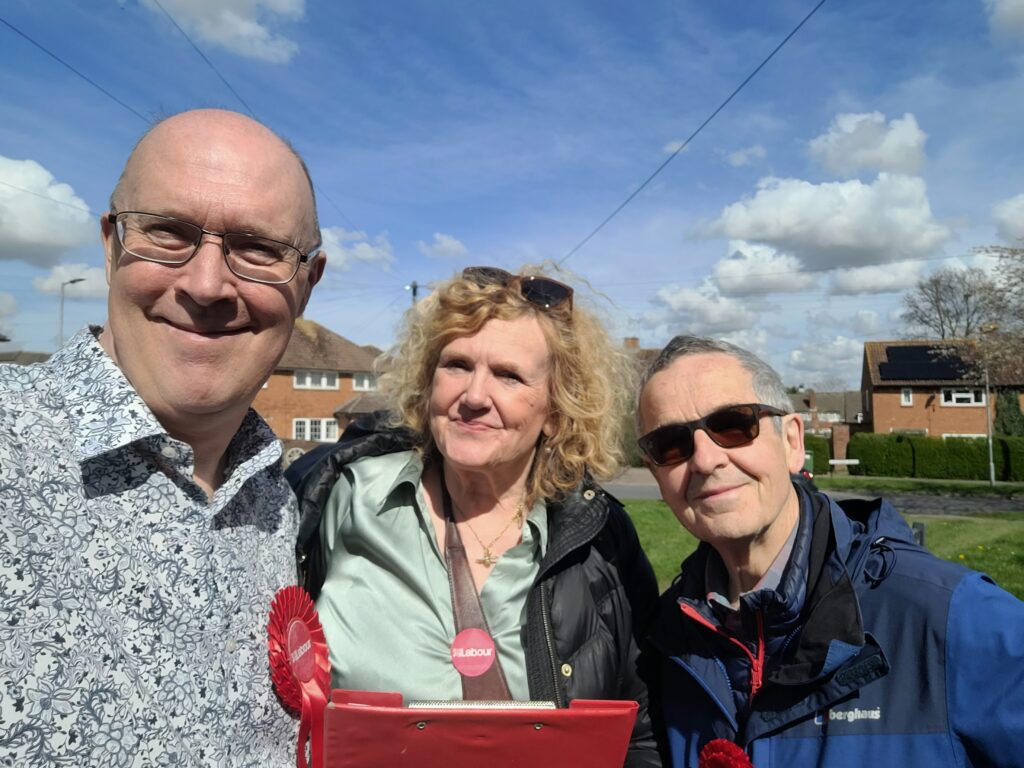
Following previous articles covering the Greens and Conservatives, we have again assembled a diverse panel of party supporters to hear their views on Labour’s performance both locally and nationally, and the challenges it faces within the St Albans district from other political groups.
They include retired teacher Janet Smith, 72, who lives near Bernards Heath, is currently the chair of St Albans Constituency Labour Party, but is also an honorary alderman of St Albans district, a former Labour councillor and one-time Mayor.
She explained that her parents and grandads were all Labour supporters, but her family as a whole represented all three of the main parties of the time.
“Everybody was interested in politics but had different views, and family discussions always included political discussions which I found very interesting.”
Growing up in Oldham, which at the time was a Labour stronghold, her front room was used by the party’s election committee, and as she helped out by handing out ham sandwiches she watched what was going on.
“When I got older, Labour seemed to be the party for me because all the people I met had obviously cared about their constituents and put people first when it came to local issues. I haven’t changed my opinion on that.”
Jack Davis, 20, is a third year student at the University of Nottingham who lives near Verulamium Park. He joined the party in 2022, at the height of ‘Partygate’, when he was just 16, and is the former chair of St Albans Labour.
“I was inevitably going to become a member at some point, but the scandal pushed me into action. Throughout history, Labour has been the party of progress in my eyes, and even as a teenager, I recognised the harm the Conservative Government was inflicting on the education system. I have always believed in acting rather than complaining, so I joined Labour to be a part of the solution.”
Retiree Chris Cloke, who lives off the Sandridge Road, previously worked for the NSPCC for many years, focusing on public education, awareness raising, and professional practice, and has been a member of the Labour Party for more than 50 years: “I joined, as a student, at the time of the second General Election in 1974 and helped campaign for Robin Corbett to be elected MP for Hemel Hempstead constituency, where I was then living. Robin unseated the sitting Tory MP. I was attracted to Labour’s values – fairness, equality, and justice. I still am and feel that only Labour acts in the interests of everyone.”
Jane Hobday has long experience as a county councillor and has also been a parish councillor and parish council chair where she lives in London Colney. She joined the party when she was just 16 and still at secondary school.
“My father was deaf, and as a result he was denied a decent education.
“I saw first-hand how easily people can be excluded, not because of ability or effort, but because systems fail to adapt. That experience shaped my belief that social justice means ensuring everyone has genuine opportunity and is not left behind.”
University student Mason Day, 19, who lives in the Batchwood area of St Albans, first became involved in the Labour Party in spring 2023.
“I always saw myself as left-of-centre, so I saw Labour as the natural option to join.
“I was irritated by the then-Conservative Government that had been in power for almost 13 years who weren’t doing enough to improve the lives of my family and friends.
“It was the mini-Budget in autumn 2022 that did it for me. It proved that economic policy in Westminster affects people in the real world as people’s mortgages went spiralling.”
Finally, we have the aforementioned Labour district councillor for London Colney Mike Hobday, another long-term party supporter, who first joined when he was 18.
“I was shaped by my family’s religious background- my grandfather was a Methodist minister – and by a strong sense that society needs to be much fairer than it often is.
“I went to a local independent school on a scholarship – I benefited from a high-quality education, but I did not believe that opportunities like that should depend on family wealth. That experience fixed my belief that everyone should have the chance to fulfil their potential and real control over their future – and that politics has a responsibility to make that possible.”
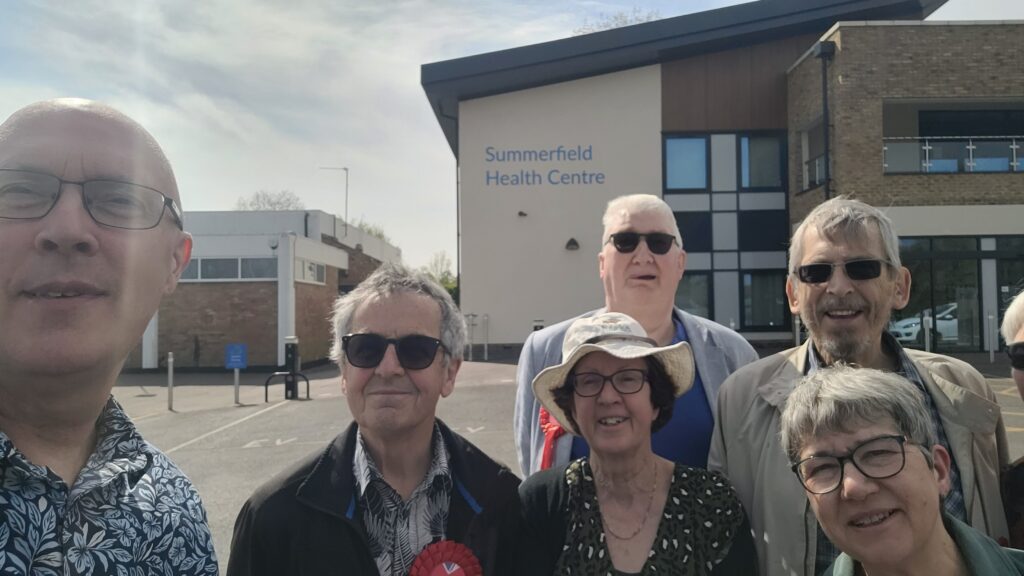
Eighteen months since the General Election, do the panel think the current Government has made the most of its landslide victory?
Jack said: “The current Government has delivered a lot in a short space of time, much of which does not get covered much or is quickly forgotten. We have clearly made good use of our majority with bold reforms such as the Renters’ Rights Act and the Employment Rights Bill alongside less headline-grabbing reforms, such as to the House of Lords and equalisation of the minimum wage.”
He highlighted what he felt to have been some of the positive measures introduced since the General Election: “Free school meals, the Hillsborough Law, lowering NHS waiting times, lifting over half a million children out of poverty by the end of the Parliament, reform to the House of Lords, increasing the minimum wage and importantly for people my age, beginning to equalise the minimum wage for all ages.
“When it comes to the Renters’ Rights Bill and Awaab’s Law inside it, a memory that has stuck with me to this day on the campaign trail was seeing a council house with black mould on the wall from floor to ceiling.”
But he added: “However, the Government has undoubtedly made mistakes, something they would admit to. The initial proposals for changes to the Winter Fuel Payments were too harsh, and the rhetoric on immigration has been too strong at times. Being able to recognise your mistakes is important.”
Mason focused on similar policies, commenting how the Renters’ Rights Act will have a genuine impact on those renting, particularly students and young people who are often victim of unscrupulous landlords, and the Employment Rights Bill will return power into the hands of working people in St Albans and beyond, ensuring fairness and dignity in the workplace.
But he argued that the problem faced by the Government was one of perception: “So many friends ask me what Labour’s done in office because they genuinely have no clue, and that makes me frustrated because why isn’t the party communicating these progressive changes to a wider audience?
“That’s completely on us. Yes, we’ve made mistakes, and that responsibility lies with the national leadership who have not done enough within the aspect of communication and presentation of certain difficult decisions such as means testing the winter fuel payments, which left a gaping hole for disinformation about the policy.”
Mike said the Government had a once-in-a-generation opportunity to reset the direction of the country, and on balance had made a good start.
“The focus on economic growth is essential, and early decisions to invest in the NHS are beginning to ease waiting lists after years of neglect. Those choices matter, because they mark a shift away from short-term fixes and towards rebuilding long-term capacity.
“The Government is operating in difficult conditions. Our economic inheritance was weak, and global instability limits how quickly progress can be felt. No responsible Government can simply ignore those constraints.
“My main concern is not the direction of travel, but clarity. With a large majority comes the obligation to set out a confident, coherent account of what the country should look like in five years’ time. Labour needs to make that case much more sharply.”
Chris said: “Despite the most appalling legacy and chaos left by the Tory Government and the challenging worldwide conditions, after only a very short time, Labour has many achievements.
“Important to me are the improvements to the NHS and cutting waiting lists, but also cutting the cost of living, improving workers’ rights, better childcare and importantly for St Albans, freezing train fares.
“The challenge is to get this across to everyone. Labour is working on a number of fronts, but things can’t change suddenly overnight. Labour has always said it will take time. I understand the frustrations that many people have – I’d like to see lasting change now too – but we need to build firm foundations. I remain confident that given the chance Labour will succeed.”
Jane said she thought the Government had made a good start, but it was always going to be a long-term project: “Keir Starmer has described Labour’s mission as a 10-year challenge, so it is unrealistic to expect every problem to be solved within 18 months.
“NHS waiting lists are starting to come down, which matters after years of pressure on the service. We are also beginning to rebuild more constructive relationships with our neighbours in Europe, which is important for trade, security and cooperation.
“While Labour has a large majority, we do not have a monopoly on good ideas. I would like to see a political culture that is less confrontational and more willing to recognise good proposals wherever they come from, while still being clear about Labour’s values and priorities.”
Janet said since coming into office the Labour Party have tried to put people first when tackling the problems faced by the country but are subject to wider challenges.
“The world is going through a chaotic time at the moment so they aren’t always able to do exactly what they would like to do and some things have to wait.
“Labour took office promising change, and there have been some changes, more breakfast clubs in schools for instance, which as a retired teacher I think is really important.
“Councils have been given more money to deal with potholes and although we moan about all the roadworks in St Albans, at least the work is being carried out.”
She also highlighted the relaxation of the two-child benefit cap, more opportunities within the NHS, and increased legal protection for the safety of women and girls, adding: “I have no problem with any Government or individual changing their minds when circumstances change or disadvantages to a possible policy are pointed out to them. In my view people who never change their minds whatever the circumstances are a much bigger problem.”
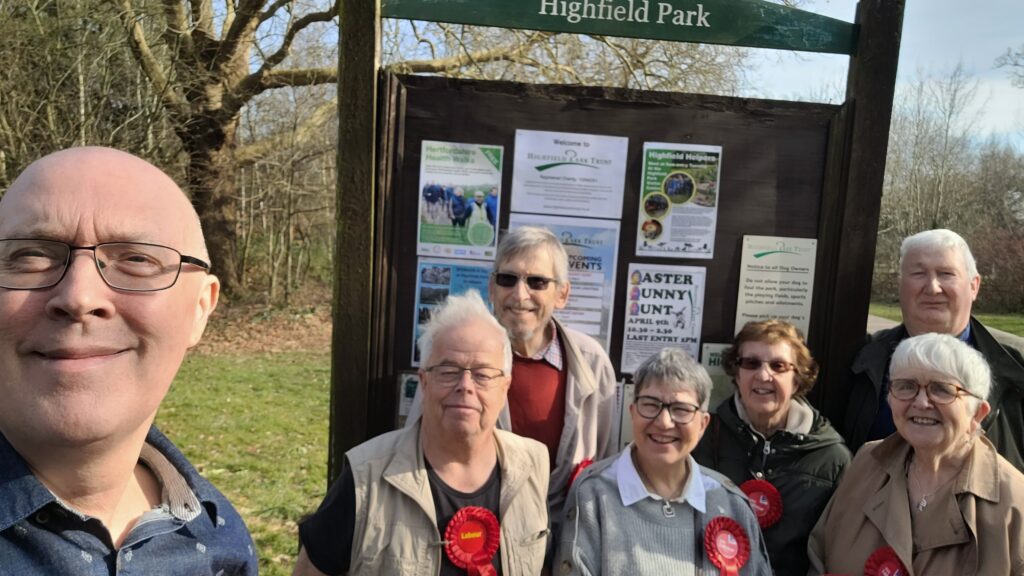
London Colney aside, we questioned why Labour struggles to make significant in-roads within the district, and what can be done to improve that situation?
Jack disputed that this was the case: “When we have fought hard, we have come a close second or won elections. The natural dominance the Lib Dems gained after 2016 was, to their credit, the result of a lot of hard work; however, when we put in the work, we become competitive.
“More than any other place I’ve campaigned in, St Albans elections are street fights. Wider national tides place the parties on the starting line, but the boots on the ground, canvassing and leafletting, are what decide the election.
“To improve our standing, we have to stick to our guns, even when the outlook is gloomy or the last election didn’t go our way, and fight for every last vote. We did it in London Colney and in two years, we went from 26 per cent of the vote to 41 per cent (average of multiple candidates, when the national environment only improved by five per cent according to Polito’s poll of polls).”
Chris said: “Sadly, I think there is a lot of cynicism about politics and it takes a lot to persuade people to get out and vote. People may feel that their vote won’t make a difference. Communication with the electorate is more difficult. I think there is no substitute for face for face communication and discussion, as we have shown in London Colney. But that is very labour-intensive.
“We have a lot to learn from our London Colney experience. In Mike Hobday and Emma Turnbull, we have two strong, hardworking councillors. They have earnt people’s respect and they can be relied on to get things done. They understand the needs of the community. In other parts of St Albans we need to take a similar approach.”
Mike pointed out how Labour has been successful in St Albans in the past, returning an MP between 1997-2005 and securing around a quarter of the vote in the 2015 and 2017 General Elections.
“We still have a solid base of support, but in recent years coming third or fourth locally has encouraged tactical voting, which makes it harder for residents to see Labour as a viable alternative.
“In London Colney, we showed that this cycle can be broken. Through sustained local work, we demonstrated that Labour understood village concerns, and in 2024 we won two seats decisively.
“More widely, I believe there is growing dissatisfaction with how the council is run – too often with arrogant disregard for local views. Where decisions feel remote from residents’ views, Labour has an opportunity to rebuild trust and show we can be a constructive and effective voice locally.”
Jane said although the party had strong support across the county, with seven Labour MPs in Herts, many working class people had been priced out of the St Albans district, which has weakened the social mix which has always been one of its strengths.
“St Albans has become an increasingly expensive place to live, and the council has been slow to deliver genuinely affordable housing.
“Locally, Labour councillors are focused on practical action – showing that we can deliver results and make a difference on the issues that matter to residents. To grow support, we need to continue demonstrating that competence and commitment consistently across the district.”
Mason said the problem wasn’t unique to St Albans, with a shortage of Labour councillors in surrounding counties.
“It’s a real challenge for Labour to cut through in a small-c conservative area, and it’s a relief Mike and Emma were around in May 2024 to deliver an incredibly local and personably campaign in London Colney.
“For Labour to make a difference locally, it must be in the way we have been doing it right now – local messaging and delivery such as the recent U-turn by the Liberal Democrat council over [charging at the free] Haseldine Road car park for which Mike and Emma deserve credit. If that’s what we can achieve with just two seats against an army of Liberal Democrats, then I’d say we have a lot to talk about here.”
Janet said when she was first elected to SADC in 2003 the number of Labour councillors had dropped to 13 from a high of 17, and in subsequent years a large number of residents who might have supported Labour have been voting tactically for the Lib Dems to keep the Tories out.
“This is no longer necessary. The Tories are not going to come back into office in St Albans any time soon. People have got the opportunity now to vote Labour without running that risk. We have to persuade them to do so. Labour councillors work very hard in their wards taking on issues that matter to residents who live there and at the council trying to provide the necessary scrutiny of decisions made by the administration.”
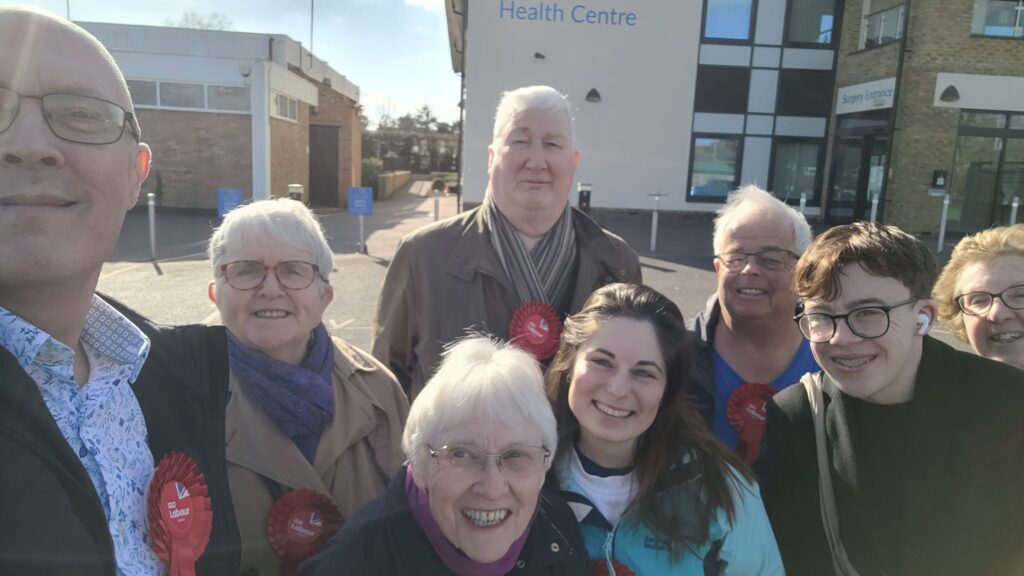
In that case, what policies do the panel see Labour championing locally? We recognise that sometimes there is a conflict between what the Government says and what local people want – how should that be managed?
Chris responded: “We need to improve the environment, so we have pride in our local communities.
“Our Labour councillors have worked hard on tackling fly-tipping and dumping rubbish, and we put forward a motion on this to annual conference earlier this year.
“The cost of housing in St Albans is outrageous – we need to ensure that there is affordable housing. This is lacking.
“With so many commuters in St Albans, ensuring a reliable and cheap train service is important.
“There need not be a conflict between the Government and what local people want but time does need to be taken to explain to people what is happening. The electorate aren’t fools and they want to know what is going on. We need to really listen to the electorate – our two Labour councillors – Mike and Emma – do this really well.”
Jane highlighted the work Labour councillors were doing to represent their communities and supporting local residents: “They raise practical local issues with the council, for example seeking to protect our local Green Belt and challenging parking charges. I see improvements in the village environment that has previously been neglected for years.”
Jack said: “Locally, Labour clearly campaigns for affordability. We have stood against increases in parking charges and against the raising of council tax.
“Disagreement between the Government and the people of St Albans should be managed through discussion and consultation over the issue. It is also important that the national mandate the Government has is respected as it looks to tackle the country’s problems which sometimes requires sacrifice at the local level.”
Mason said they should be talking loudly about Government policies which improve people’s economic security, such as interest rate cuts and employee rights, but it was inevitable in an area that doesn’t vote Labour that there would be conflict.
“Our national target for 1.5 million homes is obviously something people in St Albans will be concerned about in relation to the Green Belt.
“It is right that we, where we can, prioritise brownfield sites or the new ‘grey belt’ before looking at the Green Belt, but my personal view – and of course many, even in my party, will disagree – is that we really ought to have a different attitude to local development within our community to ensure talented young people are not priced out of St Albans because of a dogmatic approach to planning.”
Mike added: “As an opposition group, we take our scrutiny role seriously. That means being clear about where council policies are not delivering for residents and putting forward practical alternatives.
“There are too many areas where improvement is needed. For example, we have challenged repeated increases in parking charges, arguing that stronger enforcement could raise revenue more fairly while supporting local businesses. On housing, we support the Government’s ambition to build more homes, but we have opposed the council’s approach of prioritising Green Belt land ahead of other viable options.
We asked the panel how they perceived the future evolution of this country politically, and whether they were worried about a rise in right or left wing extremism?
Jack replied: “I think this country’s politics will return to the centre and pragmatism; the question is how long that will take. If this Government can deliver, the current polling trends will just be mid-term blues. As real disposable income continues to improve and the cost of living is reduced, people will be less squeezed, leading them back to mainstream politics.
“Alternatively, Reform wins the next election and sets the country back at least five years, if not longer. As the experience of other populist right-wing parties in Europe suggests, they will be unable to deliver and improve people’s standard of living (for example in the Netherlands). They will be defined by ideological actions that set them back, and this will lead to them being voted out at the next election in favour of a more centrist party.
“Extremist politics on the left and the right are worrying. More specifically, the rise of populism on both sides is tearing our country apart. Getting this country back on its feet will take time and require patience. Even a single part of the Government, such as the NHS, is a massive ship to steer and quick fixes to these problems simply do not exist.
“Policy changes or funding increases take time to trickle down into tangible improvements, and you can take the NHS as the prime example of this. There are some good early signs the NHS is improving, with waiting lists coming down and patient satisfaction in GPs improving.
“Fundamentally, I think the anger on the right over immigration and on the left over wealth inequality/the rich is a result of living standards for the average person being stagnant and even declining for a lot of people in recent years. As the Conservatives failed the country for 14 years, it’s driven people to more radical outlooks because the system is broken.”
Jane said: “I have seen extremist politics rise and fall before – including the National Front when I was growing up in the 1970s. Extremism often thrives in periods of uncertainty, when people are encouraged to blame others rather than address underlying problems.
“That is a concern, but I also believe most voters reject division when they see its consequences. The best response is politics that is rooted in fairness, solidarity and practical solutions, and a willingness to work together to build a better society.”
Mason said it was impossible to predict the outcome of the General Election of 2029, as politics changes as quickly as the weather.
“Having said that, public opinion is not positive for Labour, we cannot sugarcoat that, and we are leaving a gaping hole in the political market for populist parties competing in a shouting match for the easiest answers.
“On the left – such as the Greens, they say that if you tax the rich as much as possible, somehow everything will become perfect. At Reform, they tell us that everything will be perfect once net migration reaches zero. With the Conservatives also engaged in this politics of easy answers, and the Lib Dems having no answers at all, Labour is clearly the only party providing pragmatic solutions to the problems in this country.
“We have made mistakes, as all Governments do, but we cannot allow ourselves to make a knee-jerk reaction and elect a Reform Government, as their actions in local councils since May have been nothing short of disturbing.”
Chris said: “Recent elections have shown the electorate is disillusioned with traditional two-party politics in this country. People sometimes choose to cast a protest vote. Labour politicians and campaigners have to ensure their messages cut through to give people positive reasons to vote Labour.”
Mike added: “Trust in mainstream institutions has been declining for many years. Some scepticism is healthy, but in many countries we are seeing leaders who prioritise simple slogans over difficult, balanced decisions.
“Extreme politics can feel reassuringly clear, but it often deepens division rather than solving problems. Healthy democracy depends on robust debate, competing ideas and the willingness to make difficult decisions.
“The best response to extremism is politicians who are rooted in their communities, honest about trade-offs, and prepared to listen. That is what Labour aims to offer in St
Albans – and why local politics still matters.”
So do the panel consider the Greens more of a threat to Labour locally than Reform?
Chris said: “I think that is a very difficult question. I think the Greens are a threat, particularly in a town like St Albans. But I’m not complacent about the threat from Reform – we need to challenge their noxious lies and propaganda.”
Mike said: “In a democracy, people will rightly choose to vote for whichever party speaks to their values and priorities. It’s Labour’s job to be the very best Labour Party that we can – promoting values of fairness and opportunity for all at both a national and local level.
“That’s what I spend my time on – not looking over my shoulder at other opposition groups.
“But the real opportunity for Labour is to pick-up Liberal Democrat votes. We have to show that we offer a more credible and responsive alternative on St Albans council. I believe there is a significant group of voters whose support is not fixed and who are open to change.”
Jack replied: “In London Colney, Reform poses a greater threat, but in the rest of the city, the Greens are a greater threat. Not only is that simply numeric, but it is also practical. In LC, Labour is the opposition to the Libs, and across the wider council, the Greens are seen as the left-wing opposition in more areas, so anti-Liberal tactical voters naturally gravitate towards them.”
Mason agreed: “In London Colney, it’s clear that Reform is a greater threat to Labour given they only just trailed behind us in the area by 74 votes in the county elections. But the Greens are making huge strides in the rest of the city, becoming a threat to progressive parties like Labour and Lib Dems as well as small-c conservatives who care for the environment but are unhappy both with the Lib Dems in council and the Conservatives on a national perspective.
“Given Labour’s focus is currently on London Colney, we should be wary of Reform’s rise in support and continue fighting for better in the area.”
Jane said Reform’s politics are built on division, which she does not think reflects St Albans: “This is a diverse and welcoming city, with people of different cultures and religions and different colour skin. I welcome this diversity and see it as a strength for our community.
“In London Colney, I do not see a strong Green Party presence. Local elections tend to be about trust and track record, and people judge parties by whether they feel listened to and represented. Labour’s task is to earn that trust – not just in one ward, but across the district.”
Janet added: “The challenges to Labour raised by each of these parties are different. Reform has managed to appeal to people who have not been in the habit of voting. Some have never voted whereas others may have in the past but not in recent years. So, this is a challenge in areas where turnout is generally low.
“The Greens, conversely, have been taking votes from across the political spectrum, including ourselves. Both these issues need to be addressed.”
Would any of our panel consider running as a councillor or MP in the future?
Jack said he would definitely consider taking the plunge, having seen first-hand, in St Albans and elsewhere, the difference a passionate councillor or MP adds to an area.
“Interning in an MP’s office showed me this firsthand when it came to helping constituents with their casework. I think I can be that champion for a local area, and I hope to campaign to prove that to voters at the right time. However, I do first want to get more real-world experience before I run.”
For Chris, it isn’t an option: “Having been in the Labour Party for over 50 years, it wouldn’t be right for me to stand for an elected office. I’d much prefer seats to be taken by younger, enthusiastic members. People with vision and hope.”
Jane said she would encourage anyone to put themselves forward for public office: “ It is an honour to represent your local community. As for the future, never say never!”
Although Mason is currently focusing on his university studies, he said he wouldn’t rule it out in the future, adding: “The impact that councillors and local MPs can make in their local areas is significant, with many people’s lives improved by the support that councillors, MPs, and their staff provide. If I can do anything that improves people’s lived experiences, I will be first in line to get involved.”
And Mike said the extent of his ambition was to serve as a councillor: “I stood for election in London Colney because I was frustrated by how often local residents felt ignored by the council. My priority is to represent the village well and make sure local voices are heard at a local level.”
