


30 May 2026
Bus gates, restricted access to cars, more street furniture and replacing parking spaces with a tiny cycle lane are the recommendations of the steering group crafting a future vision for Victoria Street.
Herts county council has been working with St Albans district council on a community-led initiative to create a new-look Victoria Street which they say is responsive to the real needs of local people.
But proposals seen by the St Albans Times could create traffic chaos around the city centre on a par with the notorious one-way system of 1988, with private car users, delivery drivers and other motorists having to completely rethink their routes.
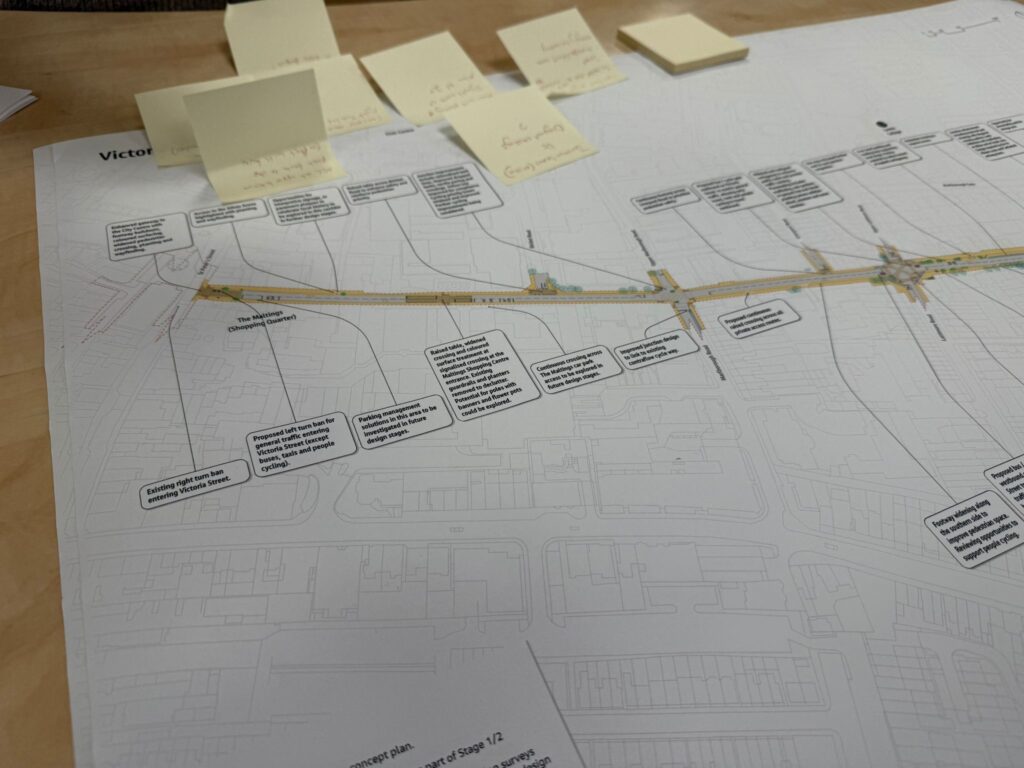
Suggestions include installing bus gates on either side of Lattimore Road junction along Victoria Street. This means you won’t be able to turn left or right if you’re coming up or down Lattimore, and cars travelling north onto the Hatfield Road will have to use the notoriously dangerous blind junction outside Loreto College.
Loreto students will be forced to weave between queues of dozens of cars stretching down Upper Lattimore Road, while residents, delivery drivers and other motorists will have to perform three-point turns on either side of the bus gates as a matter of course.
Imagine the chaos with multiple vehicles – Amazon, DHL and supermarket vans, local car owners, refuse trucks, shop customers – all trying to turn around in the section of the street between The Horn and The Victoria.
At the St Peter’s Street junction, access to Victoria Street could be restricted to just taxis, buses and cyclists. Exactly what defines a taxi is not clear, nor is the process for allowing access to unmarked Uber vehicles.
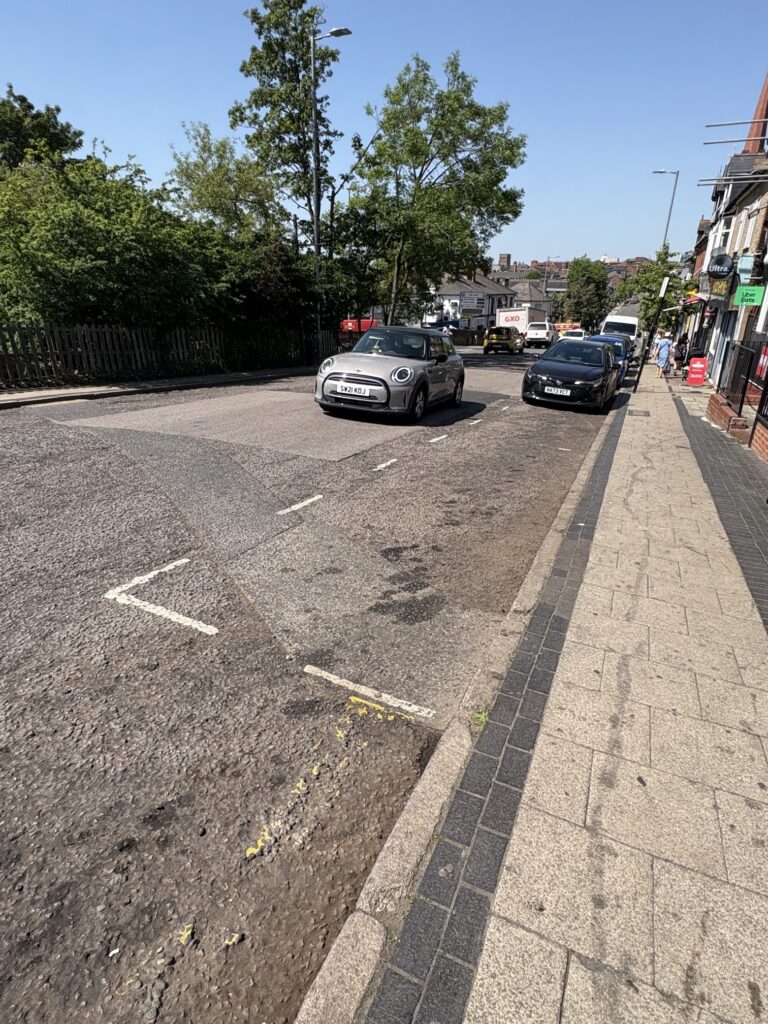
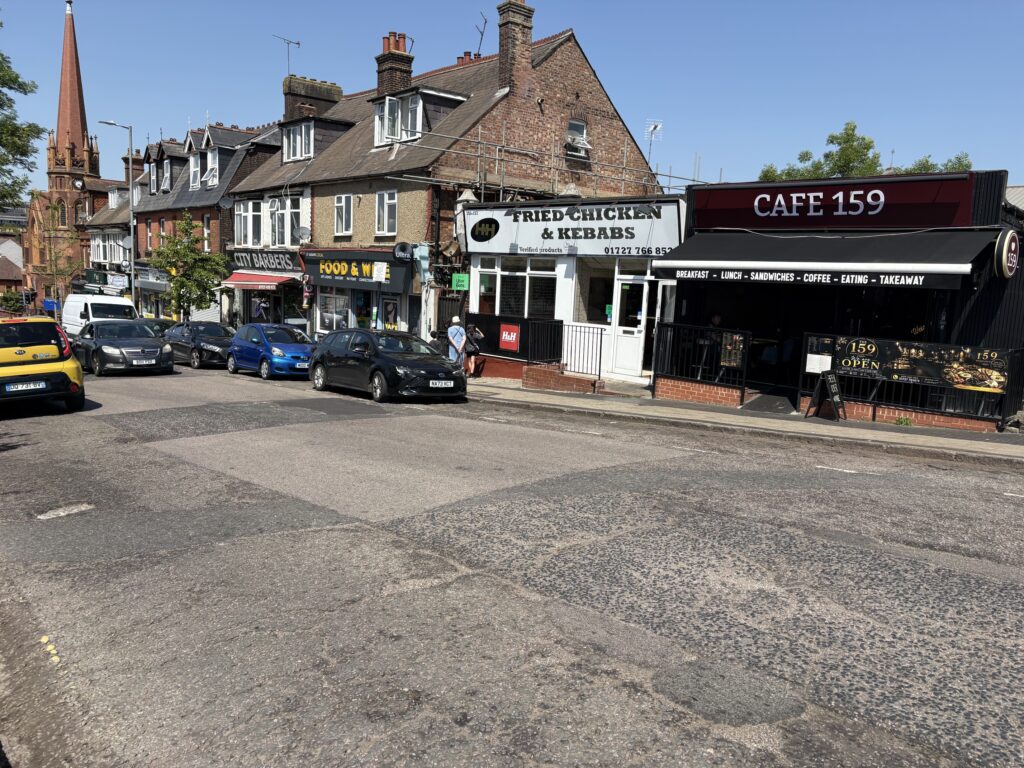
The six parking spaces outside shops including H&H, City Barbers and The 159 Kitchen and Bistro will be removed and replaced with a short cycle lane – this being the only part of Victoria Street wide enough to accommodate one.
Where their customers and delivery drivers will park has not been explained.
The bespoke right-turn lane at the Alma Road junction used by traffic heading west will be removed and there will be just one single lane in its place, causing chaos when The Horn receives its beer deliveries three times a week.
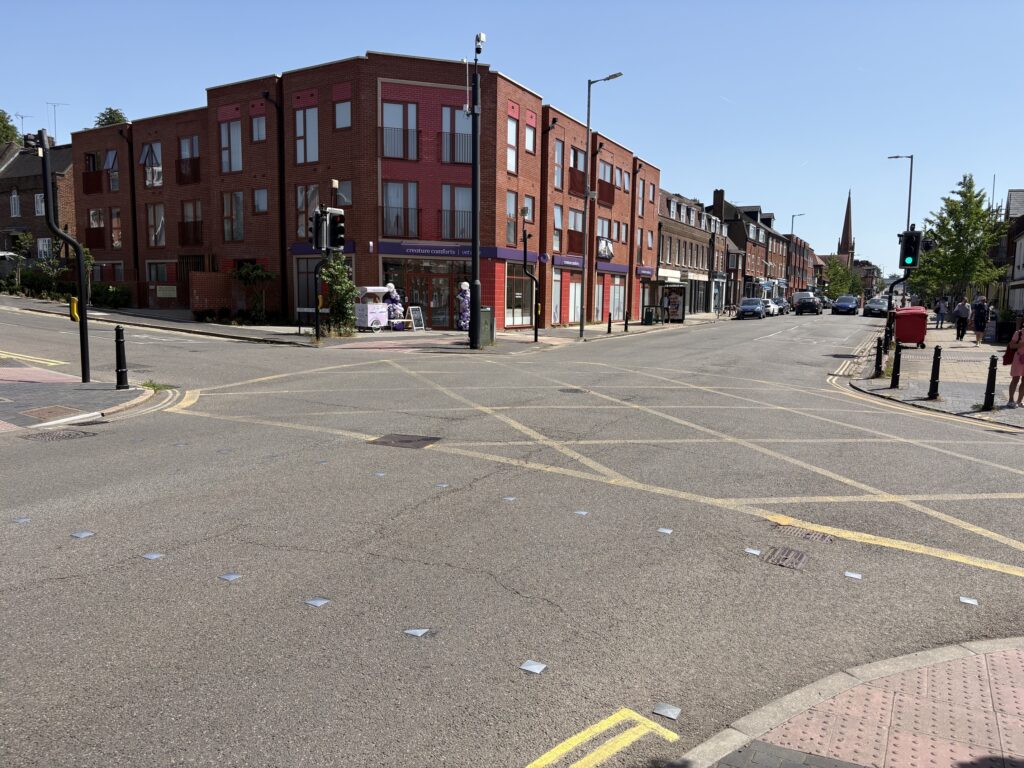
Cash will also be spent on providing more benches along the street – despite fears that these will attract all-day drinkers as has been the case in the past – blue and yellow flower displays down the length of the road, and painting a massive St Albans cross in the centre of the Alma and Lattimore Road junctions.
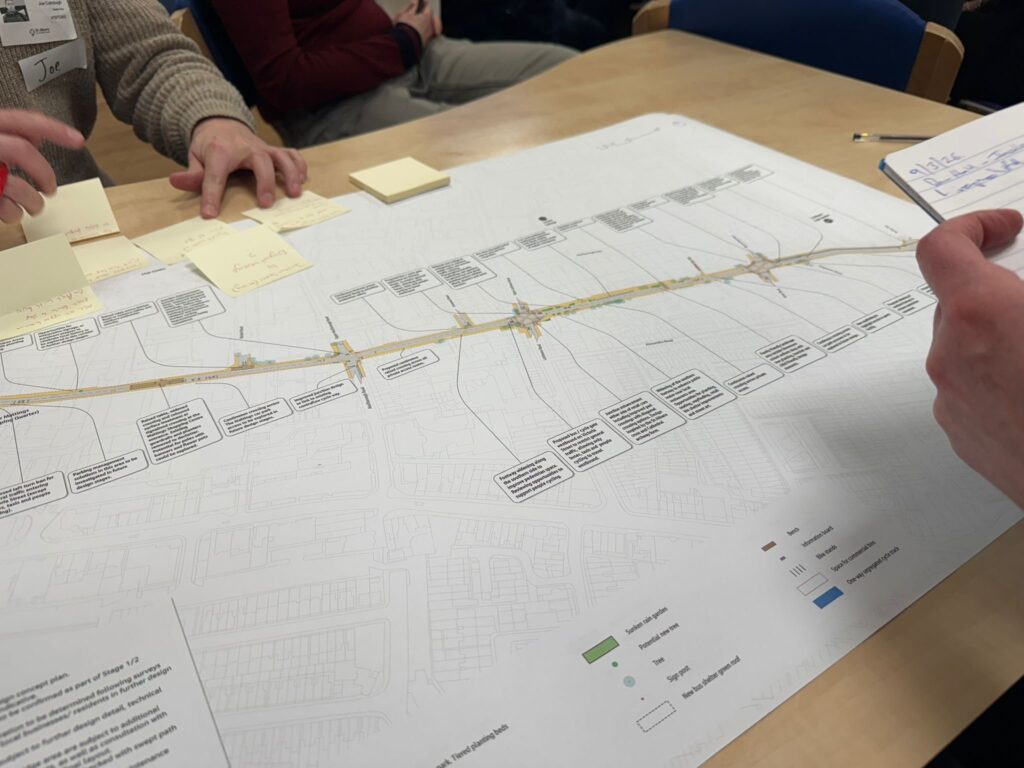
The idea of installing bus gates in Victoria Street was first mooted back in February 2024, when then-county councillor Chris White revealed that HCC was considering restricting access at the St Peter’s Street junction and preventing cars from travelling in that direction.
If these proposals go ahead then it means a major east-west route through the city centre could be blocked to cars, vans, motorbikes, and lorries, forcing them to seek alternative routes down the already congested London Road and Hatfield Road.
The scheme has already provoked a furious backlash from retailers.
The Maltings Shopping Centre director Richard Marrett said: “We wholeheartedly support the regeneration of Victoria Street as a vital eastern gateway into the city and a key access route from St Albans Station.
“However, we have consistently maintained that two-way vehicular traffic for cars must be retained along this route. Any deviation from this would have a catastrophic impact on city centre businesses.
“Although we were originally consulted by HCC, we have since been removed from the steering group. As a result, we are increasingly concerned that our views are no longer being properly considered and that plans are progressing regardless of the serious concerns raised by local businesses. We have repeatedly requested to rejoin the consultation group, but these requests have been denied.
“We operate the city centre’s principal car park, with the majority of vehicle access provided via Victoria Street. In addition, we represent more than 60 retail and hospitality units, alongside office and residential space, giving us significant insight into the practical and economic implications of these proposals.
“We understand that St Albans BID is representing local businesses on the steering group. However, we have not been approached by BID regarding the proposed plans. It is disappointing that BID has not taken this opportunity to fulfil its core purpose: engaging with, communicating with, and representing local businesses. This raises serious concerns about whether BID is fit for purpose in matters of such significance to the city’s commercial community.
“We look forward to the forthcoming public consultation and sincerely hope that our concerns, and those of the businesses we represent, will be properly heard and meaningfully considered.”
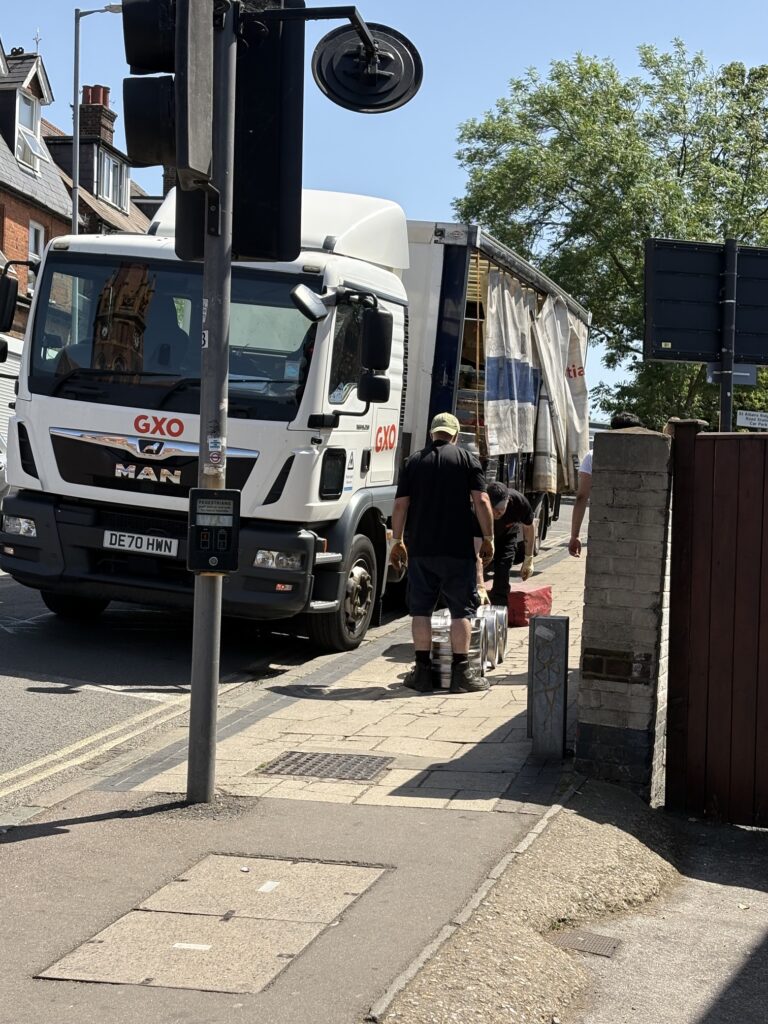
Shane Smith, general manager of The Horn, actually took part in the pre-consultation meetings as a concerned stakeholder for the night-time economy as well as a member of Victoria Street Residents Association.
He said: “We all raised various concerns about every element of their plan but it seems the council doesn’t like any critical feedback.
“Our first concern is the planned bus gates which will cause congestion on both Lattimore Road and Upper Lattimore Road. It will be very dangerous turning out of Upper Lattimore Road onto Hatfield Road unless they bring in traffic lights on that junction, and adding to this, Lattimore Road does not allow a continous flow of current traffic in both directions in the current environment. All this will do is take emissions from Victoria Street and increasing them on residential streets such as Lattimore and Upper Lattimore. Not to mention the backlog of traffic it’ll create on both Hatfield Road, London Road, Alma Road and Beaconsfield Road.
“Unless there are ANPR permits given out to taxis, the turn down from St Peter’s Street will be ineffective.
“With a cycle lane being put in on the carriageway in front of Coddess, H&H and Shree News they will lose any parking. This will damage them as businesses because of restrictions for deliveries and takeaways.
“Taking away the right turn from the Alma Road junction will have a huge impact on us as a business. We are a foundation for grassroots live music and restricting our business access for deliveries and bands will be devastating to us as a business. The likelihood of this is that the carriageway will be blocked at least three to six times per week for deliveries and bands which will widely impact congestion at the station and block the flow of traffic.
“The council mentioned about maybe putting a loading bay in place but this is only good if they are going to actively police it so that commuters don’t end up parking in it.
“Adding more benches will just encourage the growing drug use and anti-social behaviour that it already spiralling out of control on Victoria Street.
“Another crazy idea is painting the St Albans flag on the yellow box junctions – whilst I agree the box junctions need to be carefully looked at because of the amount of accidents that take place – painting a big flag on the junction is NOT the solution.
“Victoria Street Residents Association have been meeting about this consistently and we at The Horn as a viable night time economy business will strongly back wide amendments to the ludicrous plans of the council.
“They class this as ‘re-inventing’ Victoria Street but all it’s going to create is chaos for residents and detrimental impacts on businesses.”
Some of the Victoria Street businesses have already contacted St Albans MP Daisy Cooper demanding an urgent meeting to discuss the proposals, including Jean Dennis of Gallery 105.
She said: “What a waste of time and money this all appears to be. One minute MP Daisy Cooper tells us they couldn’t possibly help us to overturn the parking charges introduced to Victoria Street as the council is virtually bankrupt and needs the money.
Now we hear about the most ridiculous proposal for Victoria Street and surrounding roads.
“It seems the group coming up with these farcical solutions is led by a Sustainable Transport Strategy and Programme Manager at Hertfordshire County Council who excelled at Medieval Language translation. Sadly she clearly has little idea about 21st century transport logistics for St Albans. If allowed to progress, this scheme will cause utter chaos for all residents, their visitors, shoppers, traders and delivery companies.
“We need to make the junction by The Horn safe, this could be easily achieved by changing the timing of the traffic lights NOT by painting a St Albans flag on the road.
“As for the idea of benches, we made it quite clear two years ago when the clipboard man came around for us to comment on the same, we DO NOT WANT THEM.
“There are already too many problems with the all-day drinkers and drug takers. Spend some of your money providing a safe environment for them to go to each day to keep them off the streets.
“One has to wonder just how much money has been wasted with council staff salaries and consultants spending time dreaming up this nonsense and how much do they think it would cost to implement? We need to call for a Freedom of Information report to find out more.”
Paul Williams, owner of Rock And Road Bikes, asked: “So how are the businesses in Victoria Street supposed to get deliveries and how are customers supposed to get to my shop to drop off bicycles for repair and collect their new bicycles?
“What about the residents who live in Victoria Street who park their cars behind where they live? And the refuse collection trucks etc?
“These proposals will kill off the already-struggling buisnesses in Victoria Street, thank goodness I’m retiring and closing down at the end of August!”

Travel counsellor Valerie Avery, who lives and works in the street, said: “Having been invited by the council to attend discussions surrounding the regeneration of Victoria Street, the first thing I found striking was the complete absence of local residents and business owners. It seemed an unusual approach for a project supposedly designed to improve Victoria Street, yet without the very people who live and work there being represented.
“Following the initial meeting, it quickly became clear that residents needed a stronger collective voice, which led to the formation of a residents group. At these meetings, there were often three to five consultants from [engineering services company] Jacobs presenting what was described as a ‘pre-consultation’ exercise. One has to ask: how much public money was spent on consultants to discuss the future of a street they neither live on, work on, nor regularly use?
“Residents were repeatedly told the plans were intended to ‘enhance lives’, but without meaningful local representation, it is difficult to see how that could genuinely be achieved.
“One example repeatedly raised was the proposal for additional trees. Ironically, for the past two years I have been trying unsuccessfully to have the existing trees on Victoria Street properly maintained. No body of government will take ownership of the trees. Residents were assured they would never grow above roof height, yet a simple visit to the street shows they are now well beyond the roofline. More concerning still, the root systems beneath the surface have spread extensively underground, causing damage to foundations and impacting the utilities running beneath the road.
“At the same time, the current condition of the pavements is already shocking. Uneven surfaces, lifted paving and poor maintenance have become a daily hazard, particularly for elderly residents and those with mobility issues. The number of people who trip or fall on Victoria Street is deeply concerning, yet these longstanding problems appear to have been overlooked while attention is focused on expensive regeneration proposals.”
Some locals believe the project is a smokescreen for the stealth introduction of the HERT (Hertfordshire Essex Rapid Transit), a “trackless tram” which has been seen being tested in St Albans in recent weeks.
This £2bn project, which would link Harlow, Gilston, Hertford, Hatfield, St Albans and Hemel Hempstead using one route, and St Albans to Croxley on another, is not expected to be completed until 2040. But if the road map of St Albans is redrawn earlier under schemes like the Victoria Street redevelopment then it would make facilitating the HERT so much easier.
Resident Sim Dixon said: “I’m very disillusioned with local government in Herts. Be it St Albans district council or Herts county council, the councilors seem focused on their own grand plans and have no interest in the impact their policies will have on the residents i.e. the people who pay for their schemes and whom they are supposed to serve.
“This latest project is another example. It has been packaged as an initiative to revitalise Victoria Street but is really part of a regional plan, the Hertfordshire Essex Rapid Transit (HERT) to provide an express bus service between Hempstead and Harlow.
“The changes will impinge on the viability of local businesses and degrade the lives of the residents. What has been dressed as consultation is in fact a fig leaf to make it appear there is buy in for their proposal.
“My biggest worry is that with the move to unitary the voices of local residents will be further diminished. This is why I’ve joined the Victoria Street Neighborhood Residents Association.”
St Peter’s ward district councillor Juliet Voisey (Green Party), who was part of the steering group, confirmed that bus gates were very much part of the proposals: “Myself, and many other stakeholders have worked with HCC officers on every part of Victoria Street looking at where we can improve the road for the main users, which are cyclists and pedestrians.
“Different elements have been looked at, such as greening, community space, cycling provision and restricting car usage so buses can move more freely connecting between the centre and the train station.
“It has been challenging, given the width of Victoria Street; there is not enough room for everything that we’d like to see for all of the users to benefit. Compromises have had to be made on all sides.
“The introduction of bus gates will enable better bus movement and promote active travel. It models other countries where travelling by car will take longer thereby encouraging the behaviour change we need for health and the environment, and vulnerable users such as pedestrians and cyclists feel safer.
“Car congestion within the centre is only going to worsen if we do nothing, and already residents are feeling the impact of poor air quality.
“The officers at HCC have done extensive research on this plan looking at the data, and the initial consultations with the public showed in favour of improved greenery, signage and cycling provision.
“It’s an exciting time for Victoria Street to become more than just a gateway linking the centre to the station, but to become its own destination too.”
In an unsolicited statement received by the St Albans Times from Herts county council after we contacted various local stakeholders about the project, the authority insisted these were ‘early stage’ proposals, that the scheme is at a concept development stage, and no decisions have been finalised.
They said the outputs from meetings of the steering group were being reviewed and refined alongside ongoing technical work and traffic modelling to understand what is feasible and supported to progress. No timetable has been confirmed for when the proposals will go out for public consultation.
A spokesperson for HCC said: “In these sessions a range of views, both supportive and challenging, were shared and the outputs from these sessions are now being reviewed and refined alongside ongoing technical work and traffic modelling to understand what is feasible and supported to progress.
“These emerging findings will be presented to the project’s steering group, comprising councillors from HCC and SADC, to agree the next steps, including the scope, timing, and approach to wider public engagement on a developed concept.
“Any future proposals taken forward will be subject to further engagement and public consultation before decisions are made. The council is committed to ensuring that future plans reflect the needs of the local community, residents and businesses.”
With regards to some of the specific proposals referenced by the St Albans Times, the spokesperson said: “Given the limited available space on Victoria Street, it is unlikely that fully segregated cycle lanes can be accommodated without significant trade-offs. Potential options, including alternative cycling routes or different street layouts, continue to be explored, but no decisions have been made.
“No decisions have been made regarding bus gates. We are exploring ways to improve Victoria Street for people walking, cycling and using the bus, particularly as it forms a key link between the station and the city centre. This needs to be considered in the wider context, including the availability of parallel east–west routes.
“Data indicates that currently more people already travel along Victoria Street by walking, cycling and bus than by private car.
“Managing traffic volumes is therefore one of several approaches being considered, and the use of bus gates was raised during co-design sessions to understand stakeholder views. Feedback at the co design sessions was mixed, with some support and some concerns raised.”
HCC stressed no final decisions have been made regarding the St Peter’s Street junction.
“The Alma Road junction has been identified as a location with safety concerns, particularly given the volume of pedestrian crossings. We are exploring ways to simplify the layout and improve safety and accessibility for all users.
“Options discussed included retaining two lanes while incorporating a dedicated loading provision, such as a loading bay for nearby businesses including The Horn. These considerations will form part of the ongoing design work to ensure that servicing requirements are accommodated wherever possible.
“A range of ideas were explored to enhance the identity and experience of arriving in St Albans from the station. These were conceptual suggestions intended to prompt discussion, rather than formed proposals…
“Providing seating is an important accessibility consideration, especially given the length of the route between the station and the city centre. Without rest points, some users – particularly those with limited mobility – would be excluded.
“No detailed planting scheme has been developed, and any future proposals would be agreed with the relevant local authorities.
“More broadly, earlier engagement highlighted that Victoria Street currently lacks a clear sense of identity, and there was support for improvements that make it more welcoming and people-focused.
“It is important to emphasise that all ideas discussed to date are part of an iterative co-design process, where different perspectives are expected and valued.
“The proposals remain at a conceptual stage, and technical assessments are ongoing to determine what can realistically be delivered.”
Cllr Matt Fisher added: “As the county division member, I think it is important to clarify that the plans discussed thus far are not, to my knowledge, the final proposal entering the formal public consultation process.
“It would be somewhat naïve – and far too rigid – to undertake a formal public consultation without a realistic understanding that proposals will evolve and change through that process. That change and deviation is, in many respects, an intended and important part of meaningful consultation.
“The aim of the steering group has therefore been to bring together a wide range of stakeholder input at an early stage, helping to test ideas, rule out certain concepts and better understand both the specific wants and desires of stakeholders, as well as the broader outcomes the community would ultimately like to achieve.
“Needless to say, there are significant constraints around the physical space available and the competing demands of buses, cars, cyclists and pedestrians.
“A broad range of ideas and considerations have therefore been discussed in detail, including additional seating and dwell-time opportunities to encourage active travel and accessibility for those with reduced mobility; biodiversity improvements; noise suppression; lighting; damage reduction; aesthetics; civic pride and sense of place; opportunities to better communicate the historic value of St Albans; and improved wayfinding and signage.
“Importantly, one of the chief intended benefits is improved safety and active travel uptake, alongside the wider public health, environmental and community benefits that these changes can bring. In balance, the ambition is to improve the overall quality of life for residents whilst creating a more attractive, functional and people-focused corridor between the station and city centre.
“By no means should the current iterations be interpreted as a final outcome. They are simply initial working proposals intended to help kickstart a formal public consultation process capable of generating sizeable, meaningful and representative feedback from residents, businesses and stakeholders. The consultation itself will objectively test the proposals, their strengths, weaknesses and public acceptability.
“As we all know, change management and infrastructure change can often generate strong reactions and concern, particularly where there is a predisposition to assume that change may automatically result in worse outcomes.
“However, the purpose of the consultation and evidence-led process is precisely to examine those concerns openly and transparently.
“Personally, I believe the project has the potential to be a strong success across a number of important and measurable metrics, particularly around safety, active travel, public realm improvements and environmental quality.
“Whilst there will inevitably be differing opinions on individual elements, I believe the consultative process itself has been constructive, inclusive, professional, thorough and undertaken in good faith.”
