29 May 2026
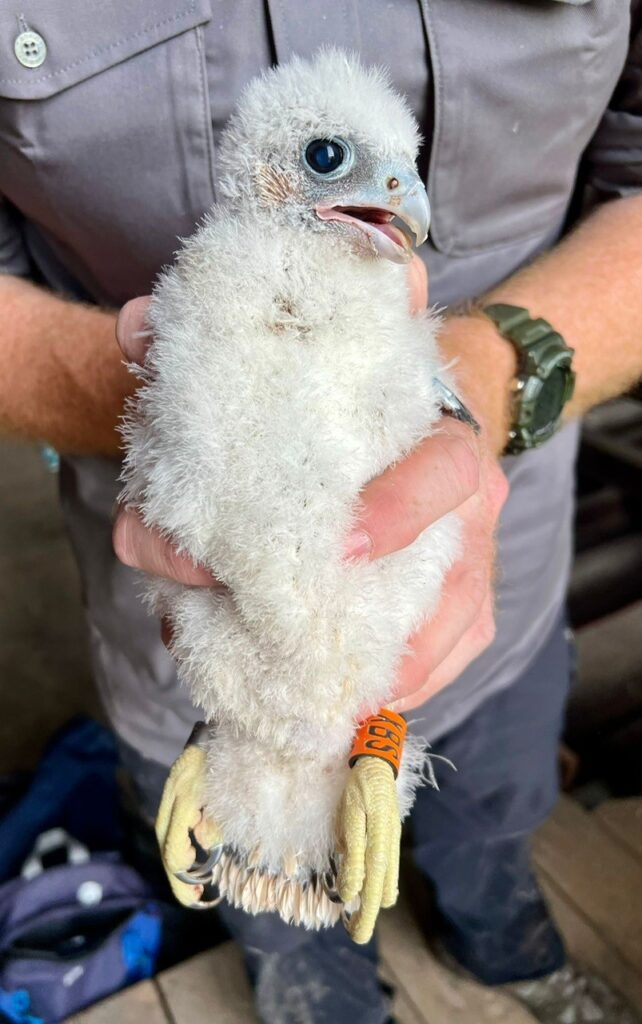
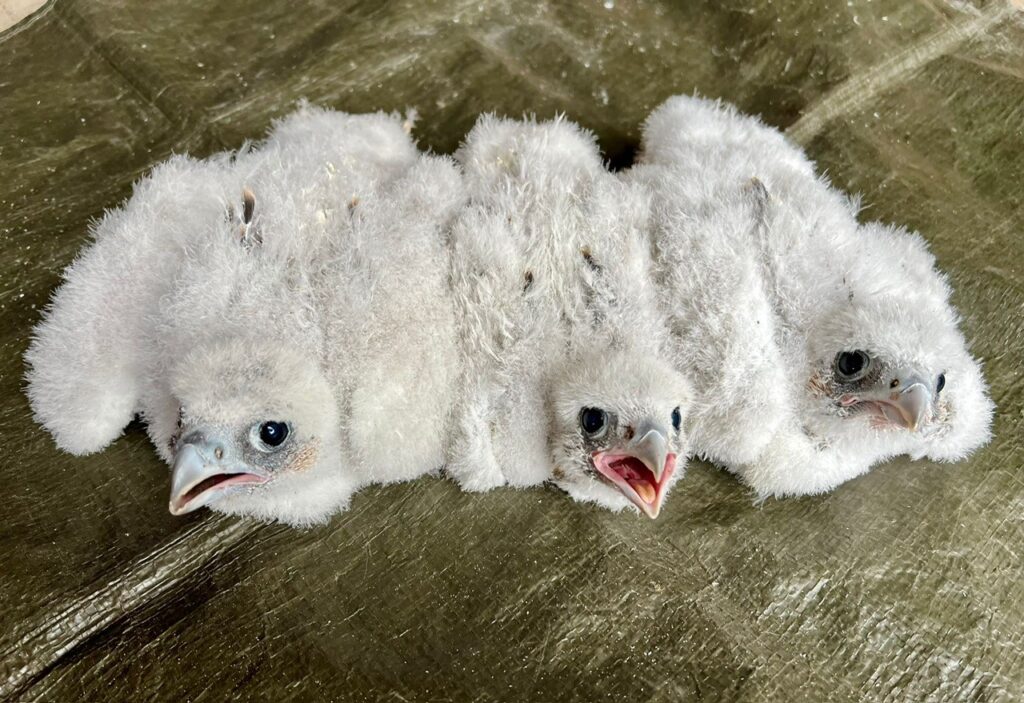
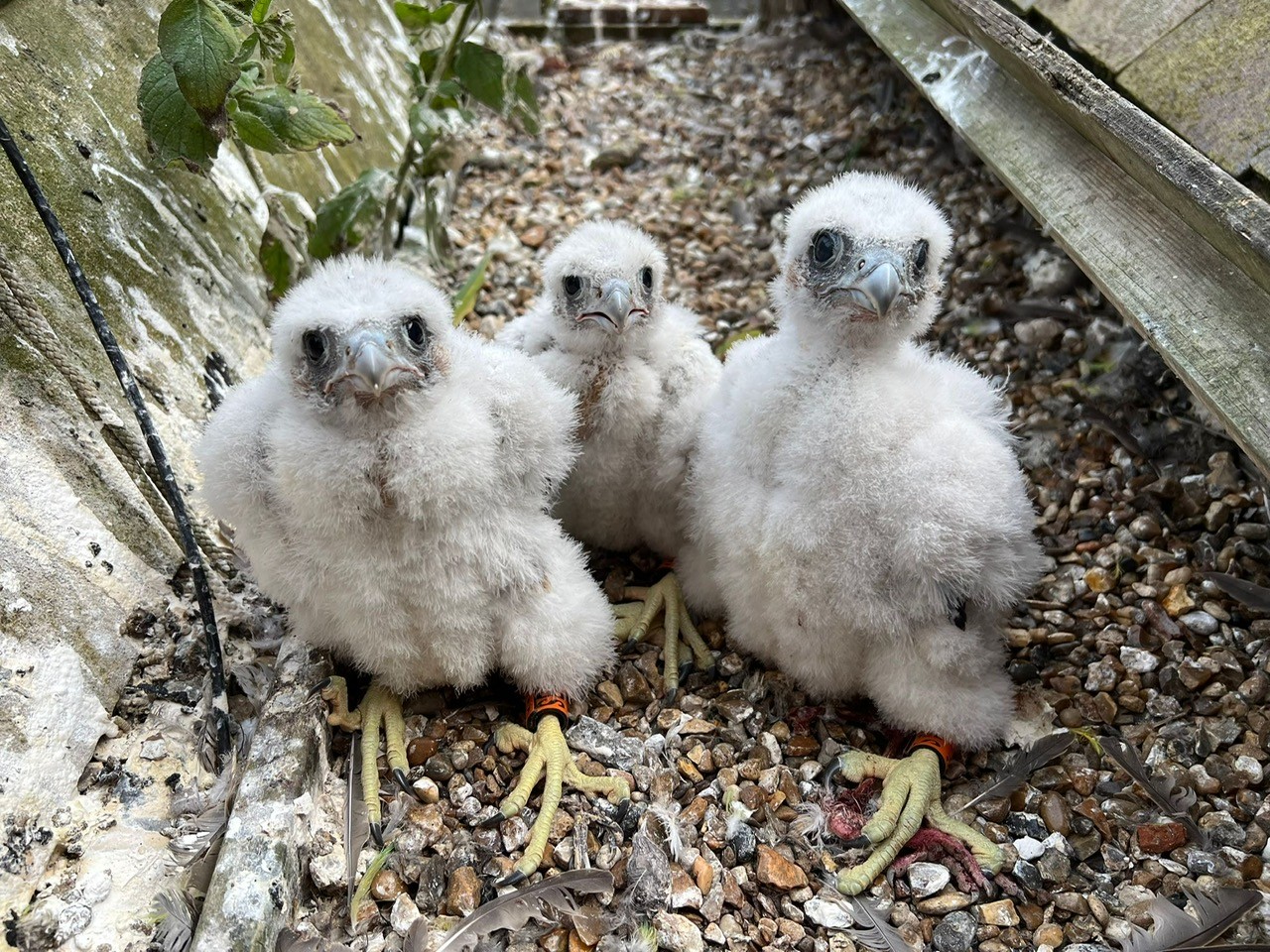
The new clutch of Peregrine falcon chicks at St Albans Cathedral have been ringed – and their genders determined as one male, one female, and possibly another female – weight being the only determinate at this stage.
The three chicks are thriving, despite the heat and the sad loss of a fourth bird a few weeks ago.
Herts breeding Peregrine co-ordinator Barry Trevis is a licensed bird-ringer/nest recorder and holder of a Government license to visit the nests of this specially protected species.
He has carried out the ringing of various chicks since the first hatched in 2022.
“On Friday, with a brood of three well-developing chicks in the nest tray, I went with colleagues to the nest and carried out the ringing of them, just three weeks after they had hatched. We know from the webcam live-stream that the parents have fed and looked after them well, particularly during the existing period of hot weather, so when we checked them we saw that they were all in good condition.
“We fitted a ring on each of their legs. One is a British Trust for Ornithology metal ring, a bit like a license tag, the other is a larger ring which is coloured Orange with Black lettering which means we’ll be able to track them in years to come.
“Quite reasonably some people ask why do we need to ring birds? Well, if we don’t put rings on these birds we don’t know much about their origins or their future. We see birds sitting around, they turn up at nests or whatever and we have no idea where they came from, how old they are or who they are.
“However, those with the colour-rings which can be read from a distance let us know exactly who each bird is. That means we have a much better idea of how long they live, their movements around the UK and even abroad, along with their relationships as sometimes they might not get on and split up or have mishaps, so the ringing gives us a way of tracking the family trees of Peregrines going forward. So far, we have had re-sightings of five of the young at sites away from St Albans, including Oxford, Notts, Hants and Norfolk.
“In addition to fitting the rings we also took measurements which from these, particularly their weights, we can usually ascertain the sex of each bird as female Peregrines are much larger than males. On Friday we concluded that we have one female, one male, and one probable female.
“Although one can never be sure whether all of the young falcons will make it to the flying stage, we are very hopeful that this latest Cathedral three will fledge from their nest ledge by around the end of the third week of June and will be seen in the immediate area for some months to come before finding their own way further afield.”
You can learn more about the birds at Herts and Middlesex Wildlife Trust’s Peregrine Watch events taking place at weekends throughout May and June – find out more.
Photos by Barry Trevis