23 Mar 2026
For just 48 days every year, a secret medieval recipe is used to create the Alban bun, part of the Easter tradition at St Albans Cathedral for nearly 700 years.
It has featured on TV shows like The One Show, Lorraine, Good Morning Britain and on Mary Berry’s Easter Feast, and has even been taken back to the Vatican by visiting Catholic priests.
The precursor to the hot cross bun was devised in 1361 by Brother Thomas Rocliffe, a monk at the Abbey, and distributed to the poor on Good Friday, the cross on the top made with a knife rather than being piped onto the bun.
An article in the Herts Advertiser of 1862 summarises the known history of the buns: “It is said that in a copy of Ye Booke of Saint Albans it was reported that in the year of Our Lord 1361 Thomas Rocliffe, a monk attached to the refectory at St Albans Monastery, caused a quantity of small sweet spiced cakes, marked with a cross, to be made; then he directed them to be given away to persons who applied at the door of the refectory on Good Friday in addition to the customary basin of sack (wine).
“These cakes so pleased the palates of the people who were the recipients that they became talked about, and various were the attempts to imitate the cakes of Father Rocliffe all over the country, but the recipe of which was kept within the walls of the Abbey.”
When this article was rediscovered about 30 years ago, efforts were made to recreate the buns using a recipe found in the Cathedral archives, with in-house refectory cook Anne Hunt initially taking charge.
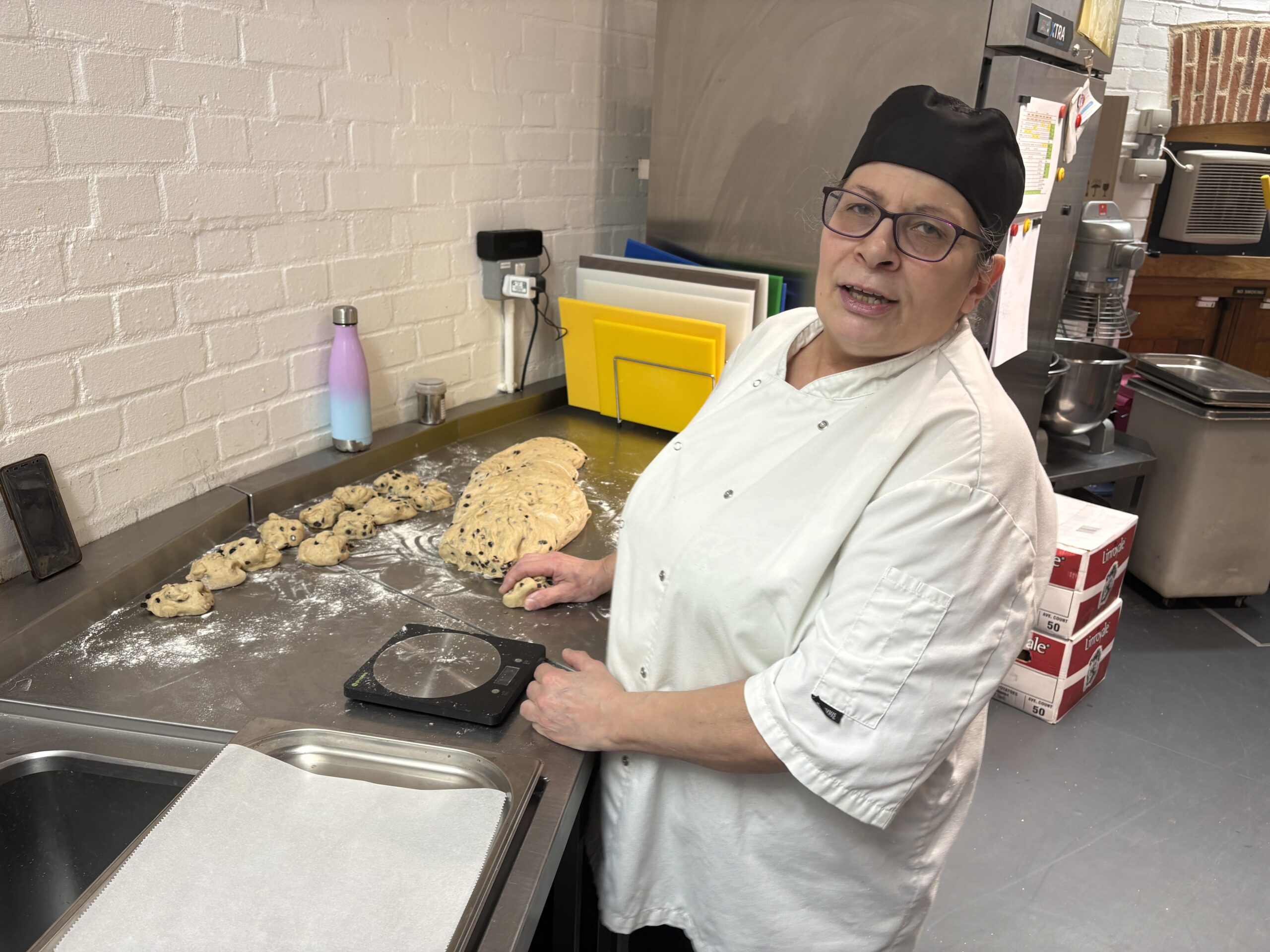
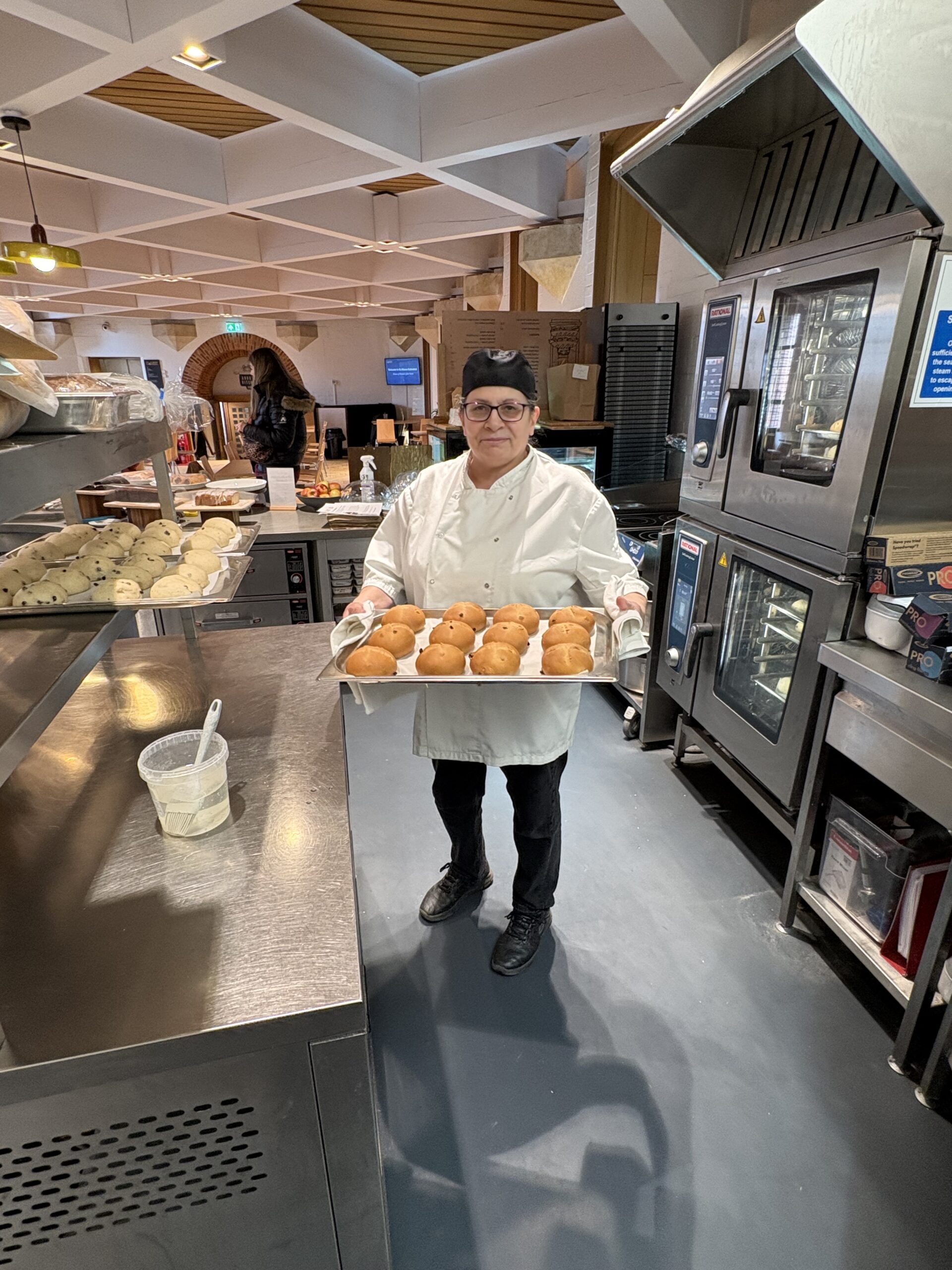
Today the buns are mainly made by chef Graca Tilson, who first took on the responsibility back during the dark days of the Covid pandemic in 2020, but is now so skilled at producing them that she knows the recipe by heart.
They are on sale from the Abbot’s Kitchen exclusively from Ash Wednesday until Easter Monday, and unlike hot cross buns are not available outside this time. Although the basic ingredients such as flour, eggs, fresh yeast and currants are highlighted for consumers, the exact mix of spices they contain are not revealed, although they are rumoured to include grains of paradise or cardamon.
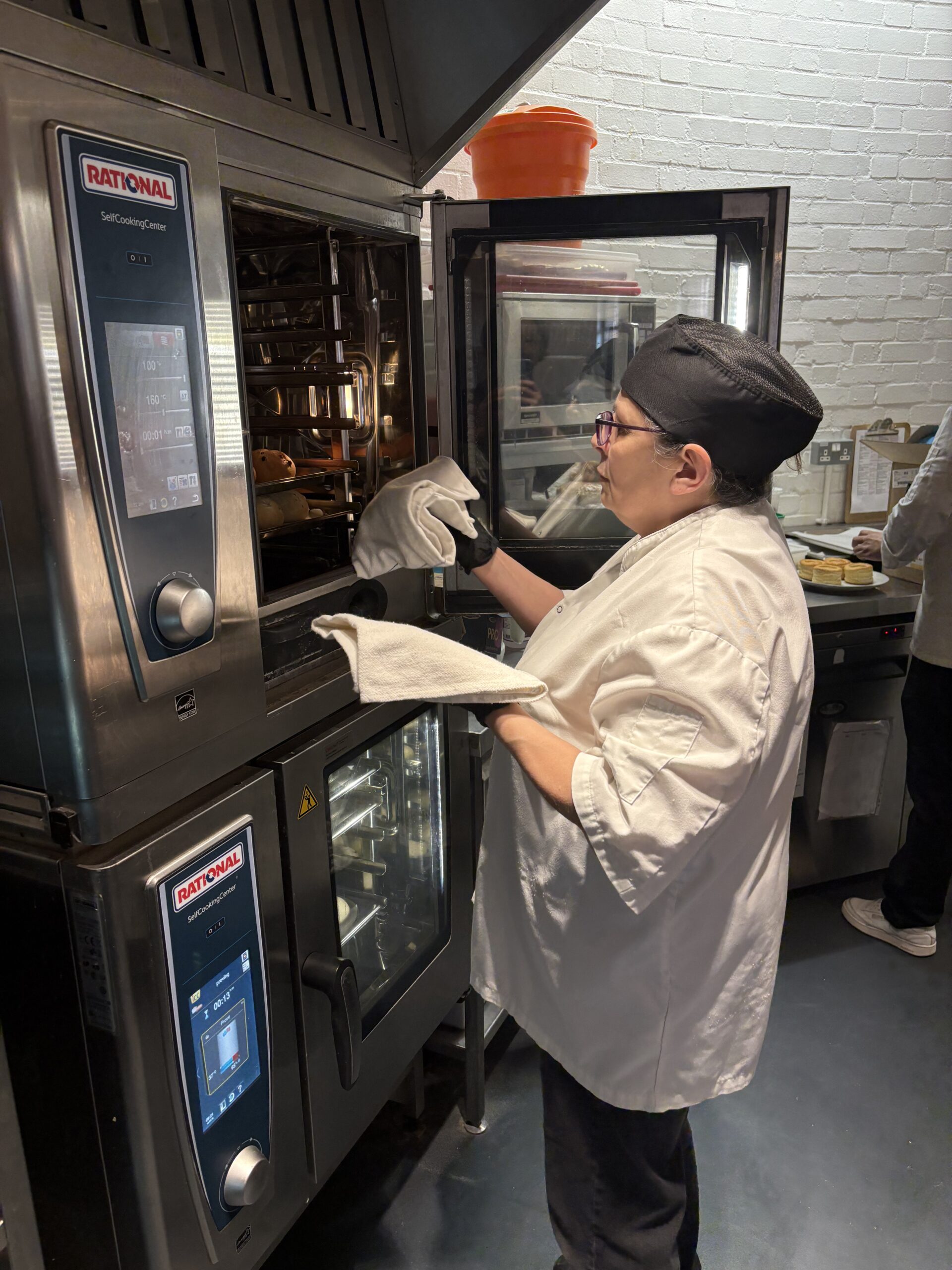
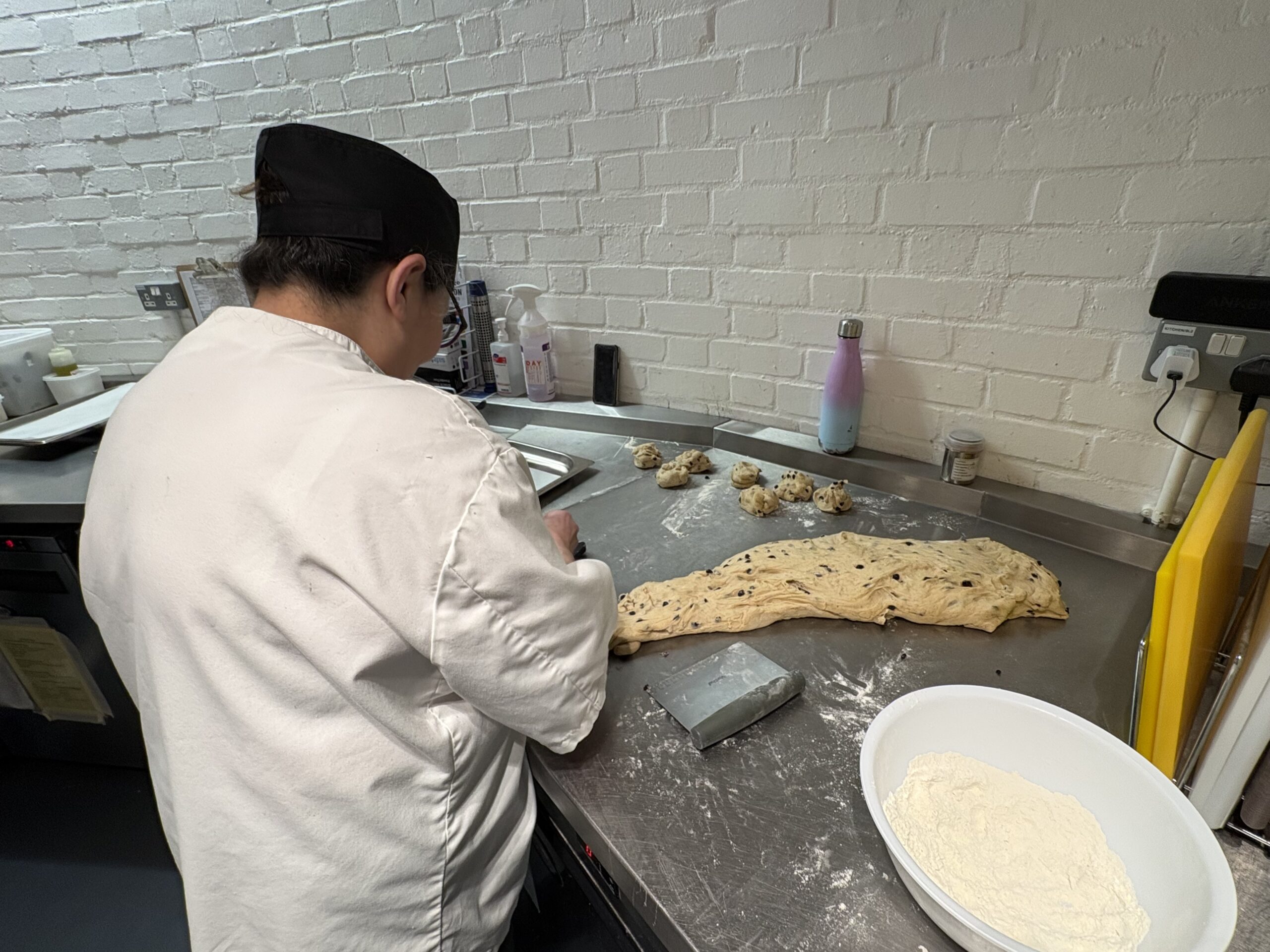
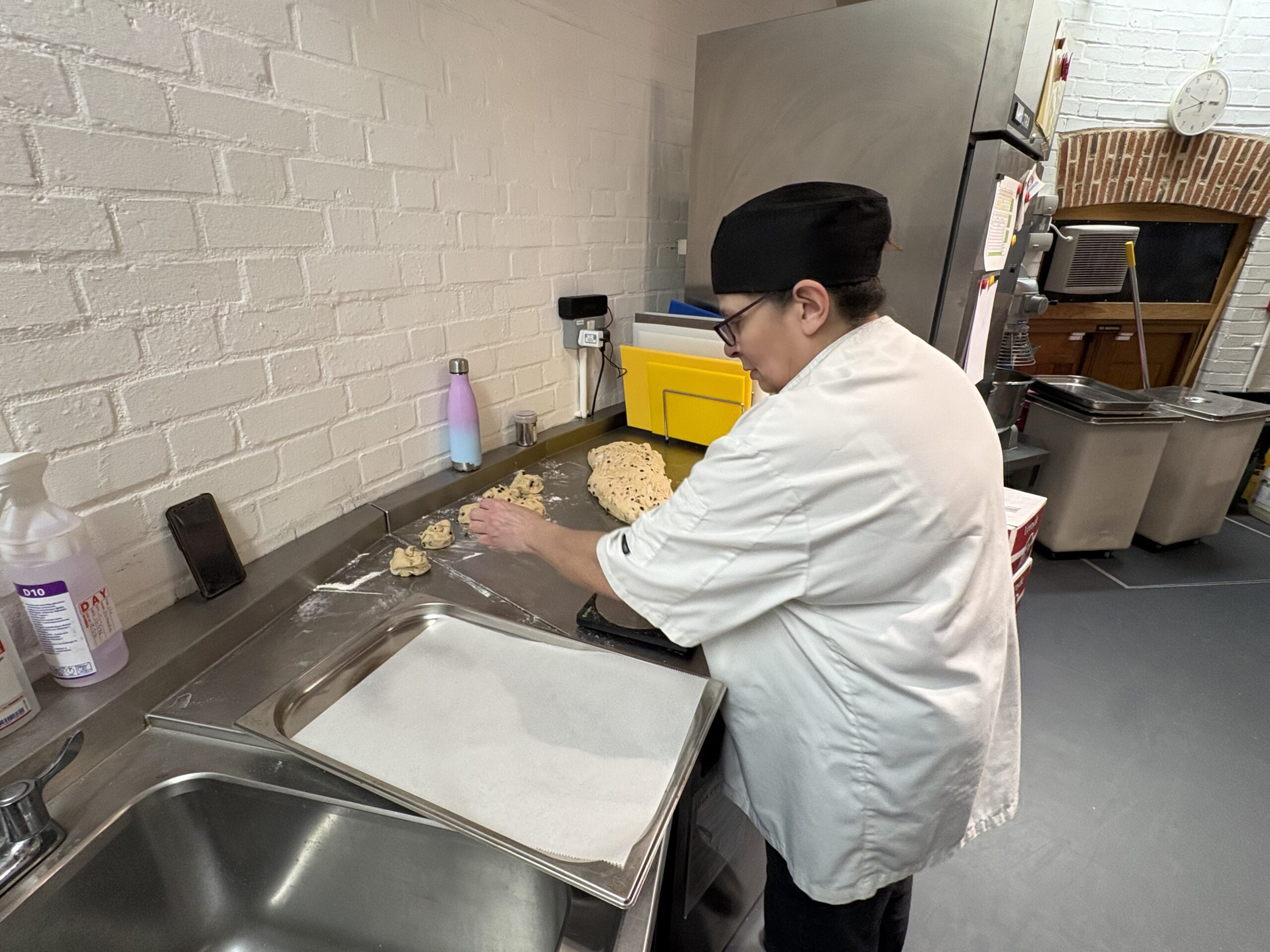
It’s 9.30 in the morning when I arrive at the Abbot’s Kitchen, but Graca has been there since 7, weighing ingredients and then mixing the dough. She will do a batch of 120 a day, all of which end up being sold.
“This year I started making them on the 18th of February and I’ll finish on the 6th of April, Easter Monday.
“The closer we get to Easter the more we sell,” she explained. “People come in to buy packs to give to their families and friends.”
As one of only a handful of people who know the recipe, she is sworn to keep it a secret, which adds to the fascination with the buns: “It’s because it’s exclusive to the Cathedral, it’s the original hot cross bun, the recipe is secret so we can’t share it, and we only make them during Lent.
So from a chef’s point of view, what is it about the Alban bun that distinguishes it from the more commonly known variety?
“The preparation method is different, and the spices are different. By law we have to state the ingredients, but we don’t have to specify which spices, it’s such a closely-guarded secret that I can’t reveal it to anyone.
“Although the Cathedral gave me a print-out of the recipe when I started, it’s now in my head because I’ve been doing it so long, and I don’t need to look at it any more.”
Eventually the recipe will be passed on to another baker, just as it was given to Graca, although the exact method of baking the buns is her own devising: “I followed the recipe, and like with everything, I’ve got better over the years because there’s a lot of trial and error. It doesn’t tell you in the recipe how long to mix everything for, and when I first started one of the mistakes I made was to mix it for too long – all the currants started breaking down and the buns looked a bit messy.
“But over the years I’ve learned how to make them better. Obviously when they were first made it was by hand, which is a lot more work, so having the mixer really helps when you’re doing these quantities.
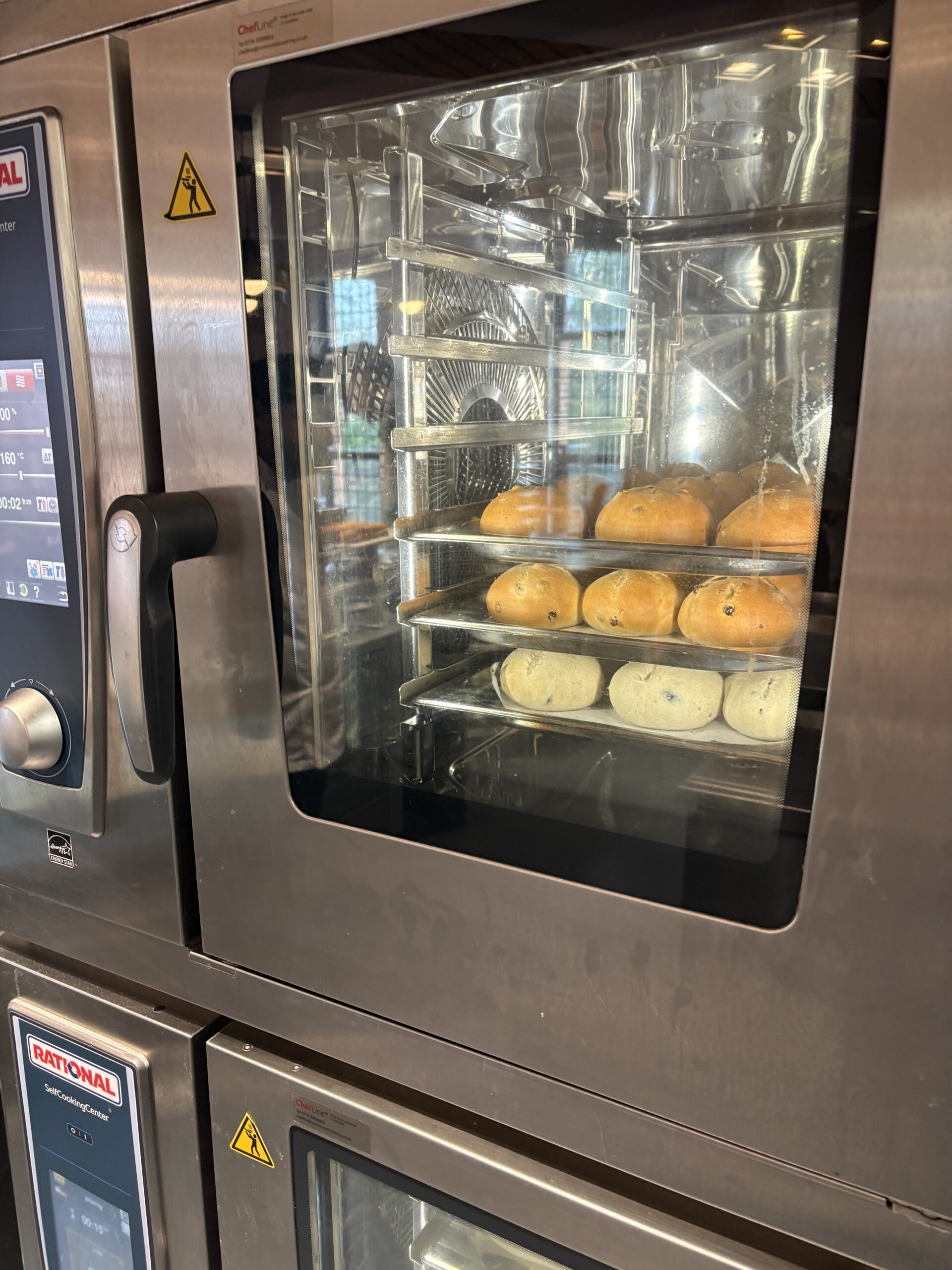
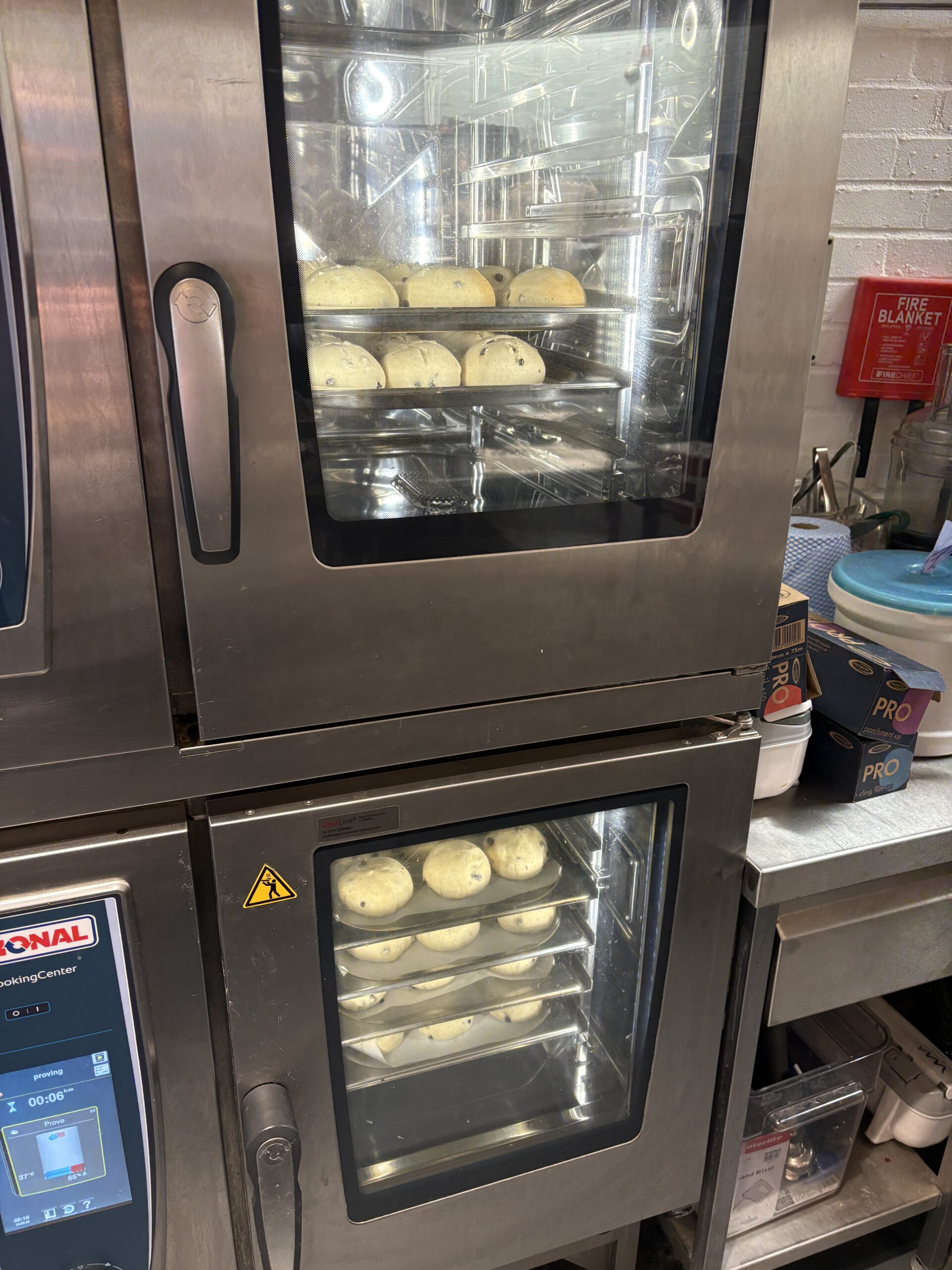
“There are always two proving stages [when the yeast is allowed to rest and rise]. You make the dough and then you have to leave it to rise until it’s more or less double the size. Then you shape the buns and then you have to prove them again. You put them in the proofer on a low, low heat to let them rise for about half an hour.
“And then I bake them in a commercial oven. But I’m not going to tell you much more about it because it’s a secret.”
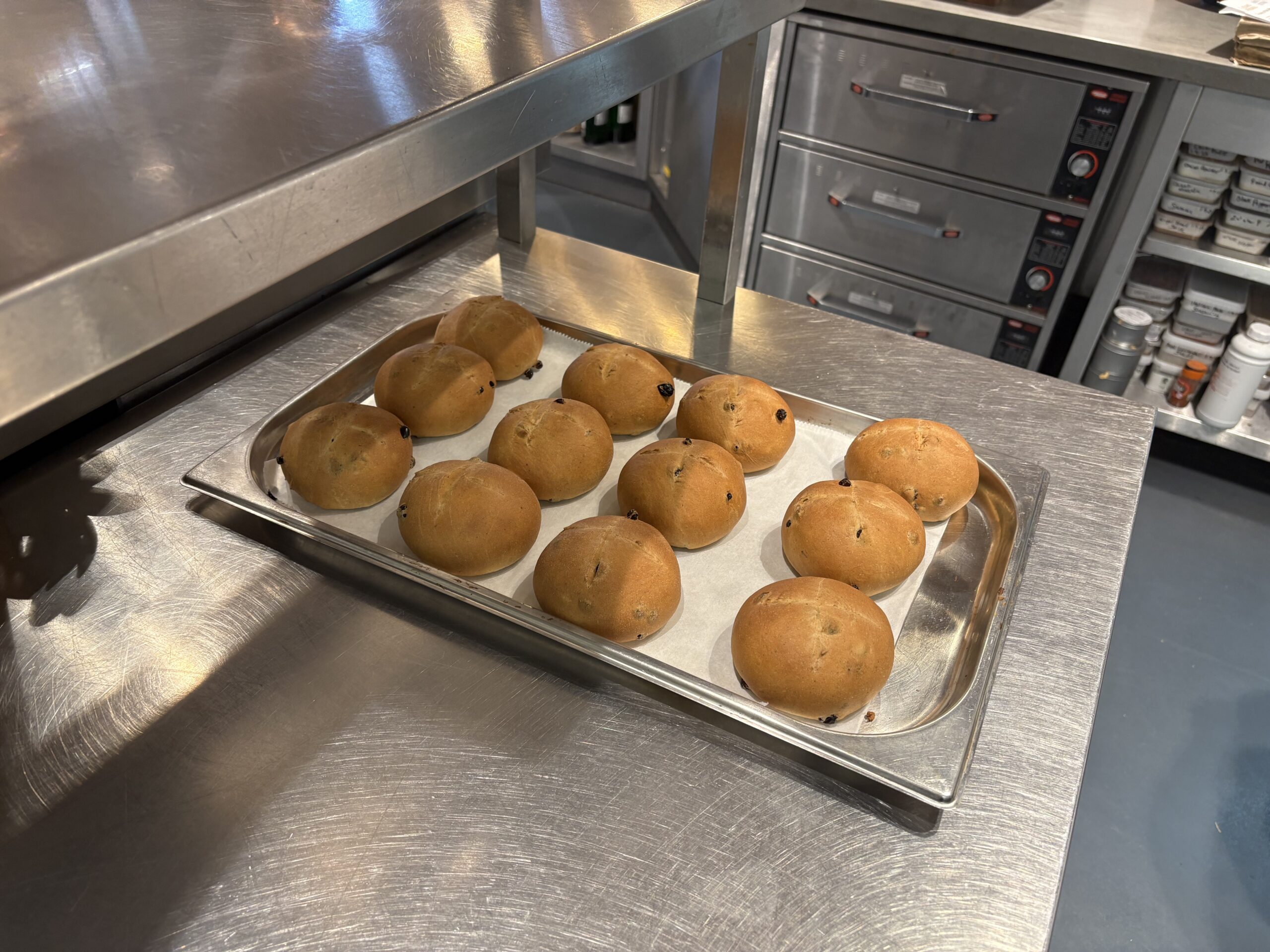
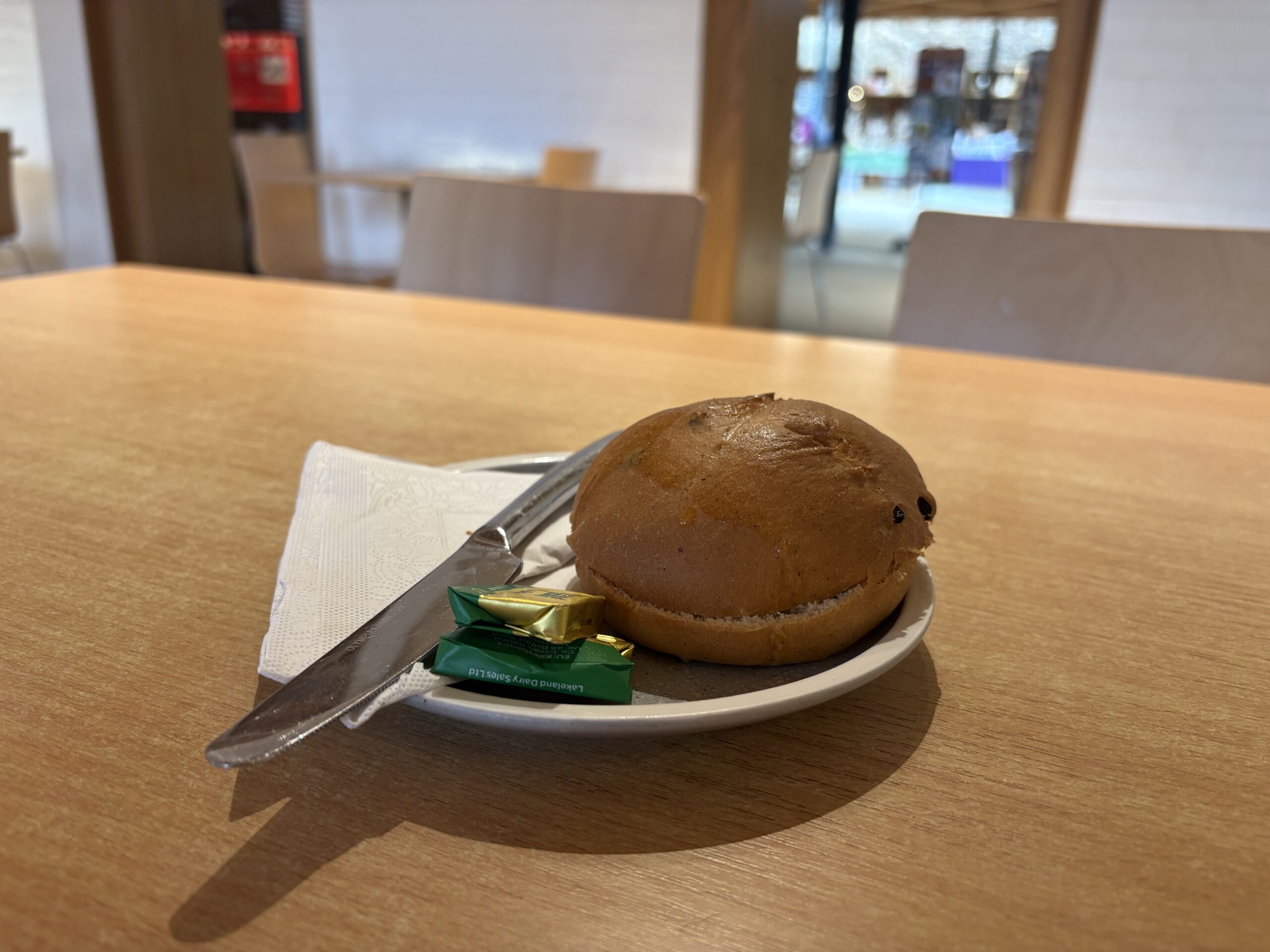
Sampling a bun straight from the oven, dripping with plenty of butter (something our medieval ancestors would have been denied), the immediate impression is how light and fluffy it is in comparison to the Hot Cross variety. It’s not cloying and as it’s much less dense toasting doesn’t really seem an option.
Also obvious is the lack of dried fruit and spices like cinnamon and nutmeg, but there’s a hint of saltiness and a sweet balance of other flavours which never overpower the bread itself.
If you haven’t tried one before, then definitely make the effort to pop along in the next couple of weeks, otherwise you’ll be waiting until next year for the opportunity.