06 Nov 2026
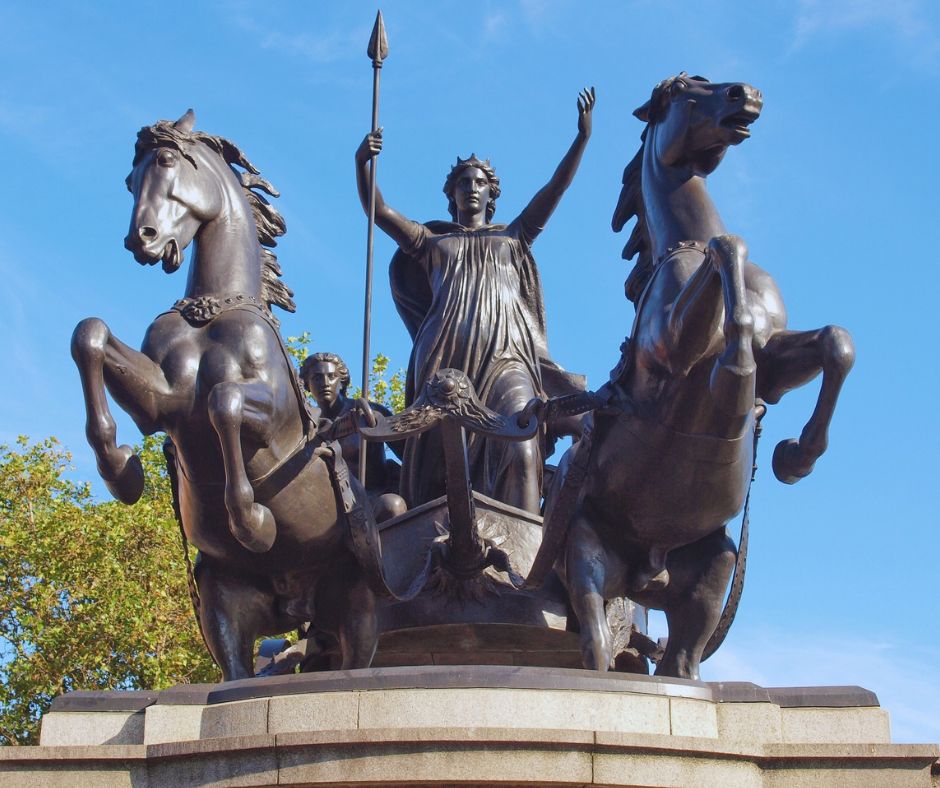
The site of Iceni warrior queen Boudicca’s final battle against the Romans may be under Park Street roundabout – adding new weight to concerns about preserving archaeology during the ongoing improvement works.
That’s the theory mooted by acclaimed archaeologist Duncan Mackay in his book Echolands, a major investigation into the long-disputed location of the “Great Battle” where the Roman Governor Suetonius Paulinus finally crushed the Celtic rebellion.
And where does he place the epicentre of this bloody battle, which left around 80,000 Britons dead? Park Street roundabout.
As revealed by the St Albans Times, intensive digging took place at the roundabout as part of the access requirements for developer SEGRO’s strategic rail freight depot on nearby Radlett Aerodrome.
But the A5183 is the route of the original Watling Street Roman road – perhaps the most important of its kind in Roman Britain – which exits the roundabout to the left of St Julian’s Hill where a new filter lane is being built.
No archaeological assessment or effort to record and protect any historical remains has taken place either prior to the works or while they were underway, and any materials excavated from trenches dug at the site have been removed and disposed of. But although there is great value in preserving evidence of the Roman road, the site itself may actually be of much greater archaeological significance.
In AD 60, after razing Camulodunum (Colchester) and Londinium (London), Boudicca’s alliance of Celtic tribes moved up Watling Street toward Verulamium, destroying a Belgic farmstead en route just south of Park Street roundabout, remains of which were found by archaeologists in 1943.
This destruction served as an immediate warning to the people of Verulamium before the town itself was sacked and burned to the ground by Boudicca’s forces, an event recorded by the Roman historian Tacitus in his Annals.
But what happened next? Duncan explains how he came to place the following battle on the outskirts of St Albans.
“The problem you have with Boudicca’s battlefield is that so many people have put forward candidate sites – it needs nothing more than for somebody to point to somewhere and say it could have happened here.
“As an archaeologist, I’ve followed the evidence Boudicca’s revolt as closely as possible, and that led me to St Albans, and it didn’t go any further.
“Tacitus, who is really the only proper source, says that after the fall of Verulamium the Roman general Paulinus ‘broke off delay and fought a battle’. That makes it sound like it should be pretty close, because Tacitus gives a really detailed reconstruction of this war.
“He has Boudicca coming down from Norfolk to sack Colchester, he has her going from Colchester to London, he has the Roman general coming from Anglesey and he has the Ninth Legion getting involved. So it’s pretty detailed.
“But then once Verulamium is destroyed, he just cuts dead and says ‘they broke off delay and fought a battle’, so I don’t understand how if could have carried on for another couple of weeks somewhere else. For me it was always going to be Verulamium-based.
“And lo and behold, right next to Verulamium you have a shallow valley coming down from Windridge Farm to the Park Street roundabout, and at the head of that valley they discovered a load of Roman sling bullets.
“Tying that all together, you’ve got a perfect storm of the archaeological evidence that a battle took place in the right period, and you’ve got the historical evidence that she was in that landscape, so I think Boudicca’s final battle is the strongest candidate for the finds at Windridge.
“And if that’s the case, then putting her battle as Tacitus describes it onto the local landscape would put Park Street roundabout as the absolute epicentre of Boudicca’s army before they head up that valley.”
What significance would the site have been in the conflict?
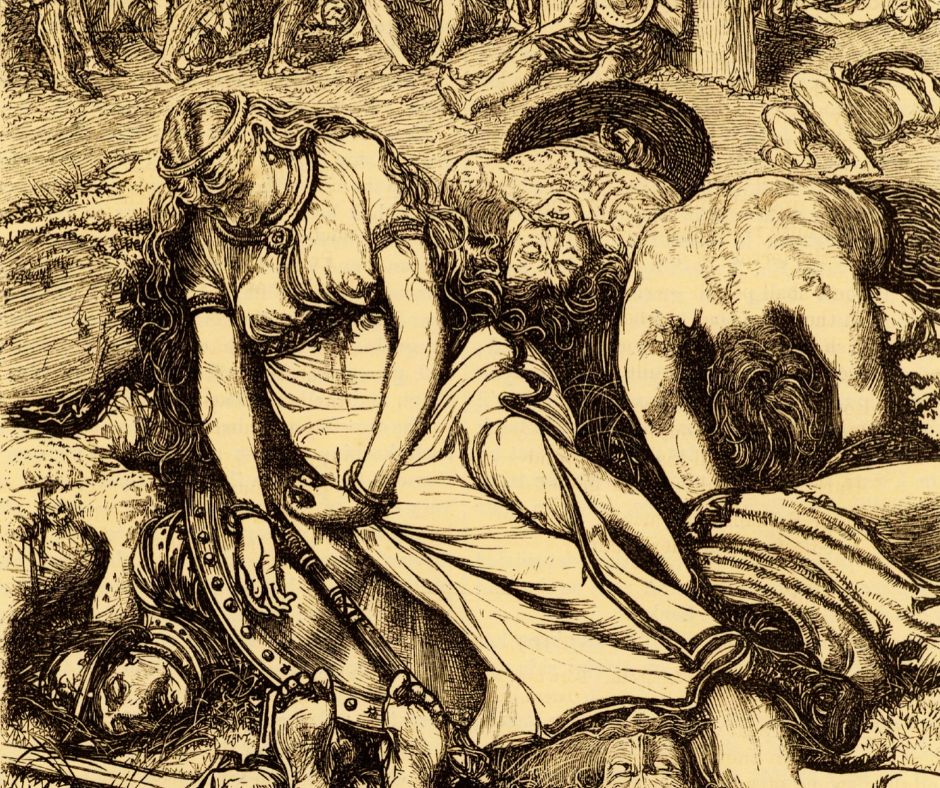
“It would have been a huge sprawling camp. Tacitus says that the entire British army, tens of thousands of people – the army and all of its civilians, non-combatants and baggage animals – were massacred. Part of the reason for that is they were caught amongst their own baggage train, which arced around the back of them.
“The roundabout would have been at the absolute centre of that camp, whjch would have probably stretched all the way up to St Julian’s and the River Ver. The attack would have started at the roundabout and gone straight up that valley up the A414, up to Bedmond Lane and Windridge Farm, where the Roman army would have been.
“The Romans would have punched them back down that valley, and this great slaughter of as Tacitus says 80,000 dead, but we might comfortably halve that, would have been between the Park Street roundabout and the River Ver, that whole bit of land there.”
Would the roundabout site still have been of archaeological importance even if Boudicca’s Great Battle did not happen there?
“If we remove the battlefield scenario, you’ve still got one of the main arterial routes of Roman Britain going straight through the roundabout, and you’re on the edge of a major Roman town. So in that sense, yes, there could be any sort of archaeology there. You can’t second guess archaeology in that way, there could be anything.
“But battlefield artifacts are incredibly difficult to find, which makes Windridge Farm such an interesting site because these things are so rare, and by default Watling Street was such an important route and has a great historical significance.”
As an independent archaeologist, Duncan is cautious not to be drawn on the politics surrounding the Park Street roundabout and whether any proper archaeological assessment should have taken place.
However, he did offer an insight into what he would have liked to happen.
“If for the sake of argument we say Boudicca’s battle happened there, in a British context we’ve never really excavated a battlefield from that era, so we really don’t know what to expect.
“I think when it comes to any major groundworks across a suspected Roman battlefield or indeed close to a Roman town where we know there’s a lot of important Roman archaeology, I think it was a bit of a missed opportunity in terms of carrying out an assessment, whether that was exploratory trenches to assess the potential of the area, or a watching brief where archaeologists watch the work in progress.”