


03 Nov 2026
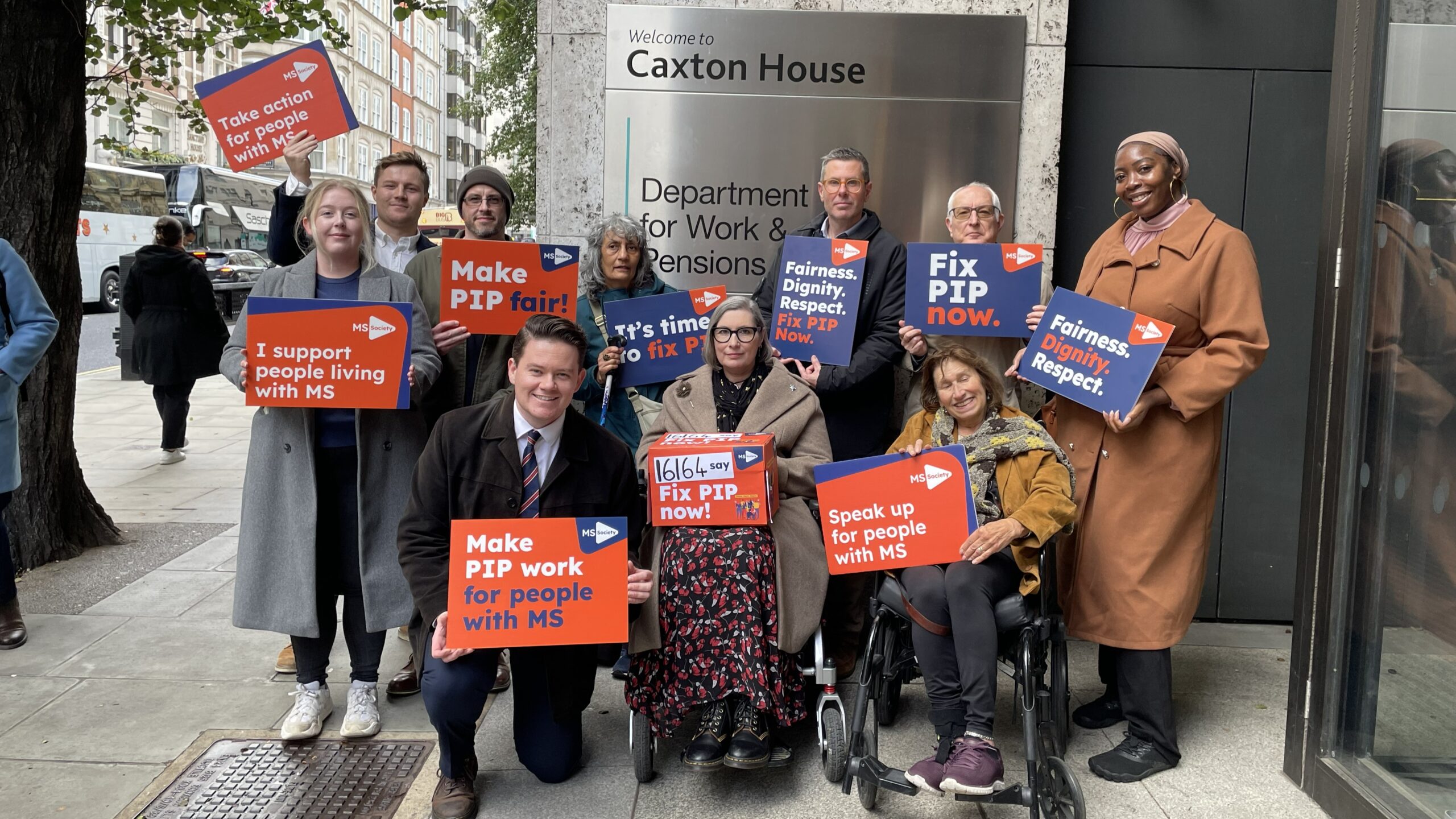
A 63-year-old St Albans campaigner who lives with progressive multiple sclerosis (MS) has delivered a petition signed by more 16,000 people calling on the Government to make Personal Independence Payment (PIP) fairer for people with the condition.
The petition was organised by the MS Society to coincide with the Government’s review into PIP, the Timms Review, which will be published later this month.
Indu Khurana, 63, worked closely with the charity to develop the campaign. She delivered the petition alongside Amy Winehouse’s mother, Janis Winehouse, who also lives with MS.
More than 150,000 people in the UK live with MS, including an estimated 2,600 in Hertfordshire alone. The condition affects the brain and spinal cord, impacting how people move, think and feel. Symptoms can fluctuate from day-to-day and are often invisible, but this is frequently not taken into account by the rigid PIP assessment criteria.
PIP is a non-means tested benefit, which helps disabled people live independently and manage the extra costs of being disabled. For someone with MS, this could include paying for carers to help them get dressed or a mobility aid so they can leave the house. Claimants are required to go through a rigorous assessment process to qualify for support, and are then reassessed every few years.
Indu was diagnosed with MS in 2017 and first applied for PIP a couple of years later. The benefit helps her pay for practical support with tasks she would otherwise struggle to manage, including a cleaner once a week and gardening help every fortnight.
It also helps with the cost of specialist equipment, such as adapted tin openers, a computer mouse, and even pens that can be held comfortably enough for writing with compromised dexterity or sensation, along with therapies like reflexology which help the nerves to remain alive and activated to varying degrees.
Indu was initially awarded the standard rate of PIP. But a few years ago decided to reapply for the higher rate, as her mobility issues and fatigue were increasing. Instead of receiving more support, Indu was reassessed and told that her PIP would be removed entirely.
Indu, who works as a psychotherapist, says: “My experience of the PIP assessment process was traumatic. For a long time, I was hesitant to ask for a reassessment because I was worried about losing the support I already had – and that was exactly what ended up happening.
“It did not make sense to me that the decision would be based only on what I had shared during the reassessment, without taking into account everything that had already been documented. Eventually the decision was overturned and my PIP resumed at the lower level. Now I am too afraid to reapply.
“In my experience, there is a lack of understanding among assessors about MS and how the condition affects people. I also feel that invisible symptoms, particularly fatigue, are not taken seriously enough. Fatigue is one of the most disabling aspects of MS, yet it can be difficult to prove because it is not always visible to other people. The lack of empathy within the assessment process is both frustrating and exhausting.
“I often feel that if assessors had to live for just one week in my shoes, they would gain a much better understanding of the realities of the condition.”
The MS Society petition calls on the UK Government to:
- Embed the PIP system with fairness, dignity and respect – Introduce new core principles that embed fairness, dignity, respect, consistency and transparency across every stage of the process.
- Fix how fluctuating and invisible symptoms are assessed – Introduce a flexible, person-centred approach that captures the reality of living with fluctuating and invisible symptoms, like MS, and end inaccurate informal and assumed observations.
- Change how mobility is assessed – Scrap the arbitrary 20 metre rule and replace it with an assessment based on whether and how people can complete essential daily tasks and live independently.
- End unnecessary reassessments – Offer lifetime awards as default for people living with long-term, progressive conditions like MS, replacing compulsory reassessments with light-touch check-ins and stopping reassessments for those on the highest awards.
Ross Barrett, senior policy manager at the MS Society, says: “Too often, an unfair and broken PIP process leaves people feeling unseen, unheard, demoralised, and forced to fight to be understood so they can access the support they are entitled to. When PIP fails, people face losing their independence and having to go without the essentials they need for daily life.
“More than 15,000 people have a strong message to send today – the Timms Review is our chance to fix PIP. The Government must continue to listen to disabled people and follow through in the final recommendations on their commitments to embed PIP with more fairness, dignity and respect.”
