


13 Oct 2026
Imagine not knowing whether you’re going to have enough money next month to feed your family, having to accept that you can’t put food on the table, and that you will need to seek help in order to keep your children from growing hungry.
Food insecurity is a growing issue in affluent St Albans, as more and more people are struggling to cope due to the ongoing cost of living crisis.
Although some of us are managing to weather soaring prices for food and fuel, others are starting to feel the pressure, something which seems hard to believe in the local authority area which research shows has the least hunger, struggle, or worry regarding food access in the country.
But despite these statistics, the team at St Albans Community Pantry (SACP) are noticing an increased number of users who would never previously have found themselves facing food insecurity, either through rising bills or lay-offs due to restricted budgets.
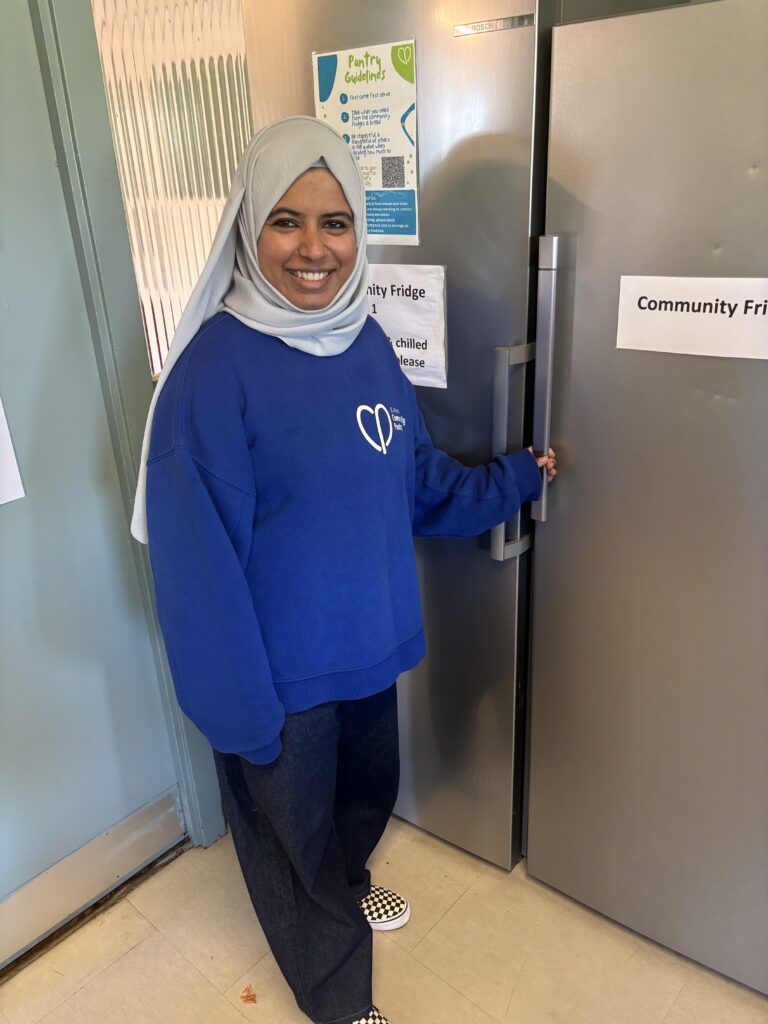
“These are people who just can’t make ends meet because everything is so expensive and their money isn’t going as far, and they are coming to us because they don’t know what’s going to happen next month,” explained founder Raihaanah Ahmed.
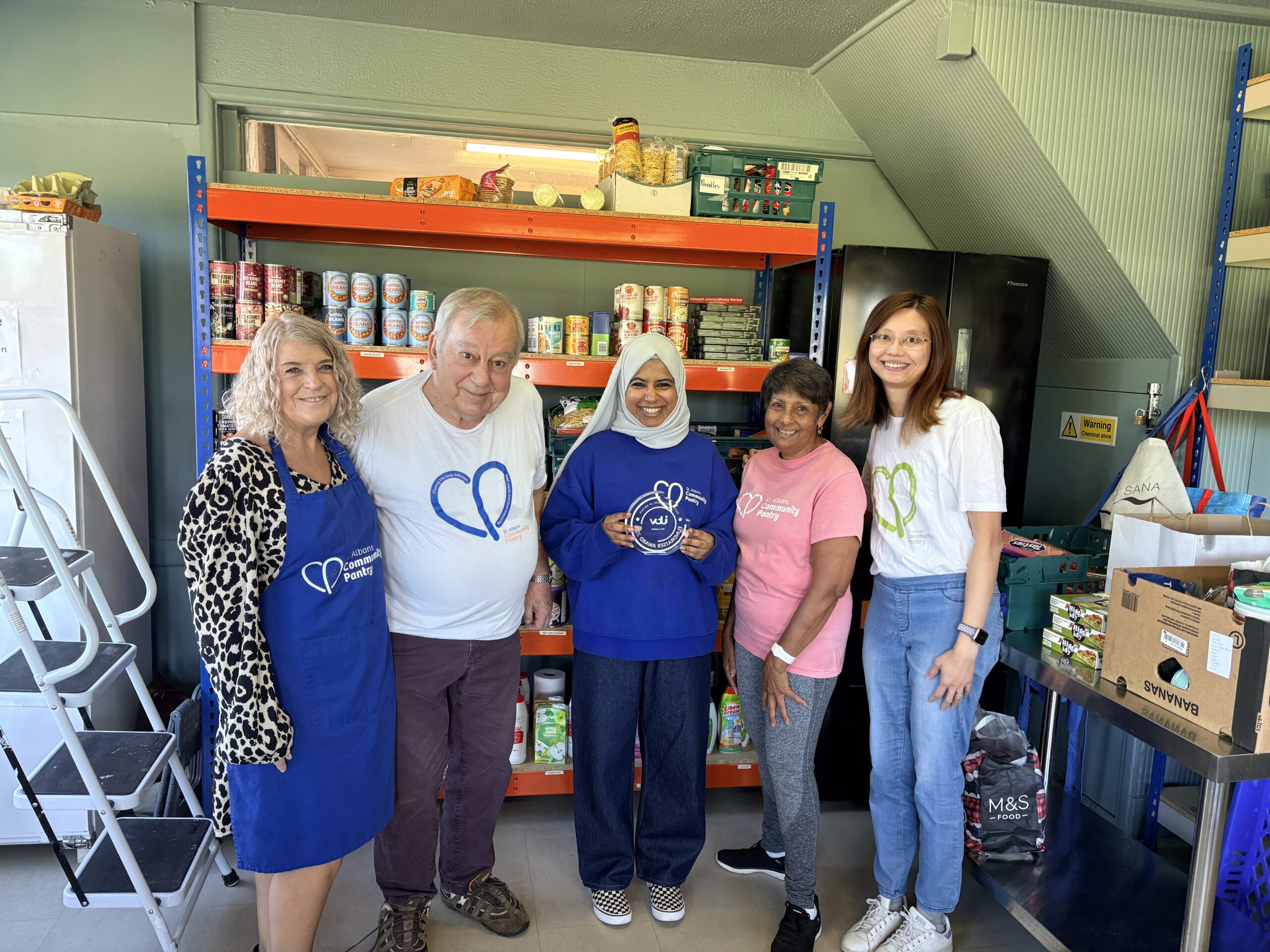
She recently had the opportunity to highlight the issues affecting ordinary people across the district when she was awarded a Pride of Britain award recognising the community-led charity’s work providing food aid to 600 people every week.
“This award was so important to us because it highlights that we’re here to help. It’s not a pat on the back we’re looking for, it’s awareness of what we do.
“It’s moving to think that someone’s gone the way to do nominate us and taken the time to do that. So, yeah. I’m deeply grateful for this award.”
Entirely volunteer run and led, the Pantry operates as a hybrid of a food bank and food rescue, collecting surplus food from supermarkets and local producers and then offering it out to those in need through a community fridge and bread pantry.
“When it comes to the climate crisis, it’s absolutely obvious that there is so much food that goes to waste, and so there are opportunities for us to do something quite serious in terms of helping protect our local environment and prevent food from going to landfill,” she explained.
In addition, it provides boxes of predominantly fresh produce delivered by DBS-checked volunteers on a weekly basis to The Pantry’s new home is in Spencer Hall, Sandridge, once a thriving community hub until the pandemic decimated its offering and it ended up neglected and disused.
Thanks to the support of local building firms and tradesmen, the facility was gutted and revamped to meet the Pantry’s demands, and now provides a bespoke home for the whole storage and distribution network.
The majority of food that comes into the community fridges is fresh, so the main components of their emergency food aid boxes are short-life with a high nutritional value, like organically grown fruit and vegetables or donations from suppliers.
“We do some really niche products come in, but we’ve also seen people give them a go, so it’s opening up their horizons and starting conversations about food. We add seasonal recipe cards because there might be items that not everybody has the knowledge of how to use, and everyone shares recipes on our WhatsApp group, which is about 900-strong at the moment. It’s just been a real sharing experience.”
What Raihaanah has also noticed has been a shift in attitudes towards using the Pantry, with the hesitancy which once surrounded users gradually dissipating.
“When I first started this I was asked to drop off food parcels in the dead of night, because people were just so worried that their neighbours would know they were in this condition.
“For me, the real eye opener was during lockdown when our primary school was putting out messages about being able to help certain families, and there were a handful of those who were in our year group, and I realised I’d been standing close to them in the playground but had no idea of the challenges they were facing.
“So all of it was a learning curve, and really shaped how we implement dignity, the power of choice, how everything is culturally competent. We tailor-make the emergency food boxes to people’s needs. It’s completely anonymous, we don’t ask any questions, we don’t ask people to complete lengthy forms, we don’t ask them to complete a register or anything – which makes funding really tricky as funders want to collect data – but it’s a caveat of any donation that we receive.
“We’re not going to collect information on people’s nationalities, ethnic backgrounds, age group, gender or whatever it is that funders often ask, and I think that’s why people enjoy coming along to the Pantry, because it doesn’t feel like another prescribed service.
“My feeling is that it’s a really critical step for people to step forward and say, ‘Look, I need help with food’, especially in this city. In St Albans, food insecurity is still very much hidden, but what we’ve done here is framed it in such a way that we don’t segregate those who have to work with those who don’t have jobs. The idea is that we’re all coming together to do our bit to ensure that food doesn’t get wasted, and that’s opened up a door to all those people who might have been struggling to come along to somewhere like this.
“I’m hoping that people feel like it’s as much theirs as ours.”
Health and safety regulations and environmental health guidelines restrict the Pantry from being able to do more in terms of wasted food and donations from the local community, but they would like to hear from anyone offering the capacity for them to collect at the end of the night as well as first thing in the morning, and as Raihaanah says, “there’s no such thing as enough volunteers”, so they’re always looking to get more people on board to help.
Receiving the Pride of Britain award on ITV News has been overwhelming, both in terms of raising their profile and encouraging people to get involved.
“We’ve been bombarded and it’s been really hard to keep on top of it, but we’re really, really grateful.”
Raihaanah – and by default the whole Pantry team – won the London and Home Counties category, beating other nominees from across the capital, and are now looking forward to the national finals later this year.
“I may have started this whole initiative, but I definitely could not do it alone, so it’s about the whole community.”
But despite the national recognition and major award, she says her real measure of success would be reducing the number of people who need help from their services.
“I’d like to see supermarkets and other food outlets only producing what we need and being really conscious about waste in that sense. I’d love not to have to support food banks within schools locally, and for me my ambition is for us to be closing our doors because we knew nobody locally needed us anymore.”

St Albans Community Pantry has received a £1,000 funding boost after being named the winner of The Oakleigh Community Grant.
The Pantry will use the money to support its work across St Albans which helps to provide cooked meals for 100 school-age children each week and emergency food support for around 300 people a week.
The grant was presented by St Albans Mayor Cllr Matt Fisher on Saturday at the community launch of The Oakleigh, Elysian Residences’ new countryside residence for people aged 65 and over in St Albans. The grant was created to support a local organisation making a difference in the city.
Raihaanah said: “We see first-hand how difficult things are for many people locally, particularly when household budgets are already stretched.
“This funding gives us some extra breathing space to keep responding when people need support, whether that is helping a parent through a difficult week or making sure an elderly gent has a proper meal.”
Gavin Stein, CEO at Elysian Residences, said: “We received so many brilliant applications from organisations doing such important work across St Albans, which made choosing a winner incredibly difficult. St Albans Community Pantry really stood out because of the direct, practical support it provides to local families and the number of people it is reaching week in, week out.
“The grant has also given us the opportunity to connect with some fantastic local groups beyond the winner, and we’re looking forward to building on those relationships and finding other ways to support the community around The Oakleigh.”
The Oakleigh comprises 126 apartments and cottages set within a 13-acre estate close to St Albans, alongside The Club House, which includes Botané restaurant and bar, a library and leisure facilities.
For more information, visit theoakleighstalbans.com.
