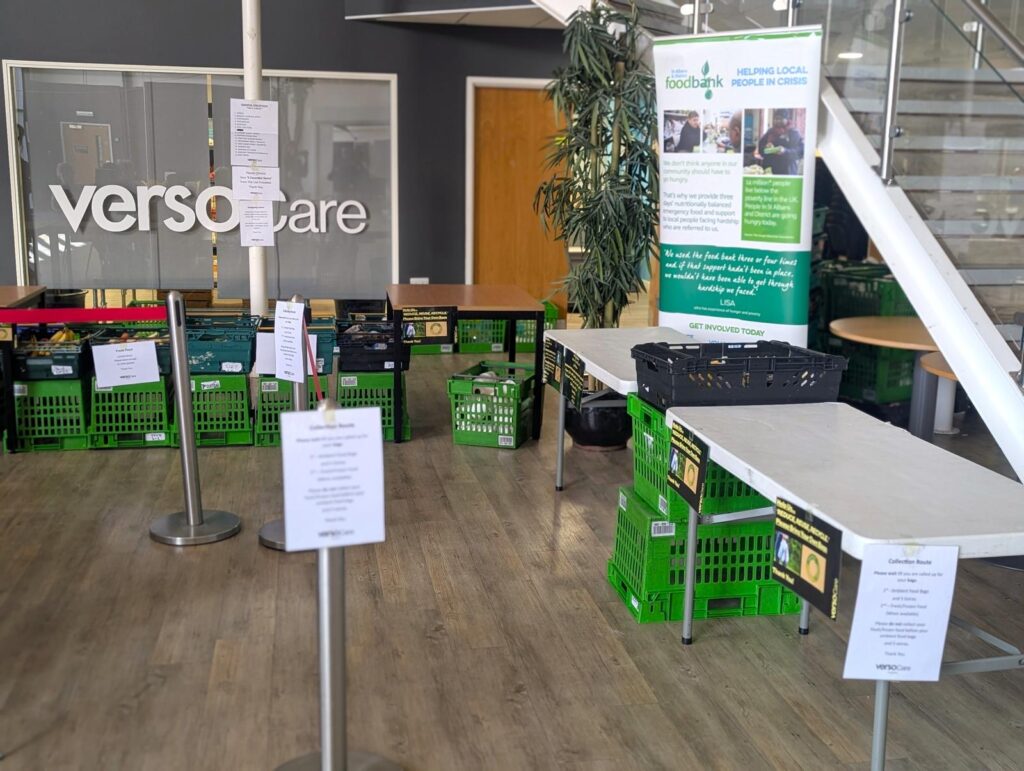
13 Oct 2026
While 700 prisoners across the UK were released from prison last week, a St Albans man was jailed for 13 weeks for stealing £138 worth of food from Aldi.
Not everybody who helps themselves to supermarket produce is doing so because they are hungry, but food poverty is real and is getting more common as the cost of living increases.
People on low incomes are feeling this the most with local charities concerned about the prevalence people not being able to afford food, and the impact on their wellbeing.
CEO of local community interest company LeeAnna’s Wish, social worker Shelley Hayles, said she’s not surprised that some people choose to steal: “It’s the easiest option of them all. Healthy and good food is expensive. Other things that need paying for like gas, electricity and travel can’t be stolen.”
She said she has recently noticed the challenge for parents who have to pay school bus fares. They are threatened with fines if their children don’t go school yet their families still have to eat:
“We are not even in the cold season yet and parents are struggling.”
Is it proportionate to imprison people for food theft?
“I don’t believe so. Not when people who rape, murder and eat babies are allowed to roam free and are actually being protected by the state. Just look at the Epstein files as evidence.”
Shelley said there isn’t enough healthy affordable food available for young people: “We have been feeding children at the [Cottonmill Cycling and Community] Centre for the last three years and the stories I hear are what make me this way.
“They include county lines, parents’ mental ill health and the struggles of children with substance-addicted adults in their lives.”
She said the impact of food poverty is far-reaching: “Food poverty places significant emotional and psychological pressure on parents and carers. When families are unable to afford sufficient food, parents can experience anxiety, stress, guilt, shame and emotional exhaustion as they struggle to meet their children’s basic needs.
“The constant worry about where the next meal will come from, alongside rising household bills and other financial pressures, can undermine wellbeing and leave parents feeling overwhelmed and isolated.”
Since 2020, the demand for foodbank support across the UK has highlighted the deepening inequality experienced by families. Trussell food banks distributed 3.12 million emergency food parcels in 2023/24, a 63 per cent increase compared with 2020.
Shelley added: “At the same time, wealth continues to be concentrated among those at the very top of society, widening the gap between families facing hardship and those benefiting from significant financial growth ie large corporate entities.
“For many families, this is no longer simply a cost-of-living crisis; it is a crisis of affordability, fairness and the distribution of wealth. Parents are being forced to make impossible choices between food, heating and other essential bills, while the profits generated within the food and retail sector raise important questions about affordability and corporate responsibility.
“Food banks are an essential response to an urgent need, providing immediate practical support and helping families maintain dignity and resilience during financially challenging times.”
LeeAnna’s Wish recognises that food poverty is not simply an issue of access to food; it is also an issue of dignity, emotional wellbeing, family resilience and community connection. Their foodbank days provide practical food support in a welcoming, non-judgemental environment, helping to reduce immediate financial pressure and the emotional burden associated with food insecurity.
“By providing access to essential food and connecting families with wider community support, we aim to help parents feel less isolated, more supported and better able to manage the challenges they face. This support can help strengthen family resilience, protect wellbeing and ensure that families do not have to face food insecurity alone.”
She said that evidence shows a relationship between food insecurity and poorer parental mental health, including symptoms of depression, anxiety and stress.
Food insecurity can also affect family relationships, as parents experience increased pressure to provide and protect their children: “They might experience feelings of guilt and shame, feeling they are failing as a parent or loss of confidence and self-worth.”
She said it is emotionally exhausting constantly trying to make ends meet and explained that persistent financial and food insecurity can contribute to low mood, hopelessness and a sense of overwhelm.
“Parents may feel they have no control over their circumstances, particularly when they are already dealing with poverty, debt, insecure employment, housing difficulties.”
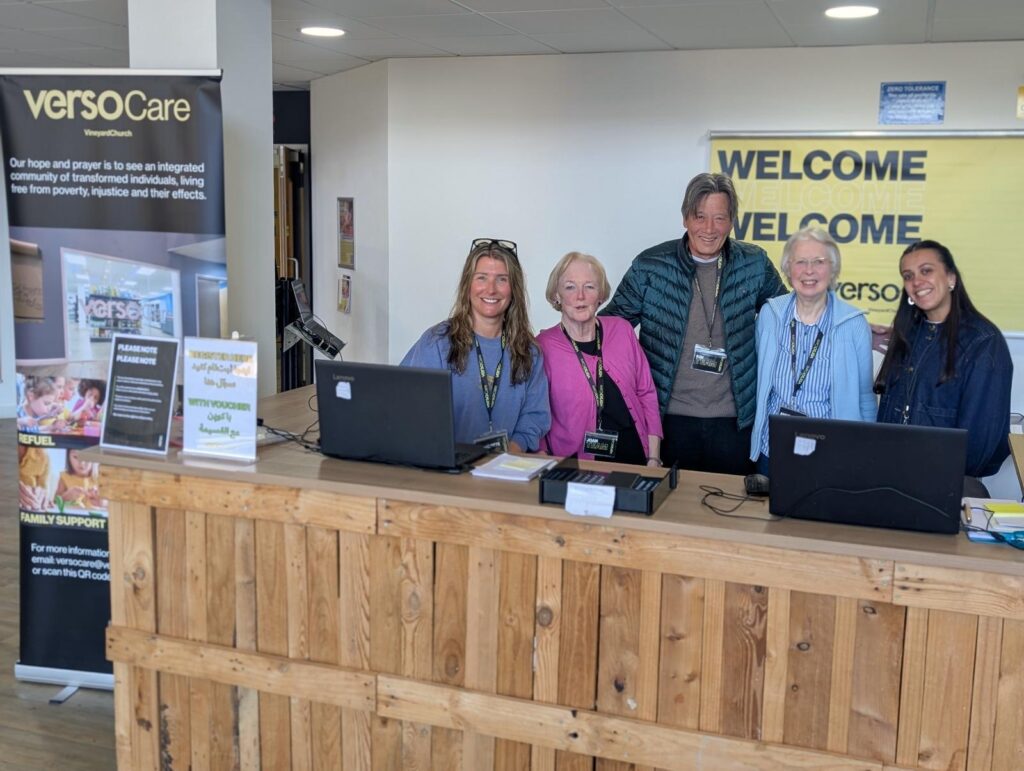
Sacha Kirsten, Verso Care manager at St Albans Verso Vineyard church, said they support approximately 90-150 households with food each month.
Why does she think food poverty still exists?
“In its simplest form, the rising cost of essentials is placing increasing pressure on household incomes.
“Once housing, energy and other essential living costs are covered, disposable income can be extremely limited, particularly where debt is also a factor.
“Food poverty is typically a symptom of wider underlying problems rather than the problem itself.”
She added that the underlying issues contributing to food poverty are complex and people become trapped in a cycle of addressing the immediate problem in front of them, making it much harder to focus on longer-term solutions.
“People can help by advocating for change – writing to their MP, supporting campaigns that address poverty and its causes – but also by connecting someone in immediate need with organisations that can help.
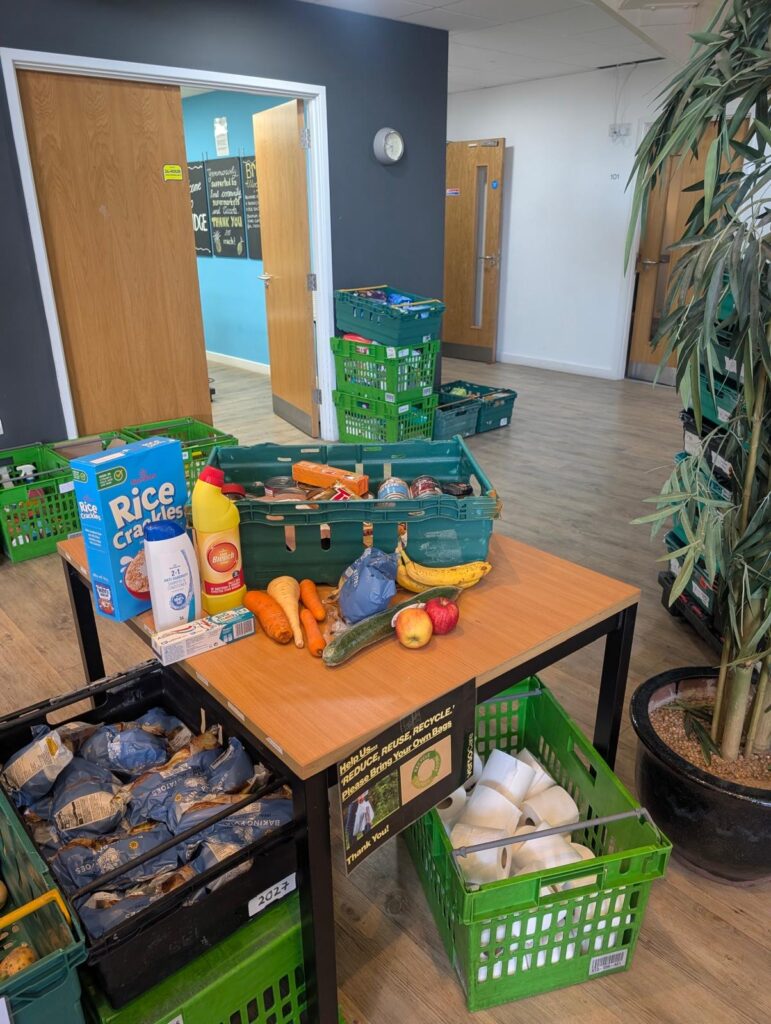
Foodbanks such as Verso Care and St Albans District Foodbank provide emergency food, but we also work collaboratively with other organisations to help people access support for some of the underlying issues that have brought them into food poverty in the first place.”
Sacha said: “The impact on wellbeing can be significant. The stress of not knowing how you will provide food for yourself or your family can take an emotional toll, particularly when it sits alongside other difficult circumstances.”
She said the feedback they receive shows that having a safe space to go to, where someone is welcomed without judgement and treated with dignity, can make a real difference. “Over time, this helps build trust and a sense of belonging during what can otherwise be an incredibly isolating and overwhelming period” she added.
“For us, it is about more than providing food. It is about seeing the person behind the immediate need and, where possible, helping them access wider support that can move them towards greater stability and independence.”
Daisy Cooper stressed that shoplifting – even for food – is not a victimless crime, no matter the circumstances: “For small shop owners and family businesses, it compounds the cost of living and the cost of doing business crises.
“Anybody who commits a crime, however big or small, should of course have to face the justice system.
“However, anybody locally who is genuinely struggling should know that food and financial support is available through the St Albans and District Food Bank, through Citizens Advice Bureau, and many other charities. I’d also encourage them to contact me without delay – my team and I will be able to signpost them to these and other relevant charities in the area.
“On food poverty more broadly, no one should be unable to afford the essentials they need to live. However, with the cost-of-living crisis raging on, many people are struggling to get by.
“Growing up in food poverty can leave its mark, both in terms of health and educational outcomes and people’s relationships with food.
“We Lib Dems are clear that the Government must act. We’ve campaigned for the expansion of free school meals, which resulted in the Government extending eligibility to every pupil whose parents or guardians receive Universal Credit, and we continue calling for this to be expanded to all low-income families.
“To tackle food bills and ensure good-quality food is affordable, we would also introduce a Good Food Law to support domestic food production – locally-grown healthy food – and reduce reliance on expensive food imports. The production of some of our most nourishing foods such as beans, fruit, vegetables, is stalling here in the UK as it’s no longer viable for farmers. This must change. By setting long-term targets for food security, production, and affordability, we can tackle food poverty head on and help to ensure that no one goes hungry.”