


20 Nov 2025
A newly formed parish council for central St Albans may not be eligible to automatically assume control over the Mayoralty or civic functions, council officers have warned.
Their findings are included in reports published ahead of tonight’s meeting of SADC’s strategy and resources committee looking at the outcome of the first phase of the Community Governance Review.
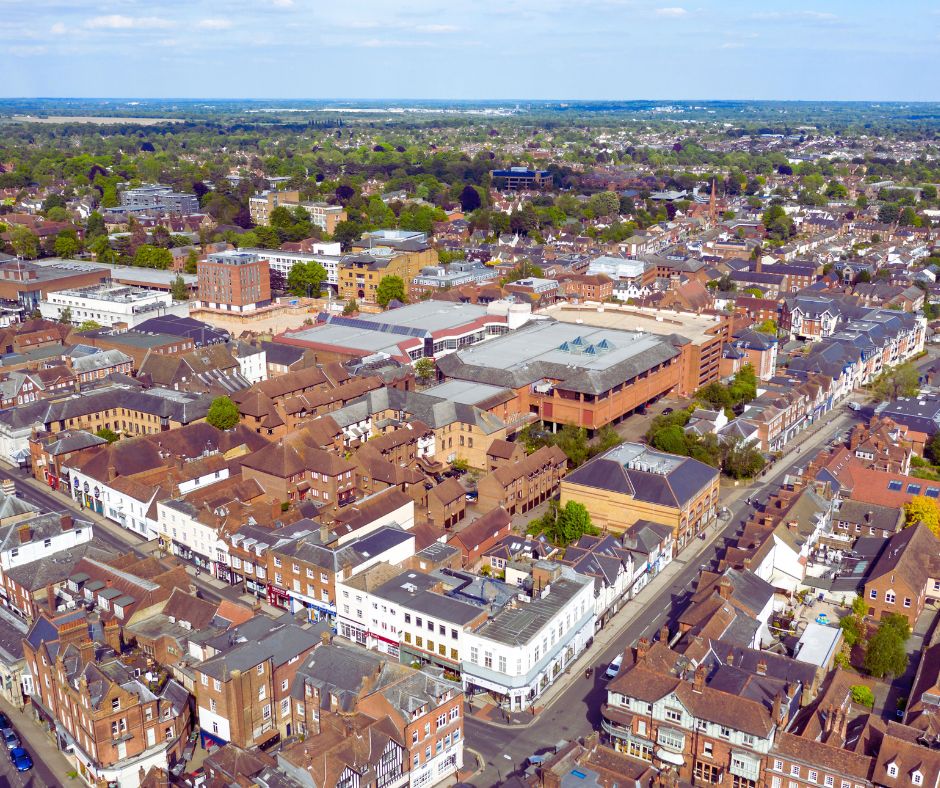
This asked whether there was an appetite among residents for the creation of a St Albans City Parish Council, covering 28,000 currently unparished households in Batchwood, Bernards Heath, Clarence, Cunningham, Hill End, Marshalswick West, Sopwell, St Peter’s and Verulam wards.
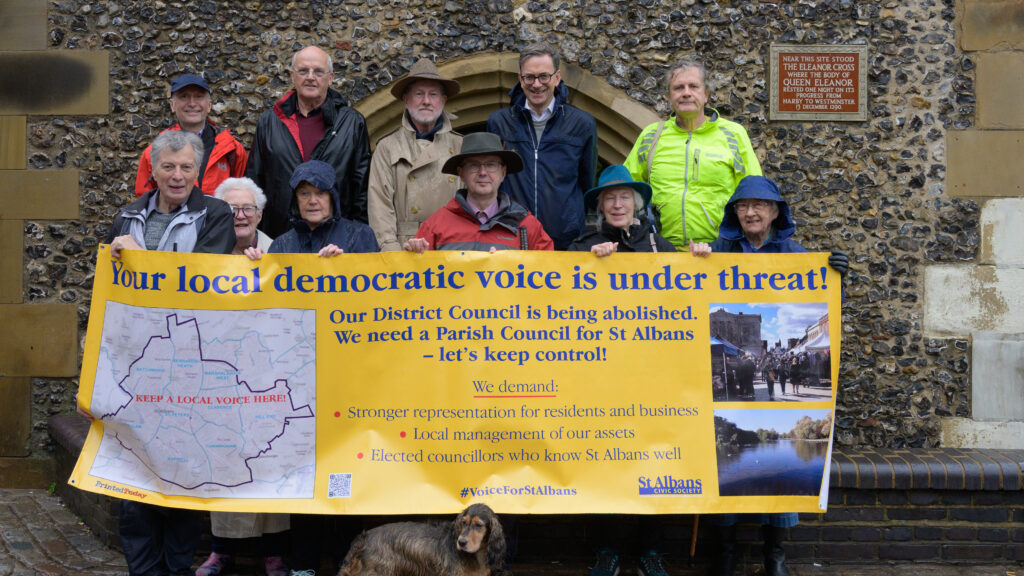
The CGR comes in the wake of the local government reorganisation initiative, which will replace HCC and SADC with two or more unitary authorities, and the fear is that without a parish council then the city will lose ownership of heritage assets as well as local representation.
The initial consultation phase saw 1,957 responses, many thanks to a concerted campaign by St Albans Civic Society and the St Albans Times to raise awareness of the issues surrounding CGR.
A petition was also submitted in relation to the Highfield area in which 233 signatories endorsed the statement “we support the creation of Highfield Parish Council for the area [Nightingale Lane to the west, Hill End Lane to the north, Hixberry Lane to the east, and the unparished area boundary to the south abutting Colney Heath Parish]”.
Officers have now recommended establishing a new parish council for the unparished area of central St Albans, while other proposals include abolishing Harpenden Rural Parish Council and absorbing it into Harpenden Town Council, increasing the number of London Colney Parish councillors from nine to 15 and amending the warding arrangements.
Legal advice has also been sought on whether the area covered by the Charters and Letters Patent of 1553, 1877 and 1974 – which established and developed the Mayoralty, granted the right to hold Wednesday and Saturday markets, and gave St Albans “city” status – would need to match the new parish area.
The report says: “The council has sought advice from the Ministry of Housing, Communities, and Local Government (MHCLG) and counsel from a barrister; however, some aspects remain inconclusive at present and clarity is being sought. Regardless of the outcome of the current Community Governance Review, MHCLG have committed to working SADC to ensure that the mayoralty and civic functions are preserved.
“This will form part of the work that is currently taking place around Local Government Reorganisation (LGR) in Hertfordshire and may involve a supplementary order which addresses the mayoralty and civic functions once the reorganisation order has been laid at the end of the LGR process…
“Further research is being undertaken to establish whether it is possible for the Charter to be amended to change the bounds of the city/charter area, if that is necessary to preserve the historic rights.”
The report said the creation of a unitary authority would require the transfer of St Albans’ historic market rights unless charter trustees are established before SADC is abolished.
These must be councillors in the relevant authority with responsibilities for their electoral ward, and may be transitional until a parish council is established. Their primary objective would be to maintain and promote the historic and ceremonial traditions for the area, and would cease to operate once parish councillors come into office.
Decisions regarding the name and style of a new parish council would need to be decided at a later point in time once the legal position regarding the use of the word “city” is conclusively determined.
It is recommended that for a parish with an electorate of the same size as that of unparished central St Albans (c48,500 as of last month), the recommended number of councillors is between 13 and 31, but officers have advised a figure of 25 based on provisional wards.
These are expected to broadly align with existing district wards to ensure each locality has its own sense of identity, and would include Batchwood, Bernards Heath, Clarence, Cunningham, Hill End, Marshalswick West, Sopwell, St Peter’s and Verulam.
The estimated costs of setting up a new parish council are estimated at £98,000 , with ongoing costs of an additional £285,000, meaning a parish precept of £13.96 per household. It is proposed that the first set of elections for parish councillors will be held on May 6 2027.
The report stated: “SADC will be responsible for some of the initial administrative tasks relating to setting up a new parish council. This would include appointing a Parish Clerk (and potentially other staff roles), finding appropriate office space for the parish council, identifying a suitable location for holding parish council meetings, and other consequential matters such as IT and equipment set up.”
Aside from any statutory transfer of allotments, it would be for SADC to decide which further assets, if any, to transfer to a new parish council, and details of these must form part of the reorganisation order published at the end of the CGR.
To establish whether there is widespread support for a new parish council in the unparished central area of St Albans, officers are proposing that a local poll should be undertaken in this area during the second consultation stage, although ultimately the final decision will be made by the council.
Mary Conneely, chair of St Albans Civic Society, responded to the report: “We were delighted with the positive results from the first stage consultation – it’’s clear that the vast majority of residents in the ‘unparished area’ support the creation of a parish council for central St Albans.
“We believe that the strategy and resources committee meeting on November 20 represents a defining moment in the future of our city, providing a significant opportunity for our elected representatives to demonstrate that they have the ability and foresight to do the right thing for the city.
“We firmly hope that all councillors, of whatever political persuasion, make the right decisions to enable a CGR stage two consultation that sets out proposals allowing residents to vote for options that are optimistic and ambitious about the full potential of St Albans.
“Also, after the end of the stage two consultation in February, we would like to see the establishment of a transitional committee of councillors and community representatives to consider options for asset transfers that cover more than allotments, and which set out an aspirational agenda for the city’s future, significant enough to make the difference in establishing a sustainable financial environment for the new parish council.”
With regards to the creation of a parish council for the Highfield area, officers said: “A parish council the size of Highfield would have relatively modest resources which would restrict the level of devolution of assets and services that could realistically occur. It is doubtful whether a parish council of this size would have the funds, and the necessary strategic leadership and local administration, to take on sizeable assets and/or services…
“To separate this area from the rest of the central area of St Albans by establishing a dedicated parish council for Highfield would potentially have a negative impact on the community cohesion which exists between Highfield and the rest of the urban centre of St Albans.”
But Highfield local Peter Cook, who led the campaign for a parish council in that part of the city, feels residents have spoken but have been ignored.
“Highfield was formed on the sites of Cell Barnes and Hill End hospitals over 25 years ago with Highfield Park formed at its heart giving clear physical boundaries. It is a well-established strong community as referenced in any estate agent brochures.
“Highfield’s response rate to the CGR was 385 per cent greater than the Civic Society’s city parish council campaign, but it seems Highfield not been listened to – why?”
He said of the 1,957 responses received to the first phase of consultation, 1,708 were generated by the Civic Society campaign, and 233 for Highfield with only three against, but the 233 are only registered as seven comments.
“Unfortunately, Highfield has never had a resident as a district councillor and it seems SADC’s political leadership is keen to continue that trend.
“Is its focus to support the soon to be redundant colleagues by producing opportunities for them to be new St Albans city ‘parish councillors’? There will be a downside for them as there are usually no paid allowances for parish councillors.
“Will the strategy and resources committee members put democracy first and allow Highfield residents their own parish council rather than being subsumed into the amorphous mass of St Albans city council?”
