01 Aug 2025
Environmental campaigner Dr Robert Wareing considers the challenges faced in trying to protect the Green Belt from being lost forever…
In just a few years time, a child will be asking their parents, “Mum, dad, what is ‘Green Belt’?” Because the concept will soon be long-forgotten, bulldozed and buried beneath concrete.
Fortunately, there are some efforts to preserve nature and wildlife, notably the current Hertfordshire Local Nature Recovery Strategy (LNRS), together with work by the Woodland Trust, other wildlife trusts and the persistence of local environmental campaign groups. But are these positive efforts to preserve nature and wildlife rather like lone voices in the wilderness?
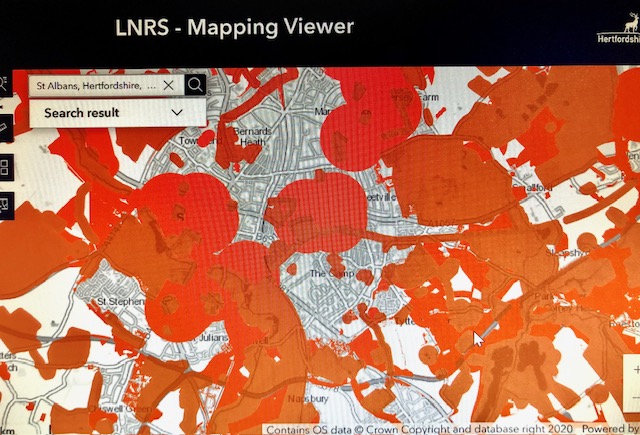
In this piece, I describe the LNRS (and show a map of designated areas across St Albans identified of “Particular Importance for Biodiversity”), explain who is involved and how the strategy is evolving and provide a link to respond to their consultation.
I then argue that these efforts of the LNRS (and others, especially active local environmental campaigners) to preserve nature and wildlife – despite the massive amount of work involved – are swimming against the tide. The relentless political and economic tide flowing against these preservation efforts, is too strong, it’s overwhelming.
The worst – and potentially – strongest threat to nature is the Planning and Infrastructure Bill currently going through Parliament. I will explain how this Bill turns on its head the long-established and key principle that has effectively protected the Green Belt and nature for decades.
Starting with the positive. Local Nature Recovery Strategies (LNRSs) are a new, England-wide approach to targeting nature recovery that are legally required by the Environment Act 2021
The Hertfordshire LNRS sets out the vision for a resilient network for nature across Hertfordshire, by connecting, enhancing and creating places for wildlife, so that nature can thrive.
It maps where the most important actions to help nature recover are needed covering all of Hertfordshire. The LNRS does this by addressing three main questions:
- What do we need to do to help nature recover?
- How should we do this?
- Where should we do this?
To create a robust and accurate LNRS, the Hertfordshire Nature Recovery Partnership has consulted and worked with a range of different people: environmental and ecological experts, farmers, land owners and managers, district and borough councils and other organisations, groups and individuals.
Importantly, the LNRS now want to hear your thoughts on what needs to be done to help nature recover in Hertfordshire. The published vision is a first draft, feedback is invited and consultation continues until September – you can respond to it here.
LNRS state: “Nature is under threat like never before. Global wildlife populations have decreased by 73% on average since 1970. This global trend is mirrored in the UK which is one of the most nature-depleted countries in the world due to historic and ongoing declines.
“Nature is not only important for its own sake, but is crucial for providing a range of services that we rely on. For instance, nature provides clean air and water, flood mitigation and pollinators play a key role in food production. Having access to natural green space provides a place to support our mental and physical wellbeing. Restoring nature plays an important role in tackling climate change through locking up carbon in plants and soils. Nature is essential for our economy, for our health and wellbeing and for reducing the impacts of climate change.”
Moving now to the negative. I am not alone in having profound concerns about the Planning and Infrastructure Bill. In its current form, environmental safeguards will be lost or seriously compromised and nature, wildlife and woodland will suffer.
The Government is proposing a new Planning and Infrastructure Bill which is intended to be a win-win for the economy and nature but, as it stands, nature will be the loser. The Bill weakens – or completely removes – the protections that keep our most sensitive wildlife, ancient trees and woods safe. The potential consequences for communities are huge.
Every day, millions of people benefit from the trees and green spaces that surround us. They protect us from floods, help cool our cities, support our mental health, and give vital homes to wildlife. But Part 3 of this Bill could put all that at risk.
The Bill introduces Environmental Delivery Plans (EDPs) for new developments. Whilst these could be an opportunity to do more for nature recovery, the plans will be funded by a new one-off charge on developers to ‘compensate’ for damage to the environment, enabling them to offset harm or destruction of wildlife, woods and trees by contributing to nature-friendly plans in the wider area.
The Woodland Trust have major concerns.
- The Bill turns on its head the long-established and key principle that has effectively protected the Green Belt and nature for decades, which is that developers have been required to avoid harming nature first, rather than trying to fix the damage later. This Bill reverses that. Builders will pay into a Nature Recovery Fund (or Levy) to “put right” (or compensate) for the damage they cause. But the funding and process is, at best, opaque.
- Proposals may allow development to go ahead without proper environmental checks. How can you protect what you don’t assess?
- It’s madness! At a time people are being encouraged to promote nature and plant trees for all the right environmental reasons, this Bill is completely contradicting this. Especially relating to trees which take many years to mature and only minutes to destroy.
- According to a report in The Guardian (June 4) at least two dozen Labour MPs are poised to rebel over this Bill because it threatens protected habitats and wildlife.
- It doesn’t guarantee that these plans will do more good than harm, leaving nature at further risk of decline.
We need urgent reassurance that nature, wildlife, trees and woods – and the many benefits they provide to people – will remain protected.
Please make time to write to Daisy Cooper MP urging her to take steps to ensure this Bill doesn’t roll back vital environmental safeguards.
Examples across St Albans of the tsunami of pressure in order to build a strong economy and homes for people are all around us, pulverising all opposition and having the inevitable consequence of destroying precious, if not invaluable nature and wildlife.
In last week’s edition of the St Albans Times, Shirani St Ledger McCarthy, spokesperson for Keep Chiswell Green, clearly described the reasons they are devastated by the perverse decision by the High Court to allow very significant developments to go ahead.
She stated: “The impact of this judgement is catastrophic for Chiswell Green. It gives the go-ahead to Cala Homes and to Headlands Way to build 721 new houses on prime Green Belt to the north and south of Chiswell Green Lane, but will also result in permission being given for a further 1,300 new houses to be built on Green Belt between Noke Lane and Ragged Hall Lane.
“Within five years, Chiswell Green will be three times its current size, but with most of the development resulting from speculative development, there will be minimal infrastructure improvements to support the existing and increased population.”
A second campaign group, CLASH, have been fighting long and hard to protect the area around Woolams Playing Field. Another residential development here by Cala Homes will result in 1,150 homes.
In a previous article in this newspaper, spokesperson Gee Smedley has explained why this should not happen; how it destroys a key part of the ‘Heartwood Halo’, the ecological corridor supporting the forest within; and it is located on a dangerously vulnerable flood plain.
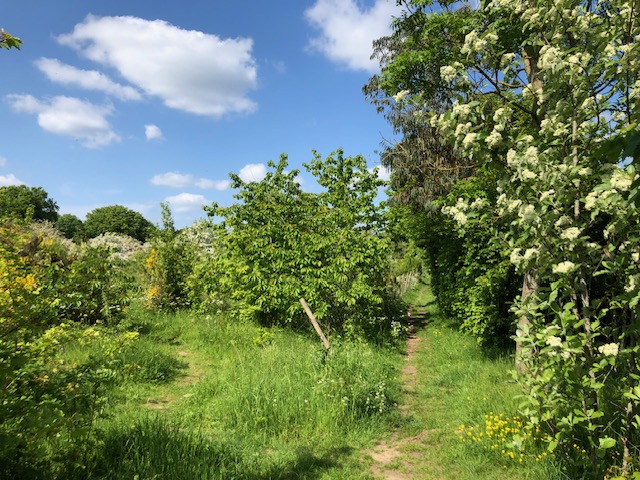
To paint the full picture, I should briefly mention some of the many housing developments planned or anticipated including:
In application:
Noke Side: 27 homes;
The Noke Hotel: 166 residential units plus a 90 bed care home;
Park Street: 95;
Frogmore: 50.
And anticipated:
Butterfly World: 265;
Rose Farm: 240;
Lye Lane: 500;
Noke Farm Cherry Hill: 45.
The cumulative impact of all this seems to have slipped under the radar. Especially taken together with the massive impact the rail freight terminal will have on all our lives.
I will describe just one further example in detail to illustrate ‘perverse logic in extremis’: the way logic and common sense can be bulldozed as though they do not exist in the dash to build.
This example is Bedmond Lane Wildlife Meadow which is now earmarked for development…
It flies in the face of the Government’s Environmental Improvement Plan 2023 which states: “We will halt the decline in our biodiversity so we can achieve thriving plants and wildlife… This goal is at the apex of our plan: all other goals will help us to achieve it.”
The Government Plan has a commitment “to restore or create more than 500,000 hectares of wildlife rich habitat by 2042.” This plan was presented to Parliament pursuant to Section 10(6) of the Environment Act 2021.
Councillors for Verulam Ward have stood shoulder to shoulder with local residents in fighting to preserve Bedmond Lane Wildlife Meadow over many years as a succession of planning applications to develop the land have been made by the owners. They are therefore fully aware of the biodiversity and value of this meadow. So much so, it was designated as an Asset of Community Value by SADC. Local councillors’ knowledge and experience should have corrected the obvious error by officers of its inclusion in the draft Local Plan.
The proposal that Bedmond Lane Wildlife Meadow has potential for development also contravenes local independent expert opinion from Herts and Middlesex Wildlife Trust (HMWT).
The inclusion of the meadow was criticised by Matt Dodds, the then-Planning and Biodiversity Manager at HMWT. In a scathing and compelling submission, based on irrefutable evidence, he stated the inclusion of Bedmond Lane Wildlife Meadow, St Albans: “… is totally in conflict with national planning policy… To include this site would be to contradict the policies of the Local Plan and make a mockery of any environmental credentials the council professes to promote… It could not be more precious for people and wildlife … It is the epitome of the sort of site that should be protected in accordance with local and national policy”.
In their submission, HMWT state: “The site itself is a species rich mosaic of habitats including species rich chalk grassland, species rich neutral grassland and scrub. It easily qualifies as a local wildlife site and the only reason that it is not designated as such is because the landowner permission required to designate the site has not been given. It is a de-facto Local Wildlife Site and should be considered as such.”
In their scathing criticism HMWT go on to say: “By including this site, the council will be endorsing the destruction of green infrastructure for its role in combating climate change and supporting biodiversity, along with its value for recreation, health and wellbeing, and landscape value.”
And they conclude: “Categorically, for the avoidance of doubt, it will not be possible to deliver biodiversity net gain on this site, within the proposed plans.”
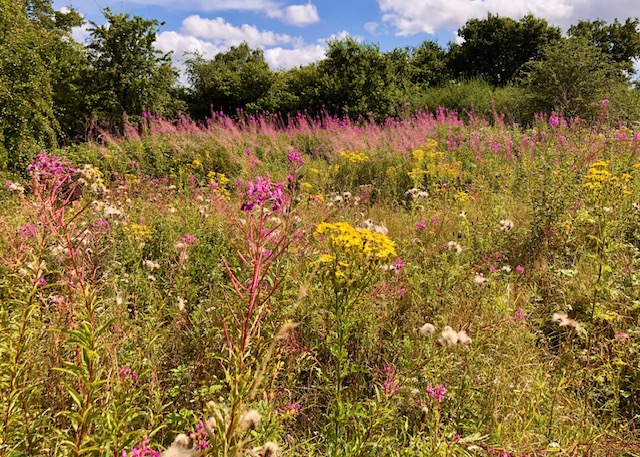
Bedmond Lane Wildlife Meadow and its environs are not just an ordinary field in the Green Belt. It is extraordinary and very special both in terms of supporting a massive range of biodiversity and – as a former Asset of Community Value – the extent of its use by many local people for outdoor recreational, social, sporting and educational activities over five decades.
This wildflower and wildlife meadow has, in previous planning applications, been described by the Hertfordshire & Middlesex Wildlife Trust (HMWT) as “unique in St Albans and of significant ecological value and importance”. It is one of the very rare examples of a true natural wildflower and wildlife meadow that remain in this county.
The meadow is also recognised by the Hertfordshire County Council ecologist as “floristically rich” and “supporting a sufficiently diverse range of plants to meet Local Wildlife Site status”.
The diversity and rich mosaic of different forms of life this meadow sustains is huge and is entirely the work of nature on a neglected piece of land. It includes many mature oak trees (some with TPOs), an area of ancient woodland affectionately known locally as “the Oak Cathedral”, a range of other trees including field maple and hazel, together with a number of spinneys formed mainly of blackthorn and hawthorn.
The meadow has a spectacular and vast array of self-seeded flora in the species rich grassland. Prominent amongst them are English bluebells, wild daffodils, snowdrops, rosebay willowherbs, oxeye daisies, primroses, poppies, forget-me-nots, violets, tansy, oregano, centaurea-montana and bird’s-foot trefoil. There are a profusion of pyramidal orchids and bee orchids, and even the exceptionally rare and protected species of lizard Orchid can be found there. I have identified more than 250 different wildflowers and have been unable to identify at least as many again.
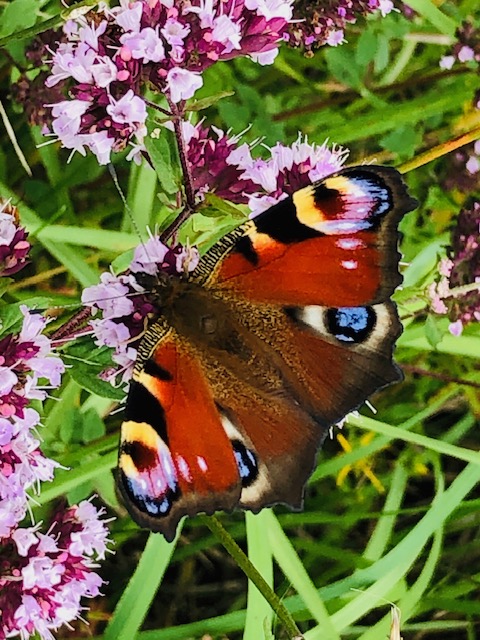
These trees and beautiful wildflowers share this precious space together with an incredible range of wildlife. It is home to many creatures great and small. There is a variety of fauna (including badgers, deer, foxes, squirrels, hedgehogs, rabbits, mice, voles … and rats!), many species of insects (especially butterflies and bees), a large range of birds (from red kites, kestrels and owls to robins) and lots and lots – an infinite number – of invertebrates.
The meadow also welcomes many occasional visitors: pheasants and partridges seek sanctuary from the Gorhambury Estate shoot; and herons, ducks and geese fly in from nearby Verulamium Park.
The beauty and life of this wildlife meadow is like an ecological kaleidoscope, constantly changing through the seasons. It is unbelievably wonderful and its value to the environment is immense.
This time last year, I submitted a detailed case – supported with extensive photographic evidence – for Bedmond Lane Wildlife Meadow to be included in the Hertfordshire Local Nature Recovery Strategy.
And there is some very good news. It is most gratifying to see much of Bedmond Lane Wildlife Meadow is identified as an Area of Particular Importance for Biodiversity (APIB), plus another smaller section recognised as an Area that Could become of Particular Importance for Biodiversity (ACIB).
However, I am not confident it will materially affect the decision to develop it.
In conclusion, I reiterate all these efforts of the LNRS and others, especially those of local environmental campaigners, to preserve nature and wildlife – despite the massive amount of work involved – are swimming against the tide. The political and economic tide flowing against these preservation efforts, is too strong, it’s overwhelming.
It seems to me that it is more of a tsunami: irresistible, relentless pressure in order to build a strong economy and homes for people. But the inevitable consequence is to destroy precious, if not invaluable nature and wildlife.
Everyone needs nature.
People need homes. So does wildlife.
And, above all, the world needs wildlife to continue to exist.
So just how can mum and dad reply to their child’s question?