25 Oct 2024
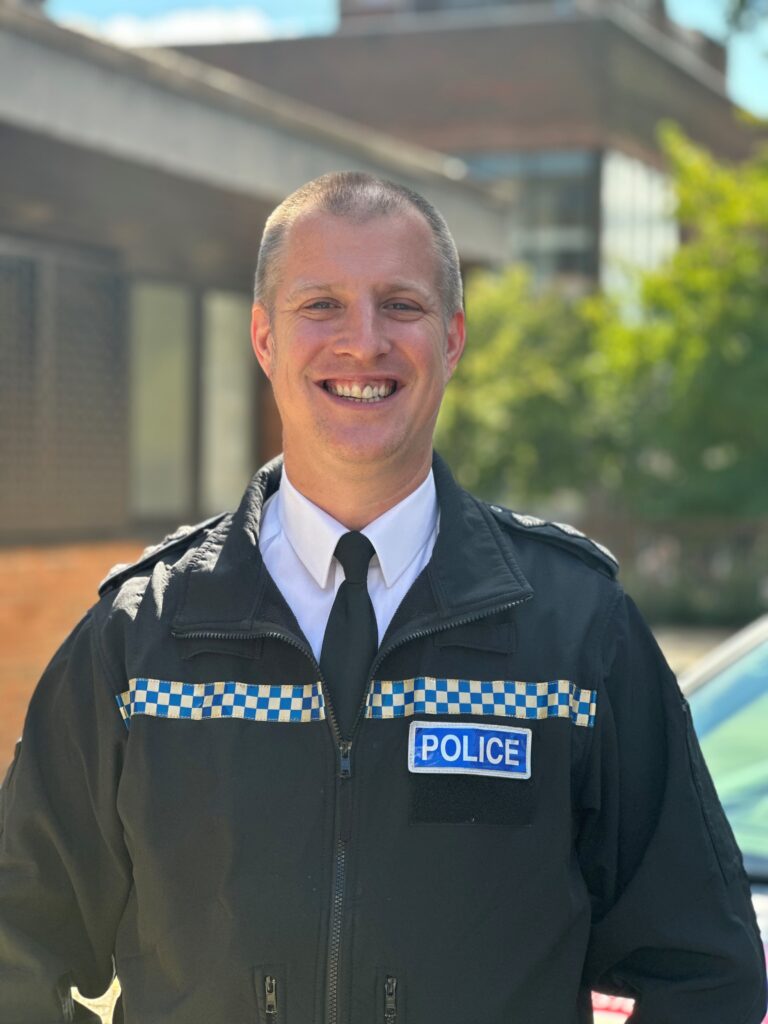
Over the past few months St Albans has witnessed one of the most protracted periods of proactive policing in recent years, as Chief Inspector Martin Turpin celebrates his first year in the role with a string of successes.
Ch Insp Turpin leads around 150 officers and staff across three Safer Neighbourhood teams (St Albans, Harpenden and London Colney), the Local Crime Unit (who deal with a range of criminal investigations), five Intervention/Response teams (who respond to both emergency and non-emergency incidents), the Community Safety Unit, proactive Scorpion Team and volunteers including Special Constables.
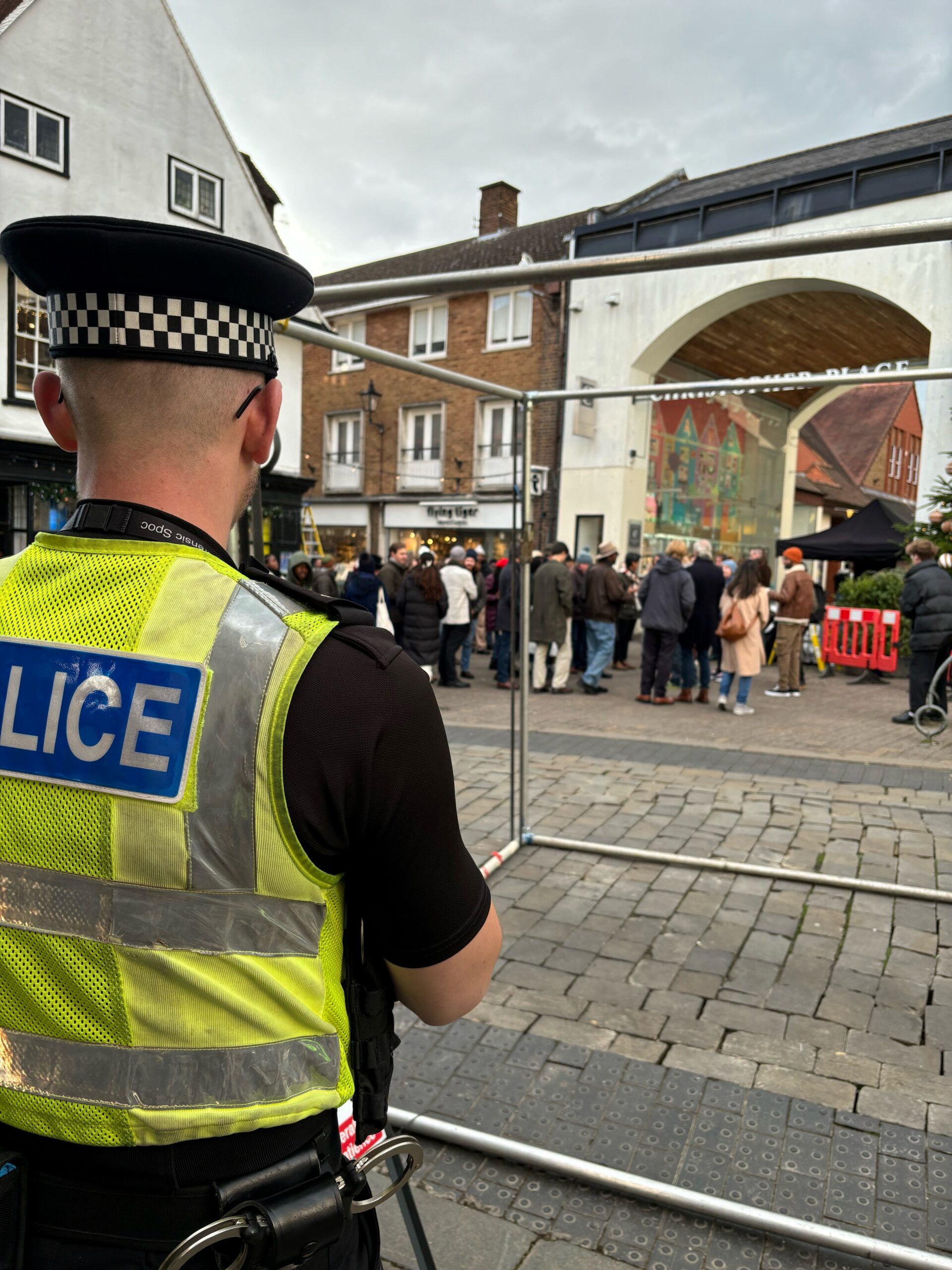
Launched in May, Operation Hotspot is a high-visibility initiative funded by the county’s Police and Crime Commissioner aimed at tackling violent crime and anti-social behaviour (ASB) in St Albans city centre.
Since then it has seen 800 extra hours of patrols, and resulted in an 11 per cent drop in those offences, with 14 arrests, 13 stop searches and two knives recovered. ASV legislation empowering officers to tackle street drinking and related behaviour has also been utilised 95 times, with five Community Protection Warnings (CPW) and three Community Protection Notices (CPN) issued as a result.
Ch Insp Turpin explained how the St Albans ASB area is the same as the city centre, which allows them to also incorporate street drinking and shoplifting into their focus.
“A lot of the antisocial behaviour is the street drinkers, who have started congregating in the city centre area over the last 12 to 18 months. What we try to do is make sure that whenever we have patrols out, or officers are going out for lunch or grabbing a coffee, we target those particular people causing that nuisance and take a positive approach.
“So rather than different officers challenging them at different times, we link it back in centrally so we can create a picture and then escalate through CPWs and CPNs before any arrest. The impact of that process is now starting to have an influence.
“It’s good to have the funding, because we can get people on overtime to do it where they’re not being distracted by other demands and it allows them to focus.
“Because the offenders realise it’s not just a telling-off, it’s actually escalating, they’re being more discreet, moving to different areas or being displaced. When we do move them on, the Neighbourhood Policing Teams pick it up, but because they’re not congregating in as many numbers it’s not causing as much of a concern.”
The other big concern for the St Albans policing team is shoplifting in the city centre.
“Nationally, there has been a huge increase in shoplifting. Part of that is it’s seen as an easier target for organised crime, whereas with video doorbells and Neighbourhood Watch it’s easier to catch offenders for burglaries and vehicle crime and they get tougher sentences.
“I think that’s pushed more people into the shoplifting arena, and because it’s part of the national agenda at the moment, I think shops are more inclined to report it, which has pushed the figures up.
“St Albans has the highest shoplifting figures in Hertfordshire at the moment, and there are several reasons for that.
“We’re on the train line into Luton and London, which means it’s easy for people outside the city to jump on the train, come in and do what they’re going to do and go back out again.
“We’ve also got the London Colney area, where we get a lot of organised crime going round the M25 jumping off at different locations and carrying out bulk shoplifting.
“We’ve now started a shoplifting team, building up to and including the Christmas period, where we’re going to target those key offenders and key locations.
“We’ve already got our Neighbourhood Policing Teams working with the six most vulnerable shops – for want of a better word – and we’re linking up with their security and their managers so when they do see offences, they come in to us and are better dealt with.
“I’m hoping the shoplifting team’s going to be brilliant and it’s going to have a real impact.
“They’re going to be doing proactive work targeting our key offenders, covert patrols, overt patrols, linking in with our other teams, so it’s not just going to be that small team, they’re going to be coordinating everything and bringing other teams in to do some really good work.
“The challenge for us will be the perception of it, because we’re going to identify more offences, we’re going to pick up more people, we’re going to be more available to the shops, so our figures are actually going to go up, but what hopefully we’re going to try and do is capture a lot more people, and rather than offences with nobody at the end of it, it’ll be taking our main players out and in the long run reducing those figures, if that makes sense.”
As it transpired, the recent Safer Business Action Week saw a dedicated team of plain clothed and high-visibility officers working with security staff at shops in St Albans city centre, Colney Fields shopping centre in London Colney and local shops including the Co-op in Cell Barnes Lane.
Six arrests for shoplifting and other offences were made over the course of the first week.
Prior to the launch of this team, St Albans police have already been working closely alongside the BID (Business Improvement District) and SADC on making sure they are not dealing with shoplifting offences in isolation, but developing a wider strategy.
“Can we look at banning orders for multiple shops? What can we do to actually publicise the fact that convicted shoplifters are in the area and how we can share that information within the confines of the law?
“We’re looking at Criminal Behaviour Orders, we’re working with probation to see whether we can get shoplifters banned from a certain area when they’re released from prison.
“For example, it they live in Luton and have no reason to come to Hertfordshire, can we put conditions in place to prevent them coming here if they’re released early from prison?
“I would argue that seven or eight people are probably responsible for 50-60 per cent of shopliftings, so it’s trying to find different ways of attacking the problem rather than putting offenders before the courts for individual offences, because then you’re never going to get the sentence you want.
“We’ve got to try and show that pattern of behaviour and look at different options to try and maximise the impact of what we’re trying to achieve.”
Any acquisitive crime like shoplifting also does not take place in isolation, he explained.
“A lot of our challenges is that offenders are often people with drug addictions and they don’t restrict themselves to shopliftings, they trying door handles and cars at night. Anything that’s low-level crime but provides volume opportunities to get easy cash to fund their habit.
“One of our sergeants in Harpenden has been doing a lot of work around vehicle interference and crimes.
“We’ve been going out in the evenings, trying door handles and actively letting people know if their doors are open and what the impact would be, and trying to raise public awareness as a result.”
One of the issues being pushed by new Herts Police and Crime Commissioner Jonathan Ash-Edwards is the illegal use of electric scooters, something which is prevalent in St Albans city centre and roads.
“It’s a national challenge,” said Ch Insp Turpin, “and I’ve taken some advice. I’m not an expert, but my understanding is that with an e-scooter, if the power is over a certain level, they actually need a driving licence, and I’m fairly sure that they can’t get insurance through the general insurance brokers, because they won’t insure them.
“The challenge for my officers is seeing them at the right time to actually do something about it. If we get reports of e-scooter use we will look into it, but it’s trying to evidence the fact that it’s over a certain power, it’s causing that antisocial behaviour, officers are there and we can identify the person riding it.
“I’m hoping for some legislative support at some stage to make our job easier in tackling that. It’s a fairly new thing, and I think it takes a little bit of time for legislation to catch up.
“In the meantime we’re trying to educate parents and say, don’t buy these things because you have to have the landowner’s permission to ride them on private land. What happens when they go out into the public arena, bump into somebody and cause them to be to hurt? They’re responsible for that.”
As well as issues in the city centre, Ch Insp Turpin also oversees the proactive Scorpion team, which deals with any targeted and covert work.
“We do not have a significant drugs issue here compared to other parts of the county, but we have a very good Scorpion Team who carry out warrants all the time to disrupt any operations we are aware of.
“We’ve had some really good results lately, but unfortunately everything is circular, and every time we take someone out, there’s going to be somebody else who wants to fill that void. The important thing for us is to make sure we keep on top of it and don’t rest on our laurels.”
One of their recent successes is reducing burglaries by 10 per cent since last year, on the back of three or four good years previously.
“The challenge for us is we’re now coming into the darker periods, so we’ve just looked at our burglary plan for the next three to six months and what that looks like and how by working with our partnership agencies we can ensure we maintain that low level of crime.”
This year’s burglary campaign is Operation Guardian, which involves various different teams across St Albans, Harpenden and London Colney.
“We’ve got our frontline teams going to key locations, we’re going to be doing some covert work with our Scorpion teams, targeting those people that we suspect are out doing the things they shouldn’t be doing, and then we’re making sure that our investigation teams have all the information they need that so that when we do get an offence, we can actually progress that to a point where we can actually take people off the street and stop them committing further offences.
“Then there’s the crime prevention element of it as well. We’ve got somebody going through what the Mos (modus operandi) are for our key areas so when our neighbourhood teams go out they understand what is happening in a specific area, for example it might be back doors and patio doors being tried, so when we’re speaking to people in that area we’re actually giving them the crime prevention advice that’s right for them, rather than just the generic stuff.”
One of the biggest game-changers in crime prevention and evidence gathering of recent years is the growth of video doorbells, a revolution which Ch Insp Turpin likens to the widespread introduction of CCTV some 20 years ago.
“This changed everything because all of a sudden, the level of evidence coming through was so much better. We could really place people in a place at a set time and there was no arguing and getting away from it. The video doorbell footage brings things to a whole new level.
“It’s made it much harder for people burgling houses or trying to commit offences on doorsteps. Every time we get an offence now, we’ve got footage from that house, from neighbours’ houses.
“I myself had a drink driver hit my car outside my house and it covered me for when I went outside and challenged the person. It just makes life really, really easy for members of the public who want to do the right thing.
“There are so many tools available to us now. The ANPR we’ve got in the area means when we have burglary offences, we can track vehicles coming in and out of the county. We can track what vehicles are with them at various different points. With the footage going into the cars, we can identify different people in the cars. The stuff that goes on by our investigation teams behind the scenes is absolutely immense. The things that can be done with phones and other things.
“There are so many good results that don’t get publicised. Some of it is down to the fact that we don’t want to give away all our tricks and techniques, but we’ve also advanced an awful lot in our crime detection over the last 15-20 years.
“We do everything we can to protect the public, prevent crime, and investigate crime as thoroughly as possible, but I would also encourage the public to take steps themselves to ensure their own safety.
“The thing that frustrates me is that every day I see so much good police work. I see officers going out dealing with stuff, I get the responses back from the members of the public, and I see the positive impact they have.
“The challenge is that a small minority of indiscretions stain that good work and take away from all the positive stuff that is done daily. It’s a shame that we focus sometimes on the negatives rather than all the positives.
“One example recently was the disorder on the back of Southport, and we put an awful lot of work into community engagement locally. Every Community Safety Partnership went out and linked in with perceived vulnerable people and communities to ensure they knew we were listening, understanding, and where necessary supporting.
“And although nothing happened in Hertfordshire the feedback we got afterwards around the level of engagement and support was overwhelming.”