


25 Oct 2025
The challenges faced by local retailers have unquestionably been compounded by SADC’s addition of on-street parking charges at many locations, but is that the whole picture? How are businesses actually faring in a location where parking remains free?
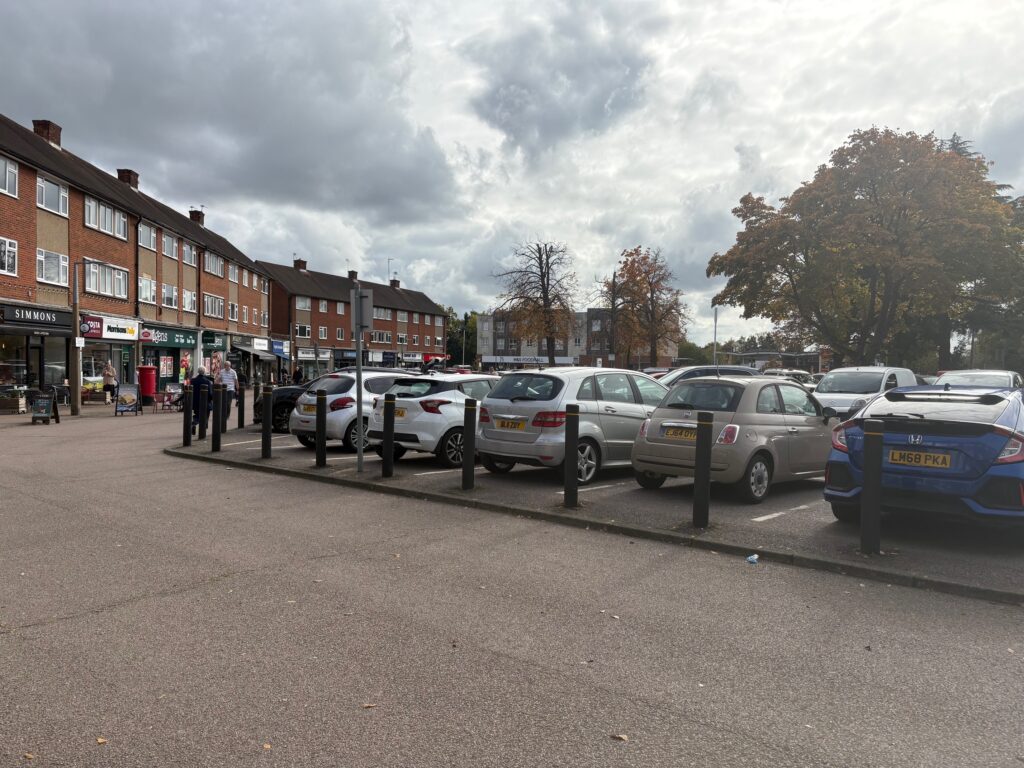
In a bid to provide a broader perspective on how traders are coping in the current economic climate, we visited The Quadrant in Marshalswick – where motorists can park for three hours without paying – to speak to a selection of different retailers about their own issues and what they would like to see in Chancellor Rachel Reeves’ autumn Budget.

Paul Murray has owned Phoenix Barber Co for 13 years. For around five years, the shop has transformed into a pop-up bar from Thursday to Saturday evenings.
“My business is really two under one roof – a barber shop and a bar – so any changes to VAT have a double impact for me.
“I’ve been running the barber shop for 13 years, and we’ve seen the business grow steadily over that time. We’re fully VAT registered and pay the full 20 per cent – in fact, £5 of every haircut goes straight to the Treasury. But fewer than 25 per cent of barber shops in the UK are VAT registered at all, and of those, only around 2 per cent pay VAT at the full 20 per cent rate. That feels deeply unfair.
“I’d like to see a more progressive, graduated VAT system applied to the hair and beauty industry. If the threshold were to be lowered – say to £30,000 – then VAT should only be paid on turnover above that figure, and it should start at a very low percentage, perhaps 5 per cent, rising gradually in increments up to 20 per cent. That would level the playing field, protect small businesses, and stop the current system from punishing success.

“As for the bar side – we’ve been open just over five years, and I honestly thought my ship had come in when we got the licence in 2020! It’s been a steep learning curve. Margins are far tighter than I expected, and I now see the bar more as an enjoyable add-on to the core business.
“Across the country we’re losing hundreds of pubs every year, and unless something changes that’s not going to stop. Cheap supermarket alcohol has made a night at the local an occasional treat rather than a habit, and the rise in National Insurance has been the final straw for many.
“I’d love to see a similar graduated VAT scheme introduced for small, independent bars, pubs and social clubs -starting at a low rate beyond a sensible threshold, then increasing in steps. That would protect small operators working on tight margins, while the big chains and large breweries could continue paying the full rate as they do now.
“I’m not asking for a VAT cut for myself on the barbering side – just a fairer playing field. But I’d very much welcome one for the bar!”
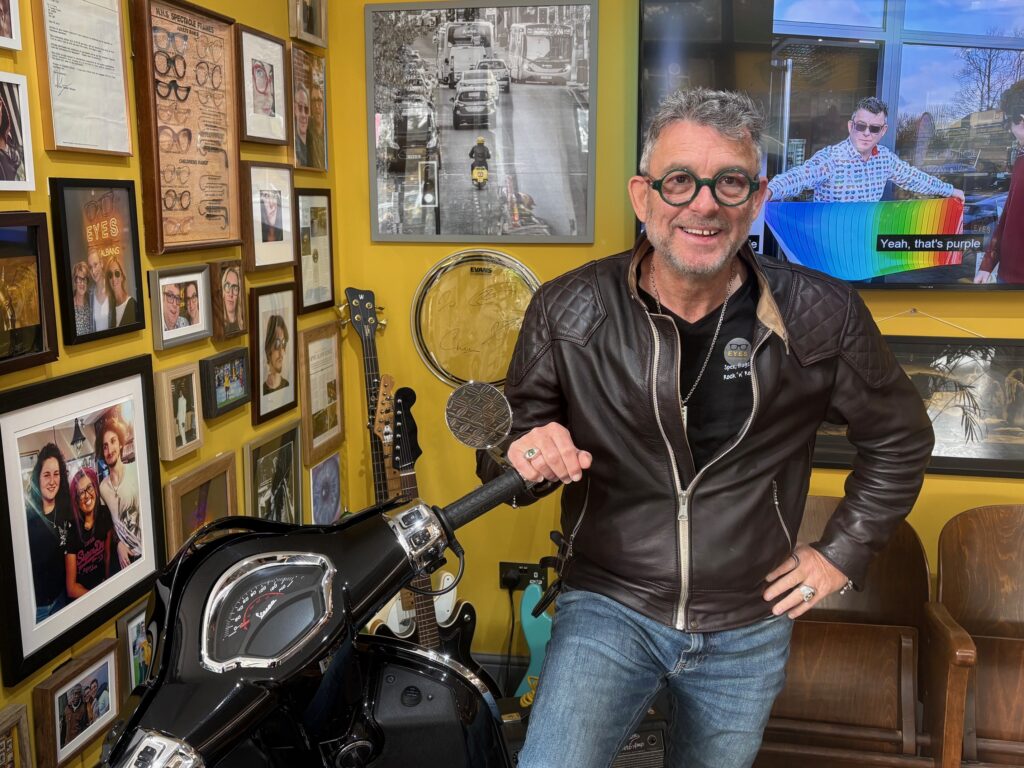
Just a few doors down from Phoenix is independent opticians EYES on St Albans, run by Jez Levy for the past seven years.
Pulling up a pew with Jez – one of the reconditioned church originals in the store – it’s not difficult to entice him into talking about the tough trading climate, even for “service” businesses like EYES where people have to come into the store to try on a product.
“There’s been a massive demise in high street shopping for various reasons. Clearly, because of the cost of living crisis, people are holding on to their money, but it’s the independent shops who are struggling the most, and need our support.
“That’s because of increases in business rates, or not having the business rate relief that we had previously, and the fact that taxes have gone up so it’s costing far more to employ staff. So retailers can’t afford the additional costs to run a business on the high street.”
He disputed the argument that parking is a contributory factor in this decline: “The primary driver for people not coming to high streets is because there’s been a demise of independent retailers. Out-of-town retail parks haven’t helped, but the biggest killer has been online shopping., as people actually look at items in high street shops and then go away and purchase them online, which is absolutely ludicrous.
“The other thing that people don’t realise is when you order online and collect in-store, the online retailer budget gets that sale, whereas if you buy something online and go to a retailer for a refund, the shop gets hit with that. All these various issues are killing the independents.
“The big boys will always survive, and if they don’t, they’ll close their whole chain, but the independent retailers are really, really suffering.
“What the independent retailer needs to do is give the consumer a little bit more of an experience instead of just taking money for an item, and that’s wahaat we’ve done here at EYES on St Albans,”
He said the financial pressures on independent businesses extends to The Quadrant in spite of the free parking, aand although the shopping centre seems relatively busy the overheads faced by retailers are now much higher.
“We’re all struggling because of the increased costs that this Government of ours is putting on us. Clearly they are not supporting the small, independent, retail businesses, they are backing the big boys out there by giving tax breaks to some of the big companies who are clearly funding them.”
So what would he like to see the Chancellor offering in her Budget come November 26?
“I’d like to see a change in how business rates are administered and charged, but I don’t think that’s on the cards yet, so I’d actually like to see a reduction in taxes for the masses, as they keep the economy going.
“For some reason, the current Government has not put two and two together and made four, as what they’re saying is that if we increases taxes on the masses then that will kick off the economy. That won’t happen. What will get the economy going is a few extra shekels in the pockets of the masses.”
Changes in business rates this year could finally see higher rates for businesses with larger premises, with smaller high street outlets retaining some discounts, and further changes relating to the rates paid on warehouses used by online businesses could be introduced in 2026.
Nadya Giffen, owner of the eponymous therapies premises in The Quadrant, said she has felt the double pinch of business rates and the increase in National Insurance, but customers are also being more mindful about where they spend their money.
“I think people are tightening their purses because there’s still so much uncertainty in the country, and with the Budget coming up, we’re all nervous.”
In an ideal world, she’d like to see business rates abolished, adding: “Obviously Rachel Reeves isn’t going to reverse what she’s done with National Insurance contributions, but she shouldn’t increase taxes as it would be catastrophic.
“The sad thing is that the Government is not forward-thinking. They’re trying to force people on welfare into jobs by cutting their welfare payments, but at the same time they’re squeezing businesses so they’re cutting staff or not taking on anyone new. It’s like they’re creating this pot of misery in the country.
“Businesses are closing because they can’t afford the high rates, high rents and high bills, and all the other hidden costs you don’t see.”
She said rising prices caused by soaring inflation have left people with less disposable income: “If you’re driving into town and paying £5 for parking, £3 for a coffee, it all adds up over the month. People want to support independents, but they can’t, so they’ll just click a button and get something delivered to their door.
“Customers are also looking at cutting their spending. Whereas before, they might have come in here maybe once or twice a month, they might come in every six weeks, which has a knock-on effect as clinicians aren’t busy so room rental goes down, and yet we have the same rent and business rates to pay, there’s no compensation, there’s no leeway.
“If you don’t pay your business rates one month, they’ll summon you to court. It makes no sense. There’s just no support for businesses.
“As far as I can see, what this Government has done since they came into power is attack independent businesses instead of thinking outside the box and being creative about where they raise funds.
“When they said in their manifesto they were going to reform business rates, we all thought they were going to reform them for the good, not the bad.
“I genuinely don’t think they know what they’re doing with the economy.
“They don’t listen, they’re not coming in here like you are and finding out what it is that impacts my business.”

