


03 Jun 2023
Following a recent article on why the Alban Arena might have had its day, Peter Denney and Geraint John offer an alternative view on why they believe the venue should be preserved.
After over 55 years of use, for an incredibly wide and highly successful variety of functions, several inappropriate alterations and inadequate maintenance, the Arena building is showing its age and clearly needs thorough and sensitive modernisation, including an extension backstage to cater for the changing demands of future modes of entertainment, improved accessibility and disability provision.
We firmly disagree with the contention that “its time has run out” and that it should be demolished. It is no more “at the end of its natural life” than other iconic buildings in this city, and elsewhere, similarly, misguidedly categorised as redundant and now, happily, transformed.
This significant 20th century building by architect Sir Frederick Gibberd, at the heart of our city, fully deserves the same care, consideration and attention as was given to the, similarly pivotal, 19th century Town Hall by architect George Smith, after its council functions were removed and it was decided to convert it to a museum and art gallery.
Let us also remember the Odyssey cinema, also threatened with demolition but then saved, redesigned, refitted internally and transformed into a wonderful asset to the life of the city thanks to the sterling efforts of many campaigners, including the Civic Society.
In addition to the issues of architectural and heritage interest here, there is the current, paramount matter of sustainability highlighted by COP26 conference, where there was widespread agreement, since emphasised most recently by the Royal Institute of British Architects, of the mantra “do not demolish, never remove, always add, transform and re-use”. The sobering fact is that the built environment is responsible for 40 per cent of global energy related carbon emissions, and uses 50 per cent of all materials extracted from the Earth.
Half of a building’s whole life cycle emissions come, not from its operational functions but from embodied carbon. Demolition is itself a polluting issue. So let the Arena stand, but thoroughly transform and re-use it.
In this context it is clear that the contention in the previous article that “the costs of refurbishment were certainly going to be higher than knocking it down and rebuilding” does not bear scrutiny. Studies elsewhere have clearly shown that such a process can cost at least twice as much as the most thorough refurbishment.
Also of relevance is the key role that the Arena has played in the life of this community, as well as being an outstanding commercial success.

In discussions with the management team around the 50th anniversary of the building they cited “the flexible nature of the seating and up-to-date production facilities…
which enabled them to cater for a wide range of users”, as the reason for that success.
And, in the booklet published to celebrate that 50th anniversary, (still available at the Arena itself as well as in the shop at the Museum + Art Gallery and especially commendable for the insight it gives into the Arena’s history as a multi-purpose venue and the extensive range of activities it has hosted over the years), which states: “Today the Alban Arena is a thriving local venue that continues to punch above its weight in the variety and scale of the events and productions it hosts. From cinema, theatre, stand-up comedy, conventions and conferences, to exhibitions and live music, the Alban Arena plays an essential role in this historic city’s entertainment and cultural scene”.
Surely a heritage not to be taken lightly?
A further matter of importance, in considering the issues raised by the council’s original feasibility proposals for the site, is the matter of place making and presence at the centre of the city.
It is notable that the eminent architectural critic and historian Nikolas Pevsner, in The Buildings of England guide to Hertfordshire, commends Gibberd’s layout of the Arena and surrounding area for “the calculated informality of its setting with the hall placed off axis to St Peter’s Street, for the generous quantity of large trees and shrubs around the paved areas, and by the gentle changes of level which disguise the height and bulk of the building. Moreover the surrounding mixture of shops and offices and of old and new buildings give the area that variety of life so often absent from such centres”.

This key relationship of the hall with the activity and mixture of St Peter’s Street is critical, and was totally ignored in those earlier proposals, which consigned the suggested theatre to the north-east corner of the site, squeezed between the council offices and Bricket Road.
Not least among the issues raised by the council’s thoughts for the site in general, and the Arena building in particular, is the matter of architectural quality and provenance.
In this respect Pevsner’s remarks in the Hertfordshire guide are extensive, and most apposite, he recognised Gibberd’s work as that of a skilled architect, planner and landscaper, for the sensitivity, clarity and purity of his vision.
Now sadly diminished by several later additions, to the front of the building, and the unsightly bridge across from the council offices and its ugly ramp down onto the north balcony of the Arena.
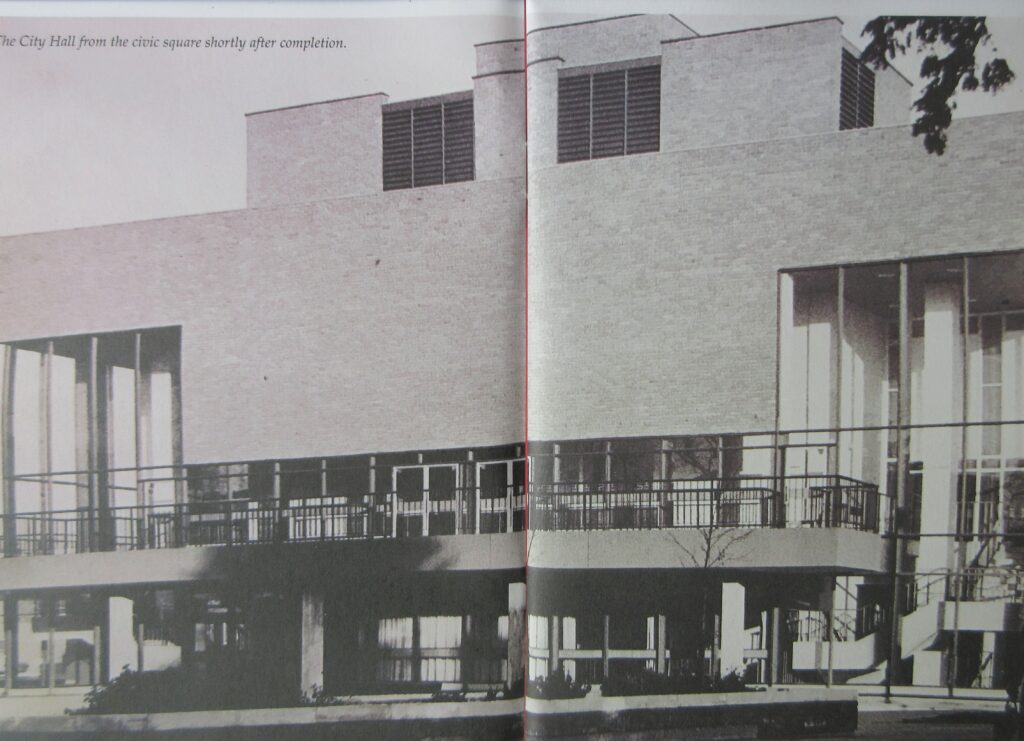
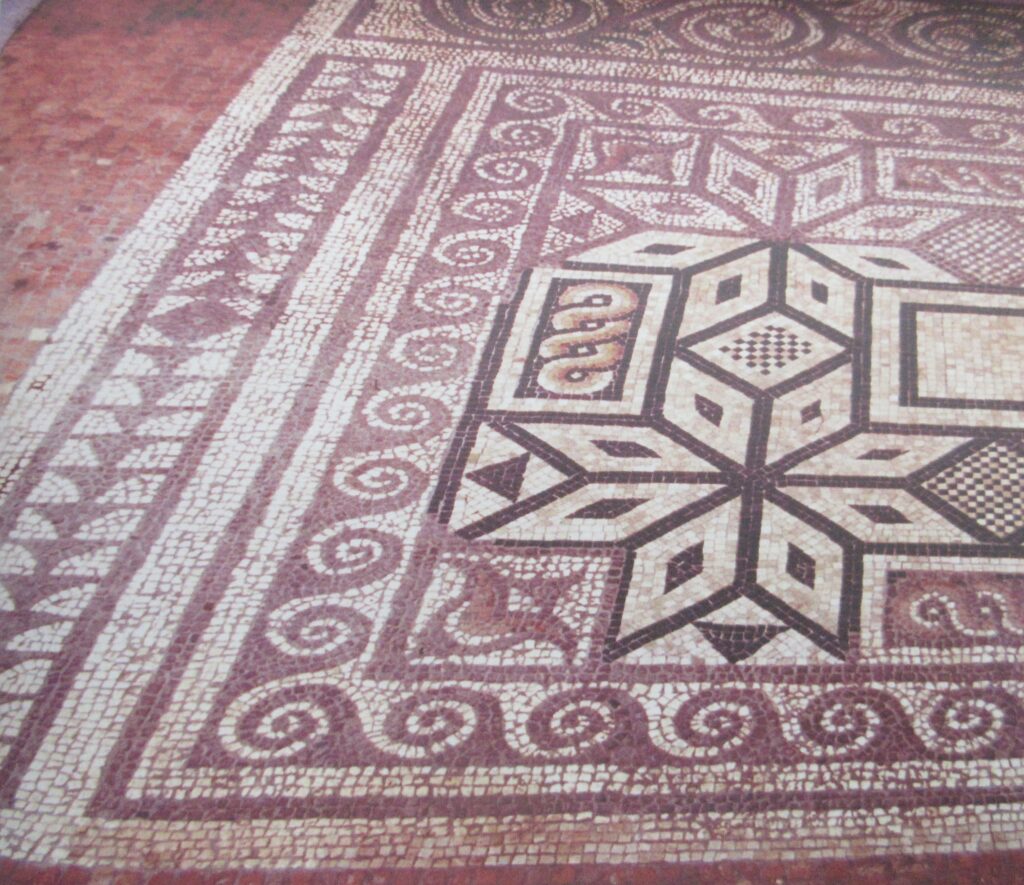
In any renovation these have to be removed and the clarity of Gibberd’s vision respected, restored, refreshed and modernised internally as well as externally, and the location of the priceless Roman mosaic, currently concealed under carpet tiles in the entrance hall, to be reviewed.
Such updating will enable a thorough re-assessment to be made of seating arrangements, bars, the public areas, at ground, first and, particularly, the under-used basement level, to facilitate a transformation of this multi-functional space into a cultural hub for the city, creating an enjoyable, inspiring and a creative focal point, serving every sector of our community, particularly the young, throughout the day and evening.
In his lifetime Gibberd was recognised as one of the most eminent British architects of his generation and a pioneer of modern architecture in England .
We are fortunate to have a notable building by him in St Albans. Its demolition should be firmly out of the question. Instead it deserves our utmost respect, consideration and the fullest attention to good design in its modernisation.
