24 Oct 2026
One of Park Street’s oldest houses is on the market for the first time in more than two decades.
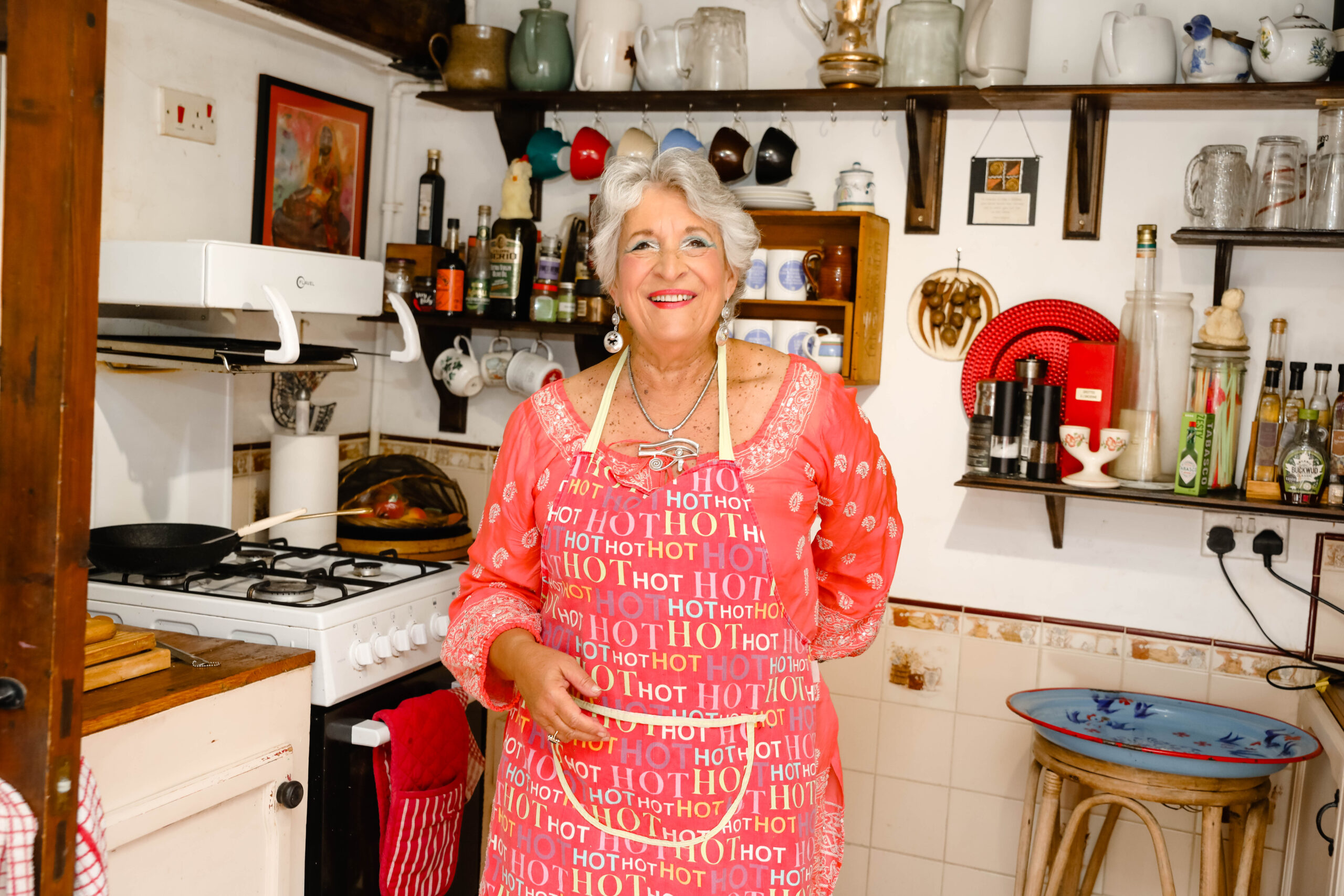
Local artist and author Suzi Clark is planning a move to the Cotswolds to be closer to family, which means Rose Cottage is looking for a new owner.
Grade II listed and timber framed, Rose Cottage has the date 1649 carved into one of its attic timbers. Some of the wide oak floorboards have been assessed by local heritage officers as potentially dating from the 16th century.
It stands on Watling Street, the ancient route developed as a Roman road almost 2,000 years ago, and is one of just 14 listed buildings in Park Street village. During maintenance work in 2015 they even found oyster shells beneath the wattle-and-daub walls.
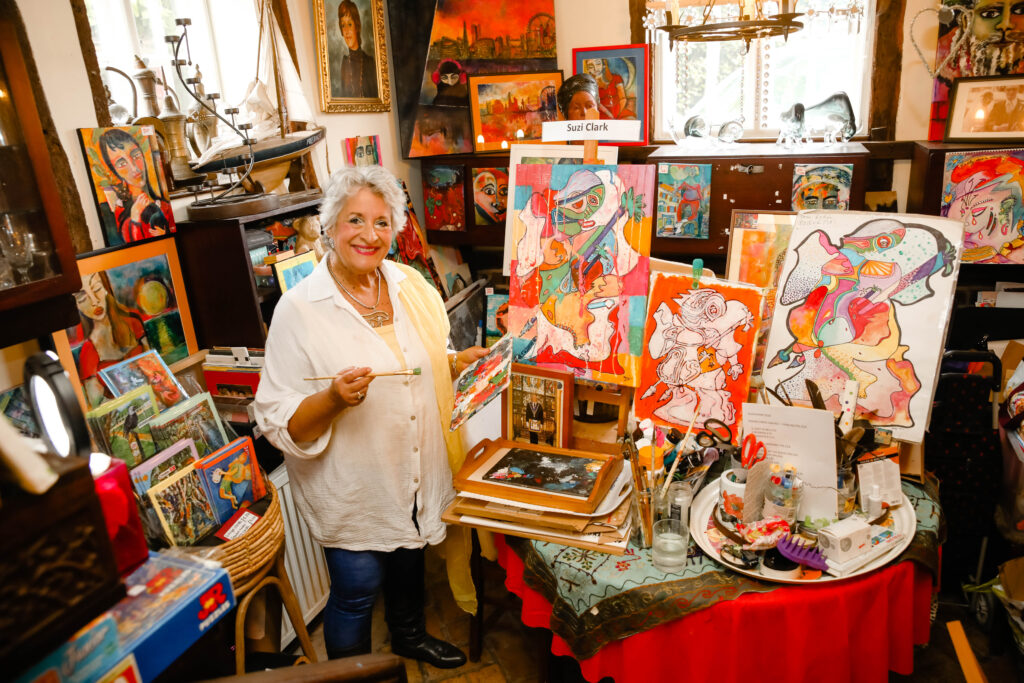
Suzi painted and exhibited from her studio there, recently opened Rose Cottage to visitors for Herts Open Studios and set her first novel at the cottage.
As she prepares to leave her beloved home forever, Suzi spoke to the St Albans Times about what it means to her.
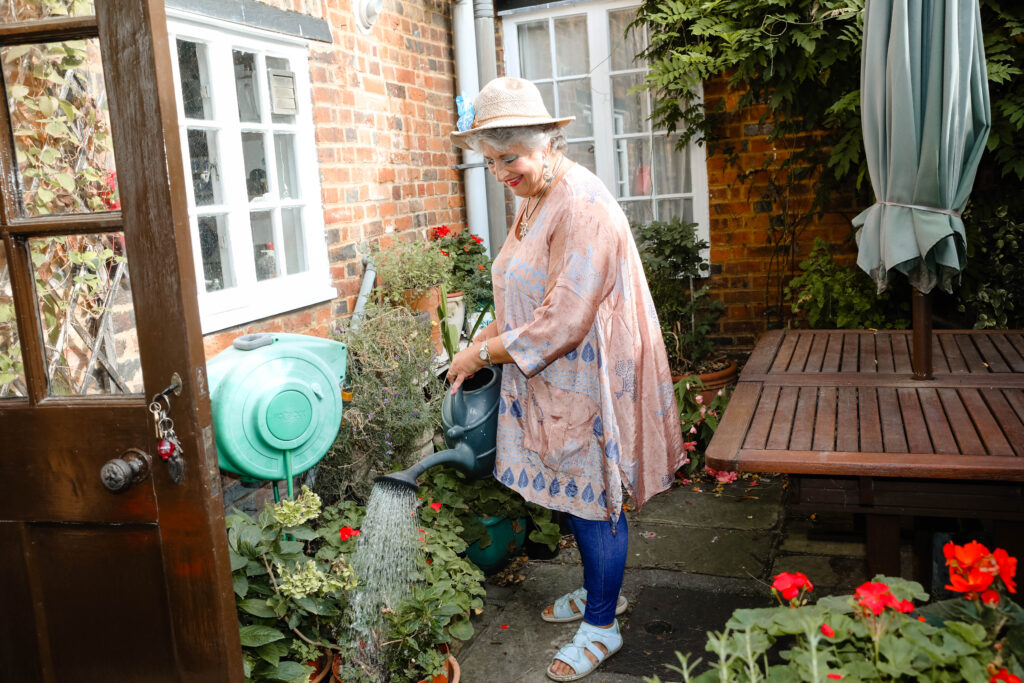
She first came across it after she was sent the details by her sister-in-law in Shenley, as she was looking to move closer to work in London from Royston.
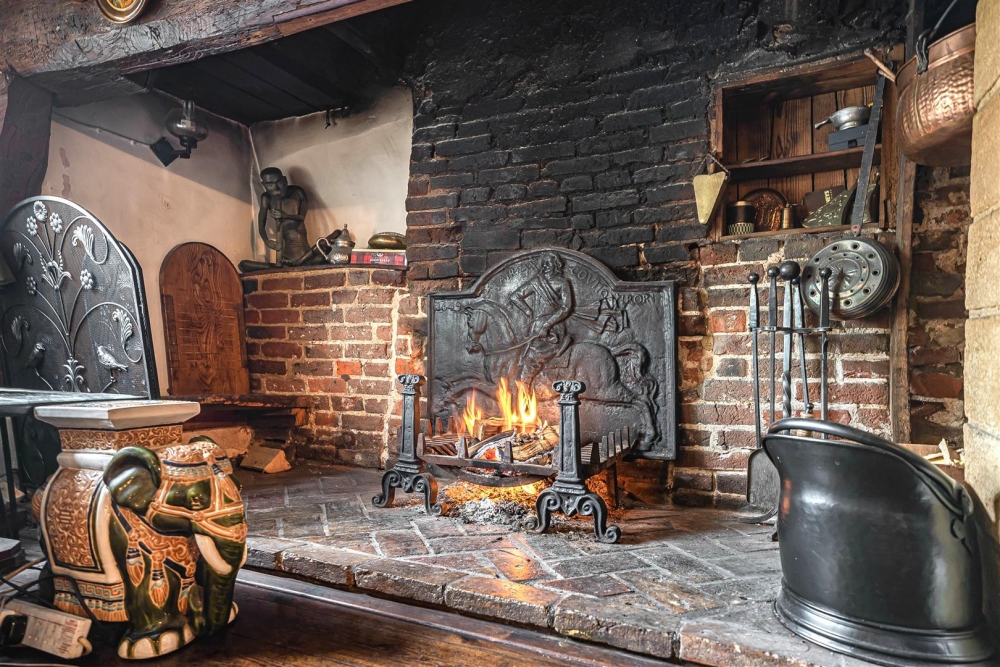
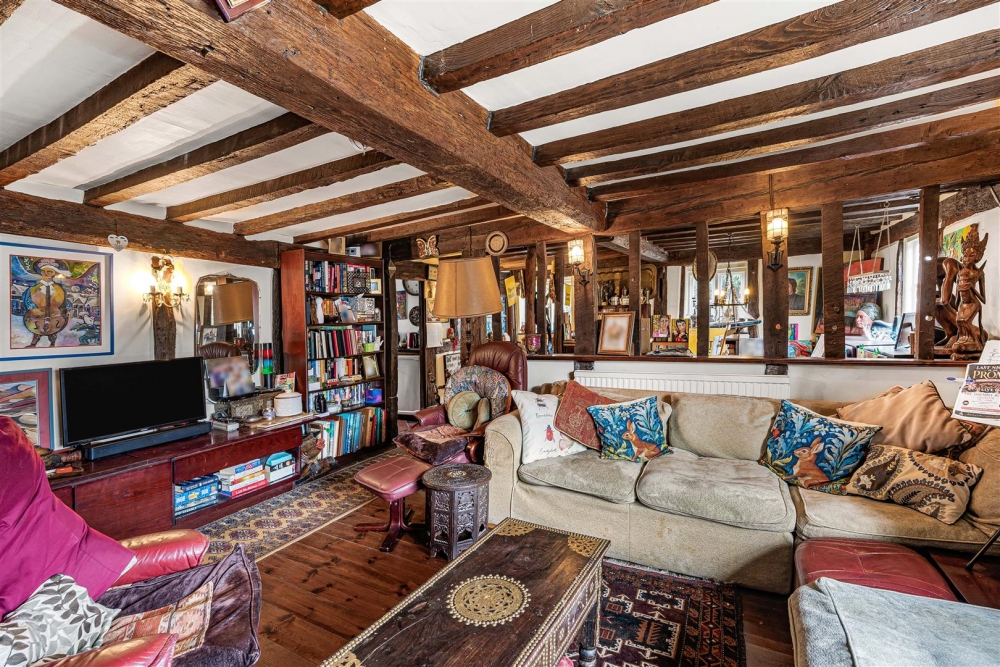
“Despite having been on the market for 16 months, Rose Cottage was love at first sight internally… well, after I hit my head on the low front door lintel! I knew before I walked into the living room and saw the extraordinary inglenook fireplace that this was the home for me.
“It helped that there was a letter addressed to me on the hallway table. Turned out I was buying from a Sue Clarke – what are the chances of that?
“The actual purchase was difficult, as the weekend I moved was also the weekend that drivers got snowed in overnight on the M11 in an early winter cold snap – one of them being my solicitor – so my online payment got ‘lost in the ether’ as the bank put it, because the internet had gone down.
“As an act of faith, I locked up my Royston home, handed over the keys and headed to Park Street with a long line of cars containing my daughters, a feral cat who adopted me and my dad at the last minute as we couldn’t leave her in the snow, and three enormous removals vehicles. When the removals men saw the small cottage, they laughed and laughed. Meanwhile, the estate agent couldn’t open the front door so he had to climb over the back gate and let us in from the back door.
“The cat piddled everywhere and disappeared.
“Ninety-six boxes later, and with my double mattress stranded on the driveway, they left. Shortly afterwards the electricity cut out. It turned out the previous owner used to rent out the cottage and used a meter that took special coins from a Post Office. There was a knock on the window and I peered out nervously to see a burly man in a beanie hat looking back at me. I wondered what kind of neighbourhood I’d moved into.
“It turned out to be my new neighbour, Andy, and he kindly ran an electric cable over the fence for two days so that my Dad, then aged 85, could have a cup of tea! Great neighbours, good friends. That’s what living in St Albans is all about.”
When she moved in the ancient cottage was empty. There was only one fitted wardrobe and she couldn’t my bedframe upstairs.
“We put the 96 boxes in the sunken dining room and opened a bottle of wine. By candlelight. I was introduced to a master carpenter from Shenley in his late eighties, we called him Magic Morton. He was with me almost a year, painstakingly fitting shelves and cupboards, restoring storage space and even building me a bedframe from the library shelves I’d brought from my Royston study.”
The initial project took almost six months, and afterwards Suzi applied for planning permission for more substantial work, including create a doorway into the kitchen from the back door, and installing a downstairs toilet for her father.
“I also had a jacuzzi bath fitted for him to help with his arthritis. The Heritage Officer was very understanding, although it took a year to get permission. There is parking for two cars on the drive, which was very helpful as my Dad was still driving into his 90s.
“Everything I have done in terms of works for Rose Cottage enhances it still further, retaining its beautiful old timbers, doors and original flooring wherever possible.”
The cottage’s detailed history is unclear, but it is listed in a conservation area with a suggested date of 1649, and that is the date on a timber in the attic. Historic England records its timber frame, later brick infill, steep tiled roof and historic sash and casement windows.
The original walls are wattle and daub. It is cool in summer and cosy in winter. It is one of just 14 listed buildings in Park Street, many much younger.
1649 is also the date on the replica wrought iron backplate in Rose Cottage’s enormous inglenook fireplace which shows General Sir Thomas Fairfax. This was the year in which Charles I was executed, and the design of the Fairfax fire backplate originates from 1649 in England, commemorating the English Civil War. It is taken from an original 17th century historical artifact produced immediately following the peak of the conflict.
The year previously, St Albans became an important Parliamentarian recruiting centre and military headquarters, and figures including Cromwell and Fairfax were closely associated with the town through the establishment of the New Model Army.
The New Model Army’s connection to St Albans involves two key historical milestones: a grand military review in 1645 and, most famously, the critical November 1648 General Council of the Army meeting at St Albans Abbey.
Led by Sir Thomas Fairfax and influenced heavily by Henry Ireton, this 1648 council drafted the historic Remonstrance of the Army, which officially abandoned treaty negotiations with King Charles I and directly paved the way for his trial and subsequent execution.
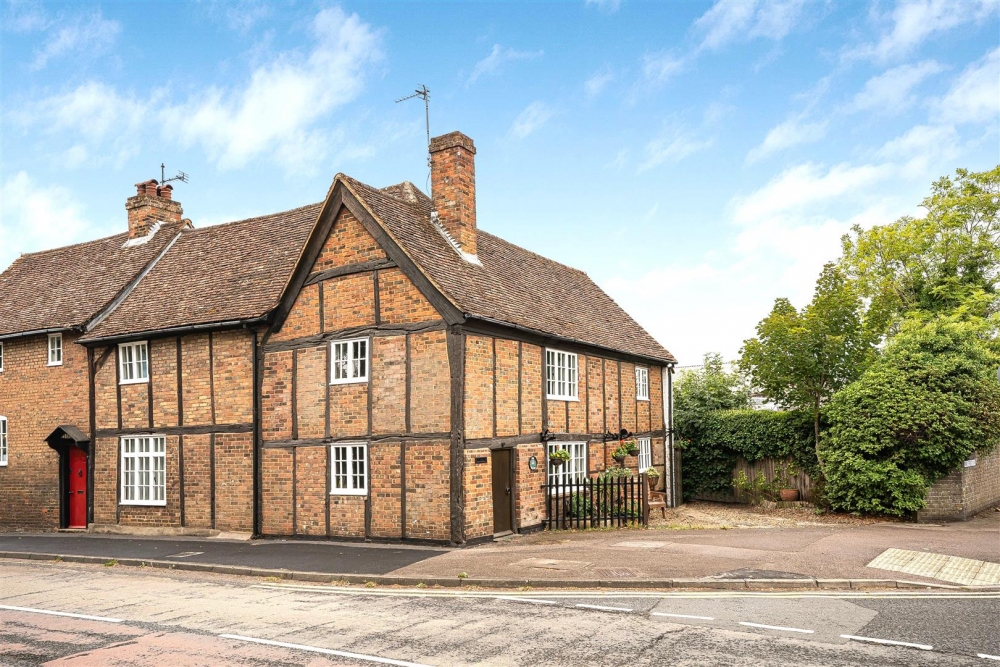
In more recent times, the cottage may have been a cattle shed/dwelling with a dairy in the last century. The Park Street and Frogmore Society (PSFS) have a photo of it as an agricultural shop front.
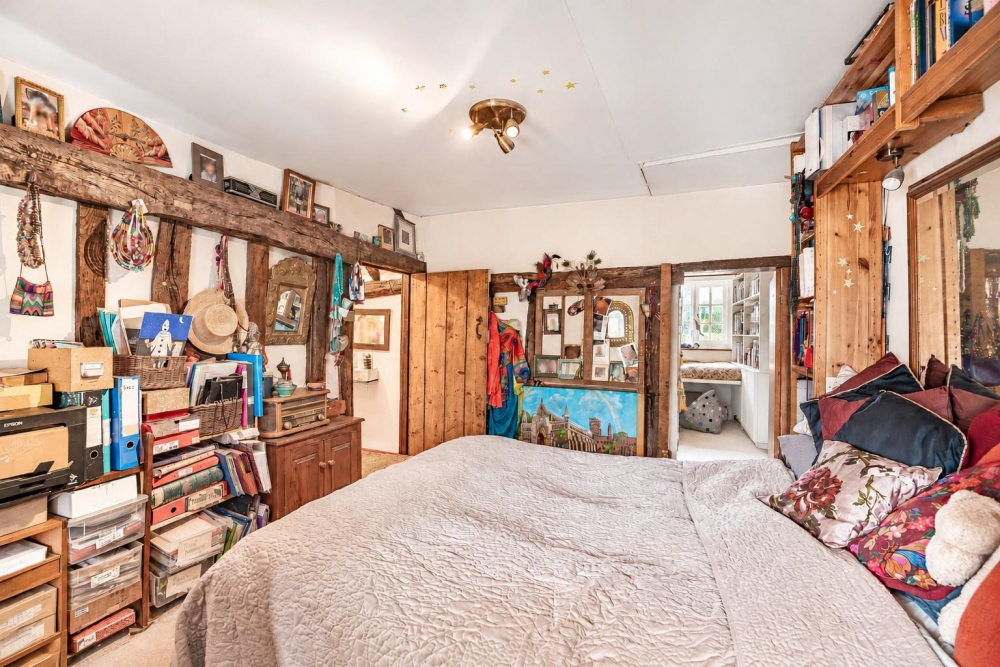
The Red Room upstairs has such wide oak planks that the Heritage Officer thought they are probably 16th century and perhaps off an old naval vessel.
In the 20th century, the War Memorial was moved from in front of Rose Cottage to its present position beside the Park Street Mill and the PSFS have a photo.
Excavations to sink a French trench across the front in 2015 unearthed oyster shells, coins, an old key and other bric-a-brac.
However, the site possibly holds an older, Roman history. It is possible that in 60AD it was part of a Roman estate.
Park Street village is on Watling Street, the former Roman road, two miles south of St Albans, once the major Roman garrison town Verulamium.
Coming northwards from Radlett the A5183 (aka Watling Street) veers to the east until a mile north of the River Colne crossing at Colney Street. At Colney Street both Watling Street and the original Roman road run on the same line, bending slightly right at Frogmore by the church.
The road bends to the right again at the northern end of Park Street near to the railway station, just after Rose Cottage. The road also rises at this point and then descends to the Park Street roundabout. To the south of the roundabout was a Belgic farmstead. When the Iceni warrior queen Boudica burnt the farm in 60AD it served as a warning to the inhabitants of Verulamium that her hordes were coming. The farm was later replaced by a Roman villa.
There is some suggestion that Boudica may have camped at the bend of the river Ver in Park Street where there was a Roman landing stage, before driving her chariot with 70,000 to 100,000 warriors north west towards the Roman civic settlement to devastate it.
Suzi adds: “More of the saving of Rose Cottage 70 years ago was revealed recently when we had a visitor called Mac, and his wife, who lived in it for a couple of years, when it was semi-derelict.
“He and his friend Paul Gobey rescued Rose Cottage and the cottage next door, restoring and renovating painstakingly and in keeping with the age of the building. He visited for the first time in many years when I opened up the cottage as part of Hertfordshire’s Open Studios artists’ initiative and it turned out to be a very emotional visit for both of us, as he saw how well the cottage has been preserved, and how his excellent craftsmanship has stood the test of time, providing me and my family with such a happy home.”
Suzi went on to feature the cottage in her first novel, Butterflies and Baked Beans, a tale of friendship, fun and magic.
“Its own history is so fascinating, and it houses a number of interesting artefacts from all over the world which I’ve acquired on my travels, which brought their own quirky stories, such as ‘The Boat that Came Home’ – one of the chapters in the book – all true.
“As a local speaker and amateur historian, I’ve enjoyed looking into other aspects of the history of characters associated with Rose Cottage such as General Fairfax and his feisty wife, Anne Vere, Lady Fairfax.
“I’ve given more than 240 talks across Hertfordshire and Bedfordshire in the past five years, and I’m currently writing my second novel which is also partly set in Park Street, taking forward some of the characters from the first.
“During lockdown, stuck at Rose Cottage with Velcro the cat, I started to paint online with a Dutch artist based in Spain. She gave me one lesson instead of paying me as a favour because I edited a book for her, and my new journey into art began.
“Rose Cottage accommodated my growing passion in the sunken dining room and for the first time this year I found the courage to open up my art studio and offer free visits around the cottage and a chance to view and even buy some of my artwork – it was a very successful experience and Rose Cottage was the star of the show for many local visitors.”
Naturally, given her connections with the cottage, it’s going to be hard to let it go: “Anyone who moves home after 21 years knows that it is going to be a wrench. I will never find another home quite like Rose Cottage – I just feel really lucky to have lived here and enjoyed the magic – now it’s time to let it go to a new ‘custodian’ of memories who will treat it with the respect it richly deserves, and preserve it for the wider community. Plus, I’m finding it difficult to climb up into the Narnia Cupboard.
“As a widowed grandparent, I know that my young grandchildren, who moved from London to the Cotswolds two years ago, would benefit from having me live closer.
“I’ve identified a couple of old Cotswold properties that are in need of a bit of TLC as, unlike some people, I’m not put off by a Grade II listing, now that I understand how important it is to work with local heritage specialists to preserve these historic homes, however humble, and therefore manage aspects of change.
“So, I’m following my heart westwards, but a part of me will always be here in Park Street and lingering in the Cathedral or the Roman theatre at weekends. I hope the laughter and the love will continue within these ancient walls, long after I’ve gone.”
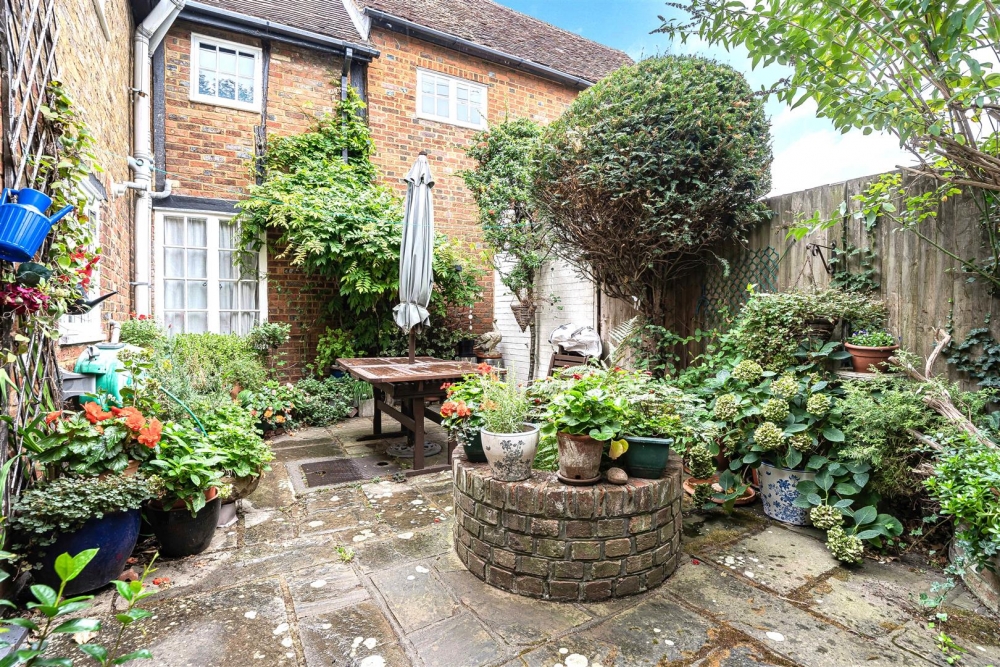
- Rose Cottage is now on the market chain free for £650,000 with Paul Barker Estate Agents. It has three double bedrooms, an inglenook fireplace and a courtyard garden with a functioning well. See the listing here.