07 Nov 2025
A chance discovery in her parents’ loft unlocked a journey of discovery for a St Albans history student which revealed new insights into her family’s wartime past.
Rosie Fitzpatrick, who is in Year 11 at The Marlborough Science Academy, found handwritten notes by her great-grandmother relating to her training for the Auxiliary Fire Service prior to the outbreak of the Second World War.
She has used this information as the basis for a project on the period to coincide with Marlborough’s annual Remembrance Day commemorations.
TMSA head of history Andrew Pressland said: “It was during a parents’ evening that Rosie’s father said they’d found his grandmother’s – so Rosie’s great-grandmother’s – diary and lecture notes from when she was training to be in the AFS.”
Rosie continued: “I guess my great-grandmother would have passed it down to my grandad, and everything from him is in a box in the attic. He recently passed away, so my dad had been looking through all his stuff, which is when he found my great-grandmother’s journal.”
She discovered that Alice Rosie Fitzpatrick (1904-1979) was part of the volunteer fire service supporting regular fire brigades during air raids. The organisation, which was made up of men and women, was formed in January 1938 to prepare for the eventuality of enemy air attacks, with the possibility of war growing ever stronger.
Members fought thousands of fires during the Blitz, and they were dubbed “heroes with grimy faces” by Prime Minister Winston Churchill for their valiant efforts.
Alice’s notes relate to the period 1938-1939, and show how seriously she took her role, with details on how sprinkler systems work, what fire extinguishers are used for petrol and oil, and the names of the different fire officers she would be working with and how their ranks could be identified.
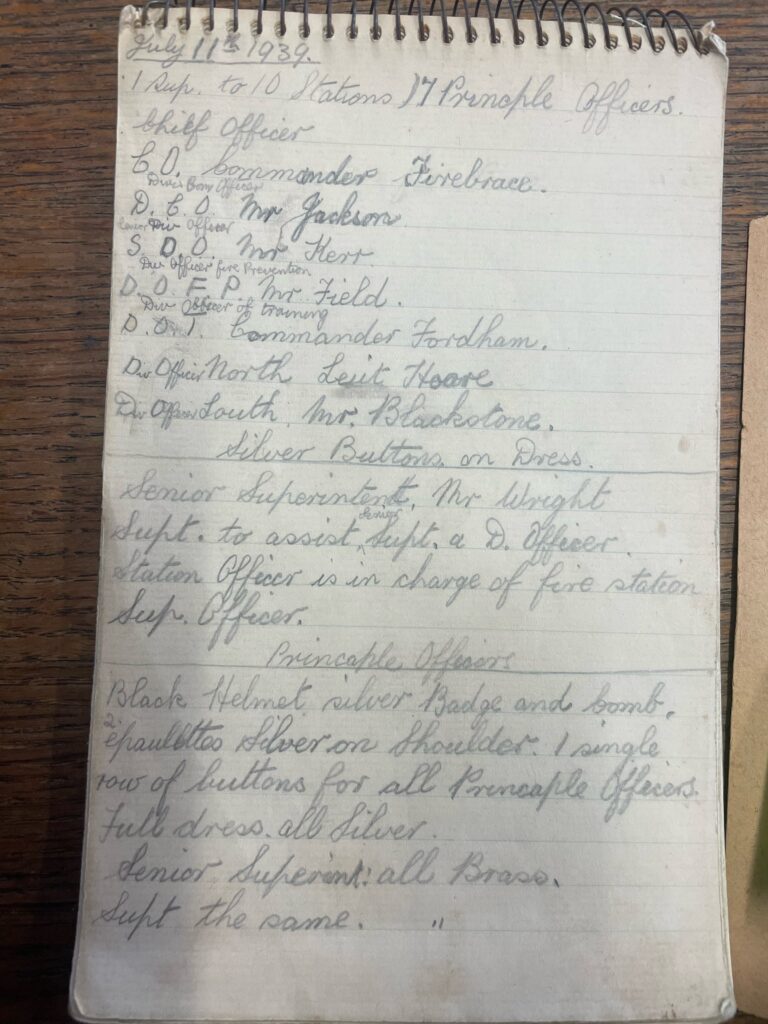
Rosie explained: “We first looked through the journal, and then started researching about the actual Auxiliary Fire Service.”
The date of 1938 shows how Alice was already being trained well ahead of the start of the war.
“They knew what must have seemed inevitable,” said Mr Pressland, “so they started to prepare early, which links into one of our GCSE topics, which is the causes of the Second World War and Britain’s policy of appeasement.
“One of the arguments defending Britain’s policy of appeasement was that [Prime Minister Neville] Chamberlain was buying time, and actually this does support that.”
Rosie said reading the journal has helped her understand more about the life of a relative she never met: “It does kind of feel like I know her. She was a warden and had driving duties, which meant she would drive through freshly bombed streets in the middle of the night, either looking for people and taking them in or giving other firefighters food for the night.”
Mr Pressland elaborated: “We uncovered lots of different stories about how these women dealt with various aspects of the Blitz, which included driving lorries to carry petrol, going on motorcycles through bombed streets, maintaining telephone services when they were damaged during air raids, and preparing meals for firefighters and delivering them during the night, which would have been more dangerous.”
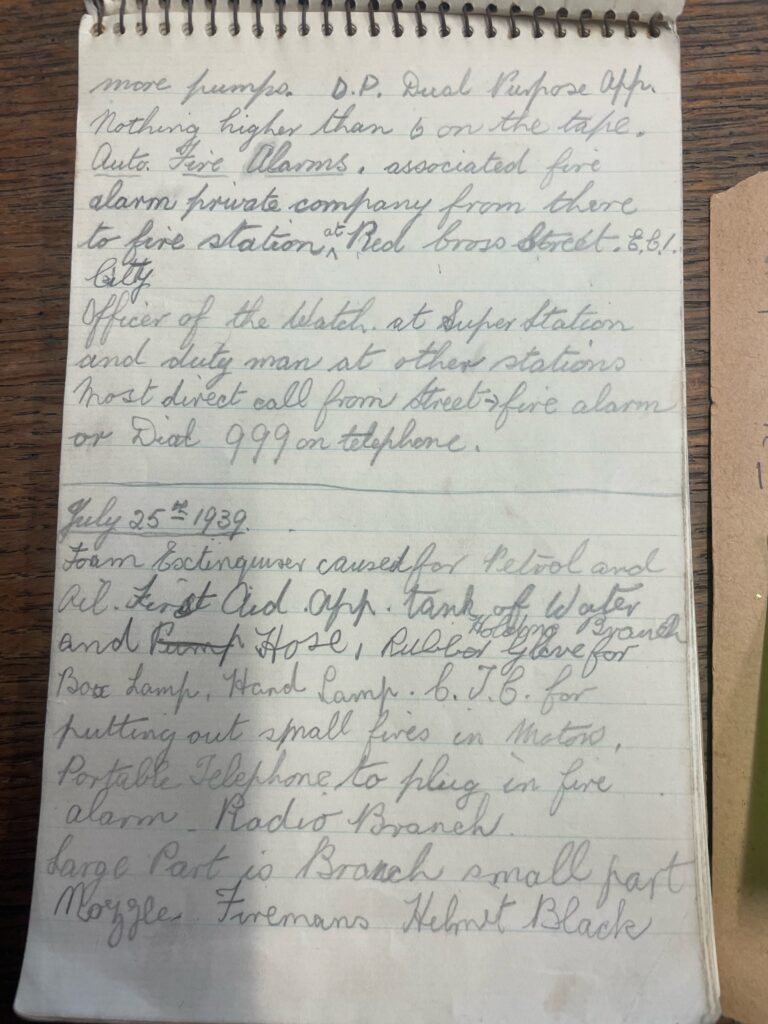
Throughout the research process they have worked closely with archivist Alan House at the Firefighters’ Memorial
Trust, who revealed that a lot of women didn’t know they were entitled to a medal for their service, which is something Rosie’s family are considering applying for.
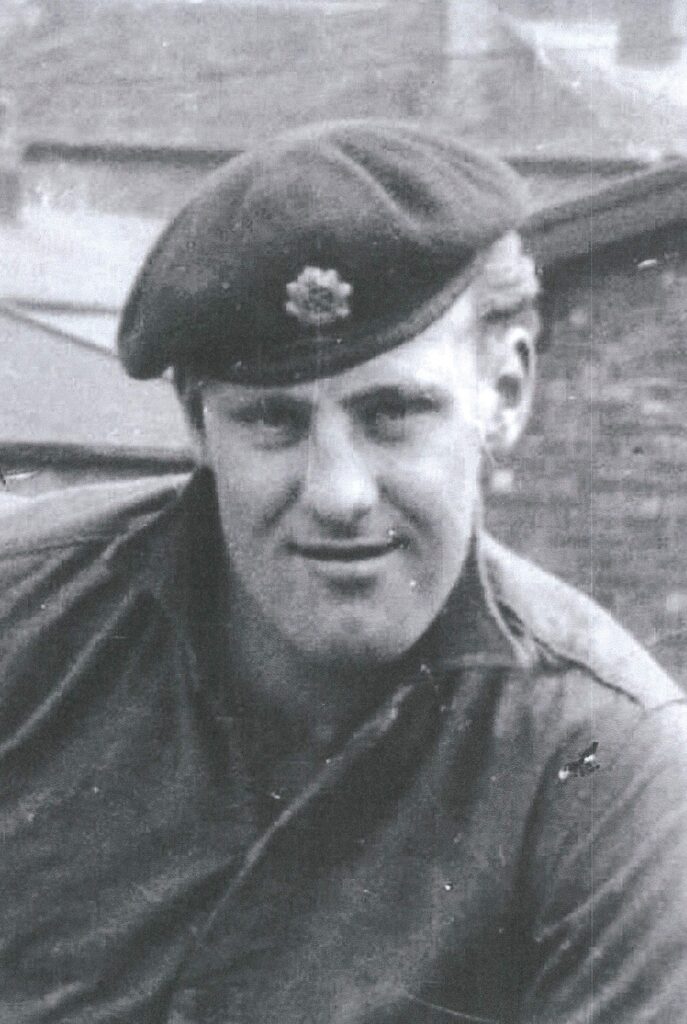
Meanwhile, Alice had no idea at the time of writing her journal that her son Peter, Rosie’s grandfather, would subsequently be evacuated from London to escape the dangers of the very raids she was fighting in the City of Westminster, right in the heart of the capital.
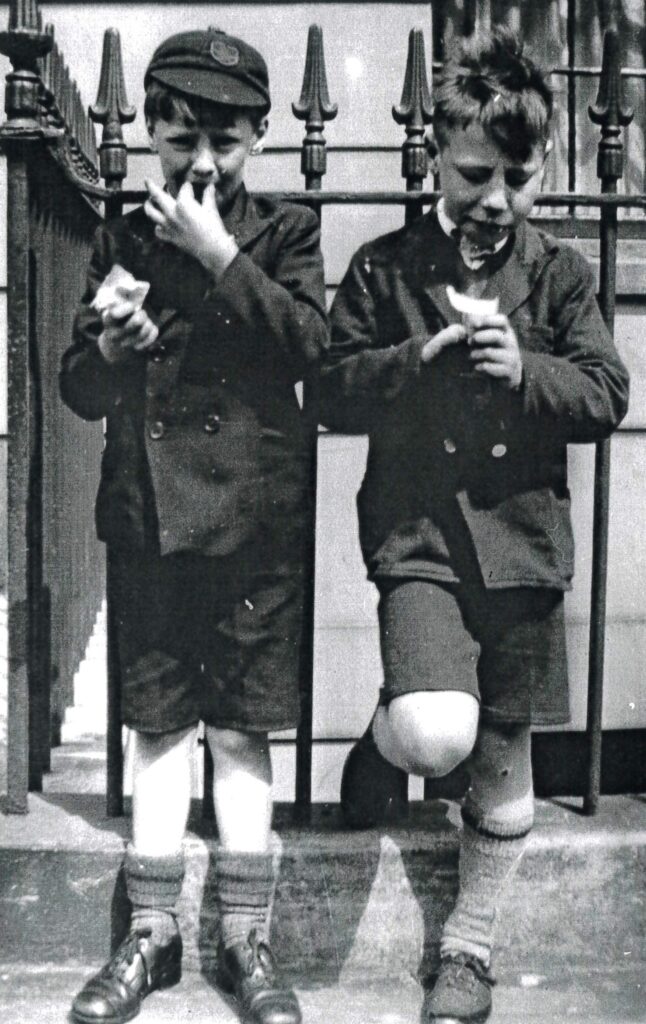
“His sister was also evacuated as well, but they weren’t evacuated together. Peter went first to Brighton, and then eventually to Wales,” said Rosie.
“He used to have a lot of stories from his time in Brighton because he really didn’t like the boys he was staying with, and eventually he was moved because the family couldn’t afford to feed so many children – he said his least favourite food at the time was stinging nettle soup!
“When he moved to Wales he ended up on a farm with a man called Mr Ward, and that was his absolute favourite place because he said that it changed his life.
“When he lived in London his dad was a drinker and his mum worked in a factory, whereas working on the farm gave him structure and routine. He said Mr Ward gave him a job but made him save all his money, which was something he continued doing for the rest of his life, just saving everything he earned.”
She produces a handwritten ledger book showing Peter’s savings from the time.
“That’s a habit which he passed down to my dad, and then us [Rosie and her siblings] as well. When we were little he bought us a jar and he’d make us put our spare change in it, or any coins we found in the street. It still sits on my sister’s shelf, and sometimes we add to it with any coins we might have around.”
Mr Pressland said: “Rosie was very close to her grandfather, and I think that helped her become emotionally very invested in this project. It’s a real-life Goodnight Mr Tom story,” he added, referring to the novel by Michelle Magorian about a London evacuee’s transformational time in the care of an elderly recluse.
Rosie said finding out more about her family’s history has been a fascinating experience, as it has shown her history from a personal level.
“It’s one thing learning it in class, but to know that my grandad was actually evacuated really puts it all into perspective.”
Mr Pressland added: “The dedication Rosie has put into this project has just been wonderful, but the final point is, if her generation doesn’t keep these stories alive, then they will be lost forever. Resonating with the past, and our descendants is what we try to encourage here at The Marlborough Science Academy, not only during the Festival of Remembrance, but on battlefield trips to France and with any opportunity in our curriculum.”