20 Apr 2026
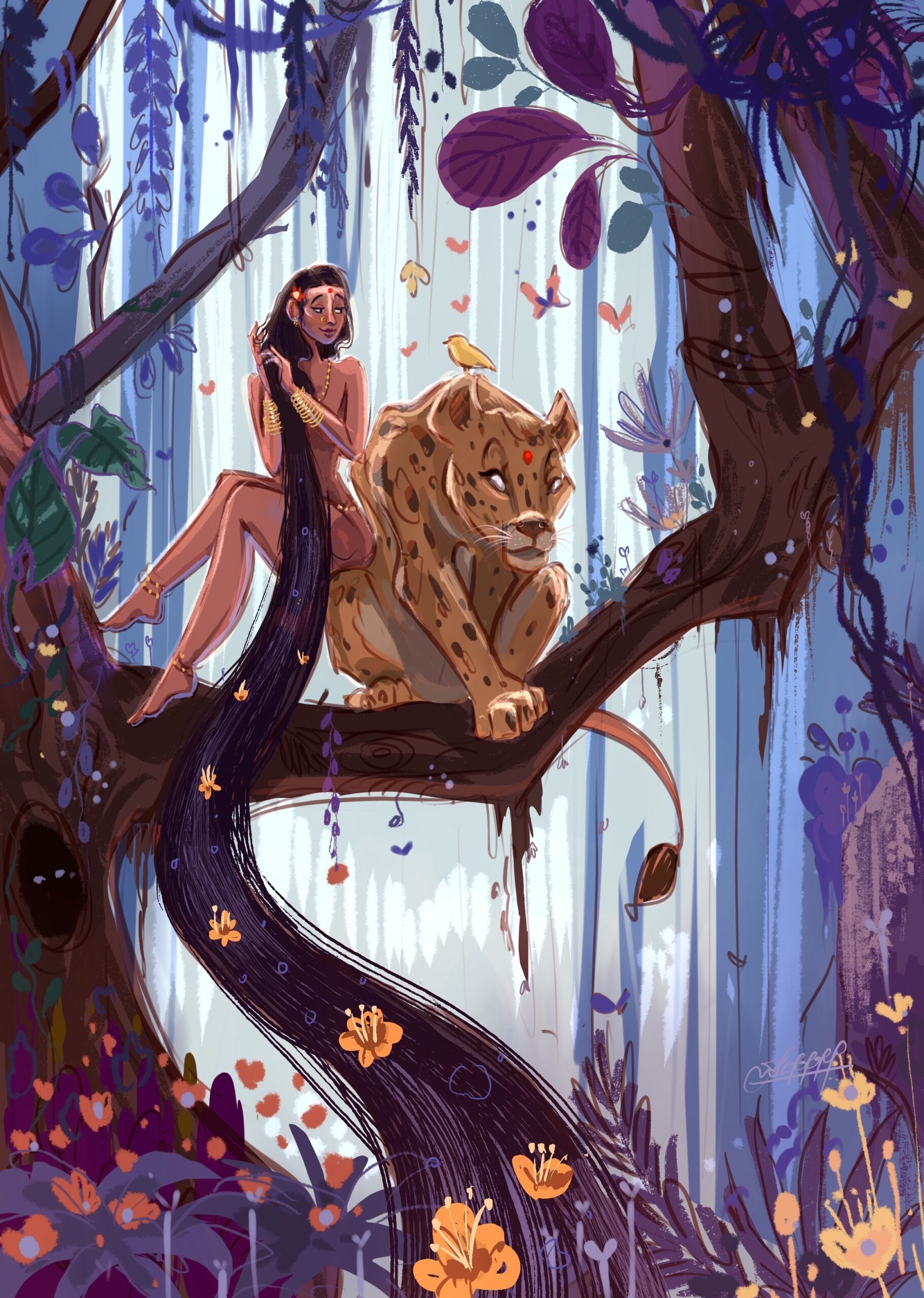
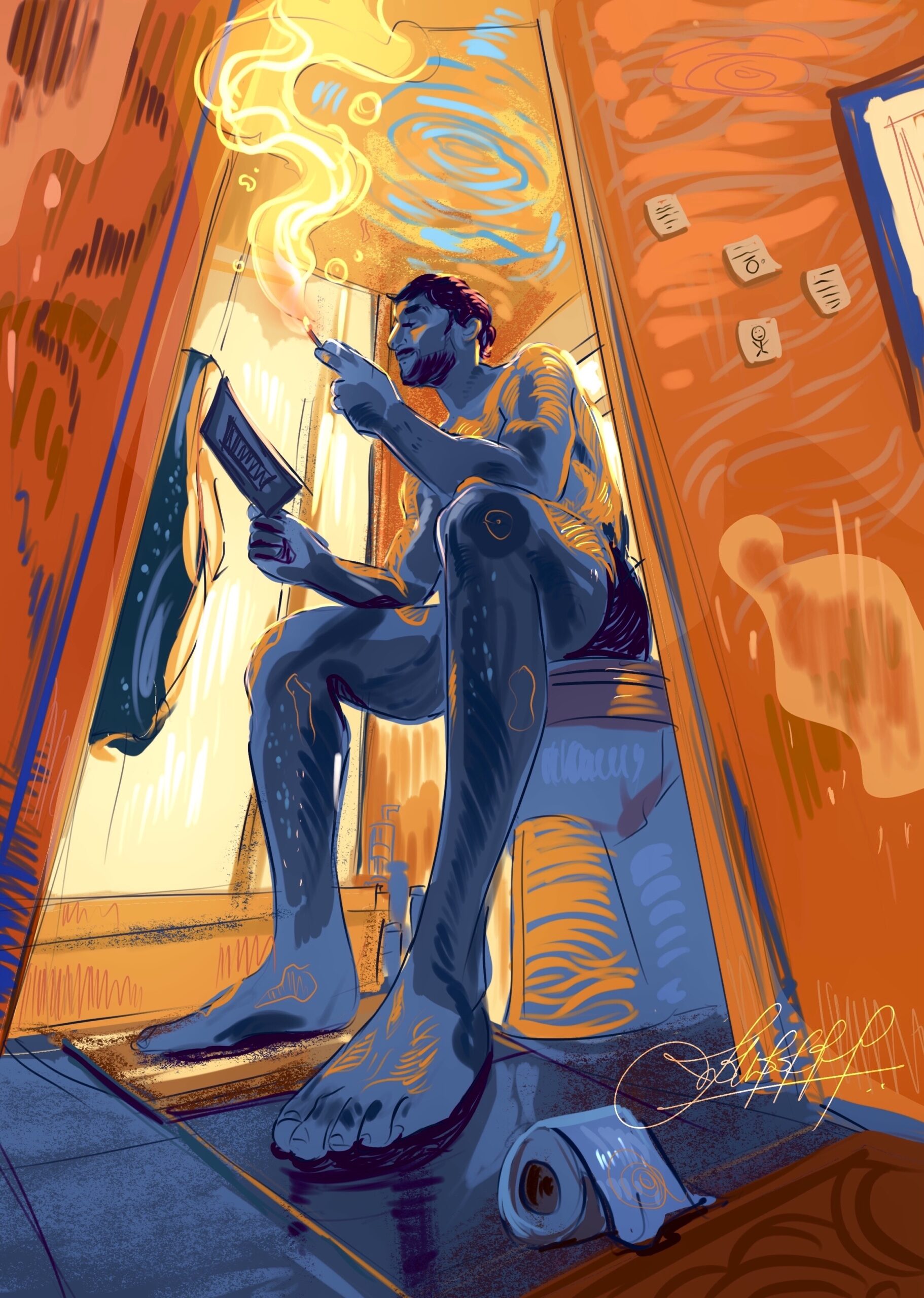
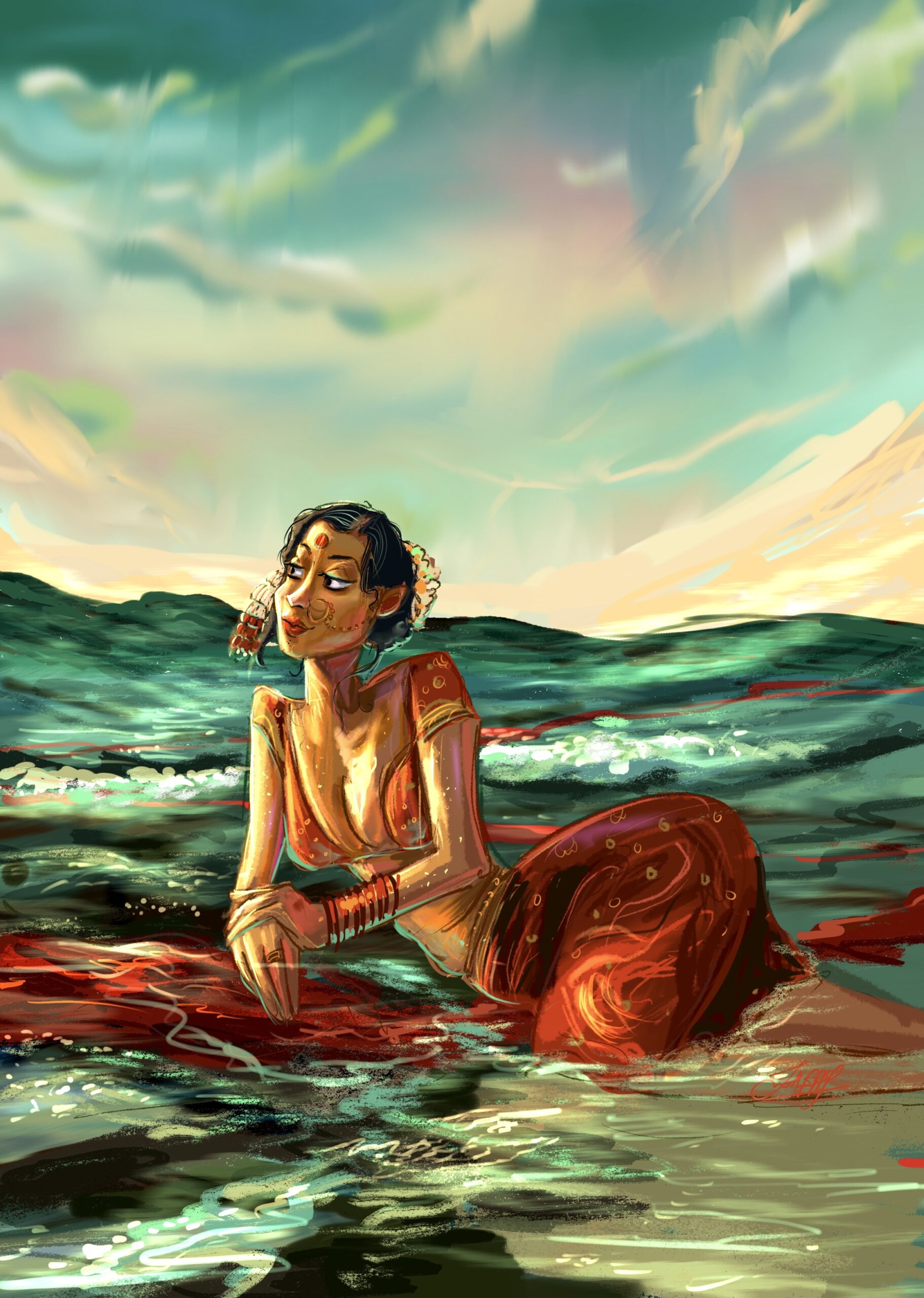
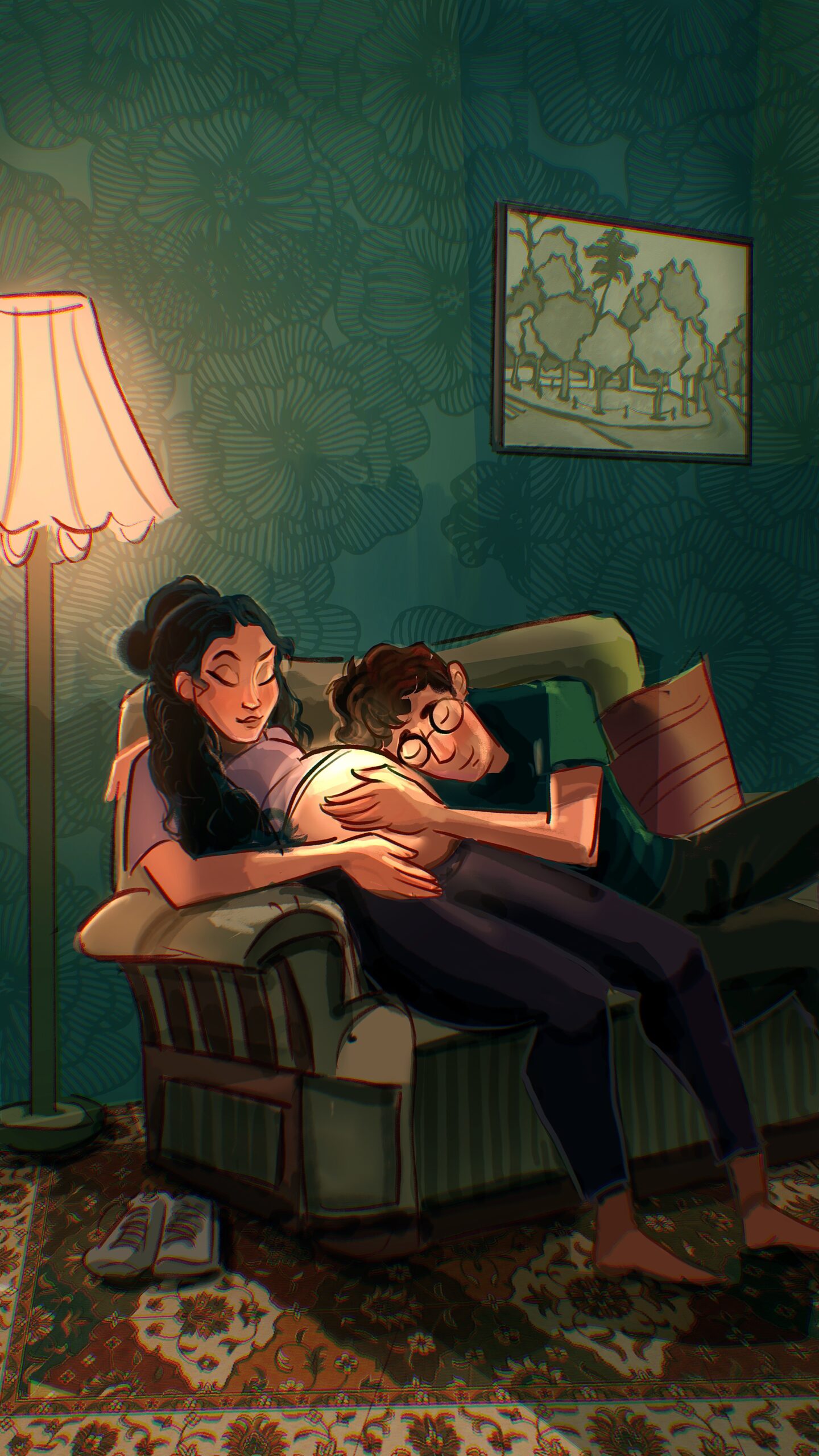
Fathima Hakkim has never stopped drawing. Raised in a strict orthodox Muslim household in the Indian state of Kerala, she channelled frustrations with her neurodivergency and a domineering patriarchal society into her art.
Now 34 and living in St Albans with her husband and young son Amari, Fathima is open about her diagnosis of ADHD and mild autism, and how it shaped her formulative years.
“As far as I can remember I was a very weird child. I have a brother who’s two years younger than me who is a picture-perfect son, but there’s always been something very weird about me.
“I didn’t know how to socialise, I didn’t know what to say to impress other kids, and I didn’t know how to be friends. I was very bad at my studies, particularly maths and science and anything that involved numbers, so I grew up with very, very low self-esteem. Nobody even noticed if I was there or not.
“But the one thing I always did was draw non-stop. If we’d go to a relative’s house, I’d have a stack of papers and sketch pens, and just spread out and keep drawing.
“I’d draw the same things over and over again, pink and green flowers or spirals, the same pictures, the same colours, it was just constant trial and error.”
Her relationship with her father was at times challenging, as his approach to parenthood was strict and regimented, but that was not all of the man he was: “My father had two sides. When he loved, he loved in grandeur. When he didn’t, that was grand too. But he loved and he loved deep. The way he showed love was so big that I chased it like a loyal puppy. I’ve never seen anything like that before. And I wanted it throughout my life.”
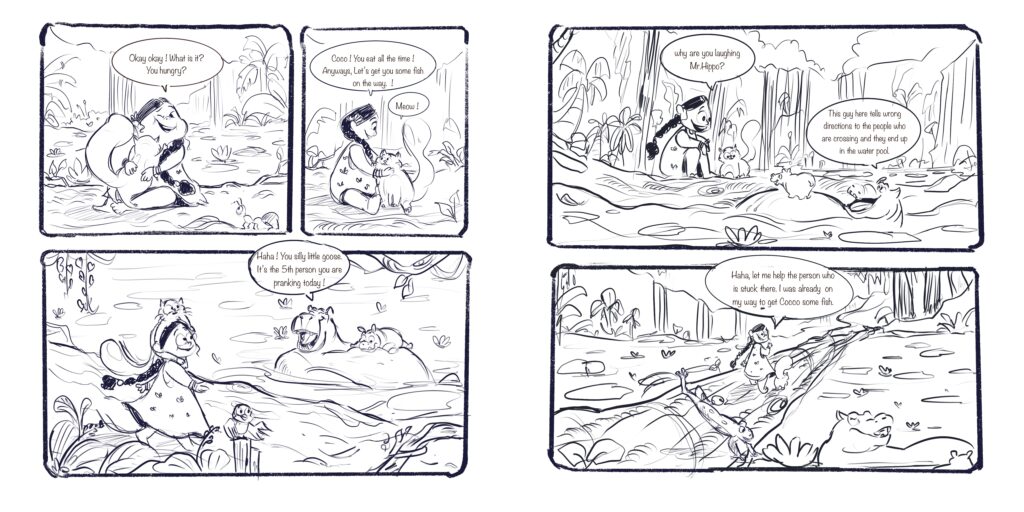
The harsh regime imposed during her youth meant she was not exposed to the wider world: “My Dad banned TV, I wasn’t allowed to read books or play with other kids, so my entire access to the outside world was cut off, and there was no inspiration.
“He became an orphan at a very young age, so when he had a family he didn’t want to share them. He was a go-getter and a very impulsive person, and he thought I was very much like him and thought if I had the exposure to the outside world I would leave home, so he closed off everything to me. But that just burned the fire even more.
“I did not come from a family where art is supported at all, so I did not have the proper materials, but I still just kept on drawing.
“I still don’t know anything about painting, but once a week we had a 30-minute or one hour art class in school. Everybody has that, and I had nothing more, but I’d finish my exam answers in a rush so I could draw on the back of every paper.”
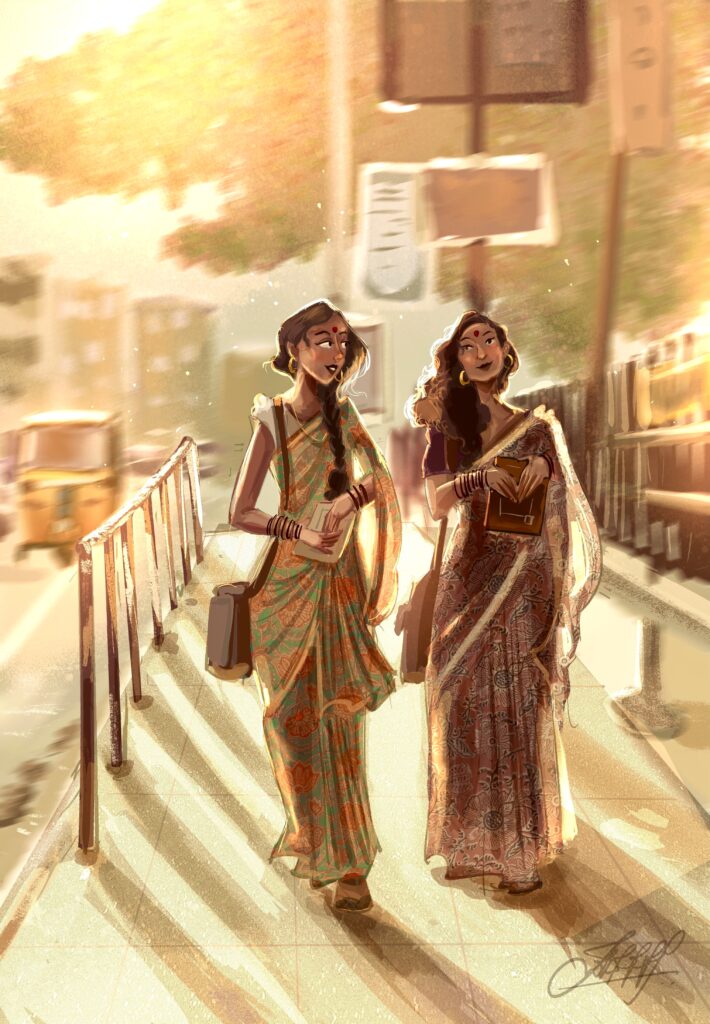
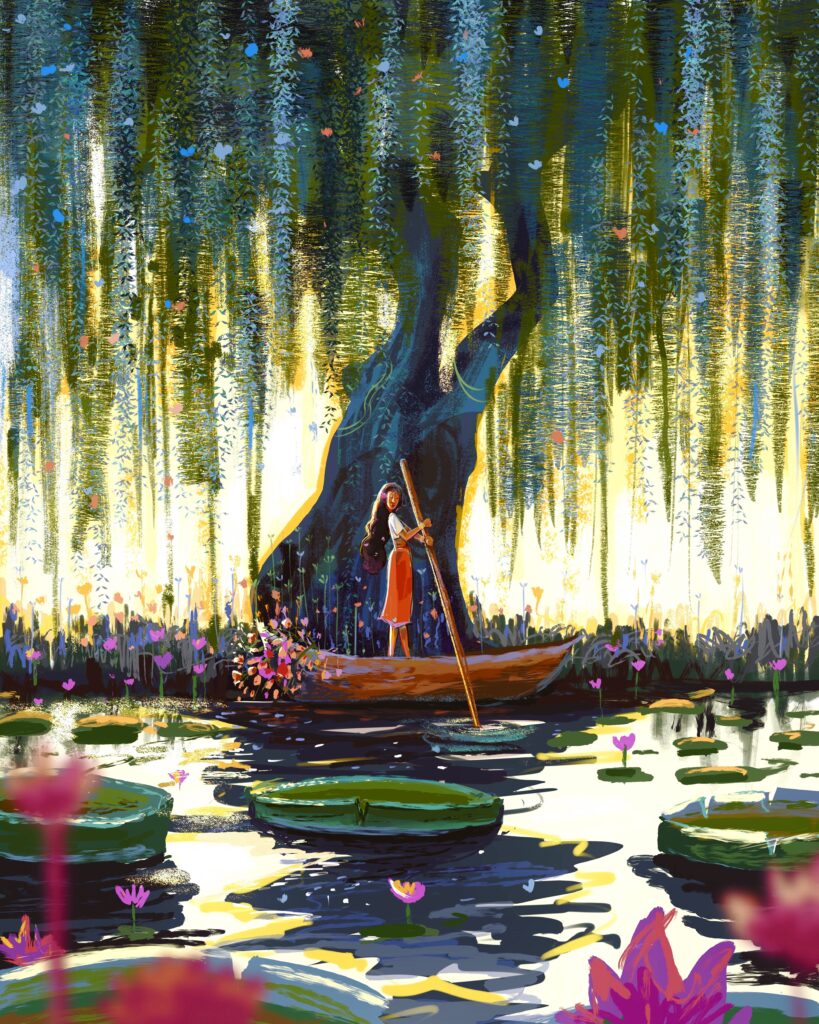
Fathima attributes an acute sense of spatial awareness to her innate ability to paint: “I see everything in 3D. I know where the character is, I know where multiple sources of light are, and I know where the wind comes from.”
Although she eventually qualified as an architect, it was a career in which she failed to succeed: “I was so bad at it that two firms fired me in one month, and I realised that I didn’t want to be the reason that somebody dies! Architecture was probably the closest thing I could do to art, because I wasn’t allowed to learn drawing.”
Her strict upbringing set out the destiny which she was expected to follow, but Fathima refused to let herself be defined by preconceptions: “We were manufactured to serve a man. How to clean your sheets and wash your dishes properly was a criteria of you being good. And when I was 24, I was forced to get married and move to a faraway place, but I didn’t stay and we eventually got divorced.”
Although there is a huge stigma associated with divorce within her culture, for Fathima it was somewhat liberating: “Once you’ve got that bad name, it’s a relief, because it’s over, and now you can be bad!”
The experience coincided with her first steps towards becoming a professional artist: “While I was going through this whole thing, I received my first payment for some paintings I had done for a big client. Usually when people get money, they buy something nice for themselves, but I just went to a local store and said, ‘I’ve got this much money, how much paint can I get?’
“I bought these huge rolls of canvas, and I locked myself in my room for about a month, and all I did was paint. Seven hours straight every day, no food or water, and that’s dysfunctional I know, but I created these massive paintings.
“I would get these rolls of paper and spread them out in my garage, take my paint tubes, squeeze them out and walk back and forth over the paper very quickly, because I didn’t have the physical capability to paint at such a scale. Back and forth, back and forth…
“After I was done, I went up to my Dad and said, ‘I’m going to do an exhibition’, and he said, ‘Not while you live under my roof’.
“Now I was somebody who’d had no social exposure, didn’t know how to talk to people, and had never travelled anywhere without her brothers. But I packed up all my paintings and caught a bus to the city of Calicut [Kozhikode], which was eight hours away. It was sort of like an art capital, and I just announced that I was going to do my exhibition there. I was absolutely clueless, but there was this bravery that comes from knowing nothing.
“A friend of mine who was into politics and was very well-placed said I should do a press meet [conference], so I was like, ‘OK, why not?’ Because I didn’t know what a press meet was, I wasn’t scared at all, but people were fascinated because usually they covered group shows, but this one young girl had done all these giant paintings – messy paintings, messy hands, big large-scale paintings – and I ended up being featured everywhere in the local newspapers, which opened all kinds of doors for me.”
Her family eventually attended on the last day of the exhibition, and again when she had the opportunity to take her work to another city, but that was to be the last time she saw her work: “They took me away, not forcefully, but said, ‘You have to come now’, and did not let me pack up my paintings, so I never saw them again. Thirty ginormous paintings. Other people took them home, I heard one is in a church, others were put in a construction site, but I’ve never seen them again.
“But it gave me courage, as this was the first time my work was actually seen, and I never went back to who I was.”
Having escaped her arranged marriage, Fathima began exhibiting further afield: “The path was very tough because I did not have anyone to back me up or look out for me.
“I did not know the dangers of the outside world for somebody naïve and underexposed like me.”
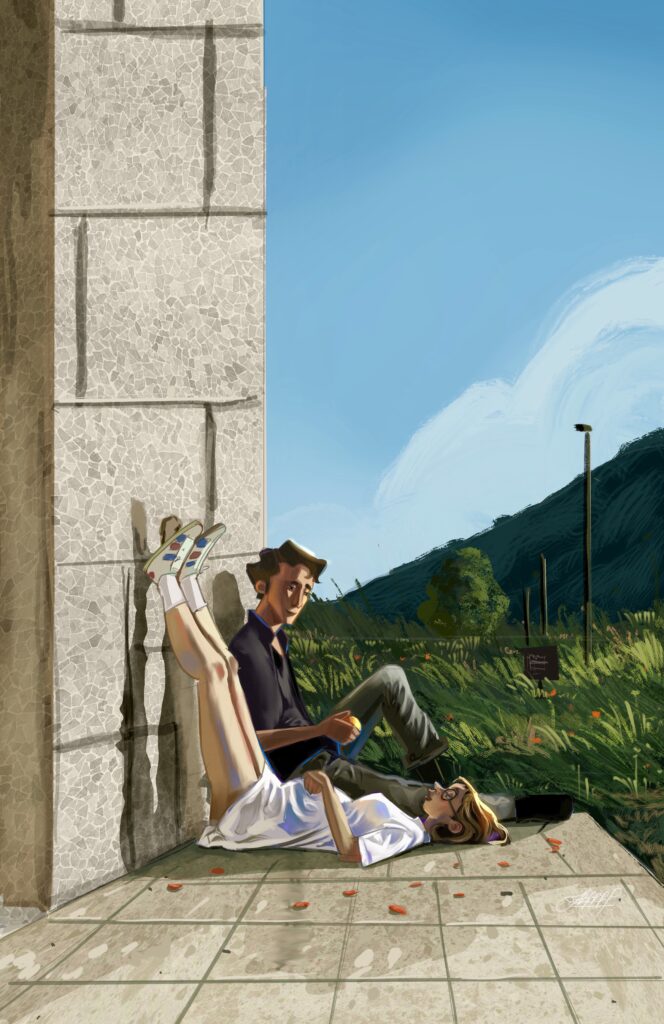
Then something happened which transformed her life and set her on a path towards a professional career: “I was living away from home in Bangalore during Covid, doing things on a medium scale. Then one day when I woke up, my phone was flooded with messages and texts, which all said the same thing, ‘Dad died’.
“I had just spoken to him the night before, and we’d had such a beautiful conversation.
“He had softened a lot over time. He had a heart problem and had become weaker, so did not have the strength to be the person he was when I was younger. At one point he apologised for how he’d been, and I said, ‘Dad, you did everything out of love, it’s not a big deal’.
“When I was hanging up, I thought, ‘What a nice conversation’, and you know, I’d worked all of my life for this, but then the next day he was gone.”
Embarking on the long journey home under the restrictions of the pandemic, Fathima realised there was an urgency to carry out the burial and she would not be back in time.
“I said, ‘It’s OK, bury him, do what’s best’. My Mum had told me that after the soul departs, it says goodbye to everybody around the body, and I was thinking, ‘I’m not there, does he think that I don’t care?’ So I asked my uncles to put the phone on speaker and put it next to him, so I could say ‘Dad, I’m coming, I’m coming’.
“When I finally got home, everything was still there, his car, his wallet, but the person himself had just vanished, and I didn’t know how to deal with that grief.
“I wanted to go and see his grave, but my uncle, who was a very religious figure, said that my Dad would be cursed if a woman went to the grave. I had had some sense of God and religion and that point, and I said, ‘This is my father, I’m his daughter, what God cannot see my pain?’ I never speak back to elders, it’s a big thing in India, but I said, ‘When I die, no man will come near me, I will curse you’. After a few days my brother took me in secret to the grave, but he was not there, and I just couldn’t say goodbye.
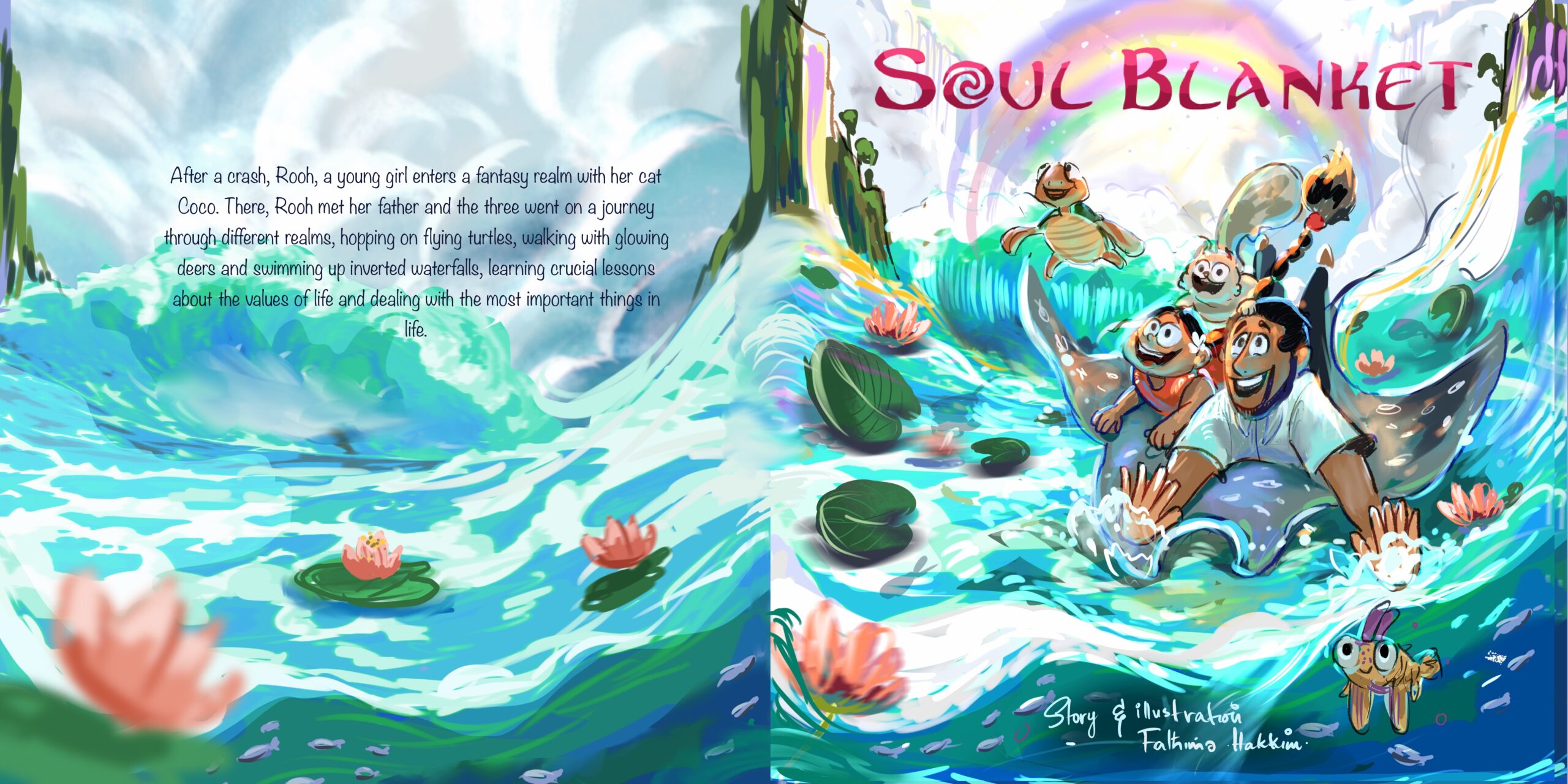
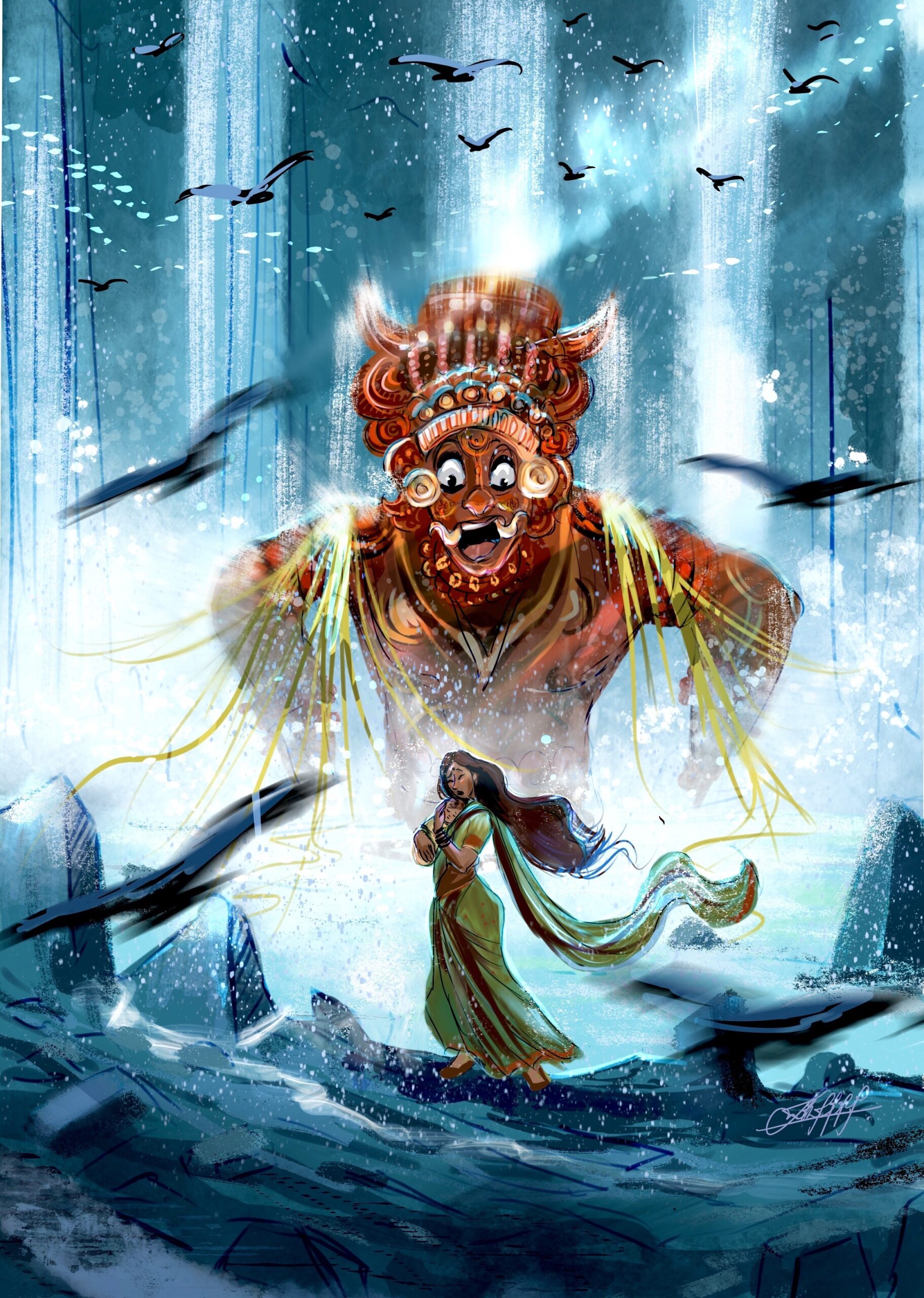
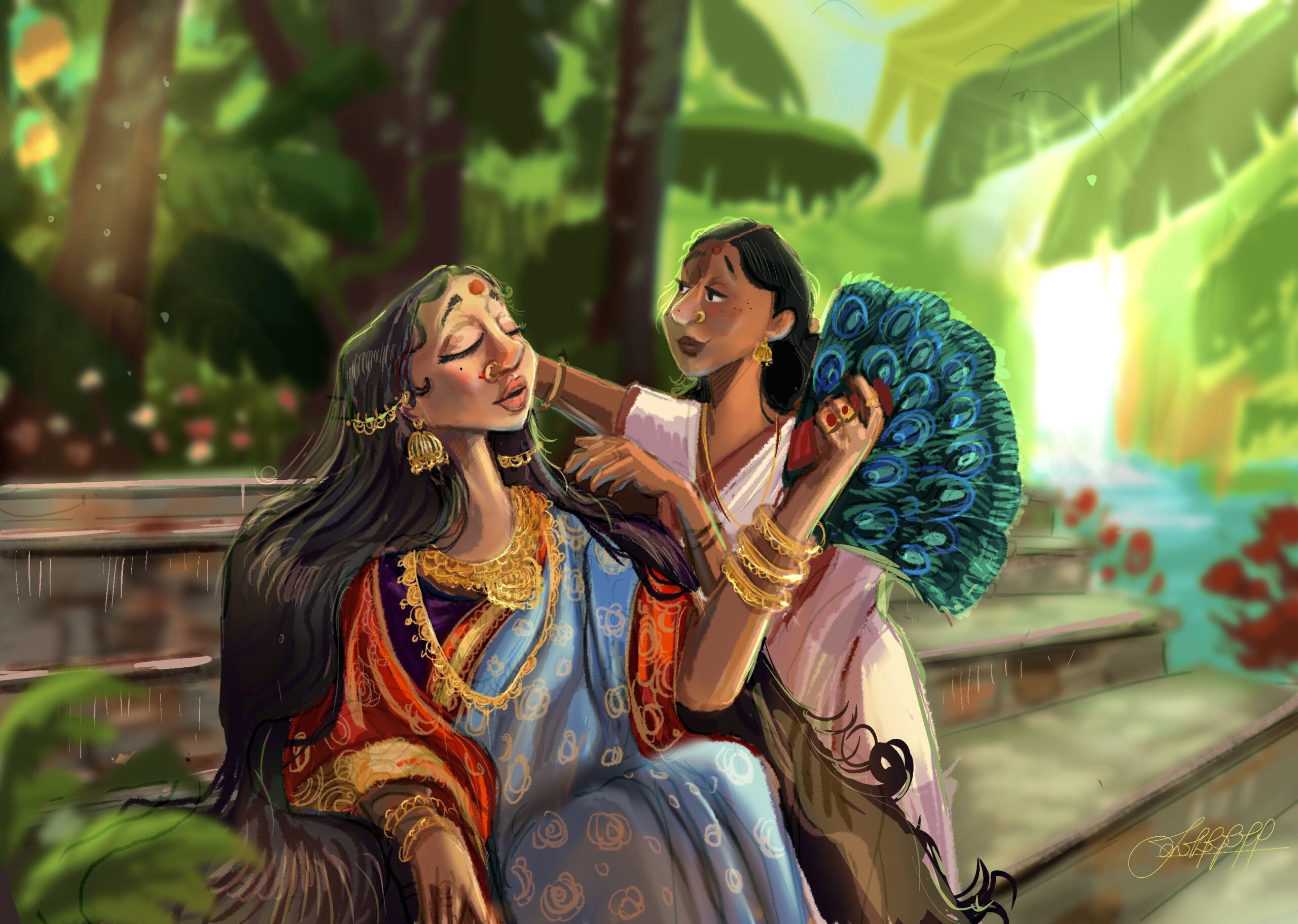
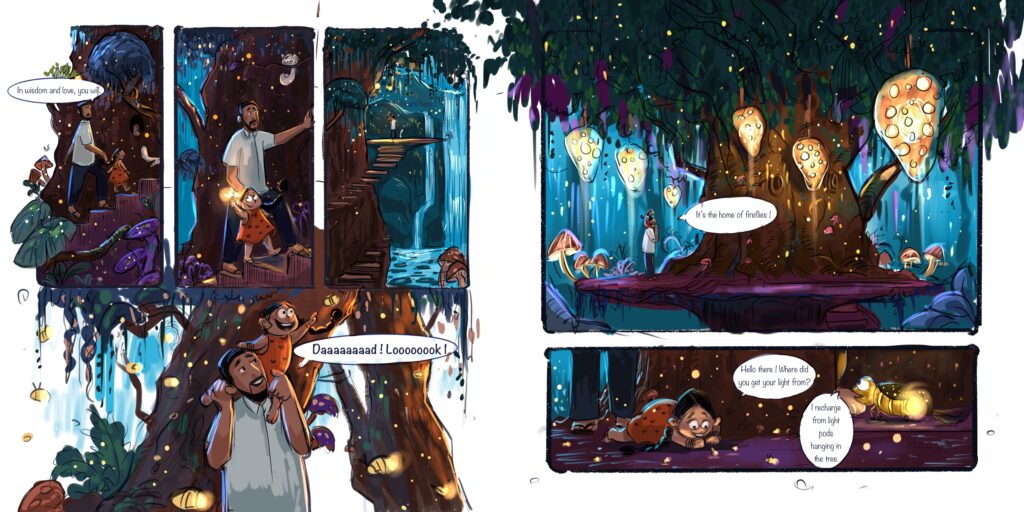
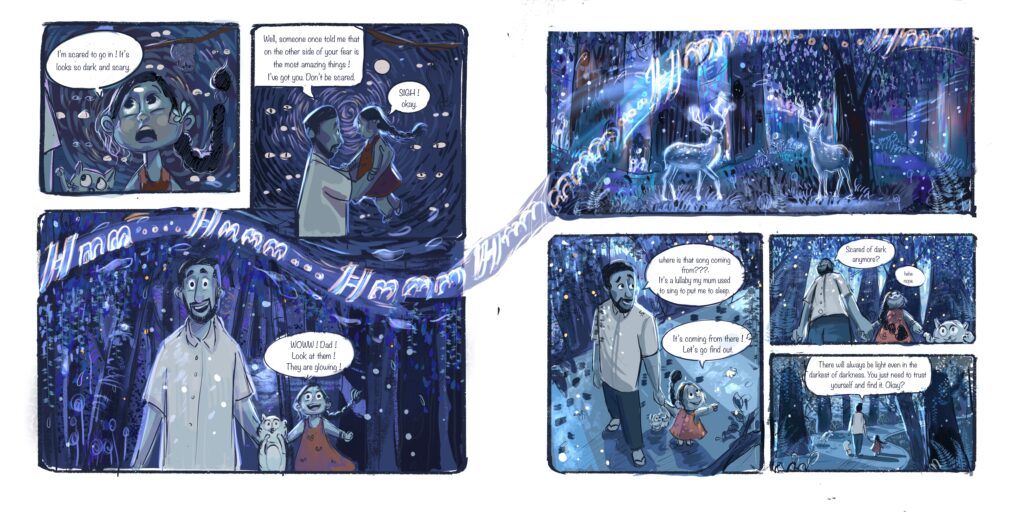
“It was such an intense, life-changing sort of grief that I knew no amount of crying was going to do anything to help me, so I started painting this sort of alternative reality where me and my Dad were together, but I was five years old.
“Four or five illustrations in one day, I was just pumping them out like I was possessed. This was all I was doing, not crying, just sitting in my room painting. I was talking to him, ‘Oh Dad do you remember when we did this?’ and by the sixth or seventh day I had about 20-something paintings, and decided I wanted to make them into a book to honour my Dad.
“I realised I couldn’t just go to any random place and talk about how much my Dad meant to me, but I could do that through art.
“It’s a story about grief, and throughout the journey my Dad is giving me all that I need to live a good life. Towards the end, I have to let him go, and it took me three days to illustrate just that one page, because we were saying goodbye, and I was finally letting him go.
“Before that I had all these nightmares where I saw Dad and I was saying, ‘Can you come back?’ After I did that book I had a dream where I showed Dad the book and he walked away and did not look back. That was like closure for me, because I didn’t get to say goodbye.”
Completing this project was to prove the impetus for her to take perhaps the biggest step in her life to date, moving to the UK: “I started looking for ways to get my work out as a book in the best way possible, and discovered that there was a Masters in children’s book illustration at Middlesex University and I just decided to do it.”
It sounds easy when she talks about it in such a matter-of-fact way, but obviously there were huge challenges for her to overcome before she could leave India and come here: “My Mum helped me a lot. She realised that being a divorcee, being neurodivergent, and being the person I am I couldn’t really survive in that country, so she arranged everything and I came here.
“That book about my Dad was to become the final paper of my Masters, but I still don’t have the guts to have it published.”
The cultural shift also proved difficult, not least because of the restrictions she had experienced during childhood: “I struggled a bit when I came here. People would ask me if I’d watched a particular movie or read a certain book, but I don’t have those memories.
“By the time I had access to the wider world, there was just so much to catch up on it was overwhelming, so I decided not to watch anything, and now I just tell people ‘I haven’t read it, I haven’t seen it’.
“It was also because I was ignorant. I have a sort of tunnel vision for things, and whatever I go through I try to make it material. It’s the only way these experiences leave me, I’m just built like that and I can’t do anything about it.”
While she was studying in the UK, Fathima had been sharing her work on Instagram: “I wasn’t too popular, but my style stood out, and one day I received a message from HarperCollins asking me to design a cover for a book.”
Once again it was to be the beginning of a new stage in her life: “I met my husband six months after coming here. When I was made, he was made next to me, God was like, ‘You know what, I’ll take a bit away from her and put it into him’, he is the universe’s poetic justice. We met on an app, and by the end of our first date he asked me to delete it. He introduced me to his family after three weeks, proposed after two months, and we flew to Kerala and got married at six months.”
Shortly afterwards the newlyweds moved to North Kensington and Chelsea, and Fathima met someone who had been working with the community devastated by the Grenfell tower block inferno.
“I was always big on making art accessible for people who don’t have access to it. I know that whatever it took me six years to learn I could easily have learned in a classroom, and my art could have taken a different direction.
“But I started teaching art to those people who had been clearly affected by the fire and it just grew from there.”
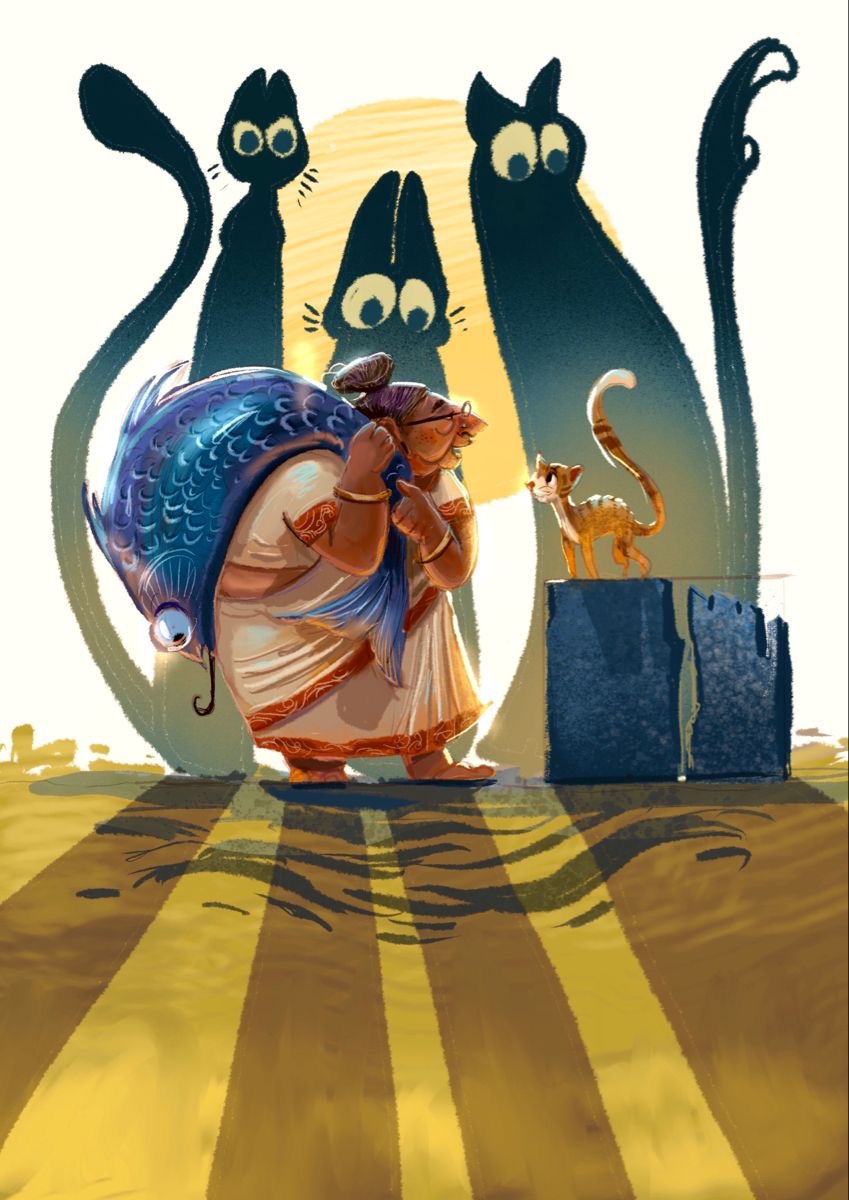
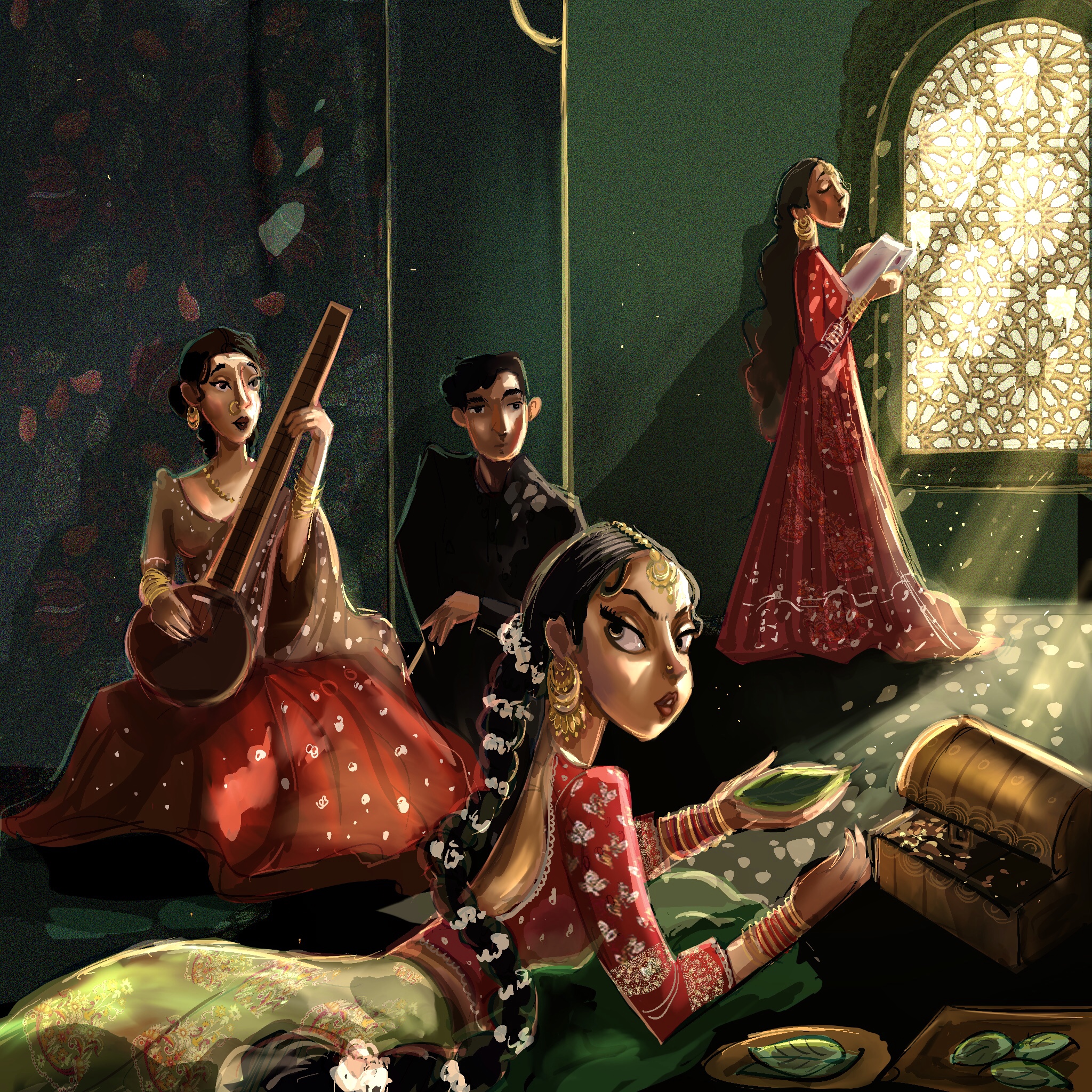
HarperCollins invited her to complete her first fully illustrated book – The Royal Spy by Ayesha Braganza, about Princess Noor Khan, who worked as an undercover spy in France during WWII – she was invited to speak and TEDX talks in India, and became a public speaker along the way.
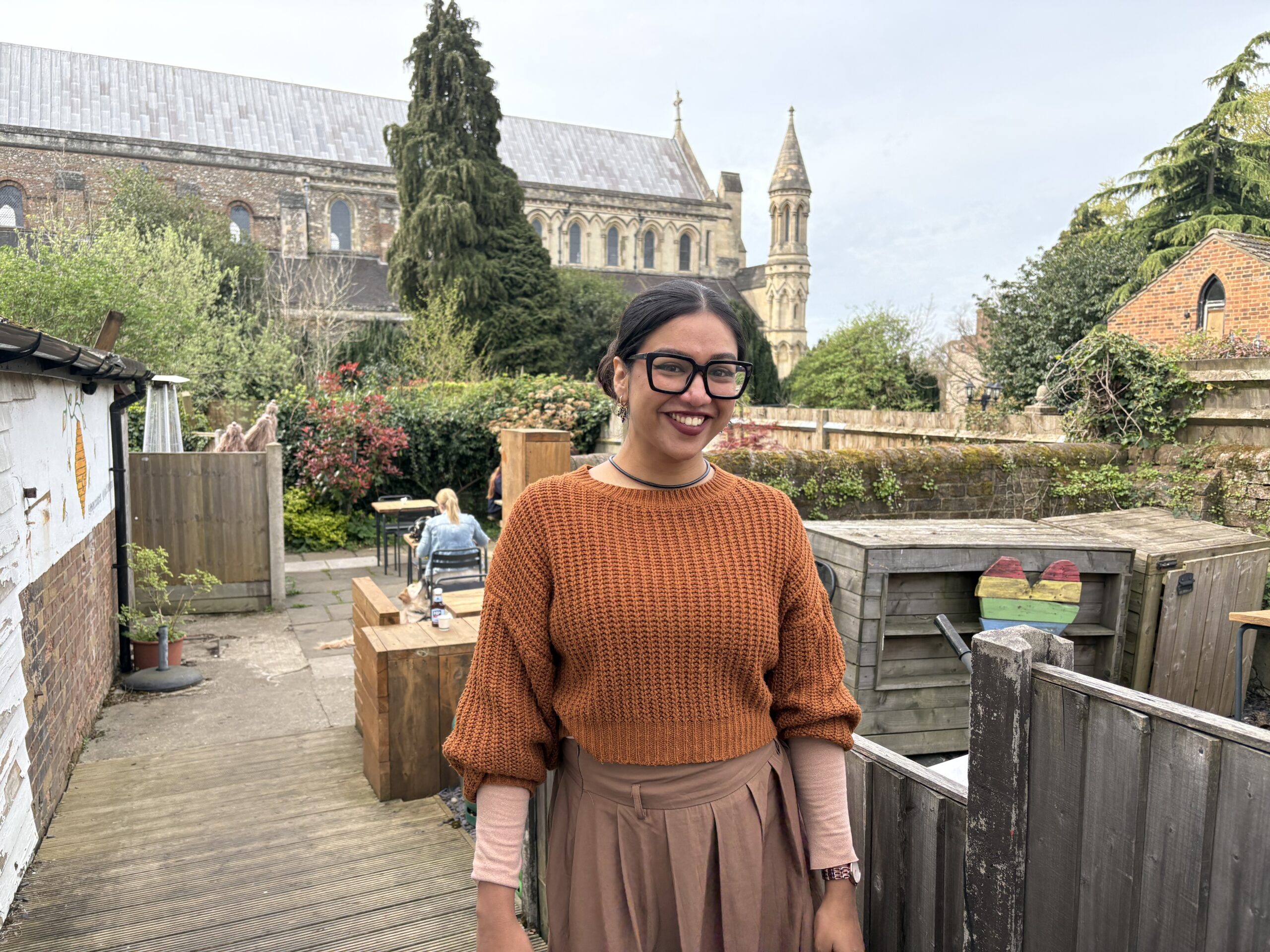
We’re sitting in the garden of George Street Canteen on a beautiful spring day, the Cathedral providing a majestic backdrop to a remarkable tale of determination against incredible odds. It’s hard not to be moved, especially when considering that this is just her talking about her journey, whereas actually living that life and experiencing those challenges is a world away from where she is now in sunny St Albans.
She was recently appointed as a visiting lecturer for the illustration department at the University of Hertfordshire, just another amazing achievement by a woman who defied preconceptions to follow her dreams. But it might have all been so different…
“I’d reached a point I had lost everything. I had nowhere to go from there, it was absolute rock bottom. There was a perceived image of me as a divorcee, and that was bad, but it was also so liberating.
“I was somebody who had tried to be good all of my life, I was a massive people pleaser. When I was interviewed for a newspaper article in my early 20s, I called them and said, ‘Can you make sure you say that Fathima wants to make her dad proud’.
I loved my Dad, but that was me being a people pleaser, and when he saw the article he was really pissed off!”
Channelling the grief from losing her father proved instrumental in her growth as both an artist and a person: “That experience just accelerated everything. I know how deep grief can go, and there were days when the pain was so bad I though I was going to die.
“But if the wound is that deep, then it can be filled back up with joy and happiness, so I create from that. I think all of these experiences happened to me so that I can sit in front of you now and have a cup of coffee, because nobody in my family has done what I have done, and because I carved that path, somebody else can walk a little easier.
“This is what I am meant to do, and if I could go back in time then I wouldn’t change a thing.”
She has now established an online platform – Studio Art Kin – for people who were told they simply weren’t the creative type, with around 72,000 people following her journey on social media.
“I paint every day, and I have learned so much that I wanted to take that and make it accessible to anybody who wants to learned art, providing the kind of education I had missed out on.
“There are lots of little art classes here in St Albans, but nothing structured with a strong module that will make you into a children’s book illustrator, but I can teach it to you in three months in a very structured way.
“What I envision here in St Albans is to create a space where people can come to draw, to heal and to learn. They come as a community, so a whole family could learn to draw with each other – I feel there is a gap yet to be filled here.”
Find out more about Fathima and her work at www.fathimahakkim.com