


31 Dec 2023
The month January takes its name from the Roman god Janus, the god of beginnings and transitions. Doorposts and gateways in the ancient world were often carved with his image. It was unmistakable because Janus had two faces, one looking backwards to where you had just come from, the other looking forwards to where you were going.
At the outset of a New Year, we too find ourselves poised between what has been and what is to come. As we look back on last year, we may feel thankful for good people and rich encounters, sad at the death of loved ones, and perhaps regretful of missed opportunities.
Looking ahead to a year brimming with possibility, we may feel a similar mixture of excitement, apprehension and fear. It’s why many of us make New Year resolutions: to exercise more, to keep in touch with friends, to diet, to ‘go green’. Resolutions often last until about 4th January – at least mine do. They tend to be about self-improvement: we resolve to do better, to make this year different.
We then get depressed because we don’t do better and it isn’t different. It’s just more of the same. It’s why the cynical among us may have already jettisoned the project. Let’s face it. It’s easy to make resolutions about making our lives better. What would be truly transformative would be to make a resolution to make someone else’s life better.
Christians have just celebrated God’s great resolution. In his infinite wisdom and love, God resolved to break the cycle of human indifference by sharing our human lot. In the birth of Jesus Christ, God became uniquely one of us: Emmanuel: God with us. It is from this foundation of love that I enter this New Year in hope.
I pray that in the months to come, we may all find the strength and the imagination to keep alive the possibility of a world where promises of individuals and nations can be made and kept, a world where needs can be seen and met, a world in which we are committed to each other’s humanity.
I wish you a very happy New Year.
+Alan Smith
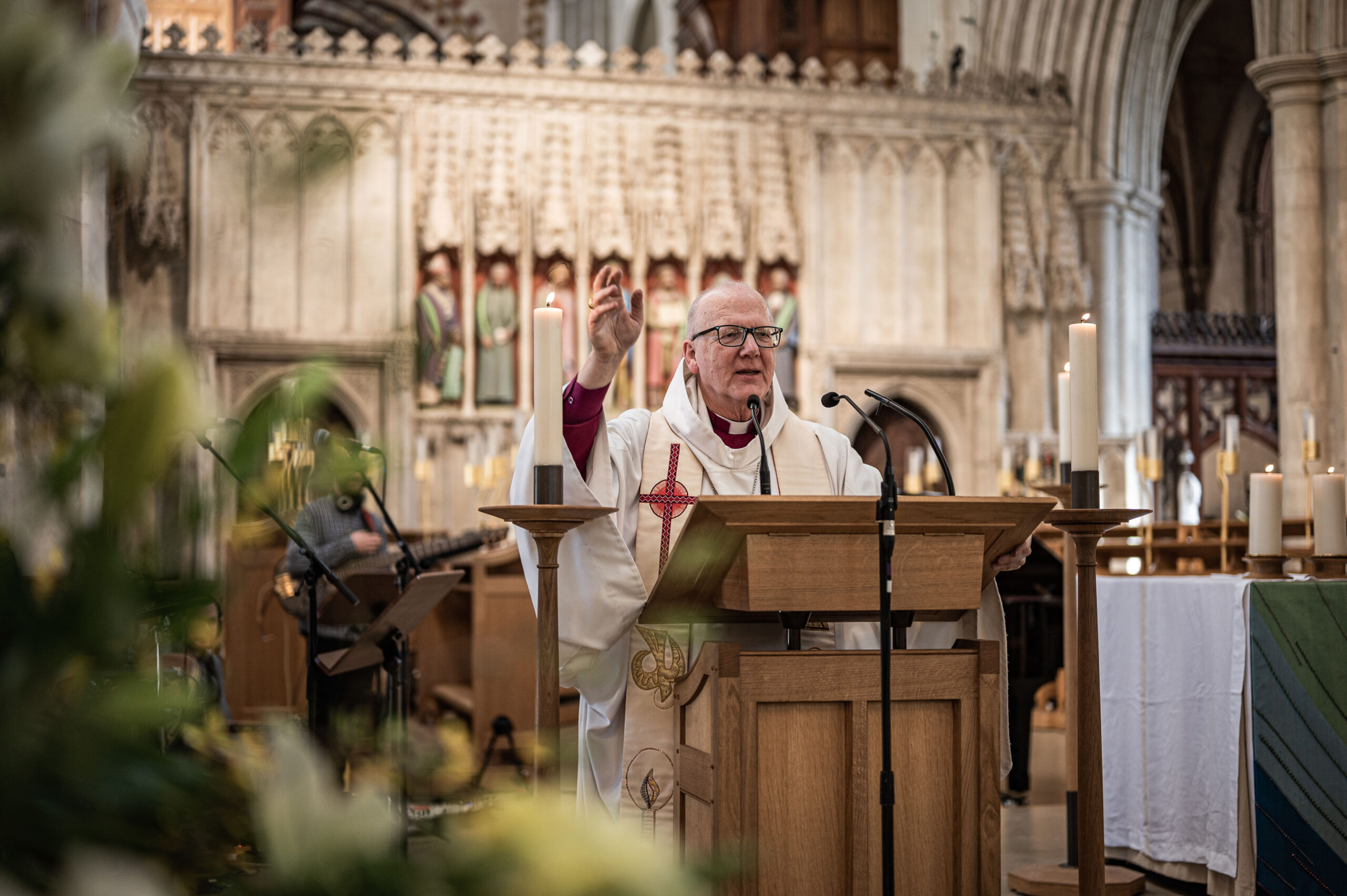
The Bishop of St Albans
