


03 May 2023
Elena Hogg, founder of local culinary company FOOD by Elena, is looking for foodstuffs in the wild…
For me, there’s something about the word ‘foraging’ that smacks of the puritanical. Knowing that food in its unadulterated form is growing naturally and abundantly in hedgerows, fields and woodlands all around us is somehow pressuring. I feel as though I should be plucking leaves and flowers, or unearthing edible bulbs and roots, for every meal.
This leads me to adopt an all-or-nothing attitude towards foraging, because you need enough knowledge to safely identify what’s not going to poison you and ideally taste nice as well, and of course you then need time to find what you’re looking for. That’s all quite a tall order, in my not terribly efficient book.
So my vigour for eating off the fat o’ the land, as it were, dwindles before it’s even begun. Luckily for me, however, my husband is far more tenacious and has a pre-existing interest in gardening and such like.
When we first moved into our current house over five years ago, he was excited to have a garden in which to indulge his green-fingered pursuits.
He spent a number of months systematically identifying everything from the particular species of plum tree we had to the herb bennet plant whose roots can be boiled with sugar and water to provide a clove-like syrup you can add to cocktails or drizzle on ice cream. Which we did, and it was actually quite nice. Was it worth
the effort and the mess? Probably not, but don’t tell my husband.
We have wood sorrel too, whose tiny leaves have an apple-like flavour and, if you can collect enough of them, make a very refreshing sorbet for a palate cleanser if you’re being fancy.
Of course, to all these uncultivated plants my resident Alan Titchmarsh found in the garden he added countless fruit trees and bushes, as well as myriad herbs from shiso to chocolate mint (uncannily like After Eight mints in flavour), which have come in extremely handy from a catering point of view. The apricot tree finally produced a single apricot last year and you’d have thought a national holiday was in order, the fuss he made.
I can tell, though, he feels an even more profound sense of reward from the weekend ramble in Nomansland or Symondshyde with the kids in tow, punctuated by lessons on how to identify lime flowers, used for making tea,
and hedge mustard, which has a very, erm, mustardy flavour and is not to be confused with jack-by-the-hedge, which also tastes as though it’s the main ingredient in a jar of Coleman’s finest and grows abundantly at this time of year.
On these weekend wanders, we have also learnt how to tell the difference between hemlock, cow parsley and sweet cicely, which are all almost identical, but the first of which will kill you in minutes and is terrifyingly commonplace, the second being safely edible but disappointing, and the third being delicately
aniseed-y in flavour and very tasty thrown in with a bowl of macerating berries.
The children’s initiation into all things foraging led to something of a debacle for our youngest a couple of years ago, in fact.
There’s a hawthorn bush at the bottom of the playground at her school and, one break-time, fresh from a recent instruction on how hawthorn bushes generously offer up both their leaves and their berries for our delectation, she began handing out the berries to all her friends, eliciting great alarm from the teachers, naturally.
We’ve since explained that it’s not allowed to forage at school, much to our daughter’s indignation.
All this not-always-solicited information on the local edible flora (sometimes, just sometimes, you just want to go for a walk without any identifying, picking or tasting) has, however, paid off.
I have become deeply appreciative of the array of alliums on offer, even as close as the grass verge near my house.
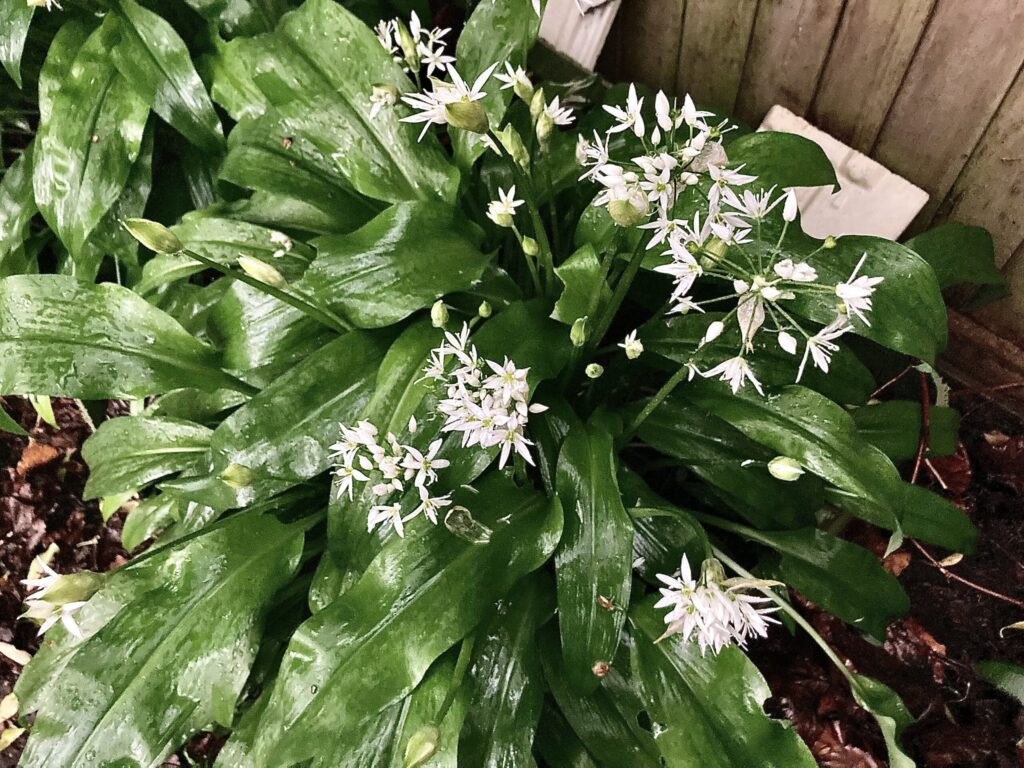
I indiscriminately call them all ‘garlic plants’, to my husband’s great annoyance, but they’re actually three-cornered leek, wild garlic and few-flowered leek (which we’ve only found at Batchwood so far).
Right where I live, there’s an abundance of three-cornered leek, which we pick, wash carefully (because there’s an abundance of dogs, too) and chop into salads.
They are pretty peppery in flavour, a little like spring onion, and could be added to regular onion in a base for a ragù.
The flowers are less strong and give a pop of sweetness when you bite them.
They look very pretty atop any dish and I use them to adorn my truffled ricotta and balsamic pearl canapé cups.
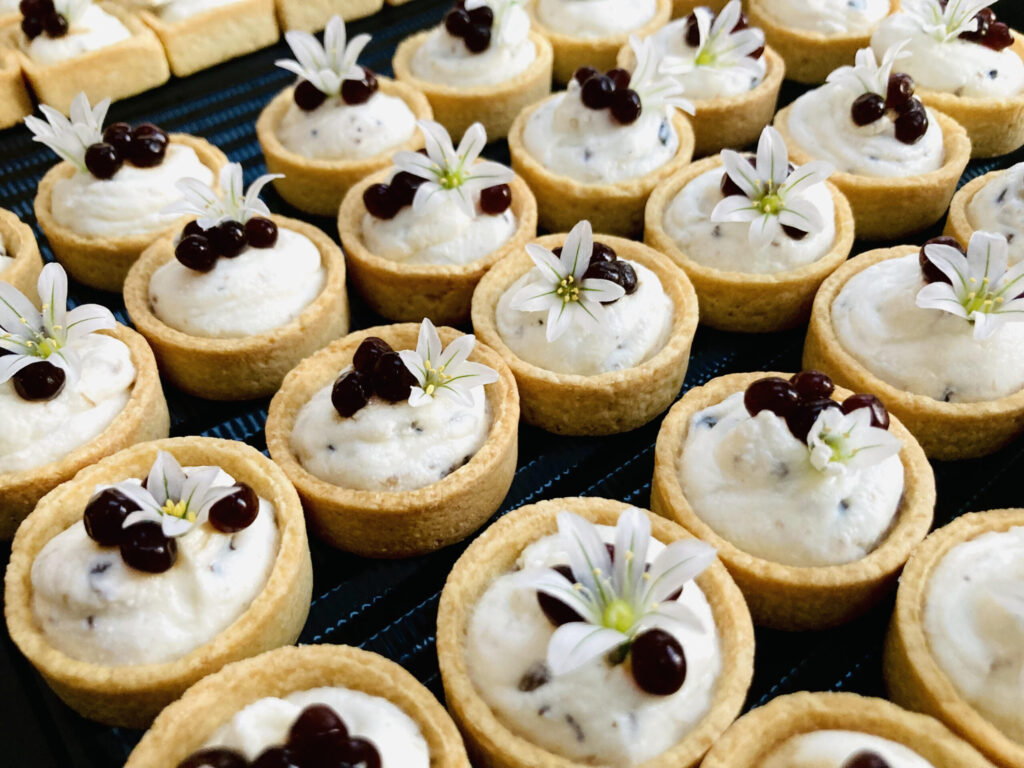
They add to the aesthetics but also the flavour profile, with earthiness from the truffle, balsamic sweetness and then a blaze of garlicky fire to offset the cool ricotta.
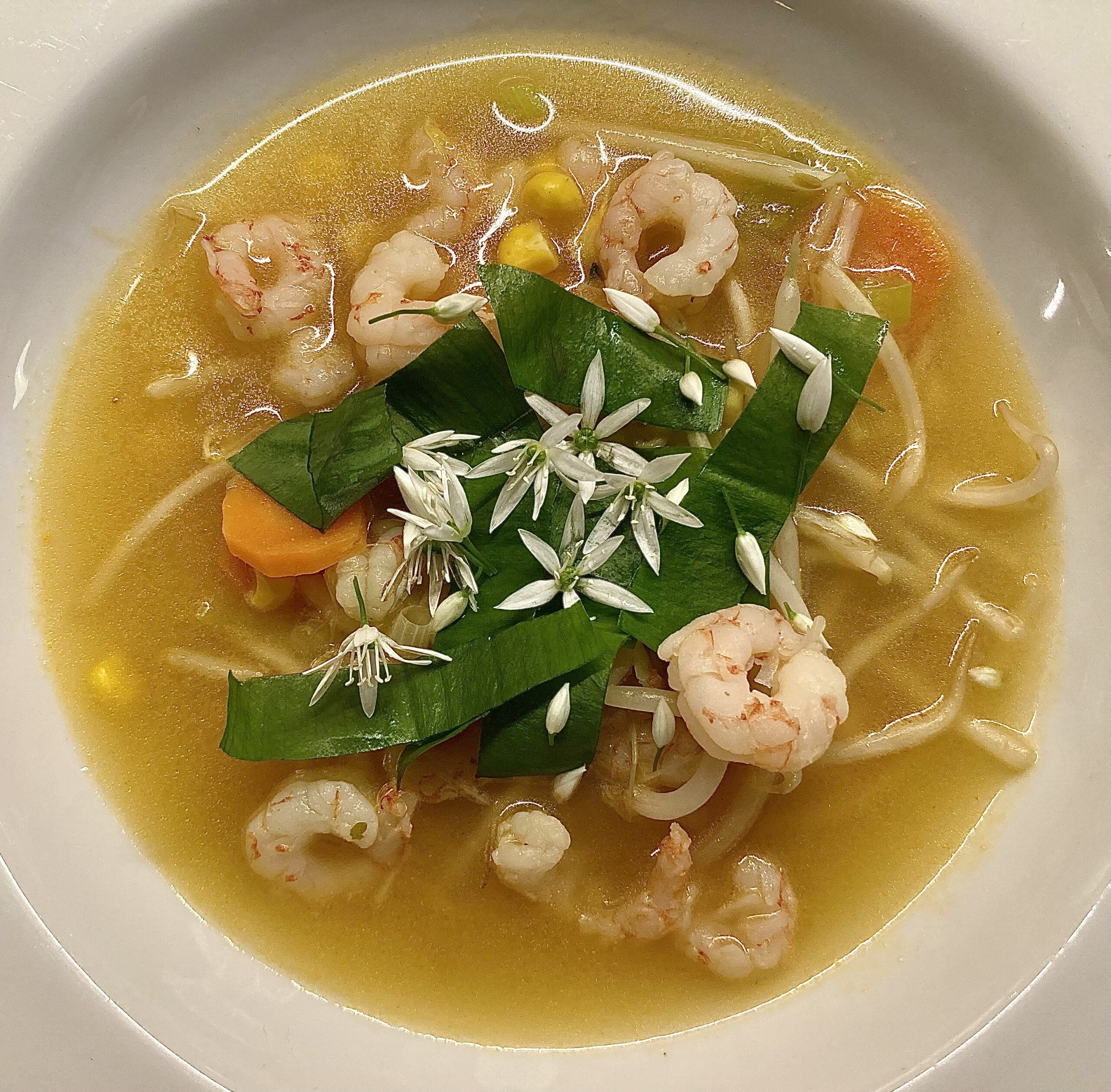
This week, I was delighted to discover the wild garlic plant at the bottom of the garden had flowered. Not so delighted as to behold it for long though; I’ve already mutilated it unceremoniously for my lunchtime salad and to shake up one of our weekly staple suppers – Thai-style broth with prawns, beansprouts, and carrots. Or whatever veggies I have in. Instead of garnishing with coriander leaf as usual, I added shredded garlic leaves instead and they were buttery and garlicky in equal measure, complemented beautifully by a sprinkling of the flowers too.
This is when foraging works for me: when its bounty is paces away from my kitchen, has no identical deadly twin, and adds a huge punch of flavour to anything it graces. Not forgetting that smug sense of achievement you get from using something a bit trendy that you didn’t spend any money on. Home-grown shiso tempura, anyone?
