


14 Apr 2023
For the first time, the city’s Museum + Gallery is holding a special exhibition focused on one of the forgotten conflicts from its long history.
The Wars of the Roses (1455–1487), were fought between two rival branches of the Plantagenet family (the houses of Lancaster and York).
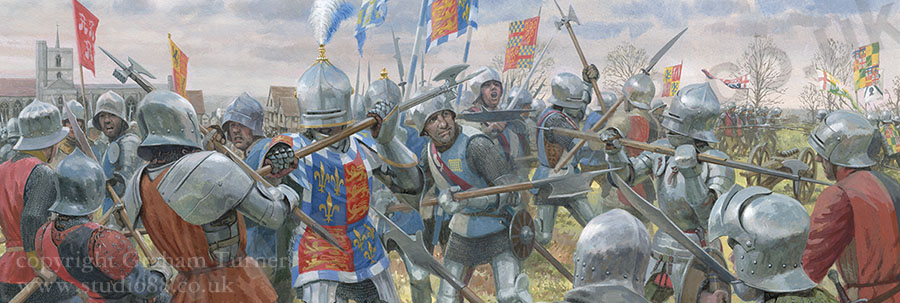
The Second Battle of St Albans took place on February 17 1461, when the Yorkist army, commanded by Richard Neville, the Earl of Warwick (nicknamed ‘The Kingmaker’), attempted to bar the road to London, north of the town, at Bernards Heath.
The Lancastrians, under Queen Margaret of Anjou (known as ‘The She-wolf of France’), outflanked the Yorkists, taking them by surprise and winning the day.
The victors released the mentally unsound King Henry VI, looted St Albans, and attempted to retake London. If London had opened its gates, the Lancastrians would have won the war. But London did not want to suffer the fate of St Albans and a month later a Yorkist victory at Towton in Yorkshire led to a Yorkist monarchy and eventually to Richard III.
It has been estimated that over 105,000 soldiers and civilians, including many members of the English nobility, died during the conflict. The 1461 battle was one of the largest battles fought during the Wars of the Roses which led ultimately to the Tudor dynasty.
The exhibition, which runs until June 25, will guide visitors through the chronology of the Wars of Roses, provide a timeline for the campaign and explain what happened during the battle. The exhibition contains objects and replicas to explain the nature of warfare at this period.
One of the star objects is a cannonball, the second oldest known in England, found near the present site of the King William IV pub on the Sandridge Road.
For further information see www.stalbanshistory.org/
