


09 Aug 2025
St Albans MP Daisy Cooper is inherently an optimist. It comes across in most of our interviews, an unshakeable belief in the possibility of a better tomorrow, and hope in the ability of our elected representatives to turn a corner and make it happen, no matter their political persuasion.
But even her sunny disposition has been unable to evade the shadows cast by the performance of the Labour Government over the past year, as it has failed to turn things around for the country after an unexpectedly rocky first few months in power.
So how can things still be going so badly wrong?
“I wish I had the answers for you. One of the deeply frustrating things is that the Government is doing some good things that will help in the long term, but that’s like five, ten years down the line.
“But we need the Government of the day to be able to pat its head and rub its tummy at the same time, so doing the long-term stuff but also actually delivering things right now that improve people’s lives.
“But the Government seems to have nothing. Whenever they point to something positive they’re doing, they then undermine it with something else.
“For example, they said they want people with savings to invest that productively in British start-ups and scale-ups, and then they starting talking about changing cash ISAs [by reducing the allowances for savings] which means everyone’s pulling their money out of investments.
“They say children are really important, then cut adoptions funding. This doesn’t add up to anything, it’s just so frustrating.
“I’ve always felt that even when people don’t agree with me, they like the fact that I’ll say what I think about something, so at least they know where I stand. I think the Government really needs to set out a vision and say what it does believe in and what it doesn’t believe in and get on with it.”
Away from domestic politics, she said the biggest upheaval of the past six months has been the return of Donald Trump to the US Presidency.
“We all knew that Trump 2.0 was going to be different from Trump 1.0 because he and his team were saying they had made mistakes in the first term and hadn’t moved fast enough. We knew he liked being called Tariff Man, so it shouldn’t have been a surprise to anybody that he came in with a sweeping set of tariffs.
“And yet again it seemed to really catch our Government off guard, and you have to think, what have they been doing for their first six months? We knew he was going to come into office, and although we didn’t know exactly the kind of tariffs he was going to go for, he had given an indication. But there didn’t seem to be much in the way of resilience coming from Downing Street.
“It just feels we’re in a bit of a perma-crisis at the moment, with one thing after another, and pandering to his ego as well. Prime Minister Keir Starmer is basically sucking up to Donald Trump, and doesn’t have anything to show for it.
“We think he should be talking tough, and that’s why we called on the Government to run a Buy British campaign and support British producers, manufacturers and crafters in our own communities.
“You just have to compare the statements made by [Prime Minister] Mark Carney of Canada. Obviously our economies are different and buying Canadian is very different from buying British because Canada and the US’ supply chains are so much more interlinked, but nonetheless there is that kind of positive patriotism which we haven’t seen here.
“I also think there is a much broader point here, which I grapple with in my role as Treasury spokesperson for the [Liberal Democrats], which is the era of interdependence is over.
“We can no longer depend on other countries. We have to cooperate with them, but we’ve also got to look very seriously at our energy security, our food security, our national security, and at the moment, we are left wanting on every single front.”
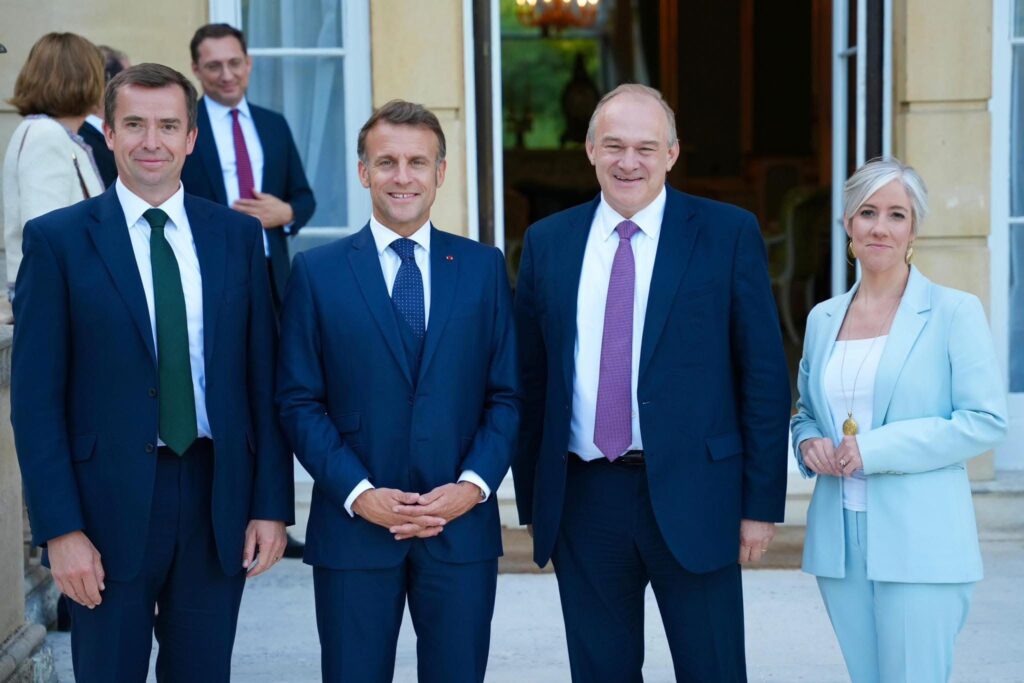
Recent surveys have shown the other major countries in Europe they were overwhelmingly in favour of the UK rejoining the EU, something which doesn’t seem to be on the Government’s agenda for fear of unnerving that section of society who argue that “the people have spoken” over Europe.
Is it fair to say there’s nothing wrong with holding your hands up and saying we made a catastrophic mistake in Brexit?
“Well, look, you know that I’m an internationalist. I’m a European. I was on all of those marches trying to persuade people that we should stay in the EU back in the day, but sadly, we lost that argument.
“We are at now at an early stage of rebuilding trust between the UK and the EU. My party are pressing this Government to go much further and much faster. We’ve said we’ve got to demonstrate that we can build a relationship with the EU in the interests of our country, and we should do that by establishing a bespoke customs union that demonstrates visibly to people around the country that we can create a new market for British businesses.
“We can scrap red tape and boost income that we can then use to put our public services back on their feet. We need to be able to demonstrate that a stronger relationship with Europe can work in the interests of the British people.
“The frustration for me is that Keir Starmer had this reset meeting with the EU and has nothing to show for it. They’ve agreed they’re going to have lots of meetings. They’re going to have lots of summits. They’re going to negotiate a lot.
“But all the things that they’ve said they’ve agreed to, there’s no meat on the bones. So they’re going to discuss a youth mobility scheme, but they haven’t actually agreed one. And the only thing they’ve agreed is selling out our fishing rights, which is bonkers.
“So again, it’s just really, really frustrating but I genuinely do welcome the change in tone and the fact that they are at least trying to engage with Europe productively.
“I thought it was very symbolic that [French President Emmanuel] Macron did a state visit and spoke to Parliamentarians, and overwhelmingly he was welcomed and it was a positive thing, but I do find it frustrating that there seems to be a real lack of ambition from this Government.”
Is this stance not brought about by fear of the rise of Reform and a reluctance to antagonise Nigel Farage?
“Reform will criticise whatever they do, so either you want a reset or you don’t, either you want growth or you don’t, you want a youth mobility scheme or you don’t. If you say you want one, then people will agree one, that’s the point.
“But at the moment, they’re in danger of sitting on the fence, where those of us who can see that there’s an opportunity to demonstrate that having a close relationship with Europe benefits Britain, and they’re in danger of not fulfilling that, while on the other hand, they’re doing just enough to be on the receiving end of a whole load of flak from those people who claim that this is some kind of surrender. And there’s a real danger in that as well.
“The Government says its number one mission is economic growth, and the most obvious way to get growth is to trade with a massive trading bloc that is right on your doorstep.
“But they’re so tentative and nervous about engaging with Europe and ripping up that red tape and allowing British businesses to trade more freely.
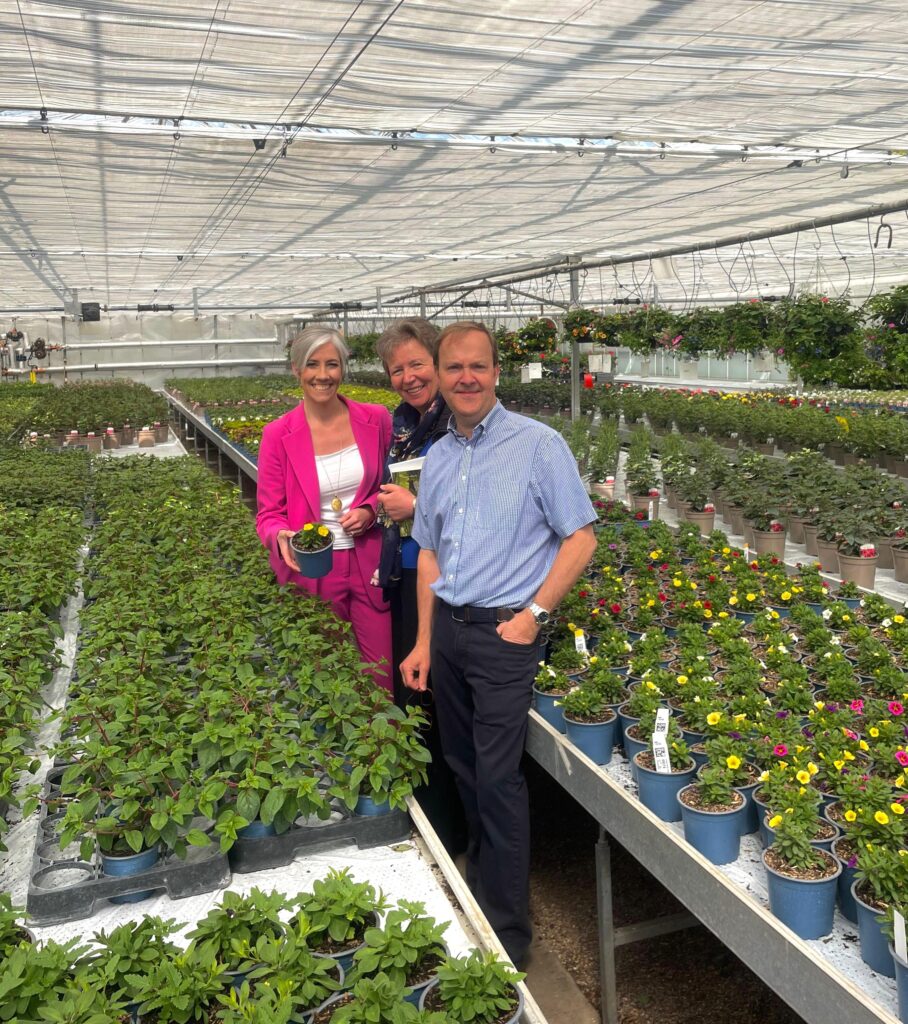
“I hear it time and again locally. Local gardening centres here in St Albans have to buy little plants from places in Europe. But because of red tape, these plants often sit in a dark room for three days without being watered in a warehouse somewhere on a border, and every individual box now has to get checked, which means that plants fall out, then get put back in again.
“So by the time they arrive, some of them have died, and that means that that’s a huge economic loss to that local gardening centre because of the regulations have been brought in post-Brexit.
“Now, if you could rip up some of that red tape and accelerate that process so that not every single individual box has to be checked, then those plants would get here faster, they’d be in better condition, and the local gardening centres wouldn’t be losing so much money.
“There are also lots of small businesses that just don’t export to Europe anymore because the forms they have to fill in are too complicated, and the additional cost that people have to pay at the other end is too high, and so many businesses just don’t export anymore. The Government’s just not going far enough on sorting it.”

Arguably two of the other national issues which are having the biggest impact on the local agenda are the Government’s increased housing targets and the broken business rates system.
When it comes to housebuilding, are these targets merely speculative without the skills base to back them up? We don’t have a construction industry that can possible deliver these targets, so is the whole issue just pie-in-the-sky and we’re actually worrying about nothing?
“Well time will tell. There are some initiatives, for example at Oaklands College, where they’ve got a fantastic new course training young people in modern construction techniques, which are very different from old construction techniques.
“Obviously, they learn how to be an electrician, how to do plumbing, all that kind of stuff. But they’re also looking at new green technologies, new bricks, faster ways of building homes.
“I guess the question will be to what extent the Government realises that you can’t build a load of homes, railways and energy infrastructure if you don’t have the skilled people to build it, and that’s a point I’ve made several times in the House of Commons. The Government has a skills strategy, but that’s all it is.
“As a local MP, I would say that if the Government says they want to build lots of homes and they’re putting legislation in place to accelerate their approval, then of course we have to take it seriously.
“But one of my big frustrations all round is that when you have this top-down approach, the Government hasn’t put any target in place for social homes, and so the only houses that get built are the really big ones that people in the local area can’t afford.
“There are lots of people in St Albans who recognise we have a local housing crisis and want their children or grandchildren to be able to stay in the area and live here. If the Government is intent on building on the Green Belt – and I think we should protect it – then at the very least say they have to be social homes, and yet they’re not delivering that.
“We also don’t regulate our existing housing stock. I have a long-standing campaign to try and get Airbnbs regulated so that local authorities can decide whether or not to have more or less of those.
“St Albans is a really lovely place to live, lots of people want to move here, and they make it their home and integrate. But there’s clearly a pressure here and you need to fix the housing market so people can afford to live here.”
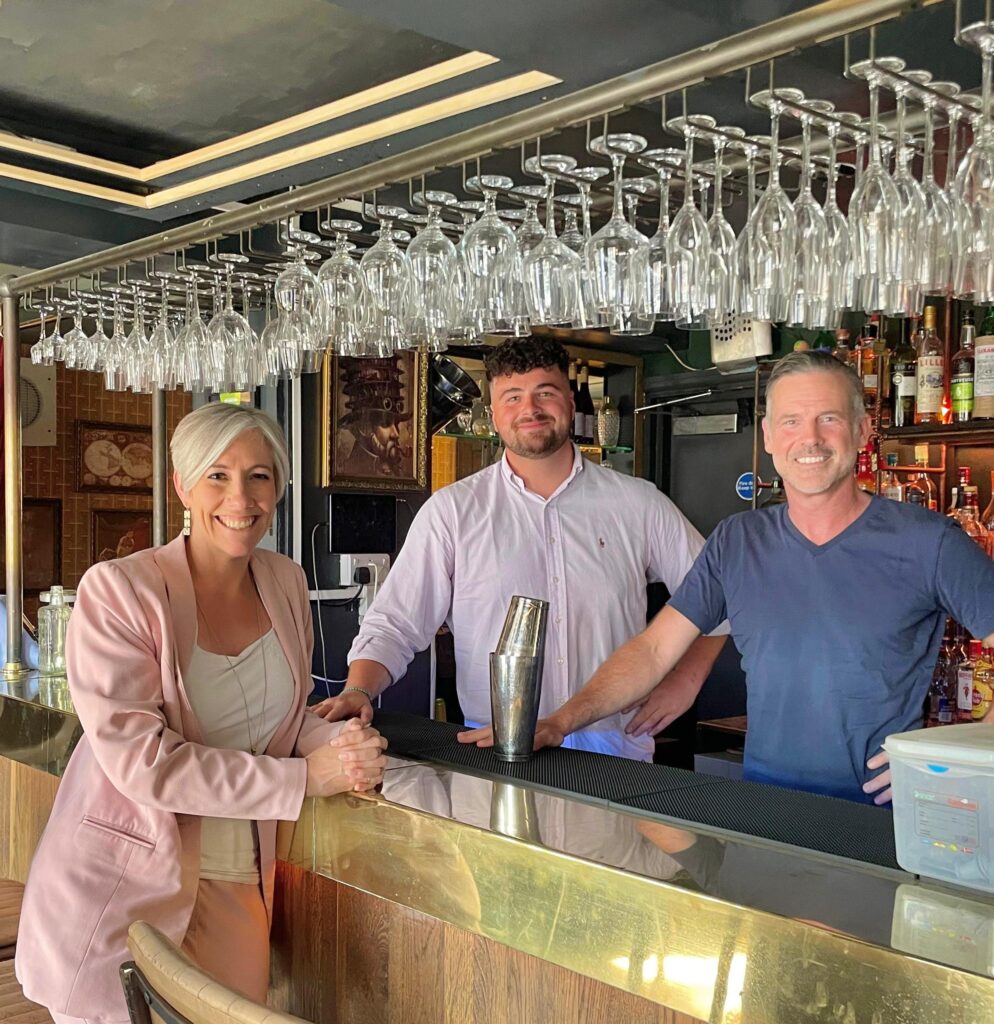
When it comes to the fundamental reform of business rates, an issue Daisy is particularly passionate about, there does not seem to be a real long-term strategy from the Government, with nothing more than tweaks around the edges.
“Labour have announced a two-stage approach to changing the business rates system. The first stage, which has already come into effect in this tax year, is a reduction in rates relief, which in effect means people’s bills have gone up.
“That’s been a massive hit to a lot of local businesses and it’s pushed some of them over the edge. The second stage, which will happen in the next financial year, is they’re trying to rebalance the burden in terms of who pays what in terms of business rates. Now, on paper, this looks like a good sense of direction.
“They want some of the out-of-town warehouses to be paying more, for example, than city centre bricks-and-mortar small businesses, and that’s a good thing. But when you’ve got a broken system and you tinker with it, it throws up unintended consequences.”
She elaborated: “We’re now in a situation where, for example, a hotel, a soft play centre or a music venue like The Horn, which happens to be a very big building, but may struggle to turn over a huge amount of profit, is going to have to pay significantly higher rates.
“This is because business rates are not based on how much money you make, they’re based on square footage, so you have situations where the rates are going to massively increase, but people’s profits aren’t going to go up, and they simply can’t afford it.
“I hear time and time again, rates, rents and wages are the biggest costs to hospitality, and all three of those have gone up, and on top of that so have energy prices and food, so it’s really tricky, particularly for the hospitality industry.
“If you go out and about in St Albans it still looks busy and the restaurants are full. But if you speak to the owners they’ll tell you they have the same number of covers, but they’re having a glass of wine, not a bottle of wine. Or they’re just having a main course and not a starter.
“So they’ve got just as many people coming in, they need just as many staff and have the same energy costs, but everyone’s buying a little bit less, so the profits get trimmed around the edges, and it gets to the point where some people are starting to wonder if it’s worth their while just to be ticking over.
“We’ll keep campaigning in Parliament on business rates and calling for fundamental reform, the energy market needs a proper shake-up in terms of whether it’s a competitive market for small businesses, and then there’s a much bigger piece of work on who owns our high streets and how that’s regulated.
“What I hear from local businesses is local landlords really want the area to succeed and will come to an agreement on any rent negotiation, but if you have a commercial landlord or private equity company, or an individual who lives on the other side of the world and doesn’t give two hoots about our area, they’re often very uncompromising. Where that happens and they put the rents up, businesses are forced out and have to move elsewhere.”

She is also concerned about cuts to support for more vulnerable members of society.
“I think that the Labour Government should have learnt the lesson that the country doesn’t want them to be the same as the last lot. They promised change, they haven’t delivered change, and they don’t look and feel like they are change. And having learnt that lesson in quite a brutal way over the winter fuel payment, I think they should have learnt that on other issues.
“So when they suddenly decided to go for a tax grab by trying to make cuts to Personal Independence Payments (PIP) for disabled people, it was absolutely outrageous. The Government says it wants to get more people into work, but it was undermining this because a lot of disabled people who do work are able to because of PIP. If you take those payments away, many of them wouldn’t be able to, and their carers wouldn’t get a carers allowance, which would mean they couldn’t work either.
“None of it adds up, and I had really hoped the Government would have learnt those lessons about winter fuel, but I’m not sure whether they have.”
It can’t all be doom and gloom can it? Surely there are some positives to come out of the past six months?
“Yeah, here are some things that I am really pleased about. One was making sure we keep our GP practices in city centres. There were outdated Treasury rules which prevented local health boards from spending what they wanted to, and this was a risk that was coming down the line, which would have seen GPs have to move out to ring road locations. I think we’ve managed to stop that happening, and I’m pleased the Government listened on that one.
“There was a national campaign started by some local residents about summer-born children with special educational needs who were losing a year of education when they changed from primary to secondary school.
“I wrote to the Government about this, I asked questions in the House, I spoke to a minister privately about it, she understood the issue, she looked into it, she’s now changing the guidance, and that will change lives for young people.
“That means that a bunch of kids who really need additional support are not going to lose a year of education. So there are ways in which the Government responds to good ideas and responds to opposition MPs, and those things will change lives, and that’s really exciting.”
The new Lib Dem-run administration at County Hall is also a sea change in local politics, which has already seen a fresh impetus in resolving long-standing issues over Special Educational Needs and Disabilities (SEND), an area which has been failing in Herts for many years.
“I was so relieved that the very first thing they announced was this SEND summit [planned for September]. As I’ve said to you before, I go round to schools and meet children and their families. I have surgeries with local parents who feel like they’re fighting the SEND system all the time just to get the support their children need.
“Often they come with solutions, or the schools have solutions, and for too long they’ve just felt like their ideas haven’t been heard. But now County Hall has started some listening exercises and it’s been really lovely to hear people saying that this is the first time they’ve been asked for their input and views on the service.
“I really, really hope there will be a change of attitude and political priority, and this sends a really strong signal about how seriously we take the fact that children were let down by the last administration for so long.
“At the same time, on SEND in particular, there needs to be national reform, and one of the unfortunate rumours is that the Government is going to withdraw EHCPs (Education, Health and Care Plans). The system is quite clumsy, but what they do say is this is your child’s needs, this is the support your child needs to have, and these are your legal rights for going about getting it.
“Which of these three things doesn’t the Government want included in the process? We don’t know, and so it feels like the PIP story all over again. We know at some point in the autumn the Government’s going to bring forward proposals for reforming the SEND system, and there are a lot of families feeling anxious about this, so I just wish the Government would have been clear about the reforms they want to pursue so people have certainty.”
With Labour set to begin its second Parliamentary year at the start of September, there are obviously other things she would like to see happen on the national stage?
“I think at the moment, the Government hasn’t set out its direction and indicated what it wants to achieve in a second year, and therefore it’s quite difficult for those of us in opposition to see what that would look like.
“What I would like to see is the Government focus on things that will make a genuine difference to people’s everyday lives. So whether that is reforming the SEND system in a way that means that children can access support faster in a new system that is less confrontational, whether it’s taking real action to tackle energy bills and to drive them down, whether it’s being more ambitious about our relationship with Europe, or whether it’s about recognising that you can’t just tackle the climate emergency with new infrastructure, you’ve got to protect nature as well, and that climate and nature are two sides of the same coin.
“On all of these issues, I really hope the Government and the ministers and MPs in the Labour Party spend the summer talking to people in their area, and then when they come back in the autumn, I genuinely hope for our country that they have a renewed sense of what’s on people’s minds, and if they can really deliver on things that people care about, hopefully that would improve things for all of us.”
