


31 Dec 2023
With the right planning, and careful use of allowances, a couple can significantly lighten their tax load in retirement, as Lumin’s Managing Director Martin Cotter explains.
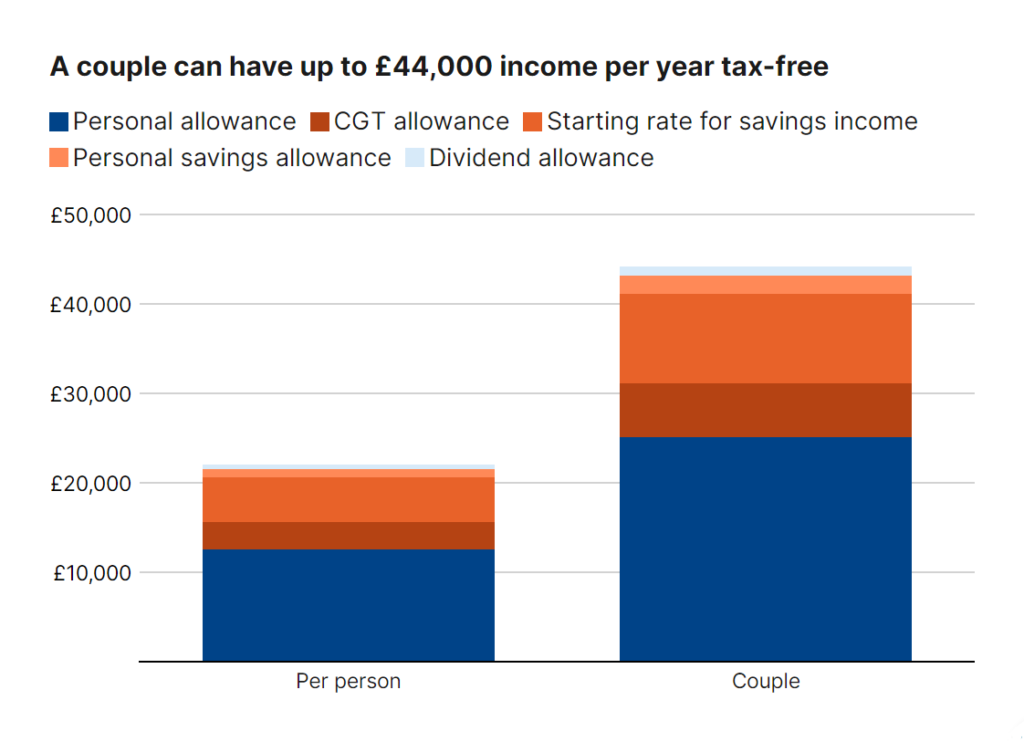
Most retirees can substantially reduce their tax burden once they stop working. With careful management and disciplined use of allowances a couple could be able to shield up to £44,000 from income tax in the 2024/25 tax year (see chart).
A changing taxation picture
During retirement the taxation picture undergoes a fundamental shift for most people. Your income will drop significantly, meaning your tax burden will also fall. You can utilise a number of helpful allowances to stay within the basic rate tax band for income tax (20%), minimising your tax bill still further. In some cases, with careful planning, a retired couple may be able to negate income tax entirely. It’s important to keep track of all forms of income.
Pension withdrawals, rental income, State Pension payments and dividend income are all taxable.
Make the most of tax allowances
Pension withdrawals are subject to income tax at your marginal rate. But if a couple each apply their personal allowances of £12,570, over £25,000 can be taken tax-free each year. The capital gains annual allowance can be used to ‘harvest’ investment gains – or other taxable gains. This allowance is £6,000 currently, but will be £3,000 per person for the 2024/25 tax year.
Individuals with less than £17,570 of non-savings income may be able to benefit from up to £5,000 of tax-free savings income. This allowance is known as the starting rate for savings. Every £1 of non-savings income above the personal allowance of £12,570 reduces your starting rate for savings by £1. Basic rate taxpayers with income above £17,570 can benefit from £1,000 tax-free savings interest per person via the personal savings allowance.
Paying less dividends tax
Investors earning income from dividends (on investments held outside of tax wrappers) can also take steps to reduce their tax bill. The dividend allowance of £1,000 will be cut to £500 from April 6, but a couple can still enjoy tax-free dividend income of £1,000 annually. Staying within the basic rate tax band also sees you pay tax on dividend income (above the dividend allowance) at just 8.75%, rather than 33.75% and 39.35% for higher and additional rate taxpayers.
ISAs and pensions
ISAs and pensions form the bedrock of retirement income, but how and when should you draw on them? Many retirees make tax-free withdrawals from flexible ISAs first and save pensions for later in retirement (leaving them invested and with the potential for future growth), as pensions are typically exempt from forming part of the estate for inheritance tax purposes.
Using ISA assets first enables you to continue making pension contributions of up to £60,000 in each tax year. This may be helpful if you are continuing to work part-time, as once you start drawing from pensions you are limited to a maximum annual contribution of £10,000. You can take up to 25% of your total pension pot as a tax-free cash lump sum when you start accessing pension benefits.
Strategically spreading pension withdrawals (beyond the 25% tax-free lump sum) over a number of tax years can help ensure overall income stays within the basic rate tax band, rather than making a large one-off withdrawal in a given tax year, which would likely tip you into a higher tax bracket.
A retired couple making full use of their allowances and exemptions can save thousands on tax each year. Find out more by calling 03300 564 446.
