



30 Sep 2026
Does the district’s recently adopted Local Plan provide the protection against speculative development which councillors claimed it would?
That’s the question being asked by campaigners fighting against a scheme for 84 homes on Green Belt land in Sandridge village.
The Local Plan identifies where more than 15,000 homes should be built across the district, with sites selected through a rigorous process intended to consider housing alongside infrastructure, transport, services and the wider spatial strategy.
But the Sandridge proposals are for arable land owned by the Salvation Army behind Shottfield Close, with the council’s planning officer recommending approval despite the site not being included in the Plan.
When the Plan was adopted in September, SADC Lib Dems claimed it was “a move that will ‘shield’ the district from unplanned speculative development by big developers…”
They added: “This marks the first Local Plan which has been successfully completed, in more than 30 years, after two failed attempts by former Conservative administrations left local communities exposed to the whims of big developers pushing through planning applications…”
In August, SADC’s development management committee agreed to defer the decision over Shottfield Close until its next meeting this evening (Wednesday) to examine issues surrounding uncertainty over a proposed skylark habitat at Pound Farm.
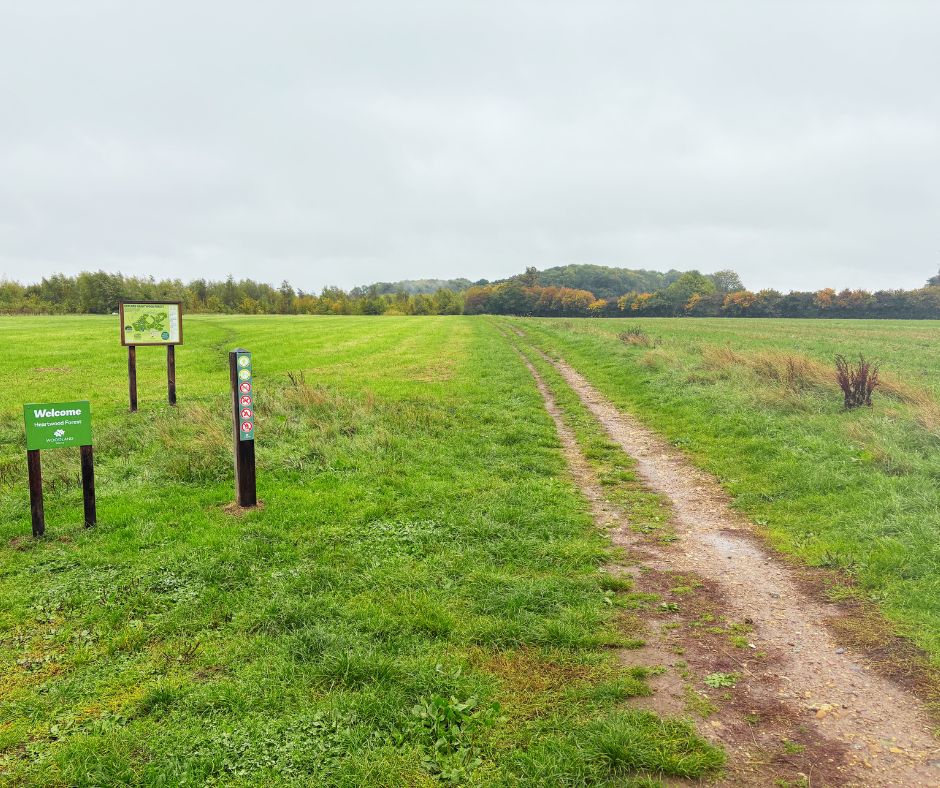
Local campaign group Save Our Sandridge has been fighting the scheme, and residents are asking what is the point of having a new Local Plan if development on unallocated Green Belt sites can still be recommended for approval almost immediately after it is adopted?
Only three months before the Local Plan was adopted, SADC leader Cllr Paul de Kort said: “We needed to get this LP in place to… help protect us from speculative planning applications by developers.”
Now he has defended the current position which his council finds itself in, and why development on unallocated Green Belt land can be permitted.
“The reason that, this can still be possible, in specific circumstances, is that the Labour Government has brought in a pernicious concept of ‘grey belt, which masquerades as already developed Green Belt land, when it is no such thing. They have now enshrined it into planning law.
“Despite this major moving of the goal posts, which is currently affecting a great many planning authorities, our LP has a great deal of value and places the district in a far better place than it was prior to adoption.
“Firstly, we now have a five-year housing supply, which is still the essential foundation that prevents Green Belt overturn, so any new speculative application has to meet the grey belt criteria, and many will not.
“Secondly, our LP specifies the social housing and environmental provision that we prioritise in any future developments.
“Thirdly, when the Labour Government’s ‘delivery test’, again newly invented, is met, the ability for any Grey Belt application to be granted will be removed; a matter of months rather than multiple years into the future.”

A spokesperson for Save Our Sandridge responded: “We fully recognise that the national planning rules have changed and that the new ‘grey belt’ provisions have to be applied. We are not arguing that being outside the Local Plan automatically prevents development, nor that every piece of Green Belt is untouchable.
“But grey belt should not become a shortcut around the Local Plan.
“The national policy route being relied upon has tests attached to it, and we believe councillors should be satisfied that every one of those tests has genuinely been demonstrated before granting permission.
“The council has just told residents that its new Local Plan will help protect land that was not selected for development from speculative applications. Shottfield is therefore an important early test of what those assurances mean in practice.
“If unallocated Green Belt sites can be approved within weeks of adoption without the Local Plan’s spatial strategy and the new national policy tests being rigorously applied, residents across the district will understandably ask what protection the Local Plan actually provides.
“Save Our Sandridge is not asking councillors to ignore national planning policy or the need for new homes. We are asking for something much simpler: apply the new Local Plan and the new national rules rigorously, use the most up-to-date evidence, and do not approve development until the outstanding questions have been properly answered.
“After decades without an up-to-date Local Plan, residents deserve to see that the new one means something.”
Asked if SADC was still being held to ransom by big developers despite the LP being in place, Cllr de Kort replied: “The Labour Government still talks about wishing to see Plan-led development. We are very happy to take them at face value and to state to any developer that they are expected to use the Local Plan process, which allocates proposals into approved site allocations, using objective criteria.
“However, whilst the grey belt definition remains in its current legal form, some developers have been encouraged by Government policy to explore this route. I am happy to leave it to your readers to decide how they want to describe such behaviour.”
But Save Our Sandridge said there are still other serious questions to answer at Shottfield.
Their spokesperson added: “The Government’s own Connectivity Tool rates the site’s overall sustainable connectivity as ‘Very Low’. Public transport and walking are also rated ‘Very Low’. There’s no way to commute to a train station by bus because the service starts too late and ends too early to be useful. Cycling on narrow country lanes is dangerous. So residents of new developments are certain to use cars for most journeys. That needs to be reconciled with the conclusion that this is a sustainable location for major housing development.
“There is also a significant wastewater issue. Thames Water has told SADC that the existing sewage treatment works infrastructure cannot accommodate the needs of the proposed development. It says upgrades are likely to be required and that any necessary works would be needed to avoid sewage flooding and/or potential pollution incidents. Thames proposed either completion of the necessary upgrades before occupation or an agreed development and infrastructure phasing plan.
“The officer report does not propose imposing Thames Water’s requested condition.
“There are questions over housing need too. The report says St Albans now has a 5.12-year housing land supply, but also relies upon the previously published Housing Delivery Test figure of 46 per cent. Since that figure was produced, the new Local Plan – with its new stepped housing requirement – has been adopted. Government rules provide for Housing Delivery Test measurements to be recalculated following adoption of a new housing requirement. We believe the committee should have the clearest and most up-to-date position available when it makes its decision.
“None of these issues individually gives an automatic answer to the application. But taken together, they demonstrate why this decision deserves extremely careful scrutiny.”
The members of SADC’s development management committee will be voting on the scheme this evening, but Cllr de Kort insists he won’t be trying to sway their opinions.
“It is a fundamental element of planning law, and therefore an essential aspect of any planning authority’s governance, that there cannot be any political interference in the decisions of a development management committee over any planning application.
“This is the reason that council leaders never comment on individual planning applications ahead of their determination.”
