30 Sep 2026
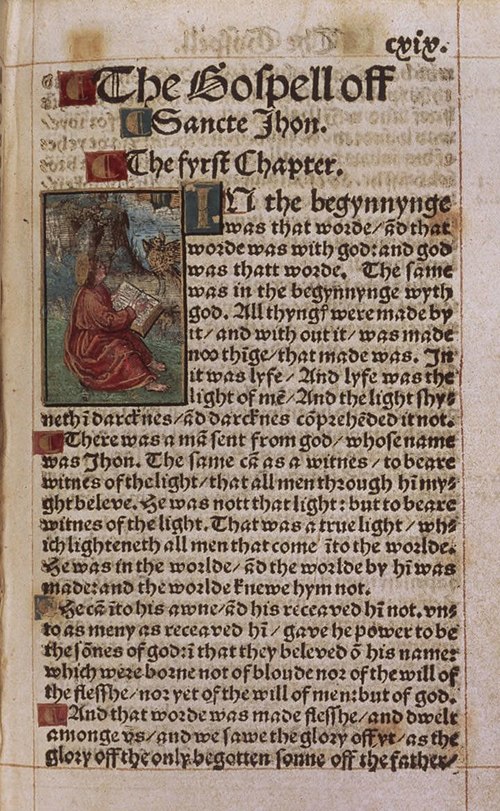
Five hundred years ago, a hunted scholar in Worms, Germany, completed an act that would change the world: translating the Bible into English. His name was William Tyndale. His translation was smuggled across borders, burned by bishops, and ultimately cost him his life.
But the words he left behind not only shaped the English language but also established a fundamental idea: that ordinary people have the right to read Scripture for themselves.
On October 3, a special dramatic performance entitled ‘The Book That Changed the World: William Tyndale and the Battle for the English Bible’ will take place in Worms.
Organised jointly by the twin cities of St Albans and Worms, the event is a part of the 2026 quincentenary programme marking the 500th anniversary of Tyndale’s New Testament. The performance is written and presented by St Albans resident Professor Tim Boatswain, with Dr Florian Ruths also performing. Conducted in English, it combines live drama, projected images, and a gripping staged debate between Tyndale and his inquisitor.
Audiences will witness the clash between authority and conscience, tradition and translation, fear and freedom. The performance will begin with background introduction before moving into the dramatic debate, bringing history vividly to life on stage.
St Albans will also host the same performance on October 15 at St Peter’s Church as part of the twin-city commemorations: https://www.stalbanscathedral.org/Event/the-book-that-changed-the-world
Tyndale was born around 1494 and studied at Oxford University. In 1524, unable to find supporters in England to fund his plan to translate the New Testament into English, he travelled to continental Europe. In 1525, he attempted to print in Cologne, but authorities raided the printing workshop; only a single surviving fragment is now held in the British Library.
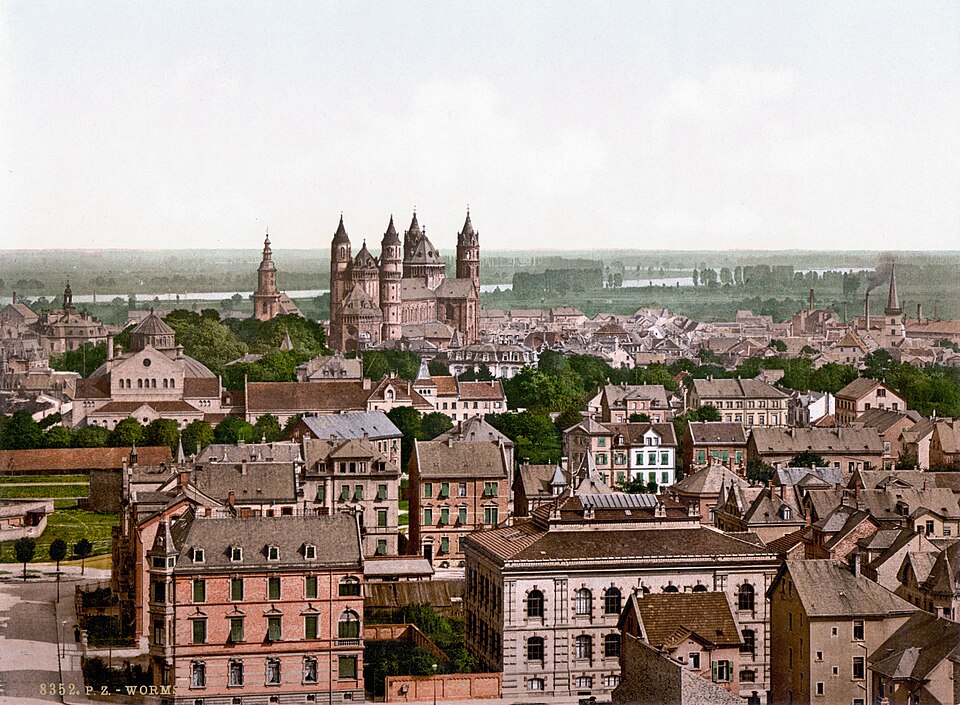
He then moved to Worms, where, with the help of printer Peter Schoeffer, he produced the first complete printed English New Testament in 1526. Copies were smuggled back to England hidden in barrels and circulated widely, to the great alarm of the authorities.
In 1535, Tyndale was betrayed in Antwerp and imprisoned near Brussels.
The following year, he was declared a heretic and sentenced to death by burning. He was ultimately strangled at the stake before his body was burned. Yet his words did not die. According to modern estimates, approximately 83 per cent of the text of the 1611 King James Bible derives directly from Tyndale’s 1534 translation.
The twinning relationship between St Albans and Worms dates back to 1957 and is St Albans’ longest-standing twin city partnership. Located on the Rhine, Worms is one of Germany’s oldest cities, with Celtic, Roman, and medieval heritage.
The two cities maintain active exchanges in municipal, cultural, and educational fields: from choir visits to football club friendlies, from museum professional exchanges to jazz festival performances.