



01 May 2026
Sprawling across more than 1,000 acres of what was once open countryside, with plans for a staggering 335,000 sq ft of logistics space, the SEGRO Logistics Park in Park Street is a construction project the likes of which has never been witnessed on such a scale in the St Albans district.
It is no exaggeration to say that the strategic rail freight depot development will completely transform this part of the UK, but will it be for the better?
The St Albans Times was granted unprecedented access to Charles Blake, senior director in SEGRO’s national markets team, who has overseen the project for around 18 months, in a bid to understand how the FTSE 100 industrial property company sees the development progressing over the coming years, and what the future holds for the immediate and wider community.
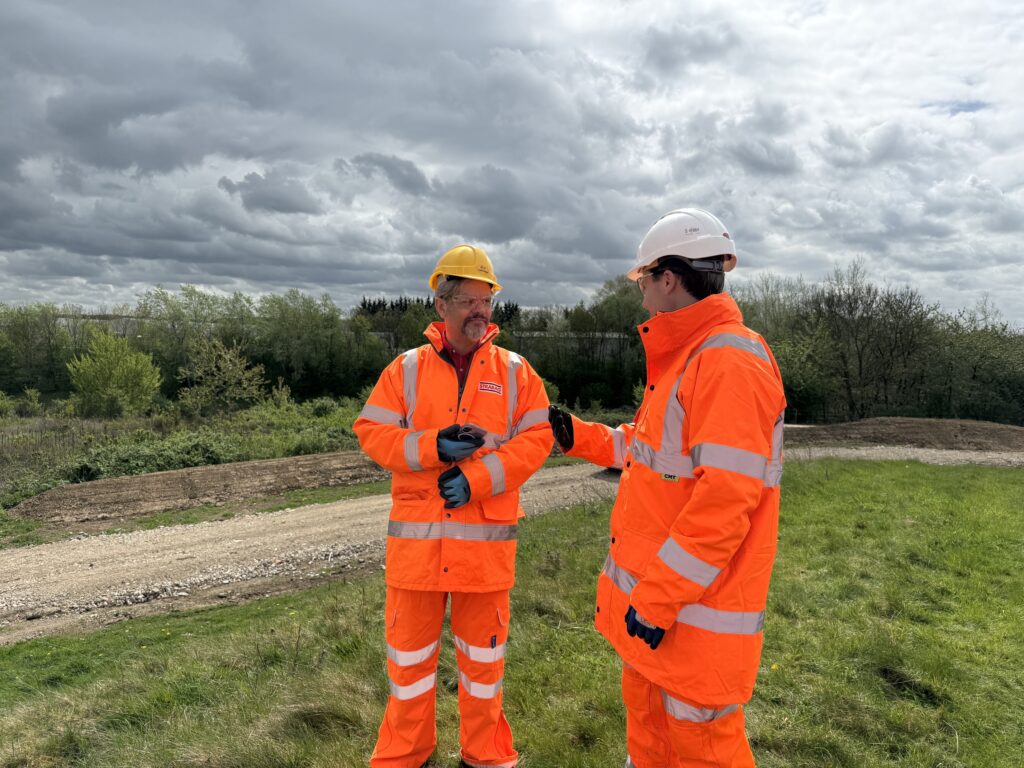
The intention was not to provide SEGRO with a public promotional platform, but to get behind some of the controversies surrounding the ongoing works, and examine whether the expectations of local residents are being answered.
The history of the Strategic Rail Freight Interchange (SRFI) development dates back almost two decades, and involves the conversion of the former Radlett Airfield into a massive rail and lorry park alongside associated warehouses, lorries, container storage and HGV parking.
In 2014 then-communities secretary Eric Pickles gave outline planning permission for the SRFI to development company HelioSlough – a partnership between real estate company Helios and Slough Estates Group (SEGRO) – with SADC losing a subsequent High Court appeal.
Both the former Conservative administration at Herts county council and Lord and Lady Verulam were subsequently responsible for selling sections of land to enable the scheme to go ahead, with the £34m sale of the 300 acre Green Belt site completed in June 2023.
A high-profile public campaign, Save St Albans: Stop the Freight, failed to prevent the project from progressing, despite claims that HCC had sold the land unlawfully.
They had argued that when the council agreed to buy the land in mid 1980s for just £1 it was on the condition it was preserved as permanent open space and could not be sold for development.
With any further legal challenge thwarted, work finally began on the project in October 2024, with construction company VolkerFitzpatrick initially focused on building a 60-metre bridge for the railway connection, which was eventually installed over the Christmas period.
The site is expected to be fully operational in 2028, but at the moment we’re seeing work underway on earthworks ahead of the main rail terminal construction, which is being carried out by Strabag UK.
Charles himself has been following the progress of the project for a long time: “I’ve been watching from a distance for years, never thinking I would be involved myself, and being slightly horrified by it!”
He said the concept itself dates back to the turn of the century, when governments of all parties were pretty unified in their belief that rail transport needed to improve in order to tackle congestion on the roads, with three strategic rail freight interchanges planned for around London, of which Radlett was the only one to progress in the south of the UK outside of the ports.
But although on paper it appears to be delivering rail connectivity for freight in the UK, there has never been any real clarity over what percentage of rail vs road movements there will be, especially given how the way freight moves around the country has changed since 20 years ago.
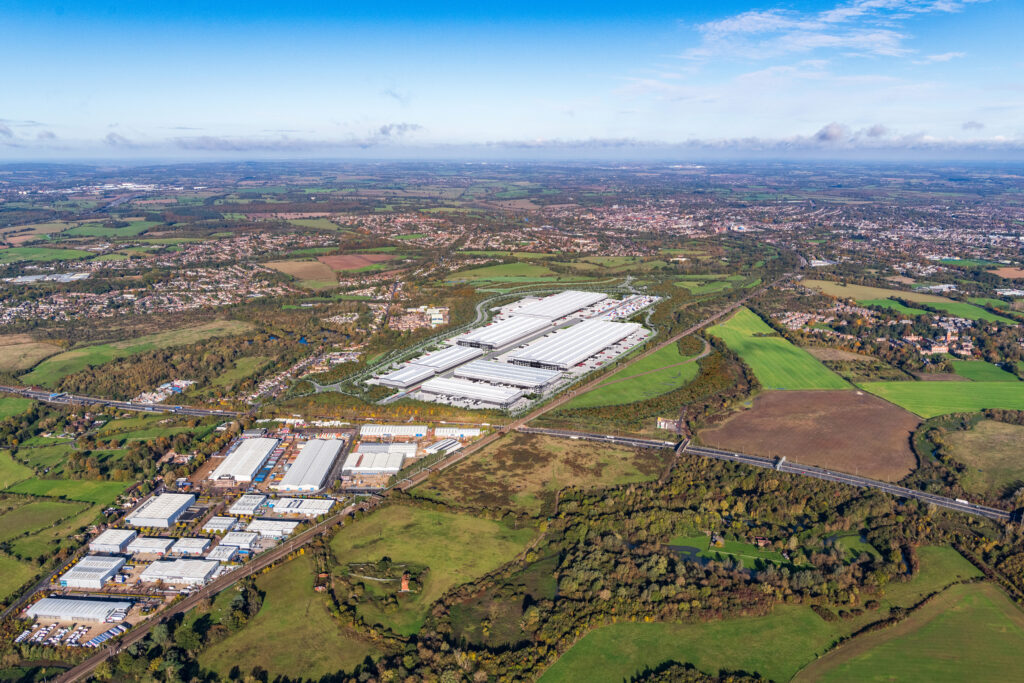
Many locals have long suspected that it will in fact be a road-to-road terminal in all but name, and the ‘rail freight’ part was just a convenient way to get planning permission in what was and is a totally unsuitable location for the massive volume of traffic that it will generate, especially as there is no direct motorway connection.
Notably, operator Network Rail would never talk about the capacity for freight on the Midland Mainline, and how the SRFI was going to actually work in practice.
Charles elaborates: “The scheme is for a strategic rail freight interchange, and there are certain criteria it needs to meet, including being able to get the largest trains in and also accessibility.”
Usage of the UK’s predominantly Victorian rail network has changed substantially over the past 100 years, with few businesses now moving a sufficiently large quantity of material to justify their own train.
The rail freight interchange model, on the other hand, allows for businesses to operate like passengers, buying space on a train for a specific amount of freight, joining lots of other companies all doing the same thing.
But it won’t be SEGRO running the terminal, they’ll be handing over responsibility for the entire operation to a specialist company.
“Will they move all of their products by rail? The answer is no, they won’t, and I don’t think anyone has ever suggested that might be the case, but what we have found at East Midlands Gateway where we have another rail terminal is that every single occupier of the site is using it in some form, even if quite often they don’t know they are doing it.
“The aim of a rail terminal is to provide a service to the region, so it can also service other sorts of businesses who are not based on the site. The whole basis of using rail is to get a reduction in carbon because a full train is equal to 70-odd lorries, but there’s also efficiency of movement and reliability, because when a train goes it goes, it doesn’t get stuck in congestion on the M25 or M1, which is why there’s been a push for strategic rail freight exchanges.
“So is it a con? Have people been duped? Is the rail terminal just a fake profit? The answer is no, it’s definitely being built, there’s definitely being millions of pounds of investment into the Midland Mainline, and we have no doubt that this will be a functioning and successful terminal.”
The other theory is that the terminal itself was eventually be replaced with housing, with the rail freight scheme a means to an end.
Charles is adamant this will not be the case: “God no, I mean the amount of money we’ve spent, the investment we’re putting in, we have no desire to start selling this site for residential – this is our business model and this is what we’re going to do with it.”

As an aside, he also clarifies concerns over the Elstree tunnels, where there is a sign warning of a height restriction which suggested the huge 725m long freight trains might not fit, which many people thought would require the tunnels to be expanded. In fact, the sign refers to a platform at Hendon and a couple of bridges further down the track which can be modified much more easily.
Residents living near the development have criticised what they claim is a complete lack of sympathy on the part of SEGRO for the devastation they are causing in the area, with little evidence of actual community involvement.
They told the St Albans Times that everything the company is doing seems to be carried out for their own convenience, with arguably zero consideration for the massive disruption they are causing.
Charles is keen to explain the SEGRO ethos, which as you might expect suggests all of the right things: “Our approach is to operate at the highest level in every aspect of what we do, whether that is the buildings we build, how we deal with our customers, contractors and staff, but also critically local communities as well.
“Helios are long gone, and that’s where the change in approach is hopefully coming from. They were not going to stay, that’s not how they worked as a business, they were going to build this and move on.”
But he also strives to draw a line under what had happened with the development before his arrival, even as far back as when the scheme was first envisioned: “Nineteen years ago we weren’t here and we didn’t do whatever happened then, and we didn’t say what was said then. The approach which was taken was not us, and we can’t fix whatever happened then, how that landed, and how people feel.
“What we do know is that people feel strongly about this site, and we have a huge responsibility to deliver it not only from a technical and financial business perspective, but also for the local community, because people are upset and they have strong feelings about this.”
Of course, it’s very easy to suggest that the current management team are merely picking up and running with the legacy of the SRFI, but that rather ignores the fact that by and large it’s the same company now working on making it into a reality.
Charles says one of the first things he did when taking over the project was to meet with St Albans MP Daisy Cooper: “She was very clear about how the local community felt, what was expected of SEGRO, and how we needed to gain people’s trust. We took that to heart and still liaise closely with her office.
“We also started the community liaison groups, which are built around councillors as the closes and most obvious democratic representation of the local community, and layered into that were residents’ groups and other organisations with a very strong stake in the community.”

He suggests that scaremongering and a fear of the unknown is often the root behind a lot of people’s concerns, and responding with accurate information often helps to deflate these worries.
“They may not go away thinking they approve of the project, but what we do want is for them to think, ‘I get it, I understand what you’re doing and I understand the logic behind it’ and that’s a big challenge, because there are always new rumours, different concerns, different agendas, and we have to speak to them as well.”
Leading the community liaison side of the operation is Mick Gilhooly, often the first port of call for individuals and organisations wanting further information about the scheme.
Unfortunately his stock response to many questions is what might be considered a politician’s answer, “It’s part of the consented scheme,” which appears vague and non-committal from a company claiming it wants to be open and honest with residents.
Charles explains: “The consented scheme dates back 19 years ago, when the intent was to have a rail-connected logistics scheme, which splits into three parts: the development of the industrial buildings, the rail connection coming off the slow line of the Midland Mainline, and the country park which goes with it.
“This was all brought together with the planning application, the original appeal, the determination by the Secretary of State, the High Court appeal, then back to the Secretary of State and so on until the end result was that outline planning permission was granted a number of years ago.”
Outline planning permission is basically the concept of what is being built, including size and use, but without any detail, and usually lasts anything from three to five years.
During that time period, any developer has to submit reserved matters in order to set out that detail, which is what happened with the SRFI, and construction work subsequently started.
Charles confirms: “What that all means is that we now have a valid planning permission, but we don’t have outline permission anymore, so can’t go back to the local authority with further reserved matters and say, ‘Here’s a different version of what we want to build’, as we’re tied in to delivering the consent of the scheme.
“One of the frustrations is that because the relationship [between HelioSlough and the local community] was so antagonistic right at the beginning, that it’s only now that we’re having a more sensible dialogue with suggestions about what we could do, and unfortunately all we can do now is deliver the consent of the scheme.
“We can’t go and put a new road in here, a new junction there, add a building or change something around. It may come across as a politician’s answer, but it’s not meant to be, what we’re trying to say is that we have no other options without starting the whole planning process again.”
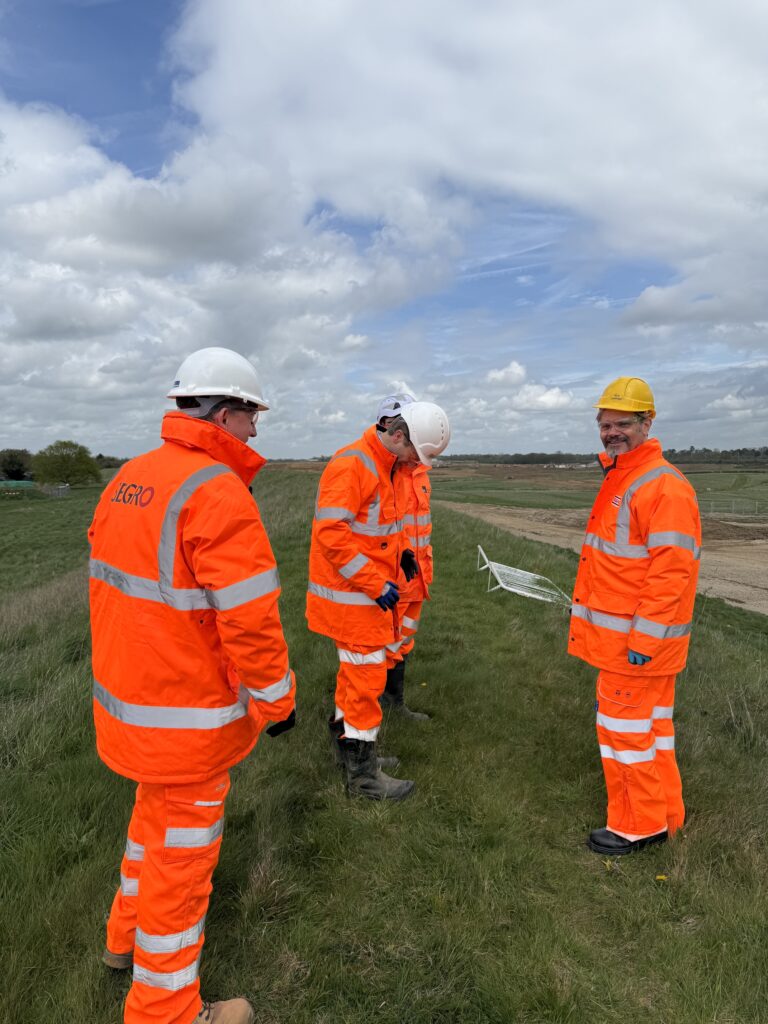
Charles argues that these restrictions are also beneficial to local residents, as they mean SEGRO is committed to delivering on everything included in the consent, and cannot deviate from these specifications.
This means that fears about changes to the size of the bunds shielding houses from a view of the logistics park are unfounded, for example.
With SEGRO restricted to delivering a scheme almost 20 years old, is it therefore proving a challenge for the company as well as the community?
“It’s frustrating because our business philosophy is to be collaborative, to work with the local community, the council, stakeholders on the rail and roads and bring everyone along with you, but the situation here is that we can’t do that. We’re stuck and have to deliver what we have permission for.
“The extra infrastructure we’re putting in will still be huge improvements which are desperately needed for the area, but when people with good faith say, for example, ‘Could you link Curo Park industrial estate in Park Street to our new bypass road?’, the answer unfortunately is we can’t, because our planning permission says so.
“That’s where the mistakes of the past don’t reflect how SEGRO works now, which is that collaborative approach where we look for the gains, as unfortunately that ability has been taken away from us.”
His argument appears valid, albeit of little merit to those homeowners whose properties are suddenly abutting a colossal logistics park, but he develops the rationale behind his thinking: “That’s why we want to have these conversations – we’re not being deliberately obtuse and trying to deliberately upset people, but it’s been 19 years of this going back and forth.
“There are people who have been petrified about this scheme for years, and we absolutely hate all the scare-mongering, the worry and the concern, it’s the disruption of the construction and the fear of not knowing.
“Then what happens once it’s built and it’s there? In two years’ time we will finish the infrastructure, the bypass will be in, the rail terminal will be in, and the bunds and landscaping built around it, with the country parks progressing and developing further.
“At that point, it’s there, it’s done, and only then will the community be able to say what the real impact has been, if it’s been as bad as they thought it would be, or if it’s actually been an improvement.
“I don’t know what percentage of HGVs coming from Radlett which will bypass the village when the new road is built, but it will make Park Street a lot safer than it is now.”
The main buildings on the site will be 800,000 to 900,000 square feet, including 30,000 to 40,000 sq ft of office space, making them one of the biggest offices in the UK, and with a specification as good as anything you might find in the West End.
But anyone hoping that the solar panels on these buildings will have some sort of mitigating impact on the development as a whole will be disappointed though.
“The problem is the National Grid, which is designed around the concept of coal power plants in the Midlands pushing up energy to the extremities [of the UK]. What it is not designed to do is take back power from certain locations. The quantity of power created by solar panels on all our roofs will almost certainly be too great for the local grid to success, which is deeply frustrating.
“The UK power network needs a whole upgrade and change to a power system which is more diverse, coming from different locations as opposed to a dozen power stations sitting in the middle of the country pushing power out.”
He highlights some of the highways upgrades and improvements as long-overdue projects which were unlikely to have been completed without SEGRO’s involvement, including the updates to the Park Street roundabout.
“It was built in a different era and doesn’t meet modern criteria, but the update will help it be much more functional and safer, because it should operate better and will make a difference to local residents.”
In recent weeks, neighbours have endured sleepless nights while trees and vegetation was cleared from around the roundabout, damaging the local wildlife habitat at the start of the nesting season.
The clearance work took place without any communication from SEGRO, but all residents were offered was an apology after the event.
Mick told them: “The vegetation clearance around Park Street roundabout comprises of two elements: clearing regrowth from the last 12 months and removing the final vegetation left untouched previously.
“The majority of these works were done initially to allow engineering surveys of the works area. At that time the decision was made to leave as much of the clearance as long as possible until the point of commencing the construction works…
“Prior to clearance works the appropriate ecology surveys are undertaken by qualified ecologists to ensure that all environmental requirements are met.
“This work is a major complex redevelopment of the roundabout scheduled for 65 weeks. It is complicated by having both National Highways and Herts Highways jurisdictions. They set out conditions of what they will allow on their networks for example lane closures, time slots and overall duration.
“They both have a delicate situation of trying to balance when works are less impactful whether that be to the network or residents…
“Mitigations of noise are difficult due the nature of wood cutting and the height of the work…. Night working is our last resort and our preference is to work during the day. A great deal of thought and planning goes into how we deliver the works.”
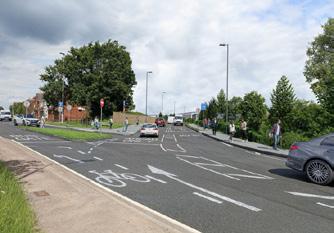
Charles explains more about the restrictions: “Certain activities cannot happen during the day, which generally tend to relate to the closure of lanes. There’s nothing we can do about this, it’s never a choice.
“But as is often with these things, you can’t make an omelette without breaking some eggs, so what we try and do is make people aware of it. If there are events happening locally, for example, there is an argument not to be working that weekend.
“The Park Street roundabout comes under two jurisdictions, National Highways for the old M10, and Herts Highways for the rest, and the quietest time on this network is night time. A general rule of thumb is that unless it’s our own land, we don’t have any control over it.
“Ultimately we’re not trying to be difficult, we’re trying to work with the different parties involved to come to a conclusion that is best for everyone.
“Mitigations for noise at night with tree chipping and cutting is near enough impossible because of the height and the type of machines you use. We admit we’re going to cause disruption, but it’s how we do it best to get it done in the shortest possible time and not annoy the most people.”
Residents living near the Park Street roundabout – particularly in Holyrood Crescent and Watling View – have also requested acoustic fencing to dampen the noise from the increased volume of traffic using the A414, especially given the removal of vast numbers of trees to prepare for the upgrades to the road network.
Mick’s response to them was textbook: “The improvements to the Park Street roundabout have been designed, assessed and approved through a thorough and robust planning process. It is not a requirement of the planning permission to provide acoustic fencing at the Park Street roundabout.”
But why would SEGRO not consider introducing additional measures to benefit nearby households, whether that’s acoustic fencing or new trees?
Charles says: “In 12 months’ time there’ll be growth again and the landscaping of the roundabout will be in progress. But the screens of trees that grew up there wouldn’t be there if people had been doing their normal maintenance work. You wouldn’t have trees on verges and blocking the view of motorists. We got quite a pounding for removing that vegetation, but actually a lot of it shouldn’t have been there in the first place, it was just overgrown.
“There may be low-level bushes and things like that, but there won’t be trees planted back there and there won’t be fencing. We don’t have planning permission for acoustic fences, and would have to do a whole load more tree clearance to get them in.
“Then there would be the issue that some people won’t like them, they’d get graffitied, and if you put them in one place, it’ll probably bounce noise elsewhere. It creates one of those conundrums where we can’t really win, because whichever way we go it’s going to upset someone and have repercussions.
“It’s also all part of the visibility design for the roundabout, so when you drive up you can see along different angles, but it’s very hard for us to get the technical side and the thought process across to the wider public.”
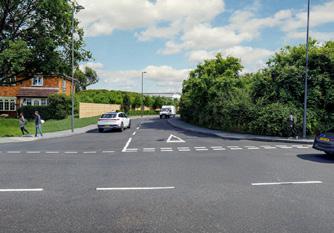
The coming months will also see dust from the earthworks on the site blown across the surrounding area, as the heat will prevent the use of damping down provisions because water evaporates too quickly.
“The sooner we can get the works done, the better, basically, because then they’re finished and out of the way. But I think the key thing which we really want to emphasise to you is we are very alive to all of this. We are not just ploughing on regardless and don’t get two hoots.
“Success for us will be being part of the fabric of the local community, not the alien or the intruder anymore. To be something recognised for the role it plays in employment, for the benefits of the country park and the infrastructure. We want to move away from 19 years of concern and attrition into a more relaxed environment where we sit within the rich tapestry of life, and we’re positive we will get there.”
* With a development on this scale, even a two hour interview barely scratches the surface of what is happening, so a follow-up meeting is already being planned to discuss elements of the scheme which were not fully discussed, including the community investment and the country park. Keep reading the St Albans Times for updates.
This article features computer generated images of the proposed logistics park and surrounding road improvements. All supplied by SEGRO.
