


01 Jan 2026
Considering a challenge for January? Laura Bill takes you through the possible benefits of a sober or meat-free month…
Abstaining from things isn’t for everybody but some people find it a helpful form of self-discipline and reflection. Because January isn’t miserable enough.
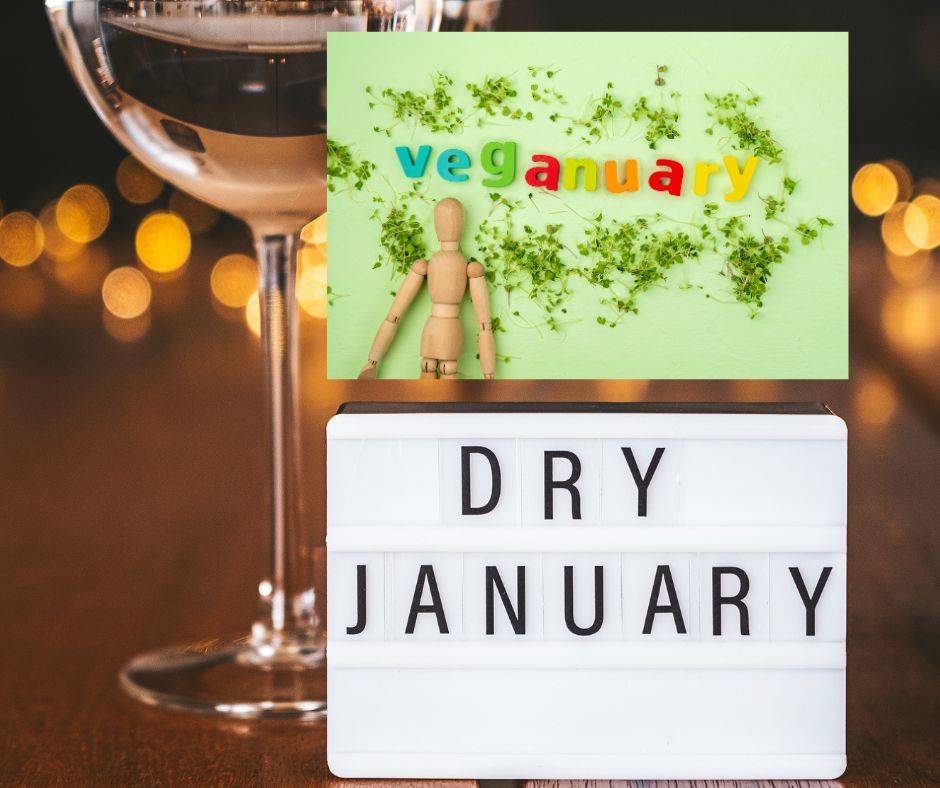
Enter Dry January. If you fancy challenging yourself to a month without booze, this might be just the thing to kick your year off to a productive and money-saving start.
But if you don’t like the idea of that how about trying a full-time plant-based diet for 31 days?
Come on, I know you are tempted, right? No? Let us help you decide which one – if any – to go for. And don’t forget both are an opportunity to feel morally and physically smug and to talk about it a lot on social media and in real actual life. If, of course, the whole thing hasn’t made you go into full hibernation mode for the gloomiest time of the year.
According to Alcohol Change UK, 19 per cent of adults in England reported in an NHS survey last year that they are tee-total.
Although alcohol is sometimes used by people to try manage symptoms of anxiety and depression, it is likely to make those symptoms worse in the long run (Mental Health Foundation, 2022).
Drinking is a causal factor in more than 200 diseases and Cancer Research UK found that drinking alcohol causes seven different types of cancer; breast cancer; bowel cancer; mouth cancer; several throat cancers and liver cancer.
And I am willing to bet that if you are thinking of doing Dry January there is a reason; you might have been feeling like you have been drinking too much for a while, you might be trying to prove something to somebody or yourself or you might be thinking it will be great for your health.
It’s widely recognised that Britain does have a weird attitude towards drink.
I noticed this when I gave it up. Festivals, weddings, funerals, book clubs, shopping events, popping round to the neighbours at Christmas, anything fun at work – all include drinking.
The proven benefits of going without alcohol are many and you don’t have to wait until you are yellow or shaking in the mornings to give it a go.
You sleep better. Which was a huge surprise to me because I thought it would be the opposite.
BUPA report that living sober is much healthier, reducing blood pressure,
lowering blood sugar, reducing fatty build up around your liver, fewer headaches and gastrointestinal (digestive) problems and often weight loss. People can enjoy improved mental health, better skin and more money.
There is a brilliant range of non-alcoholic drinks in the bars and pubs in St Albans and of course, you can drive home afterwards. (If you have a licence. Don’t try it if you don’t!)
I’m coming up to 10 years alcohol free and it’s one of the best things I’ve ever done. Nights out and family occasions are more memorable and I can be fully present around those I love spending time with and remember what happened too.
Moving onto Veganuary. As Kat Von D said: “I would never eat my neighbour’s dog or my friend’s three-year-old daughter, so why would I eat a pig?”
Go back and read that line again. There you go. You are now ready to give up dead animals and their biproducts for the month. You are welcome.
The most compelling reason for trying Veganuary has to be for the animals. Or it was for me. The thought of eating a sentient being who felt pain and experienced anxiety at being killed and possibly hearing their mate be killed as well is not an attractive one.
Somebody once described it to me as eating fear, which I know sounds weird, but that would have been the physiological state of the cow, pig or chicken as it was slaughtered.
People ask what you can eat following a vegan diet and the answer is simple: a lot. And it’s not all healthy either. You can still have fried stuff – M &S do the best churros with dark chocolate sauce and cinnamon sugar, by the way. But the benefits are a much cleaner diet which I believe has an impact on my mind too.
Veganuary, a non-profit organisation that encourages people worldwide to try vegan for January and beyond, states: “Veganism is often defined by what we don’t eat: meat, fish, eggs and dairy, plus some of the animal ingredients that are hidden away in products, such as whey (from milk) and gelatine (from animal bones).
“But really, we should focus on all the great stuff that vegans do eat. And in reality, the difference isn’t all that huge.
“Instead of meaty burgers, sausage and steaks, we eat plant-based versions. Instead of dairy cheese on a pizza or cows’ milk in our coffee, we choose plant-based versions.
“For almost every animal-derived ingredient and product, there is now a vegan alternative, and this means that a vegan meal may look and taste exactly like a non-vegan meal; it just doesn’t come with the animal suffering or the same environmental impact.”
And of course man cannot live on churros alone, so it’s wise to choose fruit, vegetable, legumes, nuts, spices, herbs and some of the 20,000 edible plants in the world.
Dr Michael Greger, an internationally recognised speaker on nutrition, food safety, and public health has a list of foods to help reach optimal health: Daily Dozen. So, Veganuary or Dry January should feel a little more in reach now. Who’s in?
