


23 Sep 2026
It’s OK To Say founder and CEO Stacey Turner, continues her look at the challenges of the new academic year…
Last week, I wrote about taking the pressure off as we headed back to school. Because the truth is, September can feel like a lot. New routines, new teachers, new classrooms, new expectations and, for some, a completely new environment.
And it isn’t just a change for our children. For parents and carers, there is a change too. The summer may have meant more flexibility, different working arrangements, later mornings or simply a different rhythm to family life. Going back to school can also mean going back to work with increased hours, more solid working hours or less flexibility than we may have had over the summer.
Suddenly, everyone needs to be somewhere at a particular time, and the juggle begins again.
But what happens when the first couple of weeks are over?
The novelty may be wearing off, we may still be reminiscing over summer while everyone is beginning to find their routine and we start to see how our children are really settling in.
Sometimes, this is when things begin to show. Actually, it can take until after October half term to get a really good feel, yet there may be initial signs.
The first few weeks can be when things really show
Sometimes it takes a little while for children to process a change. They may have held it together at school and then completely unravelled when they get home.
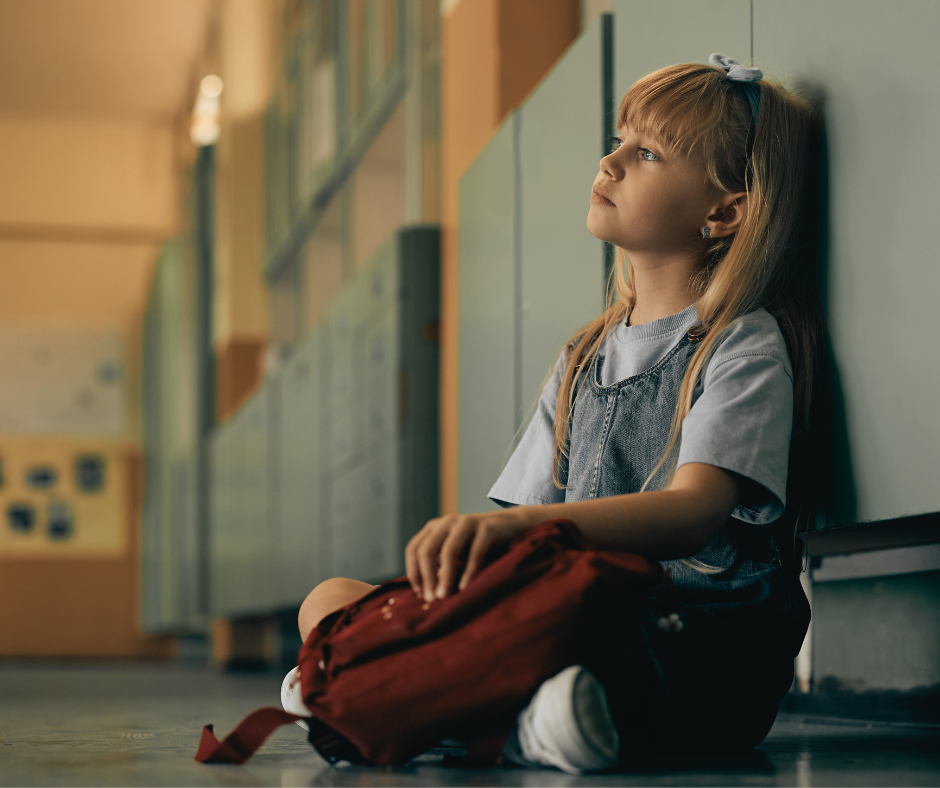
They may become more emotional, more irritable, more withdrawn or simply seem not quite themselves. And while the teacher may be telling you your child is ‘fine’ while at school, it can be a lot to make sense of.
And actually, it’s not just the timetable, the classroom or the homework they are getting used to. It’s other people too.
It can be really hard getting used to other children again. Finding your place in a new class, working out friendships, navigating personalities, knowing where you fit, wondering who you will sit with at lunch or whether you will be included.
For some children, that may feel exciting; for others, it may feel exhausting or overwhelming. And friendships can change so quickly when children are finding their feet again.
And then there are those moments when things don’t go quite as we’d hoped.
Perhaps there are behavioural issues between children, something is happening within a friendship group, or your child comes home and tells you something has happened to them.
And your first thought might be: “Oh, already?”
Because we have only just started.
We have barely got through the first few weeks and already there is something else to think about.
It can be tempting in that moment to jump straight into problem solving mode. To want answers. To want to know exactly what happened, who said what, why it happened and what is going to be done about it.
And sometimes that may be necessary.
But sometimes it can be helpful to take a breath first.
Listen to your child.
Try to understand what has happened from their perspective.
And perhaps give yourself a little time to understand the bigger picture before deciding what needs to happen next.
That doesn’t mean dismissing behaviour or allowing something that is upsetting or harmful to continue. It simply means we don’t always have to have the answer in the first five minutes.
We can care deeply, listen carefully and still take a moment.
Sometimes the effort of being around other people all day can be enormous, particularly for a child who is already feeling uncertain or anxious. They may come home and need to switch off, be quiet or simply have some space.
And this is why I think the first few weeks are worth paying attention to.
Not because we should be watching our children for signs that something is wrong, but because we know our children.
We know their usual behaviour. We know their little quirks. We know when something feels different.
Sometimes noticing is the first step.
Look beyond behaviour
Behaviour is communication. I say this often because I think it is one of the most important things we can remember.
Sometimes what looks like defiance may be overwhelm. What looks like laziness might be exhaustion.
What looks like anger could be worry. What looks like “I can’t be bothered” might actually be “I don’t know how to do this.”
And yes, sometimes a teenager really is just being a teenager!
We don’t have to analyse every mood or turn every difficult moment, perhaps we can become a little more curious and instead of immediately asking, “Why are you behaving like this?”, perhaps sometimes we can pause and ask ourselves, “What’s going on underneath this?”
That small shift may change a conversation.
Ask, please don’t assume
It can be tempting to think we know what is going on.
“They’re just tired.” “They’ll get used to it.” “It’s only the first few weeks.”
And sometimes, of course, that’s exactly what it is.
But sometimes there is more.
A friendship that has changed. Something happening in the classroom. Worry about a teacher. Feeling behind. Being excluded. Feeling different. Academic pressure.
Social media. Or simply the enormous effort of trying to fit in.
We don’t need to interrogate our children. Sometimes a gentle question can be helpful.
“How are things really feeling at school?”
And perhaps most importantly, we need to be prepared to listen to the answer. Not immediately fix. Not tell them what they should have done. Not compare their experience to ours.
Just listen and remain curious.
Pressure isn’t always obvious
We often think of pressure as something we can see. Exams, homework, deadlines, a busy timetable.
But children and young people may carry enormous amounts of pressure that we don’t necessarily see.
The pressure to fit in. To look a certain way. To have friends. To perform. To be liked. To keep up. To appear okay.
And sometimes the child who looks like they are coping brilliantly may be working incredibly hard to make it look that way.
This is why conversations matter.
Not just when something has gone wrong. Not only when we are worried. But as part of everyday life.
A conversation in the car. While making dinner. Walking the dog. Lying on the sofa and it’s OK to deliberately create these moments and lead the way in conversation.
Sometimes the best conversations happen when we’re not actually trying to have one.
Give them somewhere to land
I think home should be somewhere we can land.
As parents and carers, we take care of so much of the background stuff. The school forms, the emails, the uniforms, the lunches, the appointments, remembering which day is PE, what needs bringing in, what needs paying for and, somehow, keeping track of everything that seems to live in the school calendar.
A lot of it is invisible.
Our children may not always notice how much goes on behind the scenes to make family life work, and that’s okay. It’s what we do. But it can also mean that when September comes around, the change in routine is felt by us too.
For some parents and carers, going back to school may also mean going back to work with increased hours, more solid working hours or less flexibility than we may have had over the summer. The juggling act starts again, and suddenly there are more places to be, more times to remember and less room for the unexpected.
So perhaps home can be somewhere everyone gets to land.
A place where we don’t have to perform. Where we can have a rubbish day. Where we can get things wrong. Where we can say, “I don’t know.” Where we can cry.
Where we can be quiet. Where we don’t have to explain everything immediately.
That doesn’t mean there shouldn’t be boundaries. Of course there should. Children need boundaries, consistency and expectations.
But they also need somewhere safe to come back to.
And perhaps, sometimes, that means resisting the urge to immediately ask about homework, school, clubs, revision, dinner and everything else the minute they walk through the door.
Sometimes they just need a snack. A shower. A cuddle. A bit of space.
Or someone sitting beside them without asking a single question. And perhaps we need that too.
Know when to seek help
And then there are the moments when we may need to recognise that something could be more than simply “settling in”.
If changes in mood or behaviour persist, become more intense, or begin to affect sleep, eating, school attendance, friendships or everyday life, it may be worth talking to someone.
That could be the school, your GP, a mental health professional or simply someone you trust who may be able to help you think through what is happening.
You don’t necessarily have to wait until a situation reaches crisis point before seeking support. Sometimes early conversations can be helpful.
And asking for help doesn’t mean you’ve failed as a parent or carer. It may simply mean you’ve noticed.
It means you care. And you’re trying to understand what might be needed next.
Perhaps that is what I want to leave us with this week. Notice.
Not with fear. Not with judgement. Not with the expectation that we should know exactly what to do.
Just notice.
Notice the changes.
Notice the quieter child.
Notice the teenager who suddenly doesn’t want to leave their room.
Notice the child who is exhausted every morning.
Notice when “I’m fine” doesn’t quite sound like “I’m fine”.
And then, gently, keep the conversation going.
Because sometimes our children don’t need us to have the answer.
They may just need to know that we have noticed.
That we are there.
And that they don’t have to work everything out on their own.

A little note about separation anxiety
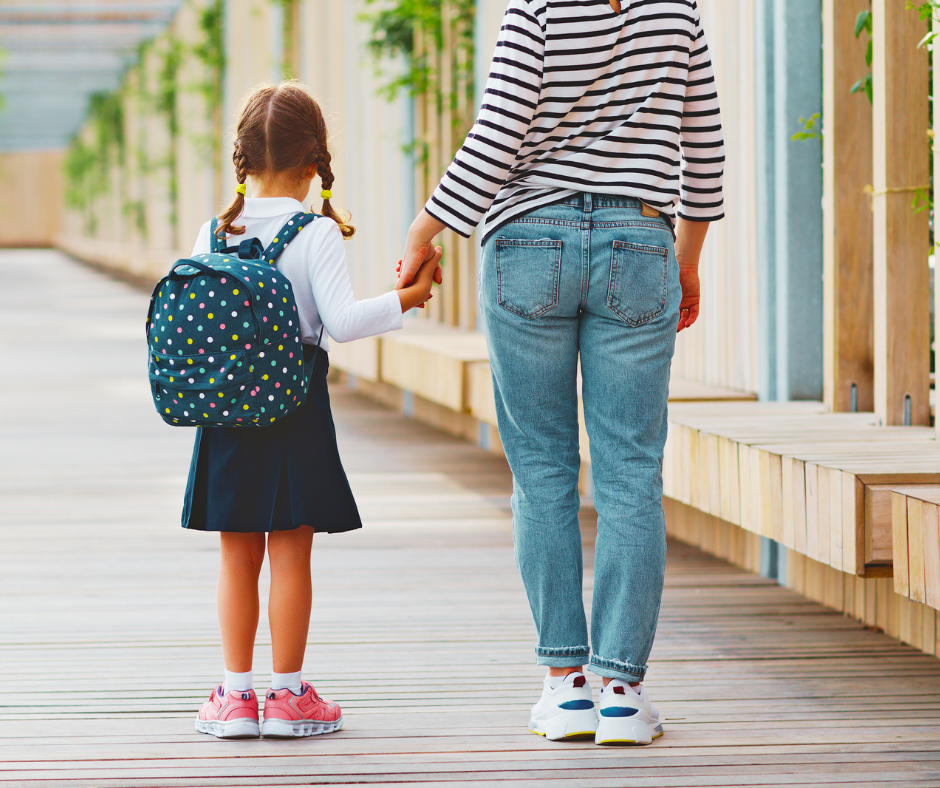
One thing I think is worth mentioning, particularly at this time of year, is separation anxiety. It is something many children experience, particularly around periods of change, and the return to school can sometimes bring it to the surface.
It might be the tears at the school gate, not wanting to leave you, needing lots of reassurance, difficulty sleeping, tummy aches or suddenly not wanting to go to school. For some children it may be very obvious, while for others it can be much more subtle. And let’s not forget that it can be difficult for parents and carers too.
Watching your child become distressed when you leave can tug at every instinct you have to protect them.
But separation anxiety isn’t simply a child being “clingy” or “difficult”. There may be a reason behind the feeling, even if we don’t immediately understand what it is.
Perhaps the return to school feels overwhelming, perhaps something has changed, or perhaps they are simply finding the separation itself difficult.
Understanding the feeling may be the first step. And sometimes supporting a child isn’t about making the anxiety disappear; it can be about helping them feel safe enough to gradually discover that they can manage the separation, and that you will come back.
I’ll be exploring this more next week – what separation anxiety can look like, when it can be part of normal development, when it might need some extra support, and how we can respond with both compassion and confidence.
Because sometimes, the hardest part of going to school isn’t the school itself.
It’s saying goodbye.
