


16 Jun 2026
It’s OK To Say founder and CEO Stacey Turner looks at what Infant Mental Health Awareness Week can teach us about connection, prevention and wellbeing across the lifespan…
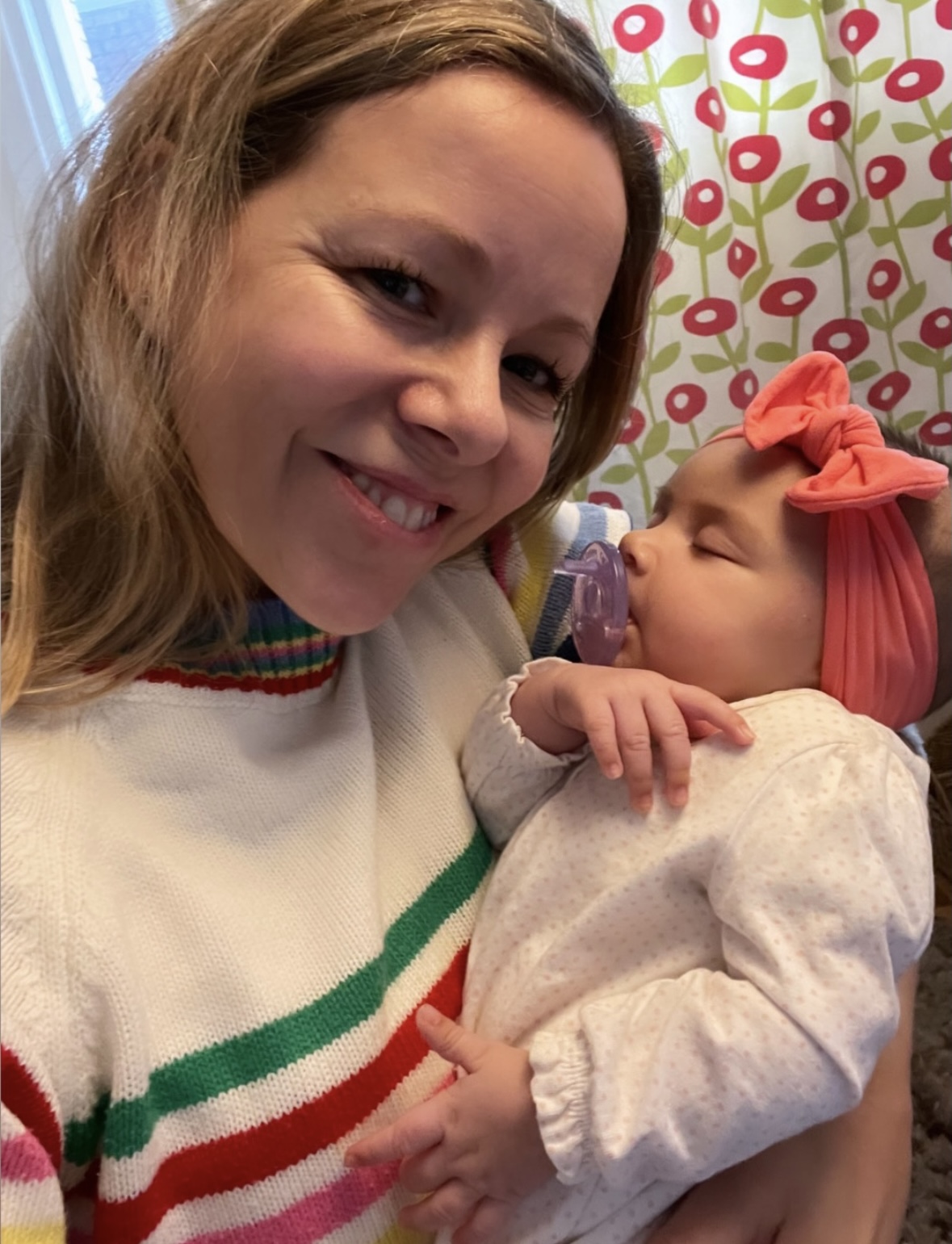
Last week marked Infant Mental Health Awareness Week, an annual campaign that shines a light on the social and emotional wellbeing of babies and the importance of secure relationships, nurturing environments and early connections.
As someone who has worked with infants, children, families and adults throughout my career, these principles are not new to me. In many ways, they sit at the heart of everything we understand about wellbeing and foster at It’s OK To Say.
What this awareness week offers, however, is an opportunity to reflect on a message that extends far beyond infancy itself – mental health begins from day one.
Not when a child starts school.
Not when a young person experiences difficulties.
Not when an adult reaches crisis point.
From day one!
A baby’s brain develops at an extraordinary rate during the earliest years of life. Millions of neural connections are formed through everyday interactions, relationships and experiences. Feeling safe, nurtured and understood helps lay foundations that can influence emotional wellbeing throughout life.
Whilst the focus of this awareness week is babies, I believe the message has relevance for all of us.
Because when we talk about mental health, we often focus on what happens when things go wrong.
Perhaps we should spend more time talking about what helps things go right.
This year’s theme is attunement, and I cannot think of a more relevant concept for the world we find ourselves living in today. Attunement is about noticing.
Parents trying to hold everything together whilst quietly struggling themselves. Young people navigating a world that often feels overwhelming and uncertain. Adults balancing work, caring responsibilities, financial pressures and family life whilst putting their own wellbeing at the bottom of an ever-growing list.
Older adults experiencing loneliness after a lifetime of being the person others relied upon.
The circumstances may differ, but the need is often the same.
To feel heard. To feel understood. To know that someone notices.
What I have learned over the years is that wellbeing is rarely shaped by one event or one isolated challenge.
People do not exist in isolation.
A child’s wellbeing is connected to their parent’s wellbeing.
A parent’s wellbeing may be influenced by their relationships, finances, housing, employment, health or support network.
Communities are influenced by the resources available to them, the opportunities around them and the sense of belonging they experience.
Individuals are influenced by the environments in which they live, learn, work and connect.
And increasingly, those environments include our digital world.
Whilst technology has brought incredible opportunities for learning, connection and support, it has also changed the way we engage with one another. We can communicate with hundreds of people in a day and still feel profoundly alone. We can know what someone has posted online, where they have been and what they have achieved, yet have little understanding of how they are truly feeling.
Attunement asks something different of us.
It asks us to be present. To listen beyond the words.
To look up from our screens long enough to notice the person sitting opposite us.
To be mindful not only of our physical environment, but also of what we consume digitally and how it influences our thoughts, emotions and sense of self.
At It’s OK To Say, we often talk about wellbeing as something that is shaped by the world around us. The relationships we build. The conversations we have. The communities we belong to. The experiences we encounter and the environments we spend our time in. This is why our approach has always been about more than responding when someone reaches crisis point.
Through our therapeutic services, support groups and community programmes, we take a systemic approach to wellbeing. In simple terms, this means we don’t just look at the individual sitting in front of us; we seek to understand the wider picture surrounding them.
We consider relationships, family dynamics, community connections, education, employment, social pressures, life experiences and the environments in which people live. We recognise that wellbeing is influenced by a complex interaction of factors rather than one isolated issue.
The same principle applies throughout the lifespan. Just as an infant’s wellbeing is shaped by the relationships and environment around them, so too is the wellbeing of a teenager, a parent, a carer, an employee or an older adult.
When we understand people within the context of their lives, rather than simply focusing on symptoms, we create opportunities for earlier intervention, stronger support and more meaningful change.
And this is why judgement has no place in this work. When we begin to understand people within the context of their lives, what we are really met with is complexity, not simplicity — and that calls for compassion, not criticism. If we could move away from judgement, we would make so much more space for curiosity. And it is curiosity that allows us to understand, to connect, and ultimately to change things in a meaningful way.
It is about recognising when someone needs comfort, reassurance, encouragement or simply a moment of our time. It is about being present enough to understand what another person may be feeling, even when they don’t yet have the words to express it.
In babies, attunement might be a parent recognising the difference between a cry of hunger and a cry for comfort. It is the gentle back-and-forth relationship that helps a child feel safe, secure and understood.
But the need to feel seen does not disappear as we grow older.
In fact, throughout my work with It’s OK To Say, I have come to believe that many of the challenges we face as individuals and communities can often be traced back to a lack of connection, understanding or support somewhere along the way.
Every day, I meet people carrying pressures that others cannot see.
This is simply how we see people at It’s OK To Say.
This is why prevention matters. Because supporting wellbeing should not begin when someone reaches crisis. It should begin by creating the conditions in which people can thrive in the first place.
This is where attunement matters. Not only between parent and child, but between friends, neighbours, colleagues, professionals and communities.
The most powerful moments are often the simplest.
A conversation that lasts a little longer. A teacher who notices a change in behaviour. A colleague who asks how someone is and genuinely waits for the answer. A neighbour who checks in. A friend who listens without judgement.
These moments may appear small, but their impact can be profound.
As a society, we often talk about intervention. We talk about services. We talk about support once difficulties have emerged.
Perhaps we should spend more time talking about prevention.
About helping children develop emotional literacy from an early age. About creating environments where people feel safe enough to speak openly. About supporting families before they reach breaking point.
About building communities where connection is valued.
About recognising that wellbeing is not solely an individual responsibility but something we create collectively.
At It’s OK To Say, we see every day what can happen when people feel genuinely heard.
We see confidence grow. We see isolation reduce. We see relationships strengthen. We see hope return.
And whilst Infant Mental Health Awareness Week shines a light on the earliest stage of life, its message is one we can all learn from.
Because whether we are a baby taking our first steps into the world, a young person finding our place within it, or an adult navigating life’s complexities, the need remains the same.
We all need to know that somebody sees us.
Somebody hears us. And somebody cares.
Perhaps the greatest gift we can offer one another is not having all the answers.
Perhaps it is simply being attuned enough to notice when someone needs us.
