10 Dec 2025
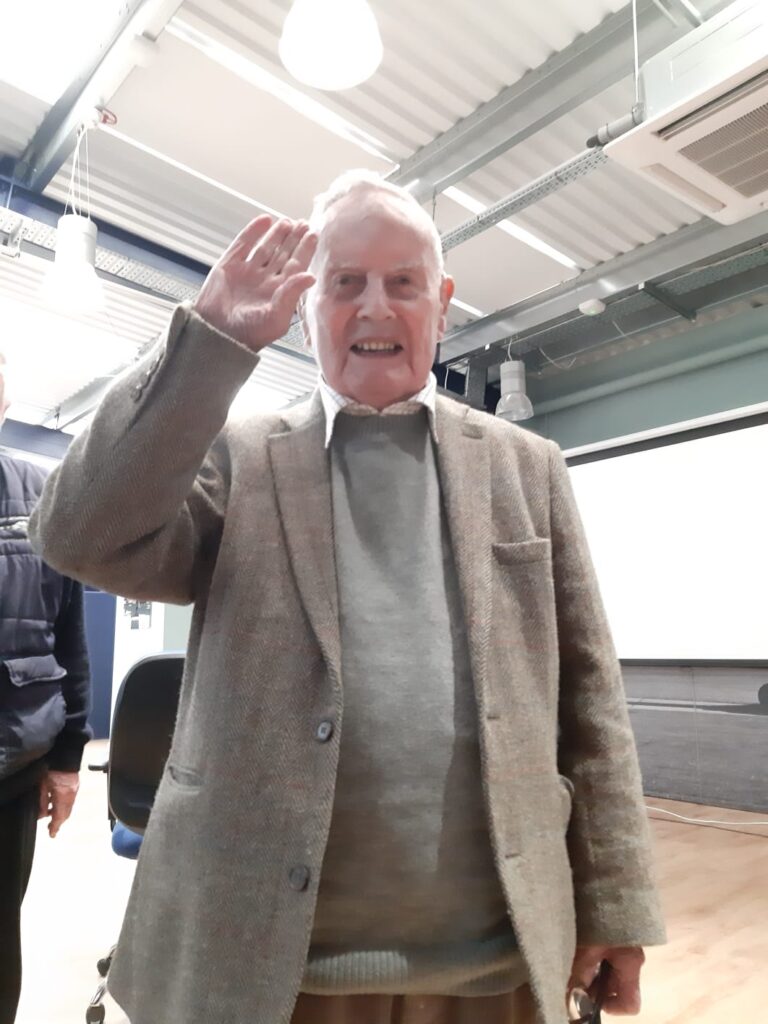
Hundreds of people flocked to hear tales of heroism and horror from a 104 year-old RAF fighter pilot at the UK’s oldest aircraft museum.
Real life super-hero, Colin Bell, left crowds spellbound at the de Havilland Museum, London Colney.
Delivering his memories with the pre-requesite old boy RAF crystal-cut English accent – he said night time was the most perilous of all.
He said: “I had an advantage, I had the best navigator the RAF had ever seen.
“The Wing Commander said – right there are 50 pilots here and 50 navigators, I want you to pair up, you have one hour.
“Nobody wanted me, then I spotted an elderly navigator in the corner of the room and asked if he’d found a pilot, ‘nope’ he said. He must have been all of 28 years-old. I asked what experience he had and he retorted, ‘well, what experience do you have?’
“I thought fair enough and told him, he had found a pilot.”
Colin said you could ‘never fully relay the horror of being shot at while being airborne over enemy territory’.
“There were bangs and crashes and flashing lights everywhere.”
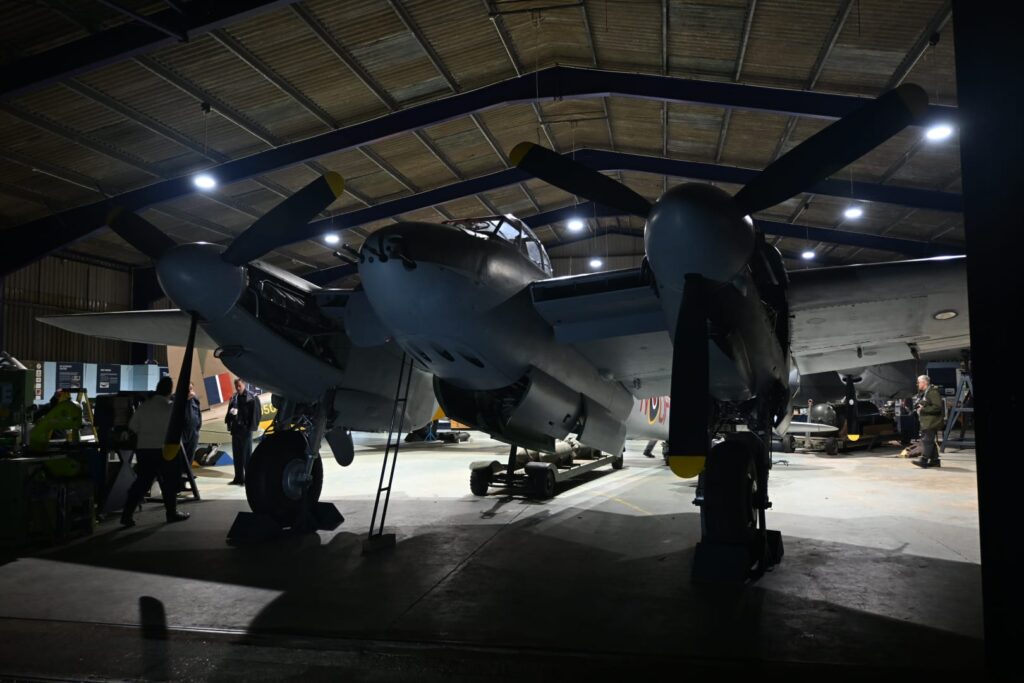
The history of the de Havilland Museum is intrinsically linked to the 85-year story of the Mosquito.
Salisbury Hall’s ‘experimental department’ built a full scale Mosquito, in secret, out of wood, headed up by cabinet maker, Bert Gear.
The Air Ministry initially refused to consider a wooden aircraft, and wanted a lighter bomber. However, Geoffrey de Havilland put his faith in the design team who built the DH98, in secret, at the moated manor house near London Colney.
The Ministry eventually ordered 50 of the planes which went into production with the help of two furniture firms, G Plan and Waring and Gillow.
De Havilland carried out the final assembly of the craft at Leavesden, with the help of Handley Page of Radlett.
The Mosquito could carry a four thousand pound bomb, with some equipped with both a 20mm cannon and machine gun at the front. The gun’s automatic loading system was copied from a cigarette handling machine.
After the war, the Government insisted the prototype was destroyed, but a valiant team of workers gently dismantled it and hid her parts in nearby Hatfield.
The Mosquito was finally, fully re-assembled in 1959 and it was then, with the help of Harpenden’s John Cunningham, that the world’s first aviation museum had its grand opening, in the grounds of Salisbury Hall.
The museum has now become a vast educational centre for future generations, thanks to a richly deserved recent £2 million Heritage Lottery Fund.
Before being rescued by Walter and Audrey Goldsmith in 1955, Salisbury Hall was derelict with only a silk farm operating in the grounds.
Rumours abound that the silk from this farm was used for the Queen’s wedding dress.
Famous residents include Nell Gwyn in the 17th century, Lady Randolph Churchill lived at the manor house from 1905 and Prime Minister Sir Winston Churchill was a regular visitor. He wrote his infamous war speeches to spur the country on in times of serious hardship, undisturbed at Salisbury Hall, in 1930. Railway locomotive designer, Sir Nigel Gresley, designed his record breaking engine, the Mallard, at the manor house.
The A4 Pacific Class were named after Sir Gresley, a keen ornithologist, watched the ducks in the moat – including the famous record beater, the Mallard locomotive.
Other fascinating aircraft at the site:
- The Comet 1 – The first purpose built airliner, which suffered major crashes until the metal fatigue issue was resolved.
- The DH89 Dragon Rapide.
- The DH82 Tiger Moth bi-plane, used as a trainer by the Royal Air Force, (many still fly today.) They were used as dive bombers during the war.
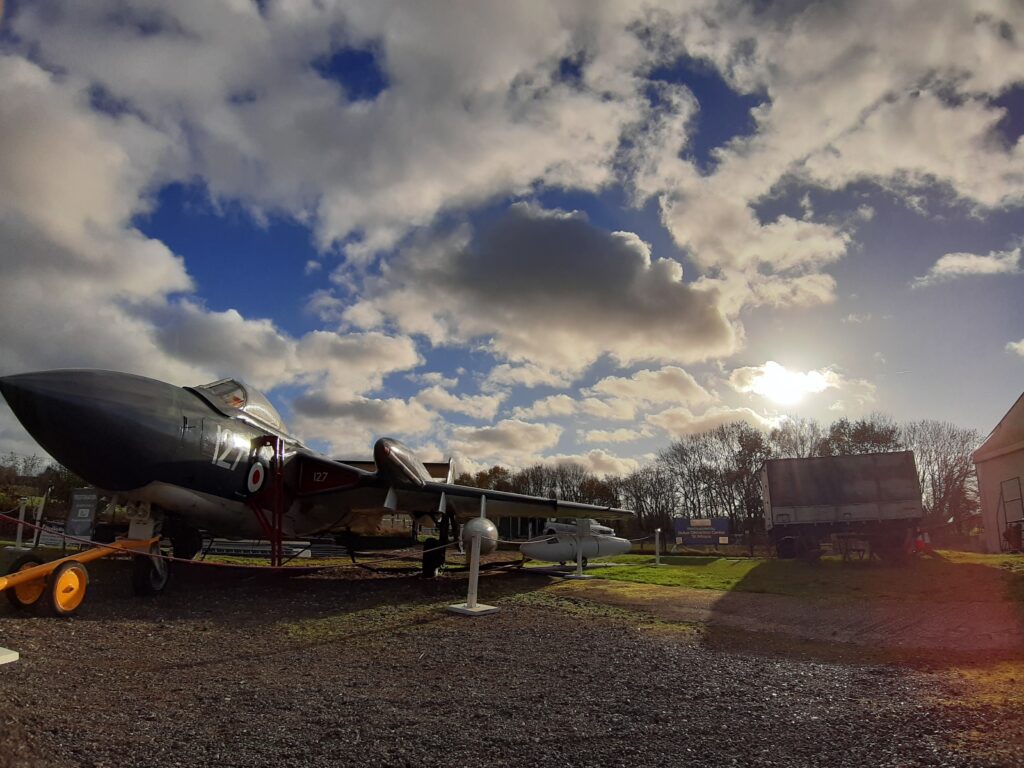
- DH112 Sea Venom – lovingly restored by the museum team after it was bought as a complete wreck when it stole sea plane fan and museum curator, Alistair Hodgson’s heart.
Words and photos by Suzi Muston.