


29 Jun 2025
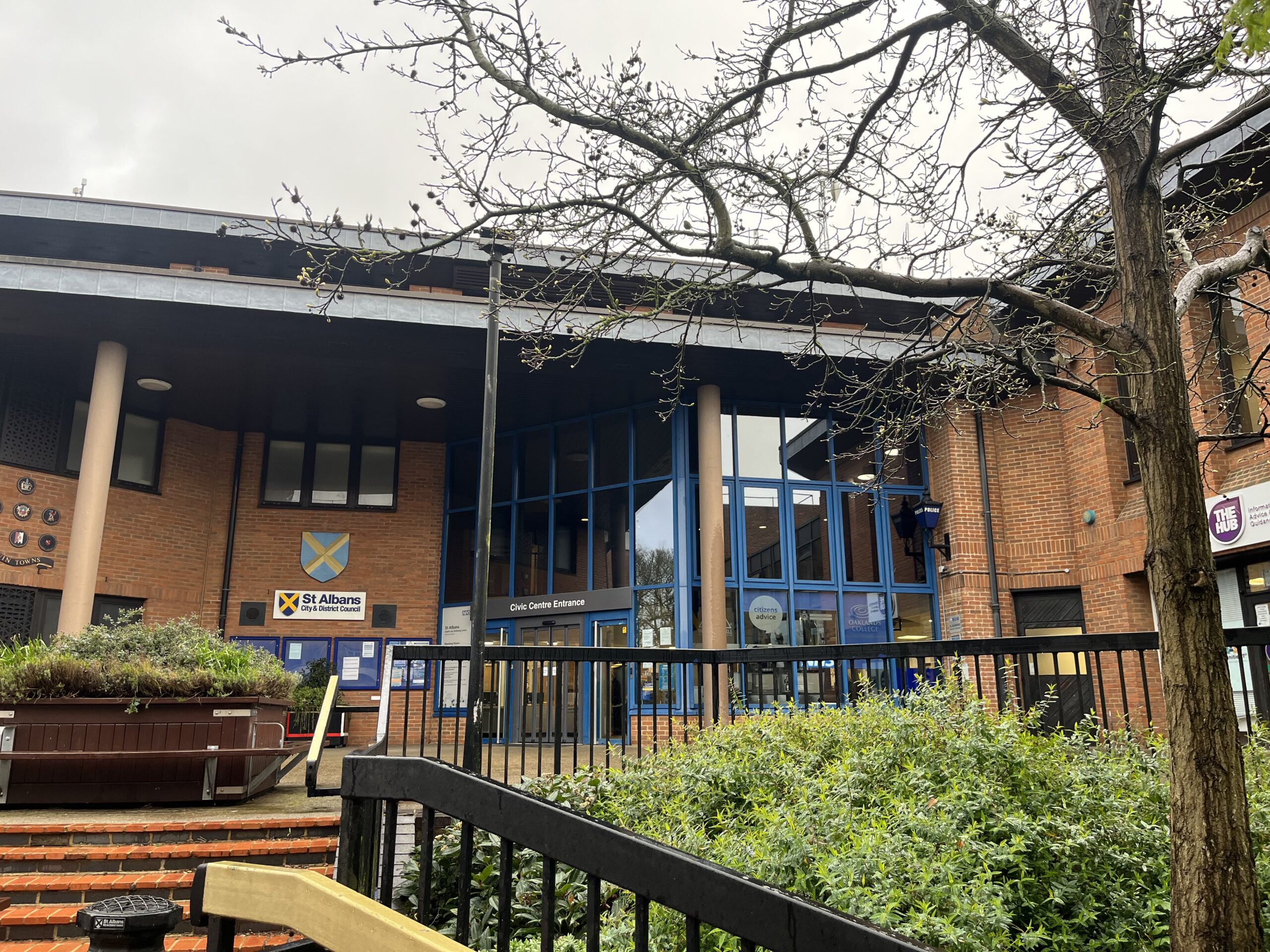
The death knell has already tolled for St Albans City and District Council, and although we’re still some years away from digging the grave, it’s fair to say the funeral notices have now been published.
By April 2028 there will be a new local government structure covering Hertfordshire, bringing an end to the two-tier system which has been in place since April 1 1974, and with it, SADC.
Council leader Cllr Paul de Kort is likely to be the last man in charge of the administration, and will effectively pull the plug on the authority when the time comes.
Putting aside the weight of responsibility for the change, from a personal perspective does this carry any emotional toll for him?
“Do I feel sad about it? I think I regret the way districts are going. We have to be careful as local politicians and journalists in that you often only hear about the complaints and the things that go wrong, whereas there are a lot of people who say, ‘you know what, the district council looks after us alright’.
“All in all I don’t think sad is quite the right word, but I’m disappointed that’s the route they’ve gone because I don’t seen the benefits of devolution.”
Just recently all 11 Herts council leaders rejected plans for one unitary authority covering the whole county, but have yet to decide on what model they will adopt going forwards.
“This frankly nonsense single unitary vision seemed to be only one man’s idea, so we’ve eliminated that and it now opens us up to the ideal of a mayoral combined authority – or metro may as they call it – to cover every part of the county.
“It couldn’t be Hertfordshire wide if there was a single unitary, which I thought was a bad idea anyway as I couldn’t understand who we were going to be combined with.”
How does he see the final structure of local government for the county?
“So a strategic authority for Hertfordshire will cover things like long-term transport, further education and hopefully things like buses, and then there will be somewhere between two and four unitaries.
“The population size of Herts is almost identical to Surrey, just over 1.2m, and they’re looking at two or three unitaries.
“So at the moment there’s a discussion going on across the Herts districts and boroughs about between two and four, which all present their problems, benefits and advantages, but a lot of this is also controlled by what the Government says it wants – it’s not a free choice.
“They’ve recently listed six or seven criteria, and two of them they keep emphasising.
“One of them is continuity of service provision, which have to be at least at the standard they were previously, which means we’ve got a lot of work.
“The other one is money, and they’re reiterating that they’re not writing off anyone’s debt.
“So there’s no get out of jail free card, and they want detailed financial forecasts of where the income’s coming from, because they don’t want it round their necks that because of local government reorganisation some councils went bust.
“That means we’re all under financial pressure, and there’s not going to be any money thrown around in this initial time period to the end of November, when we have to suggest a proposal that’s fully costed and addresses all of these things.”
He recently joined hundreds of other council leaders on a call with Jim McMahon, Minister of Housing, Communities and Local Government, to hear what he had to say about the progress of local government reorganisation.
“Someone asked about a rumour that it’s going to be delayed, and he said ‘absolutely not’, it’s going to happen by the end of this Parliament in 2029. In the case of the district and county, the show’s over for the district in April 2028.
“The important thing about him saying he’s not going to allow any delays is similar to what happened to the Local Plan in that if you don’t give him a proposal that he’s happy with, he will sign off something for your area.”
Obviously the focus here is from a political and strategic perspective, but to bring the reality of the situation home, there are a lot of people’s jobs at risk, which is a bitter pill to swallow.
He agreed: “In order to effectively restructure in the fashion that they want you’re going to lose a large chunk of staff. There are two or three projected savings: IT systems if you can get them, office space and most significantly and importantly, staff savings.
“Clearly at the higher echelons you’ll need less managers, and lots of people in the current district’s organisation will carry on in a similar job in a future organisation providing similar circumstances.
“But there’s a bigger problem for Hertfordshire, which is the proximity of London, which already has a unitary structure. While the restructuring in Herts is taking place over the next two years, if an opportunity comes up to use your skills and experience in London then you’re much more likely to take that. Commensurately you have the recruitment problem, where people will be thinking, ‘should I move there when they can’t assure me that in a year’s time I’ll still have that job?’”
This suggests a degree of uncertainty and insecurity within the confines of the Civic Centre?
“The way we’re trying to manage it, both politicians and senior officers, is being as honest and open with people as we can. I’ve been very impressed by all of the officers, I think they’re really cracking on with what they’re doing, and a lot’s been achieved since the announcement.”
Councillors across the political spectrum have mooted the idea of a city council for St Albans which will not only retain historic Royal Charter Mayors with apolitical and ceremonial roles, but take on some of the responsibilities previously afforded to SADC.
But Cllr de Kort said this wasn’t as clear cut as it sounds.
“Jim McMahon has said they’re clearly going to limit the powers and reach of town and parish councils, but while they don’t consider it necessary for every local authority to create them where there isn’t one, they aren’t going to stand in the way.
“But what they are conscious about is the cost of living burden on people, and they don’t want to see these proposals to create a big precept burden on the residents of that new parish area.
“If we said what we’re going to do is create a new district council, but call it a town council, and shove all these responsibilities onto it, then they don’t want residents to pick up the tab for it, so they would say no.
“I think there are about 20 people working full-time at Harpenden Town Council, while across the district there are 330, not including contractors, so there’s a difference in scale.
“There will not be loads of new jobs in any new town or parish councils, there will be continuity for things like ceremonial duties and the Mayor, queries about things like grass clippings and so on, as somebody’s got to deal with that, but it all comes at a cost.”
In deciding not to pursue a Judicial Review over on-street parking charges, Harpenden Town Council suggested local government reorganisation could a huge opportunity for them to take on more responsibilities, including additional parking assets.
Does Cllr de Kort believe this is a strategy which might be considered by the Government as worthy of pursuing?
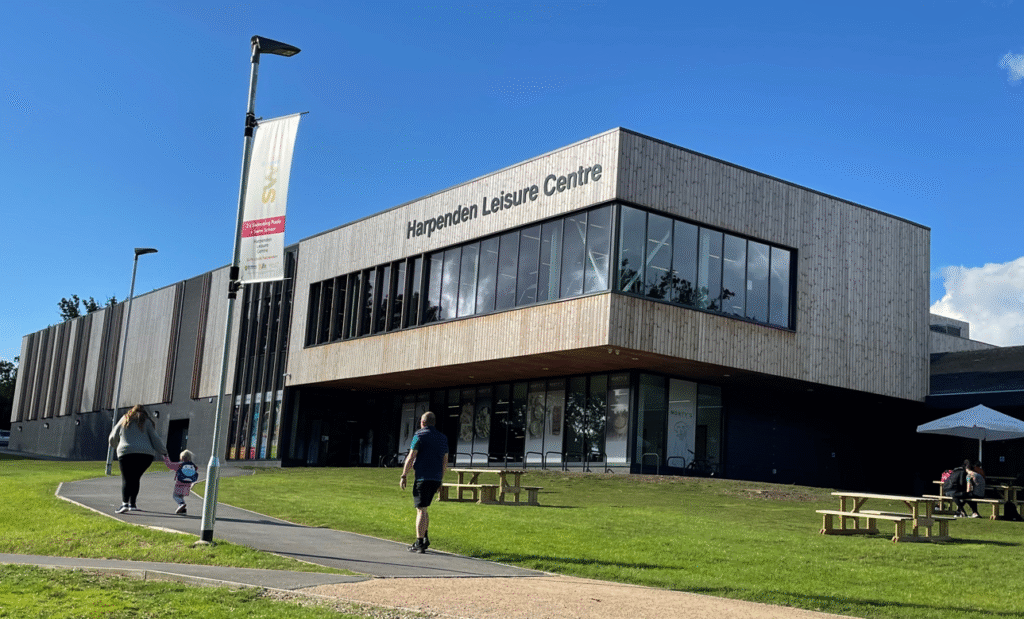
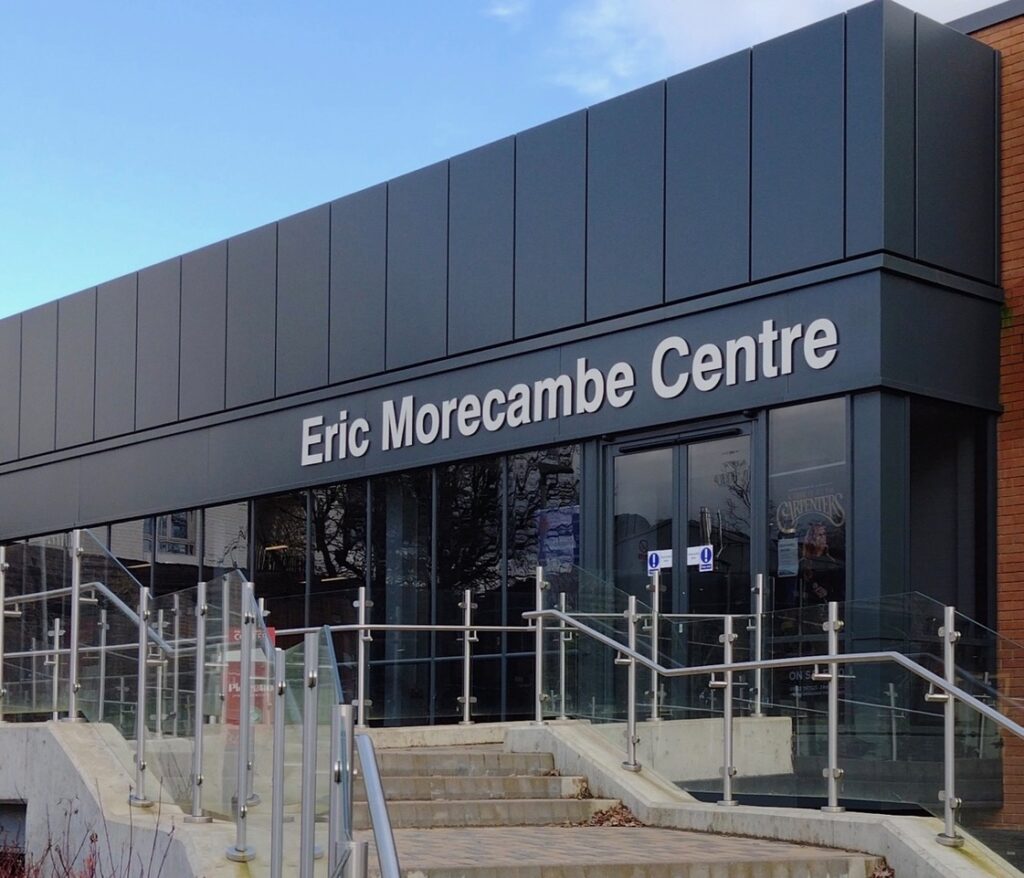
“A lot of people aren’t backward about coming forward about what they want to do, and I’ve heard talk of HTC taking over the leisure centre, the Eric Morecambe Centre and three off-street car parks.
“But it won’t be my decision, as it’s clear that conversation can only start when the new local authority is in place.
“Because I’ve now distanced myself from it I hope it will make my perspective slightly less controversial when it appears in your newspaper, which is that it won’t come for free.”
By this he means that any local authority assets have a value which needs to be recuperated, so it’s unlikely that the new body will just hand over ownership of revenue-generating car parks.
“With the leisure centre and the EMC it’s a slightly different conversation. We don’t get a contribution to our budget of any significance from either, and it fluctuates depending on swimming pool heating prices.
“But what’s significant is the debt – which was between £18-19m for the whole build – and the sale of Harpenden Public Halls was never going to cover more than about 25 per cent of that. Reasonably, you’re not going to have a situation where the new local authority gave these buildings to Harpenden Town Council but kept the debt, so they’d be saying to people in places like Watford, ‘oh yeah, you’ve got to pay this interest and pay off this debt for a leisure centre that isn’t ours’.
“That conversation will happen, but it won’t be with the district council and it won’t be until after May 2027, when a new shadow authority is appointed, because only they can make that decision.”
It is understood that the shadow local authority will spend those 12 months looking into the future, making decisions on things like IT systems, what offices are going to be used, maybe contracts like waste or leisure if they’re coming up for renewal – while the existing bodies handle service provision for their final year.
St Albans Civic Centre is obviously home to various other bodies now, including the police and the NHS, so what will the end of SADC mean for them?
“We probably have less than 30 per cent of it now, with the biggest single bit being the council chamber, which probably won’t be needed. This is another issue with any restructuring, as people say you can either sell off offices or re-let them, but I don’t know how you re-let that chamber.
“What you could have in St Albans is a council office that’s just sitting there, so there isn’t the saving, and as we’ve seen with County Hall, you end up with security costs and other expenses.
“You can’t just say to the NHS or the police, ‘we don’t need this bit, you can have it for free’, so I don’t know what’s going to happen.
“That’s one of the examples of practicality, as often the savings that are theoretically advanced aren’t made in practice. It’s the same with software systems and contracts, which might not be aligned across different councils.
“Any savings will take time to emerge, and the Government haven’t provided any extra money, they just say we will fund this out of the savings we’re going to make, so I don’t know how that’s going to work.”
Rather than focus overwhelmingly on reorganisation, Cllr de Kort said SADC will be using the next few years to get many long-running projects over the line so they don’t leave them half-finished, for example Telford Court, New Greens community centre and the Local Plan process.
“To be clear, it’s not a legacy for me it’s a legacy for the residents, ultimately you want to do these things for our 145,000 residents.
“We’re the party who believes in localism, and although I can see why some people like the idea of unitary authorities, I’m not a fan. But the difference now compared to a few months ago is that the Government is very clear this is not a debating point – we’re way beyond that.
“Districts and boroughs all across the country are going, so we just have to make the best of it.”
