05 Feb 2024
Elena Hogg, founder of local culinary company FOOD by Elena, finds her pulses racing to be part of some delicious dishes…
Beans, beans, good for the heart. The more you eat… the better for your heart.
Rude sayings aside, pulses and legumes really are the super-food to rival all others. They’re high in protein and fibre, low in fat and salt, and contain just about every mineral and vitamin you care to mention. They’re a covert health food passing mostly under the radar, unlike trendy spirulina or acai. And they’re so much nicer to eat, too, in my unfashionable opinion.
Many of the world’s cuisines include legumes in various guises, evidencing just how versatile and user-friendly they are. Without even pausing, I can bring to mind China’s black bean sauce, Japan’s edamame, Mexican frijoles, the red beans and rice of the Caribbean, Indian lentil dhal, even the Swedes have their own ‘bruna bönor’ (brown beans), which they traditionally serve with smoked pork or game meats. Alright, this last one I did take time to find.
As well as being a nutritional juggernaut, another superpower that beans bring to the table (pun intended) is how affordable they are. The going rate of a can of own-brand beans in the supermarket is roughly between 40p and 65p. Although the gourmet pouches of legumes with extra fancy flavourings will set you back around £2, for about the same price you can also buy an entire kilo of dried split peas.
That’s a lot of nourishment for your buck.
Perhaps most importantly from a practical point of view, pulses are extremely easy to cook with. Granted, if you’re using dried ones, you do need to remember to soak them the night before. As someone who frequently forgets to remember but remembers to forget, I keep a plentiful supply of the tinned variety in the pantry so that I can have my fix as and when.
For example, a regular lunch for me when I’m in a big rush, but feeling zen enough to make something nutritious, is a wholemeal tortilla wrap (from the freezer and defrosted in seconds in the microwave) layered up with whatever goodies I can assemble. I find my fridge usually offers up cream cheese or hummus to spread as a base-coat, both thick enough to hold things in place, and either some spinach or rocket leaves for bulk. As well as flavour-punches in the form of capers, olive tapenade or some kind of homemade chutney, and sometimes all three I’m ashamed to admit, half a tin of cannellini or butter beans gets added, along with pumpkin seeds and diced cucumber for crunch. Over the years, I’ve perfected my wrapping technique and no longer end up with a plateful of soggy tortilla wrap unravelling around a pile of spilt filling.
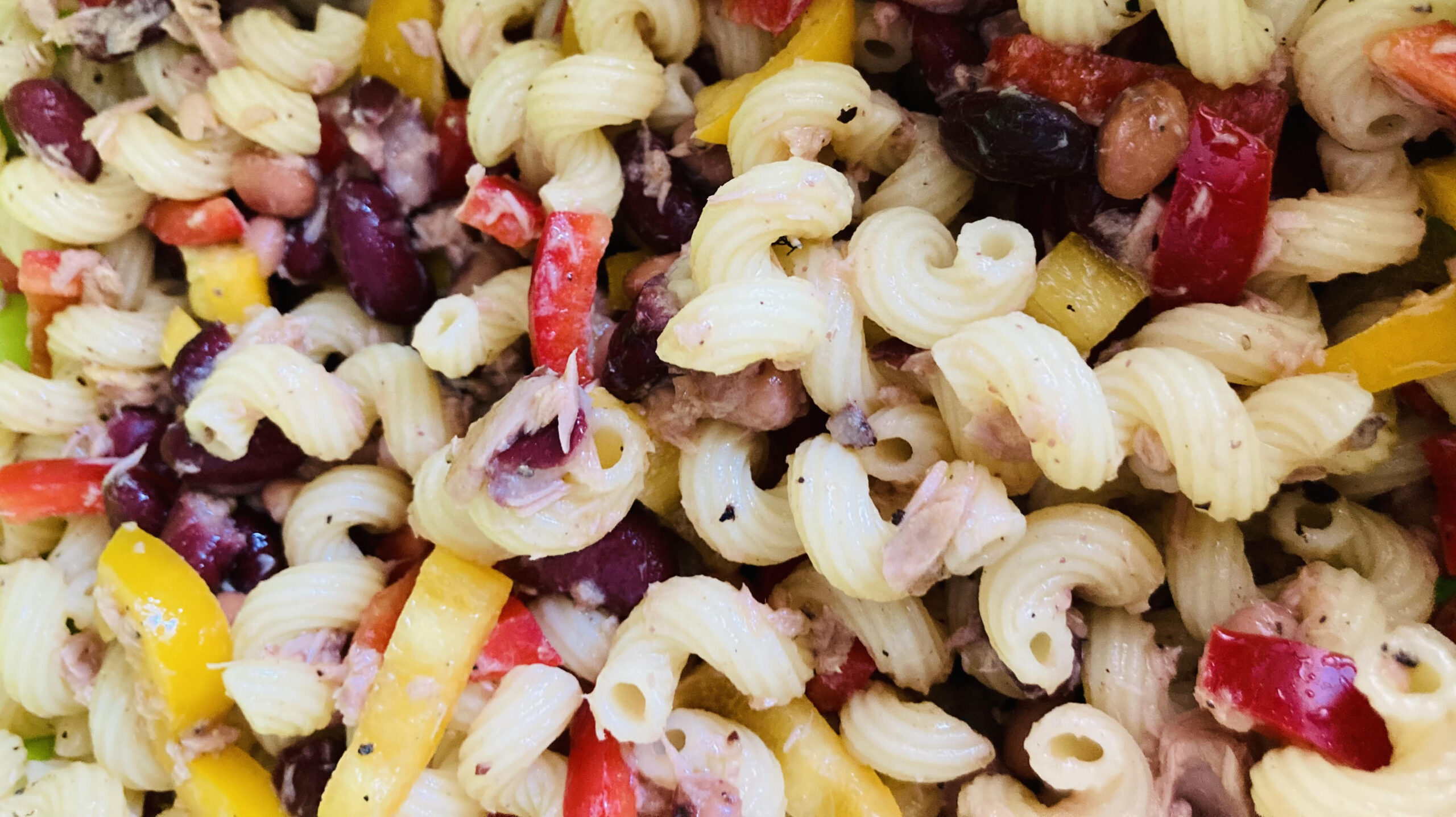
Beans are a fabulous addition to the Tupperware packed lunch staple – pasta salad. I remember as a child having pasta shells (conchiglie) with tuna, bell peppers, red onion and kidney beans (it was always kidney beans, and indeed always pasta shells, though nowadays I usually use mixed beans and any kind of pasta shape I have.
Like my mum did then and still does now, I dress with olive oil and red wine vinegar, of which you need a lot due to how much the tuna absorbs.
For how straightforward this dish sounds, it really hits the spot taste-wise and also in its ability to sustain you till the journey home.
If you prefer a hot meal instead, I’m fairly sure there isn’t a soup recipe in the world that beans of some kind wouldn’t go well in, mainly because they’re so mild in flavour that they never really compete. They do add bulk and bite, though, and if you whizz your soup rather than leaving it chunky, pulses will provide the velvetiness that potatoes would otherwise do, but without the carbohydrate spike.
Don’t stop at the beans alone – add in the tin juices or the cooking water if you’ve used dried (both known as aquafaba) because they contain leached nutrients, make for a great thickener to your soups and stews, and help maximise flavour.
Of course, aquafaba has the added bonus of being a fabulous vegan egg substitute. The first time I made aquafaba meringues, I was blown away by how like the egg version they were.
Chickpea water works well for meringue because of the neutral colour and taste, but other pulses work too. You can also make mayonnaise really easily and even macarons, of all tricky little morsels.
I was surprised how quick a vegan chocolate mousse was to whip up, and how rich, considering it was dairy-free.
Not all things beany have to be quick though.
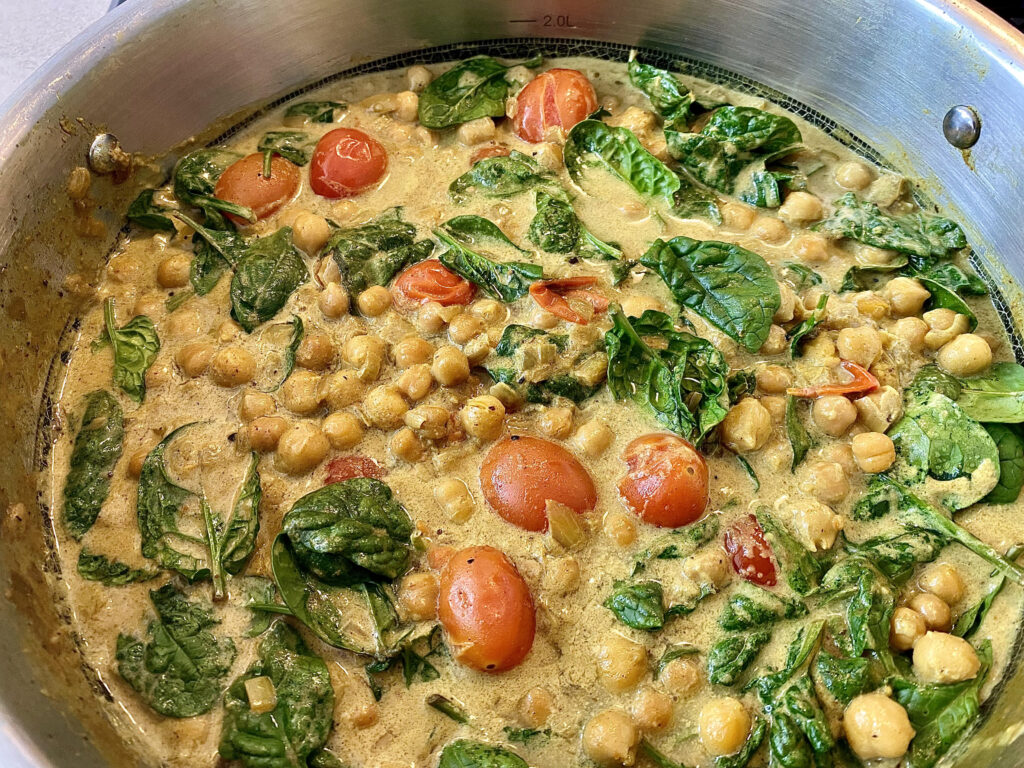
I recently spent a therapeutic hour dicing a couple of small onions and sweating them slowly before adding garlic, ginger, turmeric and garam masala.
Next, a tin of coconut milk went in, as well as a vegan stock cube, some whole cherry tomatoes (you can use tinned) and the contents of two cans of chickpeas – with their liquid.
If you have any curry leaves, add them. If you have fresh coriander, finely chop the stalks and throw those in too, saving the leaves for garnish at the end.
By garnish, I mean a huge pile of blousy leaves, not a prissy, finely chopped teaspoonful.
Leave to bubble gently for about thirty minutes – or for hours if you have the time, but be sure to cover with a lid or it’ll dry out.
Before you want to eat it, add some spinach leaves (or frozen spinach) and allow to wilt (or thaw) into the stew before checking for seasoning and squeezing over the juice of a lime.
Served up with rice or quinoa, it is January comfort in a nutrient-packed bowl. Enjoy.