29 Jan 2024
Sheldon Ringrose continues her series of articles examining fashion through the ages with a look at styles from the 18th century…
It’s said by people who know about these things that fashion as we know it today, really began during the Georgian era. Accessible to a wider mix of people, there were street styles, fashion influencers and celebrity hairdressers. Artificiality became fashionable but instead of cosmetic surgery, wigs and false underwear were used, including a very early version of a Brazilian butt-lift.
Except this was made of cork.
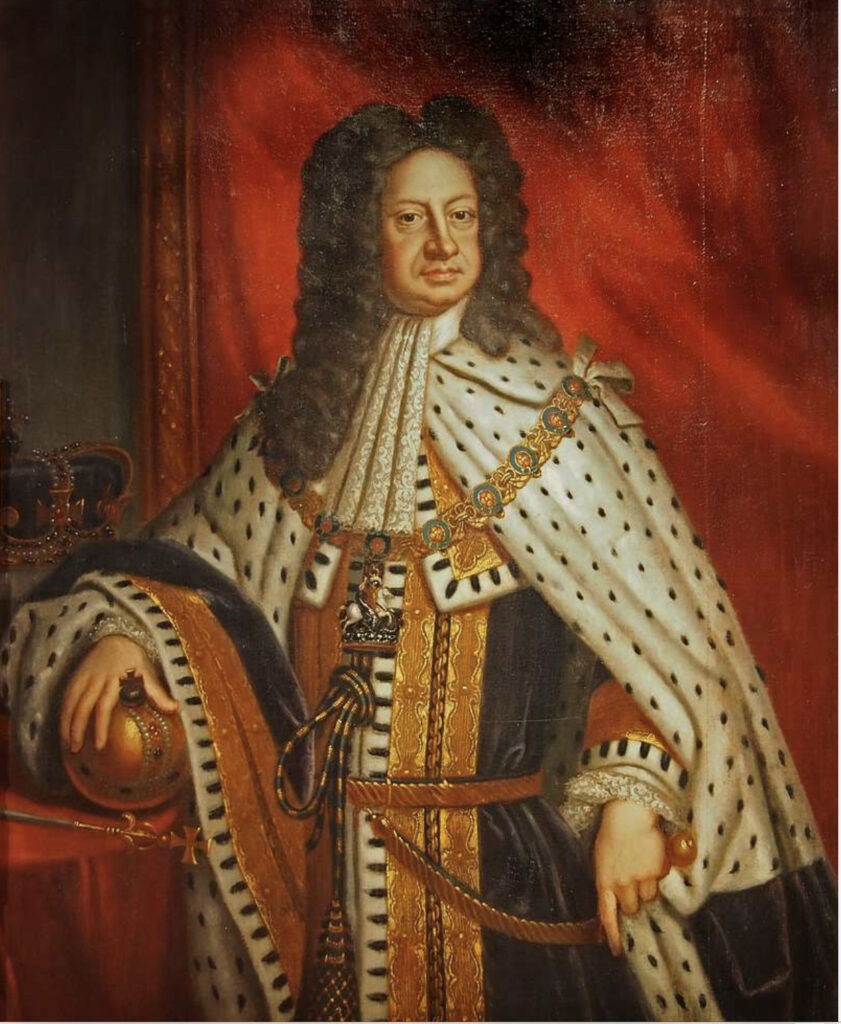
But first, some context. On 18th September 1714, George, Elector of Hanover, arrived in England with a large German entourage. He was also accompanied by two mistresses, popularly known as the Elephant and Castle because one was described as “inordinately fat”, while the other was thin.
Crowned several weeks later as George I, the new king spoke little English so communicated with his English ministers in a mix of schoolboy Latin and French.
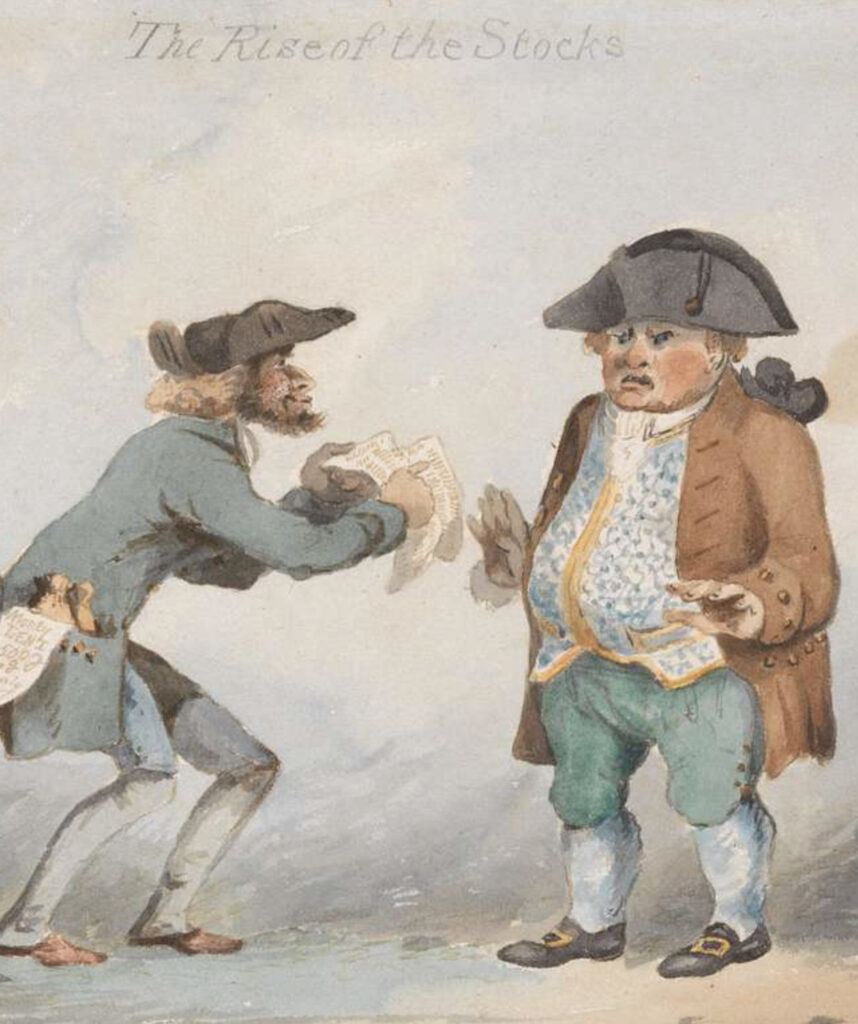
In London, coffee shops became fashionable meeting places to discuss stocks and shares, especially the high dividends promised by the South Sea Company. Thousands rushed to buy what stocks they could afford but in 1720, the bubble burst, ruining many and crashing the economy.
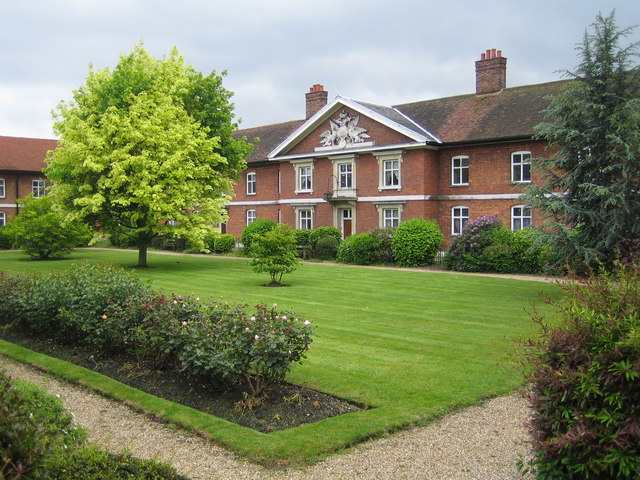
Not everyone suffered. Canny investors like local St Albans girl Sarah Churchill, Duchess of Marlborough, cashed in their shares before the crash and made a fortune. It’s said that the Marlborough almshouses in Hatfield Road were funded from Sarah’s wily stock dealing. She had contacts in high places. Insider dealing? Perhaps?
And St Albans in the 1700s? It was known to be rife with Dissenters, (those opposed to state interference in religious affairs, who founded their own churches and schools).
The town’s population was around 4,000, comprising Baptists, Methodists, Quakers and Anglicans. In 1715, two charity schools were founded as it was urgently felt necessary to rid the streets of “loose and disorderly children, filling the streets with noise and clamour”. Education was seen as the only way to stop these children growing up to be “Wretches without Principles, Morals and ready for Wickedness”.
Perhaps it worked, because by 1724, St Albans was described as a “fair, large and well- inhabited thoroughfare town”. The coaching trade was bringing travellers requiring refreshments, accommodation and services. The growth of straw plaiting and hat manufacturing also allowed local women to earn an income.
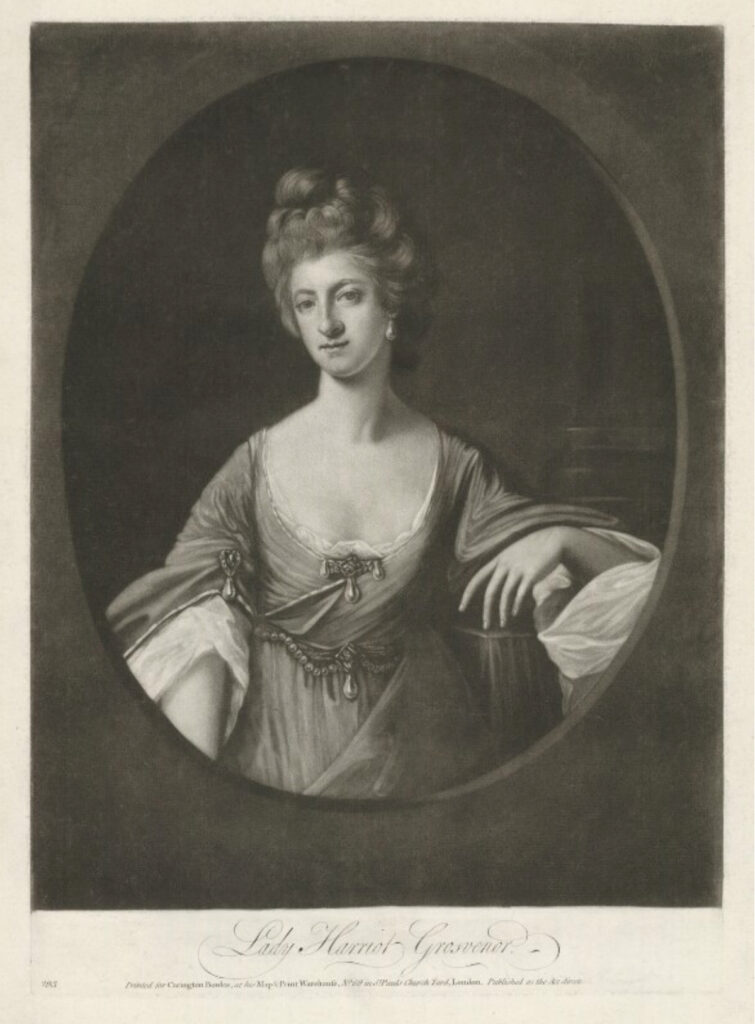
Meanwhile, at the White Hart in Holywell Hill in 1769, Lady Henrietta Grosvenor, a fashion trendsetter, was engaged in an affair with Henry, Duke of Cumberland, brother of King George III.
Lord Grosvenor sued the duke for damages, alleging ‘criminal conversation’ with his marital property – how wives were legally viewed.
The trial was a scandalous sensation, with the lovers’ letters published in the press and servants revealing what they had seen through keyholes. Lord Grosvenor was awarded £10,000, (over 1 million today) but the judge refused him a divorce, saying they were as bad as each other and should remain tied to each other for the rest of their lives. Henrietta became a member of the New Female Coterie, a club of socially prominent women who had been publicly shamed. The group was said to have been started by Caroline, Countess of Harrington, who became infamous thanks to her apparently insatiable sexual appetite.
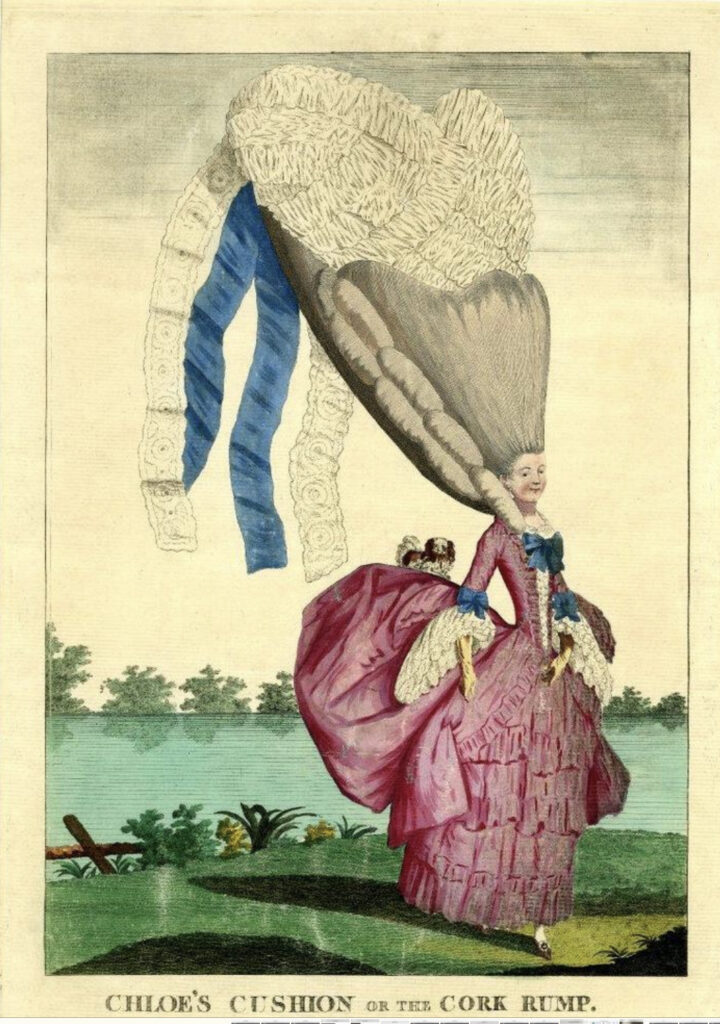
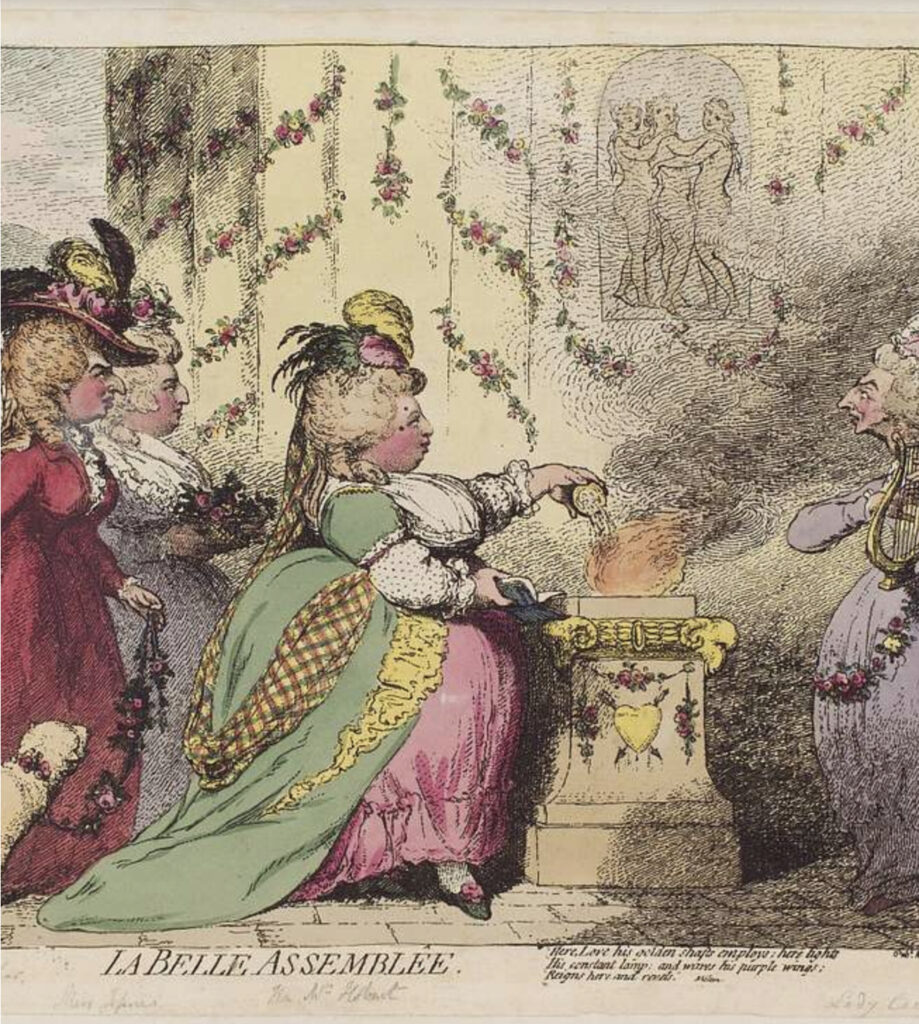
Cork rumps entered the fashion world in 1776, thanks to Henrietta. Said to have worn this padded bustle first at a regatta, she was complimented on her elegant appearance and “striking protuberance”.
The Town & Country Magazine wrote that many bum-shops had opened in Westminster where one could find cork rumps to suit all shapes and sizes.
An equally bizarre male fad was for false stomachs of cork or tin, the Morning Post commenting that false bellies conferred dignity and respect. However, with men wearing these and women wearing false rumps, it meant that “men appeared to carry all before them and women, behind”.
Unsurprisingly, both fashions were short lived.
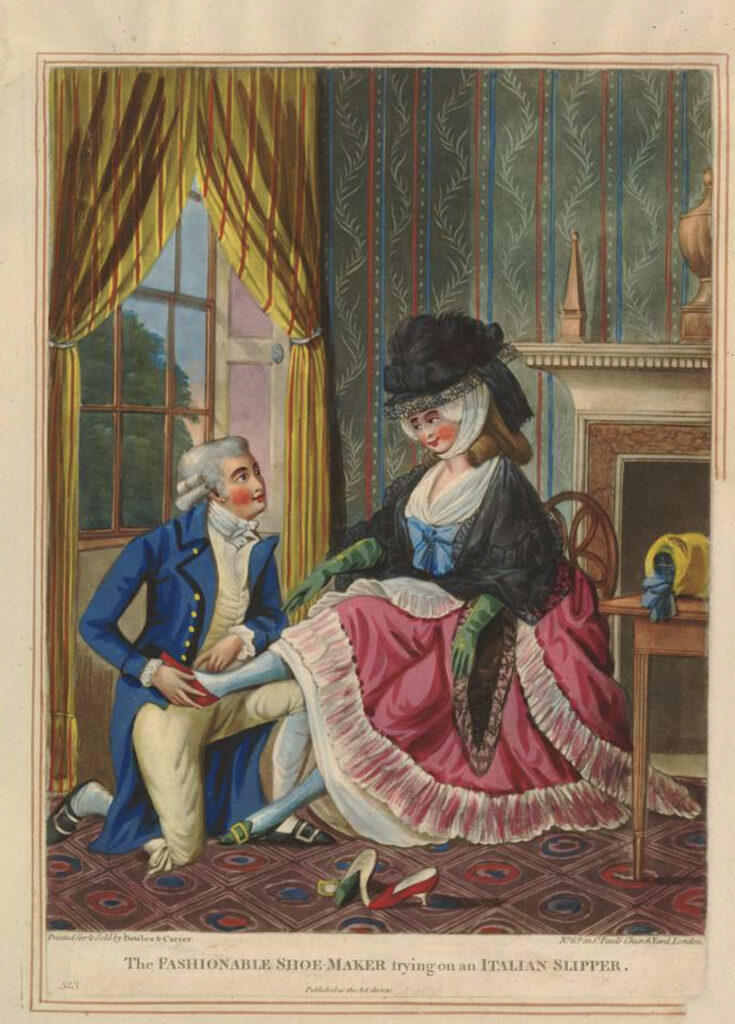
Downy calves were another form of fashion fakery. These were false calves for men and could be sewn into stockings to produce manly looking calves. Handily, they also kept your legs warm.
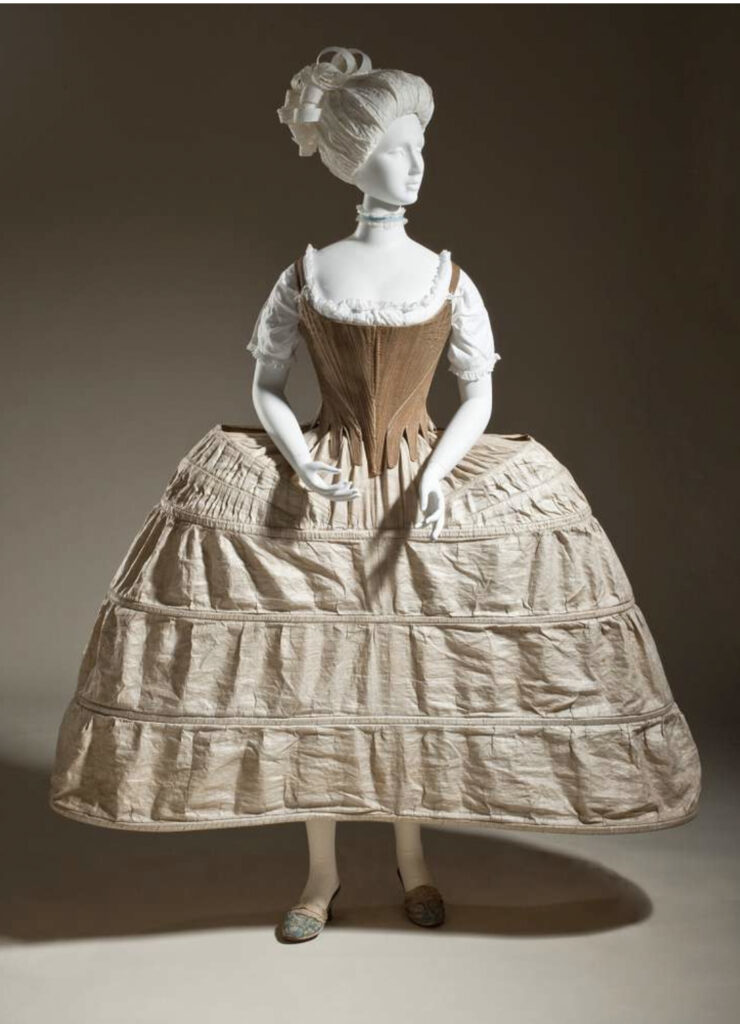
Talking of strange trends, domed hoops known as panniers were worn under skirts. Although smaller hoops were used daily, for evening occasions they could reach absurd widths of up to seven feet, with consequent implications for furniture styles and width of doors.
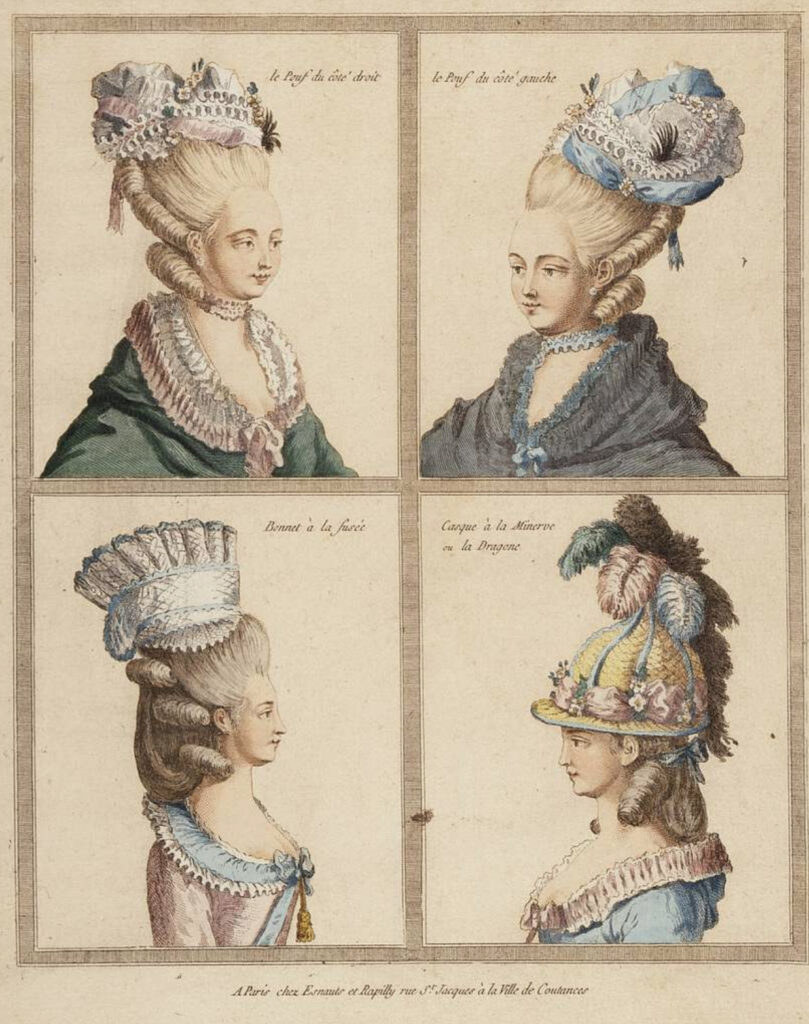
And then there was hair. Elaborately decorated hairstyles became a big thing. By the end of the 18th century, something like 50,000 celebrity stylists and hairdressers were recorded in London alone.
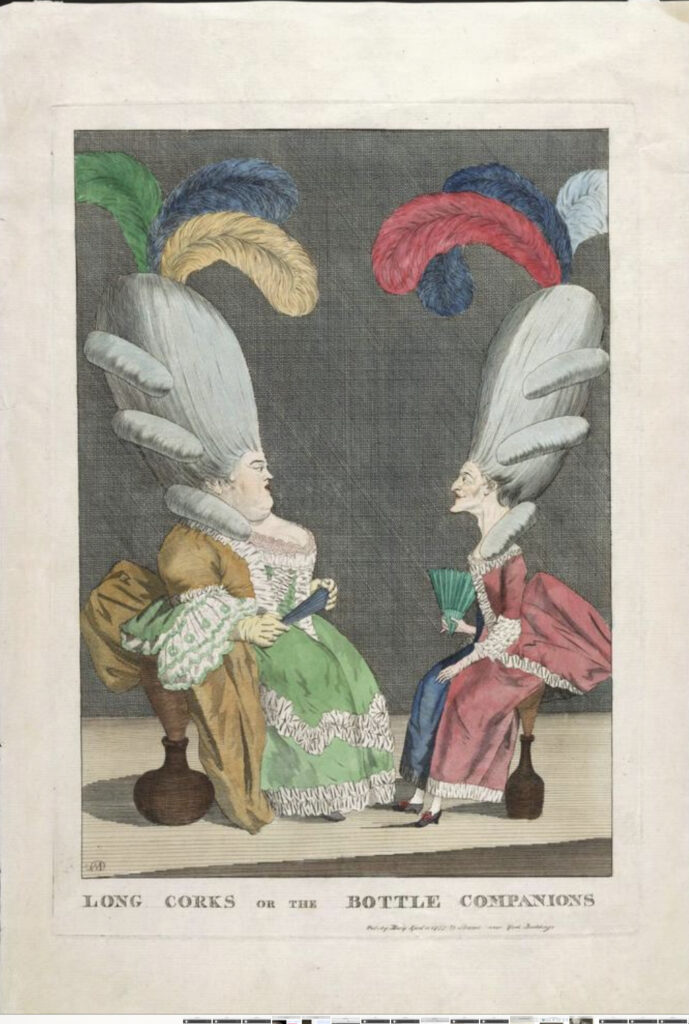
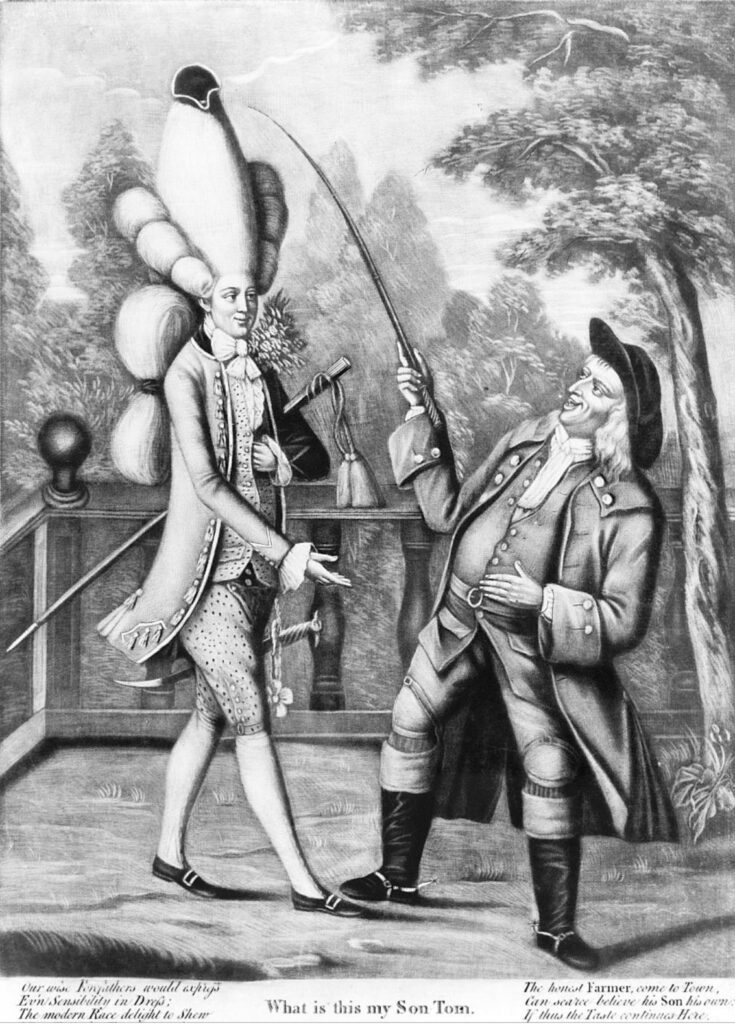
But because natural hair limited possibilities, wigs were used allowing hairstyles to become tall. Very tall. Up to 3-4 feet.
Often ornamented with ribbons, artificial flowers and birds, feathers and topped by tiny hats.
The weight must have been quite something. As well as all that, white or grey powder would be heavily applied.
But it wasn’t all just silly fads.
One of the most popular dress styles was known as the sack. Not quite so evocative as its original name, “robe à la française”, it had a tight fitting bodice, triangular stomacher and box pleats at the back.
For the wealthy, dresses were made in gorgeously coloured brocades, damasks, silks and taffetas. Meanwhile working women had to make do with hardwearing plain cotton and linen.
As for men, everyday wear was the three piece suit, with most English men preferring the informal “country” style. For the modish, however, it was all about French fashion – brightly coloured, full skirted velvet coats for the evening, with snowy white lace shirt cuffs and jabot, (ornamental ruffle).
White silk stockings and well-buckled shoes were also seen as essential as “nothing gives a more slovenly air to a man than ill-dressed legs”.
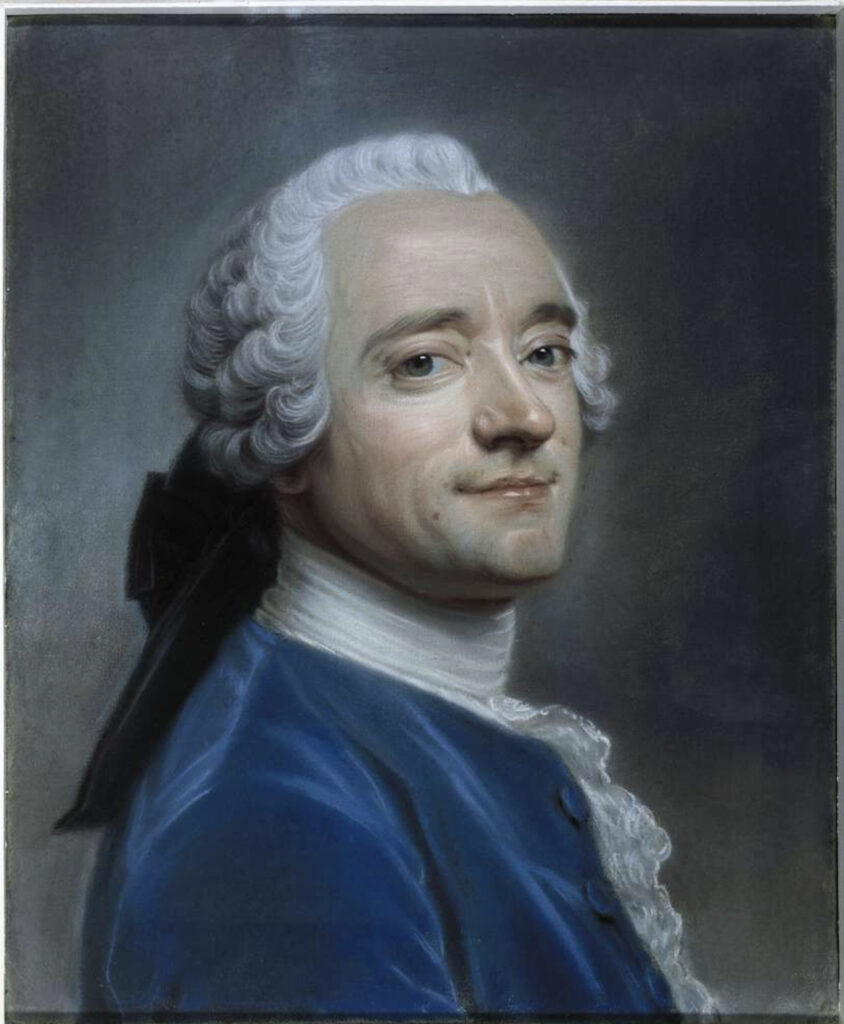
The earlier male fashion for full bottomed wigs continued into the 18th century and these began to be powdered with starch or fine powder.
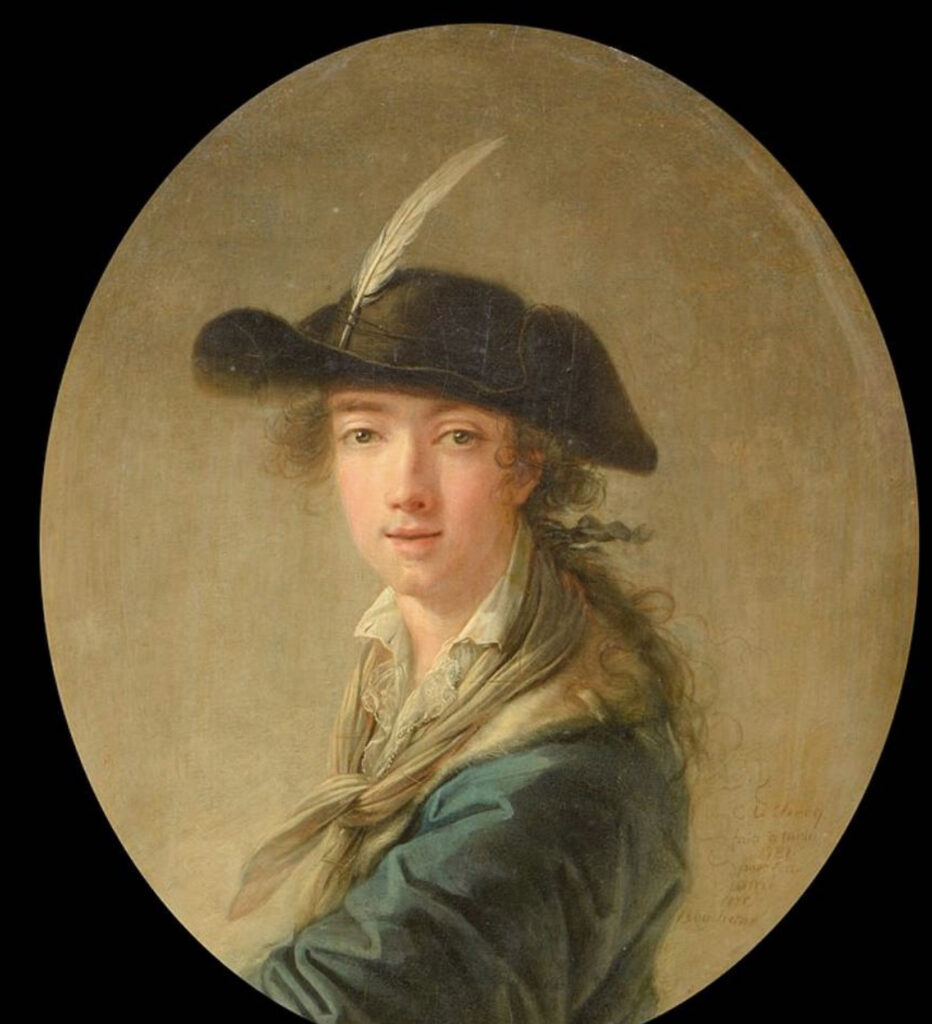
Wigs were expensive so whilst wig makers profited, milliners suffered as hats couldn’t really be worn with these gigantic wigs. As the century wore on, however, powdered wigs shrank and were tied back in a queue – pigtail. Hats came back into fashion, especially the three-cornered cocked hat (later called the tricorne). Younger men began to discard wigs in favour of powdering and tying back their own hair. However, the cost of wigs and
powder meant most men and women had no choice but to stick with their natural hair.
In 1727, in contrast to these fashion fads, a very practical addition to both appearance and health was invented by London manufacturer, Edward Scarlett. He began making eye glasses with metal arms replacing spectacles which simply rested on the bridge of the nose. Now, with arms looped over the ears, they could be worn all the time. However, for those male slaves to fashion, the Macaronis, there were lorgnettes, (spectacles with a long handle) or a quizzing glass on a ribbon.
As the century drew to a close, revolution and terror erupted in France. But it wasn’t only French politics and society which were transformed. Fashion had to adapt accordingly and, like previous trends, this crossed the channel. New informality and simplicity were to influence what came next in England. The Regency.
History in colour: www.stalbanstourguides.co.uk.