


14 Mar 2023
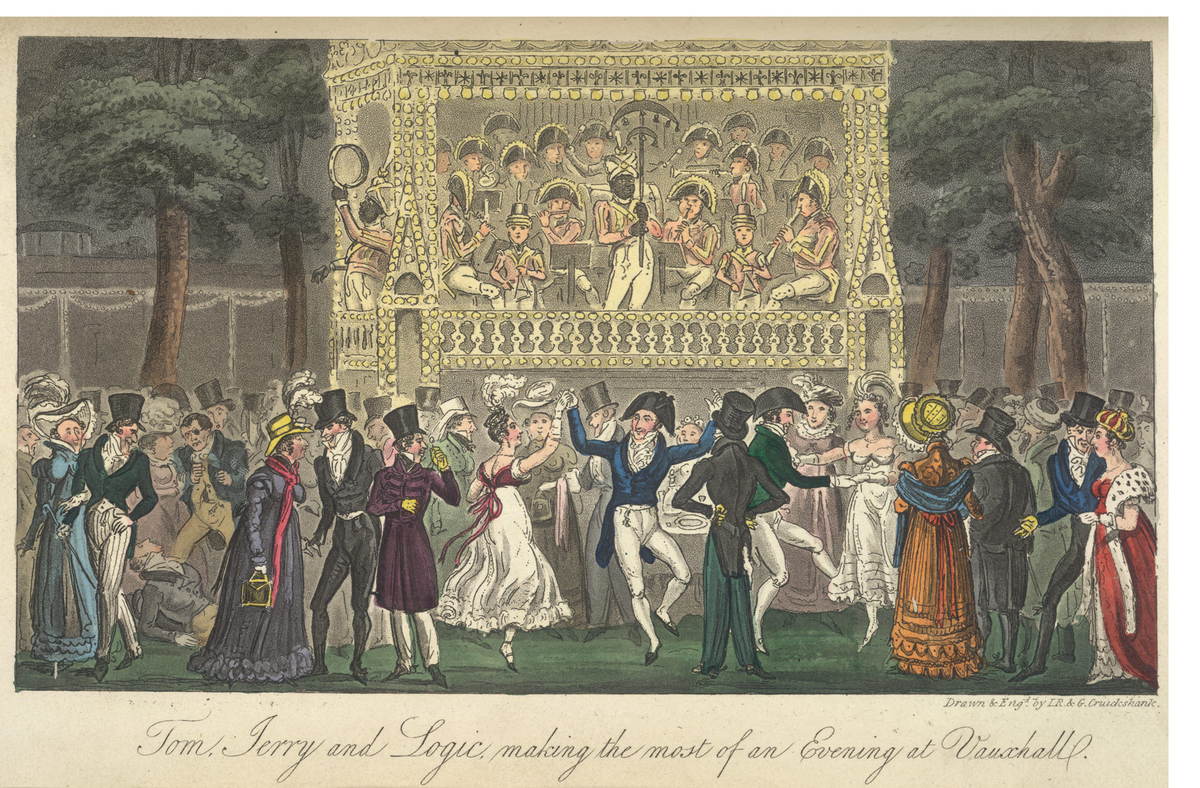
Along Hatfield Road there are two metal mile posts, advising the distances to Hatfield and Reading. Supplying the mileage to Hatfield and Watford is understandable, but why Reading? And what has it to do with the recreation of the well-to-do in the 18th century?
For the wealthy elite of society back then, overindulgence of both food and wine inevitably resulted in a multitude of health problems including gout. The cure was perceived to be ‘taking the waters’ and the spa town of choice was Bath, where the waters from the mineral springs were thought to have almost miraculous properties. After all, with such an unpleasant taste, they must be doing you good.
18th century roads were dreadful, so the journey to Bath from Hertfordshire was both long uncomfortable. It took the whole of the first day to reach London on a road that was notoriously bad, and then three more days travelling west.
All in a rattling coach with poor suspension, while suffering from gout.
Two Hertfordshire aristocrats came up with a way to improve things. Build a new road. The Marquis of Salisbury, of Hatfield House, and the Earl of Essex, from Cassiobury Park in Watford, joined forces to finance the Hatfield to Reading Turnpike Road, the route going via St Albans, explaining the mile posts in Hatfield Road.
Its great advantage was that it bypassed the congested and cobbled streets of London and thus reduced the overall journey time to Bath. This early ‘M25’ soon became nicknamed the ‘Gout Road’ for obvious reasons.
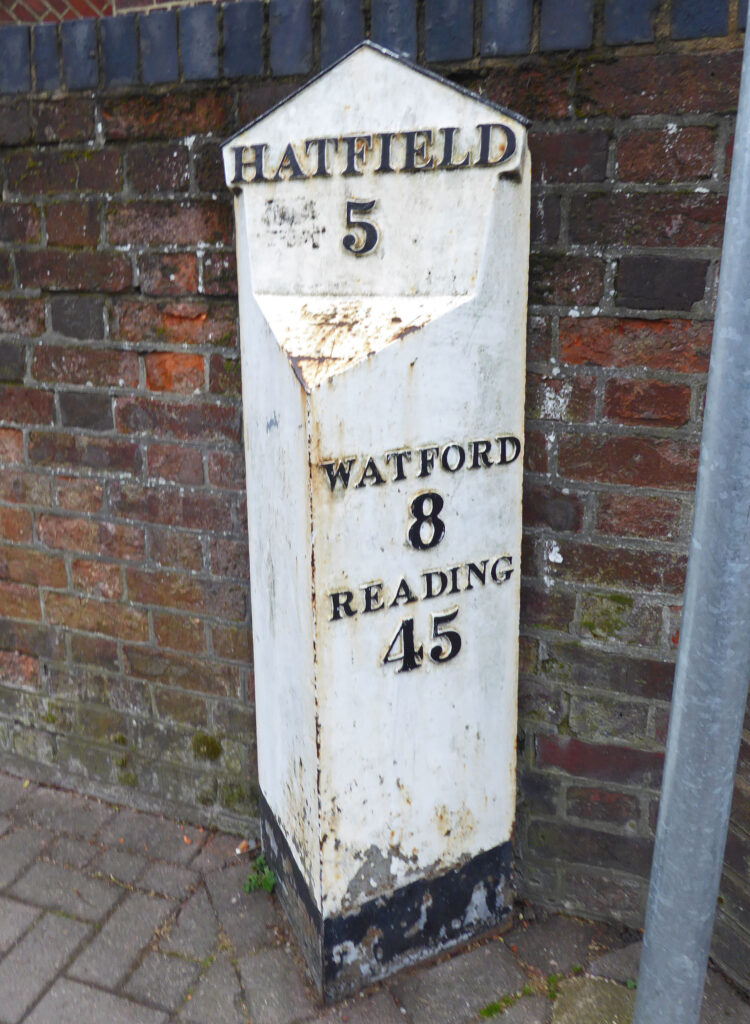
Another way for the fashionable elite to pass the time was dancing, which provided both exercise and an opportunity for men and women to flirt whilst maintaining the utmost decorum. Think of all those TV adaptations of Jane Austen novels with lines of couples performing carefully choreographed steps. No doubt the watching mothers and chaperones spent the time sizing up potential husband material for the daughters.
Dances took place in the Assembly Rooms, the social hub for the elite of the town. And whilst St Albans couldn’t quite match Bath for its fashionable status, it did have its own Assembly Room.
Originally this was at the Angel Inn at the bottom of Fishpool Street, which was considered to be the ‘principal inn’ of the town in the late 18th century.
However the opening of the new Town Hall (now the Museum + Gallery) in 1831 dealt a blow to the fortunes of the Angel, providing a new assembly room right in the centre of town. The Angel couldn’t compete.
While the 18th century elite were enjoying taking the waters and socialising in Bath, the poor people crammed into overcrowded towns and cities had little opportunity for healthy recreation. Indeed their main pleasure turned out to be thoroughly unhealthy. Gin.
With Britain at war with France, the government of the day was keen to discourage the import of French wine, and used the taxation system to encourage the production of spirits.
As a result, a flood of gin became available at prices affordable to the masses. And this wasn’t the spirit that we know today, flavoured with botanicals and diluted with tonic water. 18th century gin was about twice the strength and the added flavour was more likely to be sulphuric acid than juniper.
It was drunk neat and in huge volume. Its popularity with women gave it the name ‘mother’s ruin’ and inevitably cases of alcoholism and even alcohol poisoning followed in large numbers.
St Albans wasn’t immune from the problem. There was the case of Elizabeth Pruden in 1797. Elizabeth went into the Crow inn on Fishpool Steet and ordered a quart of gin – that’s over a litre – which she paid for, downed and then left. The next day she was arrested for theft from the inn, which she admitted – presumably it was to fund her gin habit. Her sentence – seven years’ transportation to Australia. This was the normal punishment for theft at the time. And all for goods worth sixpence, about £3 today.
There was plenty of attention paid to physical health in the 18th century, although the medicine was rudimentary, and you had to be able to afford the doctor’s fees. However mental illness was another matter. Sufferers were locked away in asylums, of which St Mary of Bethlehem in London, known as Bedlam, was probably the most famous.
Here patients were restrained in chains for long periods and treated with ‘cures’ such as plunging in cold baths and bloodletting. They were further humiliated by visitors who paid to watch the inmates as a form of entertainment. Laughing at the lunatics.
There was one doctor who was ahead of his time, taking a more enlightened view. Dr Nathaniel Cotton ran a private asylum, the Collegium Insanorum, in Lower Dagnall Street, St Albans. The building no longer exists, but it was on the corner of College Street, named after Dr Cotton’s hospital. A Blue Plaque marks its location.
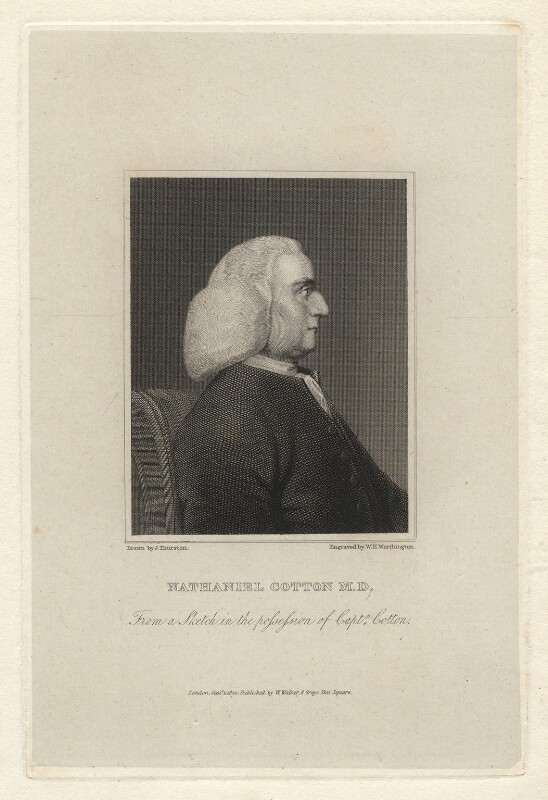
Here he treated patients with kindness and patience, encouraging a good diet, plenty of fresh air and physical exercise. His most famous patient was the poet, William Cowper, who spent 18 months at the Collegium
Insanorum having suffered a nervous breakdown and was full of praise for his treatment. However, it was only for the wealthy with fees between three and five guineas per week – almost two months’ wages for a skilled tradesman at the time.
There was a downside to being able to afford medical treatment. Wealthy sufferers of the Glimmering of the gizzard, the Quavering of the kidneys or the Wambling Trot, (don’t ask), were able to buy potions such as Dr Radcliffe’s Famous Purging Elixir, Anodyne Necklaces made from the “bones of St Hugh”; or Dr. Trigg’s Golden Vatican Pill, at two shillings a box. (Approximately £9 today). Goodness knows what these contained but they made their entrepreneurial doctors a lot of money.
Article contributed by www.stalbanstourguides.co.uk
