


28 Sep 2023
The proposed transformation of a derelict 18th century barn into St Albans’ newest theatre came as a surprise announcement this week, but negotiations have been underway behind the scenes for some time.
OVO Theatre Company has been awarded £300,000 from the government’s Community Ownership Fund to renovate and convert St Germain’s Barn and the little-used St Michael’s Changing Rooms adjacent, with both buildings owned by SADC.
The new theatre will be located within the scheduled ancient monument of Roman Verulamium, close to the Roman Theatre of St Albans, where OVO has been running its hugely successful Roman Theatre Open Air Festival since 2014.
The St Albans Times caught up with OVO artistic director Adam Nichols to find out more about the project.
He explained what having a permanent base would mean for OVO: “What it gives us is it gives us a home in the winter months. So obviously the Roman Theatre now is a sort of four to five month affair for us in the summer
“So it means that we’ll have a space in the winter months where we can carry on producing and operating. And obviously the proximity to the Roman Theatre is a real benefit and attraction for us because that has increasingly become our centre of operations over the last few years.
“Being in that close proximity, and having the venue there and being able to actually utilise it to support what we’re doing at the Roman Theatre when we’re there will be a big advantage.”
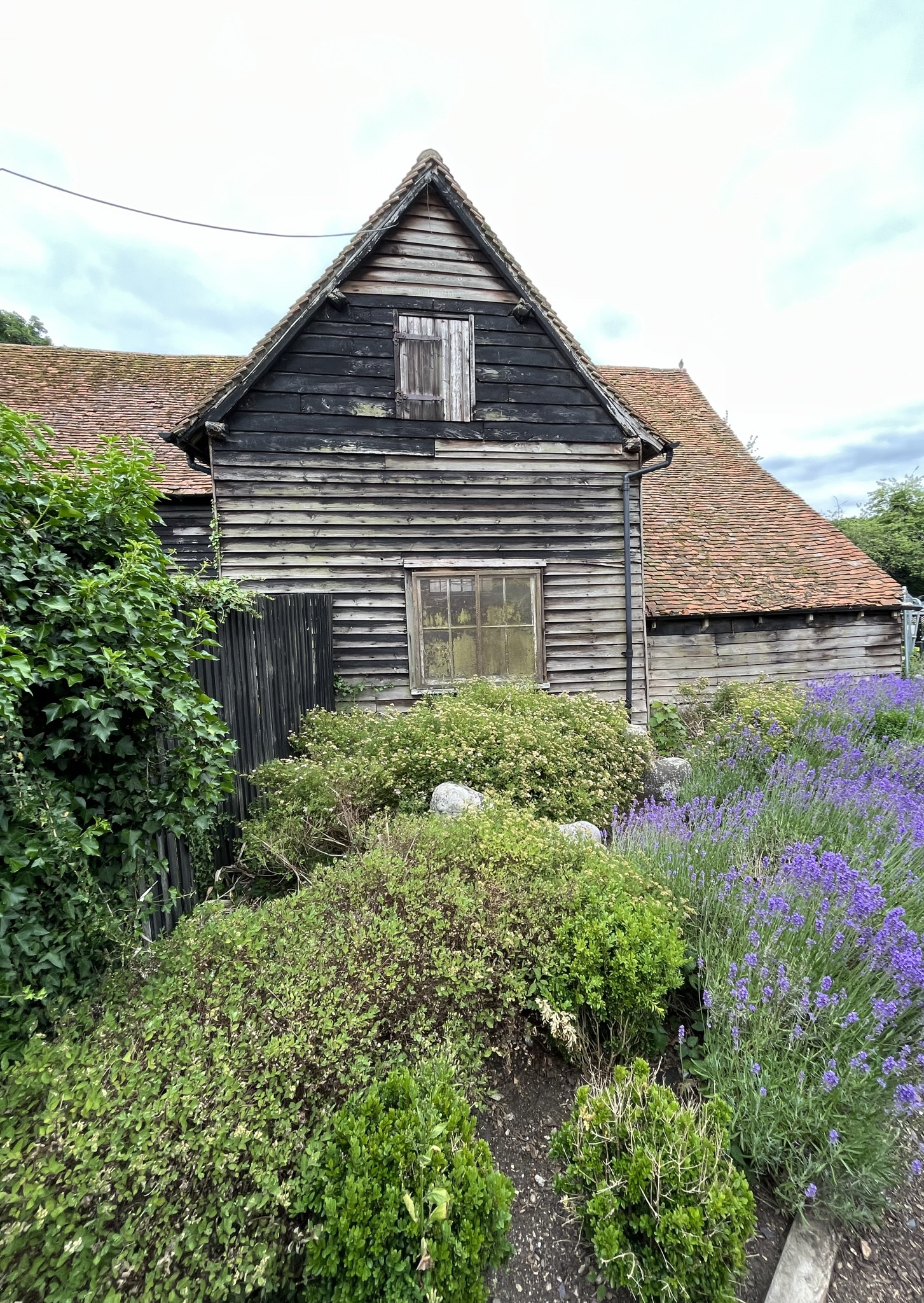
The barn itself stood on the east side of the foldyard of St Germain’s Farm, the existence of which was documented since the 16th century, and is Grade II listed for its special architectural or historic interest.
Although the barn itself dates back to the 18th century, there is 20th century weatherboarding over the original timber frame.
Visitors to Verulamium Park may have passed it by without comment, which is what Adam did until recently: “To be honest, until about a year ago, I’d never even noticed the barn was there.
“It’s got a horrible fence around it, it’s been left in the state that it’s in because it’s Grade II listed.
“It’s a beautiful building. It needs a bit of TLC, but it’s a stunning barn.
“We’ve been looking for somewhere for a little while and we’ve looked at a few different places, but I think there’s an opportunity to turn something that’s currently not being used, that’s a little bit sad and a little bit unloved into something that could be a really exciting place.
“From the perspective of local residents I don’t think there will be any major objections as at night time it’s a complete ghost town down there and it’s quite far away from the nearest houses along St Michael Street.
“We’ve had letters of support from [Verulamium] Museum and [nearby Herts and Middlesex] Wildlife Trust and various others down there, so I’m not so concerned about them and we’ve already agreed with the district council that we would maintain a public toilet facility within the building.”
The redevelopment of the barn and adjacent sports facilities is still very much in the early stages, Adam revealed, but he felt the potential was huge.
“We’ve only done an initial feasibility concept, but the plan is that the barn would become a performance space and a community space. It could be used by community organisations or companies or whoever else for events.
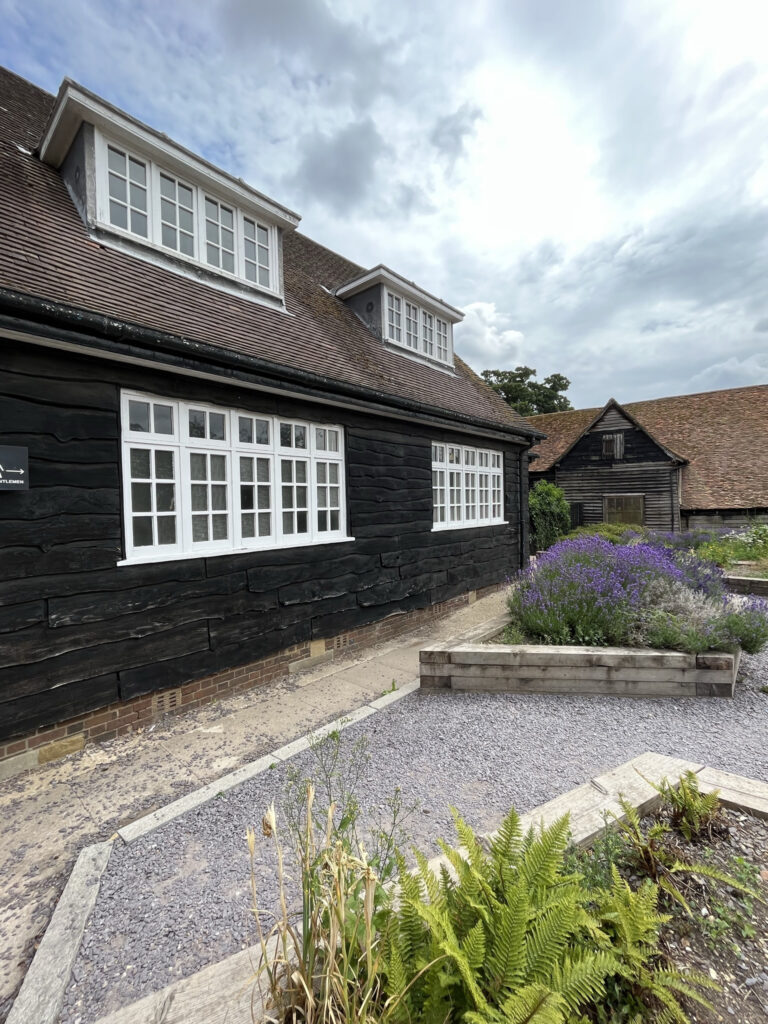
“Then we would convert the pavilion and changing rooms so that the ground floor would become a sort of front of house area. Upstairs we’d have rehearsal rooms, meeting rooms, dressing rooms. But there’d also be spaces there that could be used by anyone for meetings, events, classes.”
Although the barn itself is listed, the changing rooms aren’t, which presents a challenge from the planning perspective to connect the two buildings together.
“Because it all sits within the scheduled monument of Verulamium, Historic England have a say on any development in that area.
“We’ve got to come up with a plan that will be acceptable to them even if we’re only planning to put in something very small like a connecting passageway between the two buildings.
“Their starting point is no new development within the scheduled monument so we’ve got to come up with a scheme that will satisfy them, both in terms of not disturbing the archaeology underneath, but also aesthetically. “I mean the aesthetic bit of it makes me chuckle a little bit because if you look at that frontage at the moment, you’ve got bins, you’ve got a horrible fence that’s been around the barn for about seven or eight years, you’ve got lampposts, parking meters, I mean it’s a real mess.
“I think whatever we do is going to improve the look of it. But nonetheless, if we’re going to put a new structure in there, it’s got to be aesthetically in keeping with everything else, which is fair enough.”
The new theatre doesn’t mean the end of OVO’s involvement in the Maltings Arts Theatre, just a move towards more community usage.
“The Maltings doesn’t particularly lend itself quite so well now to the shows that we’re producing now, but it’s still obviously a really good space in a really good location so we’re trying to evolve the model there to take in more community performance and community events.
“We still think it has a part to play locally and it’s still in strong demand to be used by all sorts of different organisations.”
The timeline for the project is to complete the conversion of the buildings by the end of 2024, with the new theatre opening in 2025.
Adam added: “At the end of the day it’s £300,000 of public money that is coming into the district to do something positive and we’ll be saving the local tax payers money just by the council not having to maintain them anymore. The council will still own the buildings, but the idea is that we have a long lease which will enable us to make the investment that needs to be made to do the work that needs to be done.”

