01 Oct 2026
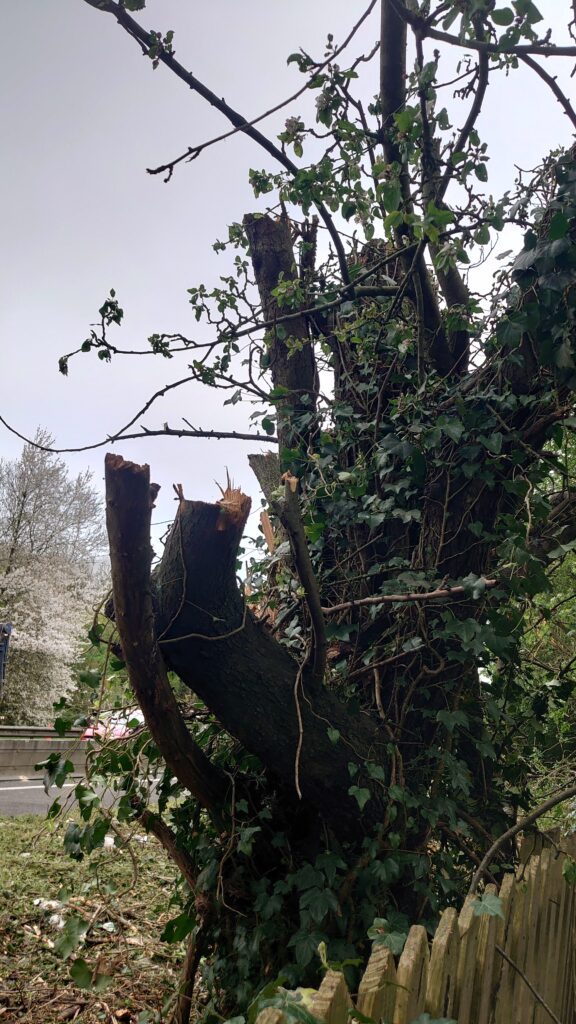
Rail freight developer SEGRO has agreed to save a 70-80ft mature sycamore which faced being chopped down as part of the Park Street roundabout works taking place to accommodate the depot – but four other trees are still at risk.
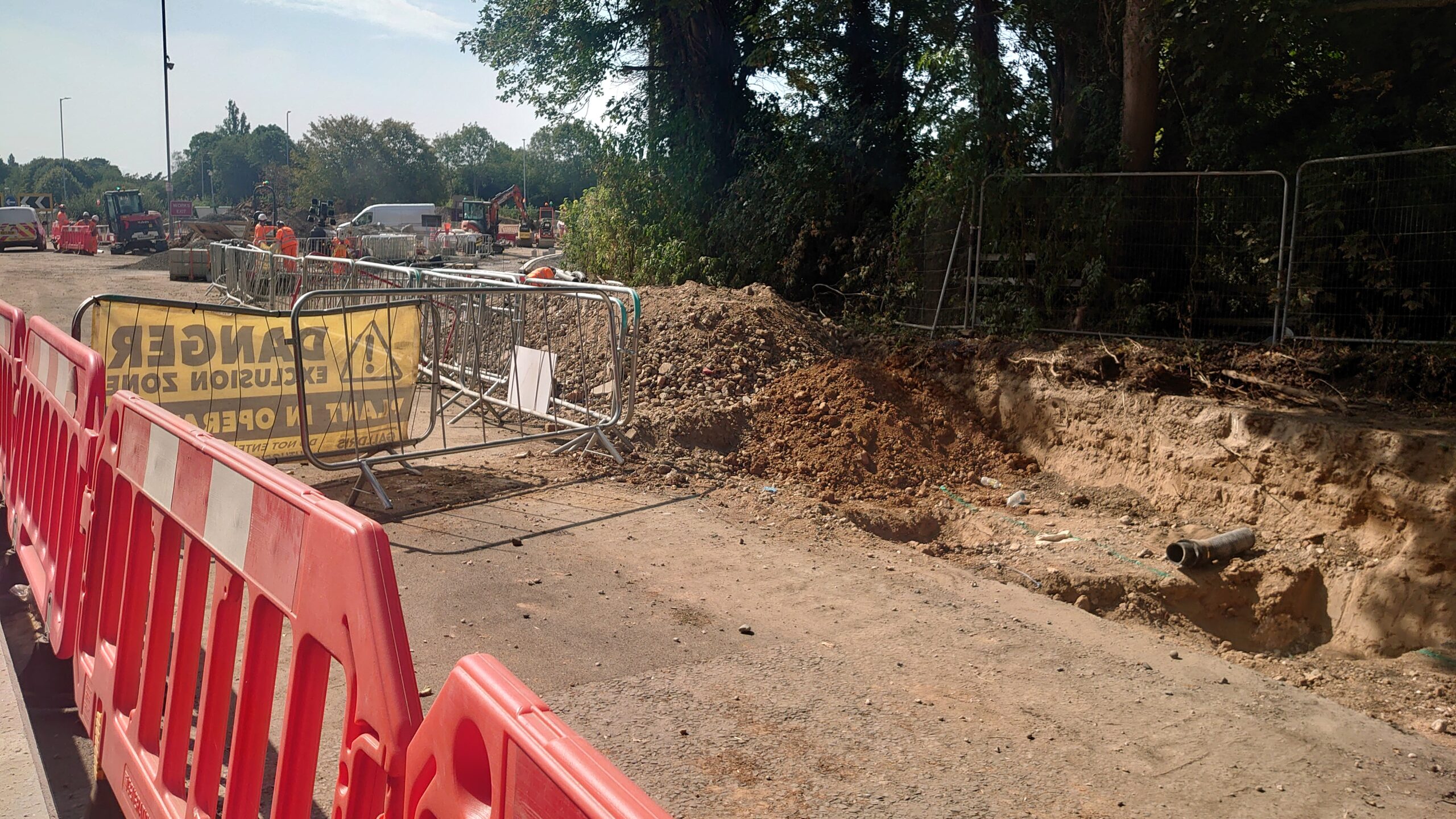
Last year Herts Highways proposed to destroy dozens of mature trees at the bottom of St Julian’s Hill to make way for the roundabout redevelopment, only to face overwhelming opposition when neighbours highlighted how they reduced noise, light and emissions pollution, providing a vital environment for local wildlife.
Highways and SEGRO promised no more trees would be destroyed on this part of the roundabout, only to make a U-turn and threaten to remove a 70-80ft sycamore known as T1 and possibly the other remaining trees to allow for a new filter lane.
SEGRO engaged an arboriculturist who said the roundabout works would likely require cutting the trees’ roots, which would kill them, so it was better to remove them in advance rather than create any potential health and safety risks later.
But campaigners from the local community fundraised for the services of an independent arborist to provide a second opinion before the trees were destroyed.
Ryan Hurdle, director of Redwood and Green tree and landscape consultancy, revealed that the SEGRO contractor’s arborist report did not clearly or correctly identify the trees that were recommended for removal.
Ryan asked for the trees indicated for removal to be marked on their trunks to avoid confusion when the tree surgeon arrived.
The large sycamore tree initially at risk has been recommended for retention by Redwood and Green, subject to having its height professionally reduced by about a third.
There should also be treatment of the badly severed and exposed roots, installation of protective fencing around tree to avoid further trunk/branch damage and work undertaken to improve soil conditions to combat root rot whilst encouraging new root growth.
He also recommended an intense regime of controlled watering and the spread of mulch to give the tree the best possible conditions for recovering from the stress it has suffered from excavation works in and around its main root system.
The tree should be monitored every 18 months for the next five to six years and there should be no further excavations near to the tree’s root area.
A spokesperson for SEGRO said the company would not be seeking to destroy the main sycamore tree, but others were still scheduled for removal.
“The independent arboricultural review considered the affected trees and the results are aligned to those of STRABAG UK’s arboricultural specialist regarding the impact of the approved highway works and their potential long-term health and stability.
“Having considered the possibilities for retaining tree T1 suggested in both assessments, Hertfordshire County Council has now agreed that this tree can be left in place, subject to the recommended mitigation measures including crown reduction and soil improvement works to support its recovery.
“Subject to the necessary approvals, STRABAG UK will implement these measures and Hertfordshire County Council will monitor the tree’s condition going forward.
“The remaining affected trees continue to be considered unsuitable for retention and we will continue to work with Hertfordshire County Council and other relevant stakeholders on the agreed next steps.”
Local resident Gill Holpin, who launched a campaign to save the trees, said: “The residents of Tithe Barn love and enjoy the mature trees on their estate and understand the benefits that these trees provide to them and their families for their health and welfare, as well as the benefit to the local wildlife.
“They are appalled that they have had to engage a professional arborist due to concerns with the quality and limitations of the HCC-supplied arborist report. Residents are united in trying to do everything possible to keep and protect the beautiful trees that remain around their side of the Park Street roundabout.
“There appears to have been no consideration from SEGRO or their contractors as to the damage that might have been done during the filter lane construction and excavation works to any of the trees close to the fence line on St Albans district council’s land. The arborist’s report detailed clearly the damage that deep excavations can do to trees’ roots and the remedial action required to help affected trees after having their roots ripped apart by heavy machinery like diggers.
“For companies as large as SEGRO and their contractors, residents expect more consideration and care given that they engage their own experts to advise on ecology and arboricultural matters.
“We challenge Hertfordshire County Council and SEGRO to provide evidence that an arborist professionally assessed all the trees near to the roundabout excavations, including those on St Albans district council land adjacent to Butt Field View.
“They ask to see evidence that their contractors undertook the excavation works with expert care and consideration for the established trees both on Highways and SADC land.
“Residents fear that the remaining trees on St Albans district council land near to the boundary fence may also be suffering from root damage and this might not be evident for a number of years at which point SEGRO may deny any responsibility.
“Root strengthening measures should be applied to all trees where excavations may have damaged their root systems. Guarantees from SEGRO to St Albans district council should be given for any failure of trees within five metres of the boundary fence.”
One of her neighbours added: “I would like to challenge any councillor to come down here at 1am on a Saturday night, have a good listen, and then tell residents whether they genuinely believe this level of disturbance is acceptable and within the legal framework – particularly given the permanent loss of trees along the highway boundary, which previously provided an important buffer between the roads and neighbouring homes and helped reduce the impact of traffic and construction noise.”
And fellow campaigner Andy Love welcomed the news: “Residents are relieved that SEGRO, HCC and STRABAG agree with Redwood and Green’s findings that tree T1 can be retained if certain care and maintenance is carried out to British Standards 3998-2010.
“The residents will be requesting that their arborist, Ryan Hurdle, is engaged by SEGRO/STRABAG to supervise the tree’s height reduction to make sure this is carried out strictly to the guidance he provided.”
But he said there were still unanswered questions about the whole roundabout works.
“I’ve tried many times to get a copy of the diagram showing the finished landscaping of the completed Park Street roundabout but it has never been forthcoming.
“This makes me wonder why and what do the designers of the roundabout upgrades not want residents to see?
“It would have been very welcome if those responsible for the SRFI infrastructure upgrades involved local residents in some way in the design of the landscaping of such areas as Park Street roundabout, but it appears that our ideas and opinions don’t matter!”