07 Sep 2023
One of the most divisive traffic experiments St Albans city centre has witnessed since the one-way system of the 1980s is continuing to polarise opinion even as it begins winding down.
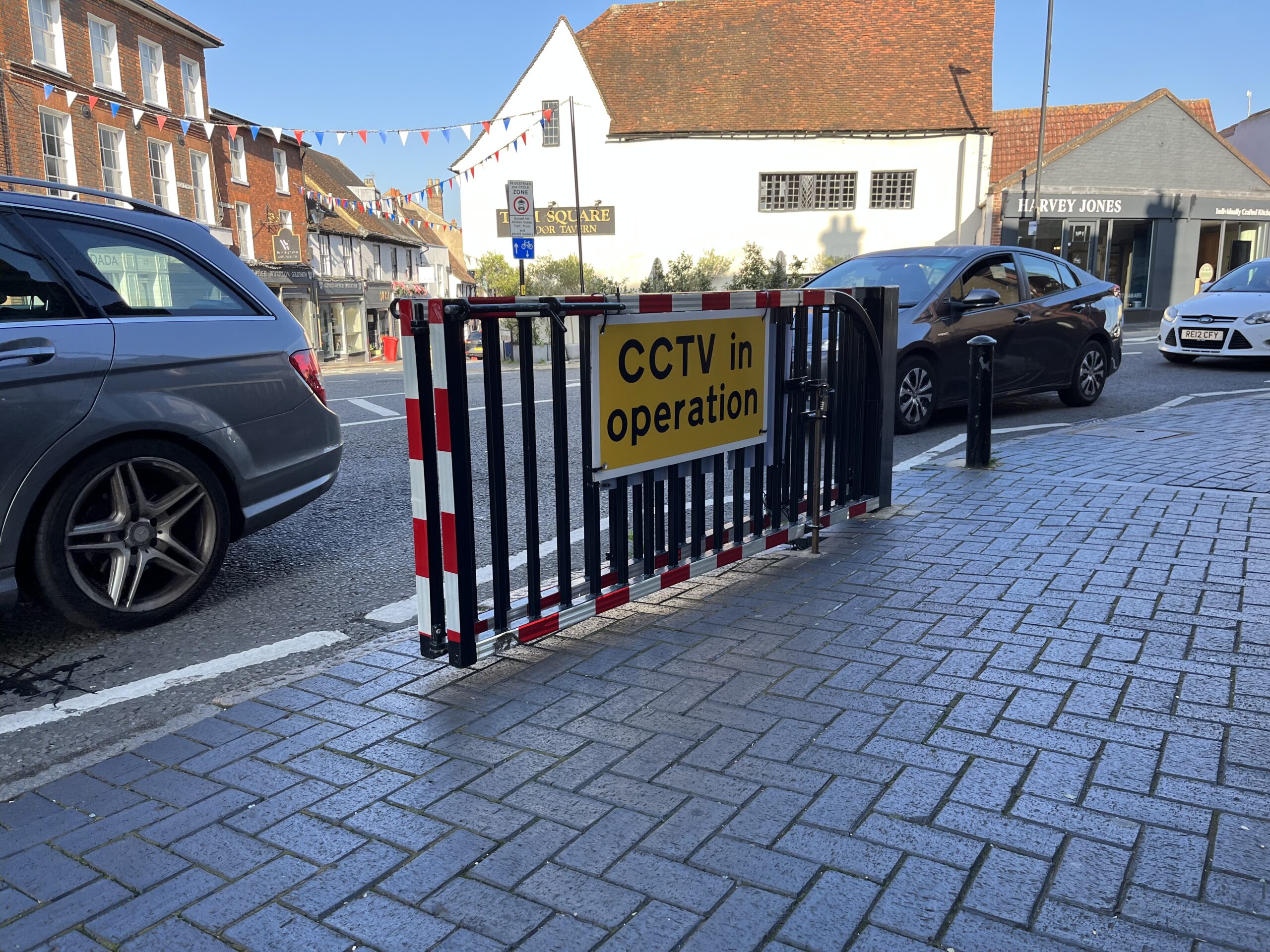
As predicted by the St Albans Times, Herts county council (HCC) has announced new plans which will see High Street reopen to traffic seven days a week, with the gates remaining in place to enable quick and easy conversion to public space for special events.
George Street will be closed to motor vehicles on Saturdays and Sundays, and the prohibition of motor vehicles and restricted parking zone in Market Place, Spencer Street and Upper Dagnall Street will be made permanent.
Cllr Phil Bibby, HCC executive member for highways and transport said: “Although we originally introduced the measures in Market Place to help during the pandemic, the friendlier and safer environment they’ve created in St Albans city centre has proved popular with visitors and traders, so it makes sense to make those measures permanent.
“However, we’ve listened to residents and businesses, and it’s clear that the closures on High Street and George Street aren’t working the way we’d hoped. We’ll continue monitoring traffic, air quality and footfall in the area to see how they’re affected by reopening these roads.”
The project board, made up of representatives from HCC, SADC and St Albans BID, decided to implement these changes before the scheduled end of the trials based upon an interim report detailing public engagement responses, business surveys, and initial monitoring and evaluation findings.
Manager of The Maltings Shopping Centre Phil Corrigan said: “It’s just a disgrace they have taken so long to reach this decision with no real consultation with those businesses that have suffered the impact of these closures.
“Interestingly they mention increased traffic levels in Folly Lane with no mention of traffic levels in King Harry Lane or Catherine Street which has taken the bulk of the diverted traffic. Also they claim an increase in footfall and dwell time since the pandemic, well no surprise there and again unsubstantiated data and selective presentation. It would be interesting to see and compare their data with ours.
“But overall very good news for our city.”
Sean Hughes, owner of Dylans and landlord of The Boot, said: “We are delighted that the pedestrianisation of Market Place is going ahead permanently and think it has proven to be a real success in that part of the city.
“We hope that St Albans council and HCC agree on a budget for the area to properly level the area with a view to make Market Place more accessible to disabled visitors and the elderly without the various levels of pavement.
“Let’s not forget that the first Battle of St Albans in the War of the Roses was outside our Clock Tower and this is a very, very important area with historical interest.”
“We are personally very happy with the re-opening of High Street which has been a nightmare since it started and in my opinion has made the trial very, very difficult to justify. It has made the George Street element of the trial a huge challenge with additional restrictions due to the number of gates emergency services had to travel through. We are still yet to hear of any pollution or accurate traffic report as it was not conducted in a way that was over a long period of time.
“George Street was extremely quiet and felt bleak in the winter period so we are pleased this is reopening although we are currently happy to see the weekend closure going ahead but the overall success is the one-way re-opening, something we have called for a long time.
“It is still very disappointing to see that we are so restricted with tables on the street which was due to the High Street closure and believe it is a missed opportunity to do something quite groundbreaking.
“A lot of traders in the street need vehicle access to run their business every day and we hope that the compromise of a weekday opening and a weekend closure will ensure that they can run their business.
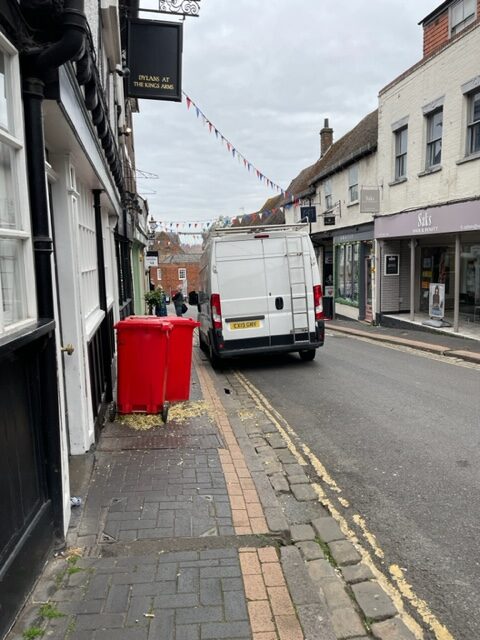
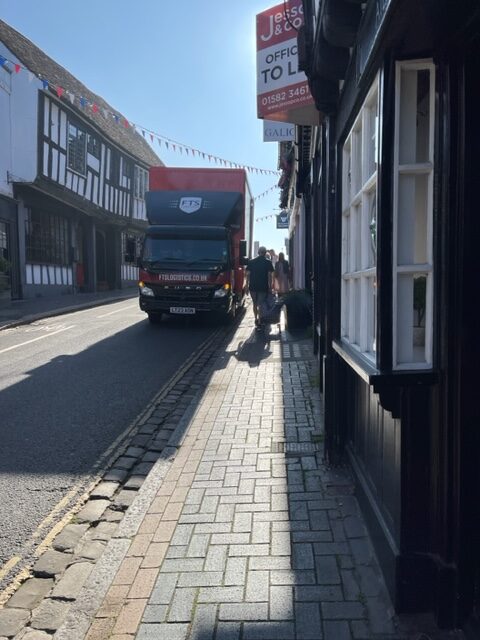
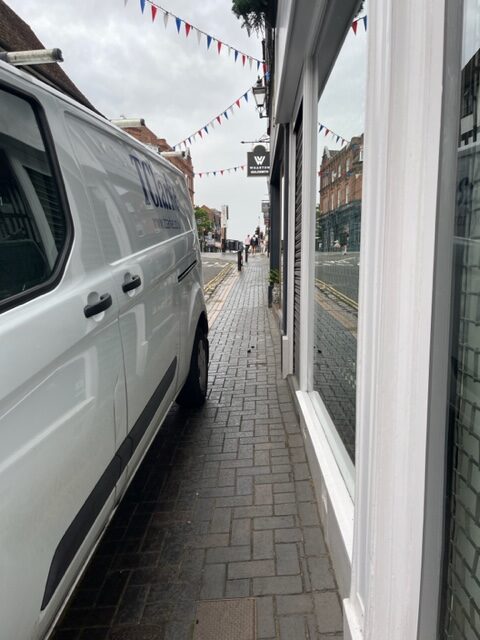
“We really do hope that investment can come in to accommodate the one-way road and increase the awareness of the low speed zone. We also think George Street is overdue a plan to widen pavements to ensure it is safe as it is currently too narrow for disabled visitors and people with pushchairs to pass each other without stepping into the road. The pavements are far too narrow as they stand.
“We hope to see 30-minute parking spaces added to the four spaces at the bottom of the street (8.30am-5.30pm) rather than restricting them to residents only which will encourage business into the area during the week.
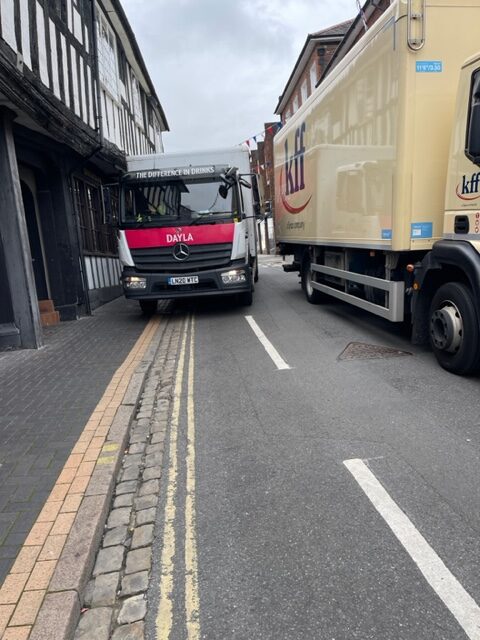
“This will also help with loading issues as a whole which has been hugely challenging for businesses and disruptive for residents who after all have to live here after shops close at 6pm. It will also assist businesses such as Flowerbox who need to have parking very close to their shop in order to make a living.”
Fellow George Street retailer Sarah Gillow, creative director at GALIO jewellers, wanted the road permanently closed to traffic.
“As a trader on the street for 30-plus years, a member of St Albans Chamber of Commerce, director and latterly chair of the BID, I have seen many changes in our beloved city. By far, the best has been the banning of cars on George Street – as the historic street, with its narrow pavements, is not fit to carry such a huge volume of traffic.
“The Covid-enforced closures saw the street adorned with flowers and bunting and with businesses fully embracing the ability to trade outside. Hence, the majority voted for permanent closure.
“However, the current trial period has been a very different experience.
“The trials happened later than planned, were not clearly promoted and we had none of the previous street decorations. Furthermore, businesses had to spend months fighting for a license to trade outside so the street scene has been empty for much of the trial period. In a nutshell, it’s like comparing apples with pears and it’s unsurprising that opinions are split when previously most business owners were pro-closure.
“Galio, along with Whartons (a double shop), Dwayne Edwards, Tinkletorium, Atelier Monte, Earley’s, Hawk Ventures (No. 10), The Bride, Thorns, Trinder Hair Studio (double shop) and Galio (also a double shop) hope the weekday reopening is just the next stage of the trial and no final decisions have been made.
“Benefits of the closure to us were increased footfall on the street, less pollution both from fumes and noise.”
County councillor Sandy Walkington said: “Clearly a line has been drawn under High Street which will now stay open. That closure has not delivered the pedestrian and street activity benefits to outweigh the problems caused elsewhere by displaced traffic.
“Market Place will remain closed with a traffic order making it permanent. There remains everything to play for in George Street where in this final phase the street will remain closed at weekends and one-way downhill when it is open during the week.
“At the end of this last phase, residents and businesses will have a choice: to keep it as weekend-only, go back to seven-day closure or re-open it fully.
“This has always been about trialling different options to get the best balance between vehicles and users of the city centre. Listening and consulting will continue to be the hallmark as we go forward.
“As a councillor talking to both businesses and residents, I am conscious of the strength of feeling on both sides. We are seeking a balanced outcome that delivers the greatest benefit to St Albans city centre.”
St Albans council leader and county councillor Chris White said he thought the experiment had been a partial success: “The major win is the permanent closure of Market Place which should never have had traffic in the first place.
“Comms was always an issue. The project was bedevilled by false information, especially over ambulances where an impression was given that the ambulance service had problems. This has been consistently denied in public forums by the CEO of the East of England Ambulance service – not surprising given the amount of pedestrianisation throughout the county already, including St Albans.
“It would have been better to have been collecting data far earlier and in a more comprehensive range of places.”
In a press release from HCC, the council claimed: “Data collected by Hertfordshire County Council during the trial shows that traffic has reduced significantly at the congested Peahen junction compared to before the trial, and compared to before the pandemic. There has been some increase in traffic on other roads such as Folly Lane, however in general traffic levels in the city remain unaffected.
“Air quality has improved throughout the centre of St Albans with pollution (NO2) reducing by an average of 16% on pre-pandemic levels. Footfall in St Albans has also increased since the beginning of the trials with St Albans welcoming 26% more visitors compared with the same time last year, with people staying slightly longer than they did before.”