



12 Aug 2026
The last few weeks have been full of frustration again, writes Laura Bill. The search for meaningful work in addition to the work I do with the St Albans Times. I am very much a journalist and a teacher – by qualifications, skills and experience. It’s not a flaky thing, it’s just who I am and I don’t see that that should go against me. But finding the right thing seems an impossible task and anybody would feel demoralised.
I’m quite sick of the level of effort and emotional investment put into each application and interview only to be constantly deemed ‘unsuccessful’. What a word to use. As if you don’t feel shit enough?
Now that’s not good at the best of times but I do have a thing called Rejection Sensitivity Dysphoria (RSD) which is intense emotional or physical pain triggered by perceived or real rejection, criticism, or failure. It often accompanies ADHD and basically means that every knock back, every “We liked you but no sorry…”, every “We”ll let you know on Friday” and then silence until Wednesday feels actually painful to me. And I know that sounds dramatic and it is.
One of my close friends said to me half joking that I’m obviously too good and scaring the employers away. And I hate to say it but it’s something I’m sensing. That people want to hire a nice friendly nodding idiot. And how am I supposed to navigate that?
There’s a saying, he said, “Sometimes you have to play the fool to catch a fool” and it got me really thinking about whether or not it’s worth a try.
I can’t help but ponder whether this is a women-only thing. Is it only women who feel they have to dumb themselves down? I know once upon a time it was advised that women should just look pretty and smile in the company of men.
I read this sort of stuff in my Grandma’s books and laughed at them as a kid in the nineties. Stuff like “Be sure to have his favourite meal on the table promptly when he arrives home. Warm his slippers by the fire and greet him in a skirt and blouse with freshly applied lipstick.”
As feminist Andrea Dworkin said: “She will try to find the nice way to exercise intelligence. But intelligence is not ladylike. Intelligence is full of excesses…women must be sunlight and cheery and sweet or the woman could not bribe her way with smiles through the day.” (Right-Wing Women)
I wanted to chat to some other women about this and see if it’s still something that impacts them in 2026. That, in itself felt a bit weird. How do you broach it? You can’t just randomly ask women how often they play dumb? Any discussion has to be carefully worded and sensitively approached.
But it seems I’m not alone in this. St Albans influencer and content creator Karen Snook said: “I don’t think I’ve ever deliberately hidden my intelligence, but I have definitely softened the way I present it.
“In meetings, I’ve found myself being more self-deprecating or framing ideas as questions rather than statements. As I’ve got older, though, I’ve become much more comfortable taking up space and trusting my instincts.
“There were times when I knew I had a good idea but held back. Ironically, I’ve often watched someone else say the same thing later and receive the credit.”
She said running her own businesses has given her the confidence to speak up more because she’s learned that her perspective has value.
I asked her what she would she say to a woman who was worried that her assertiveness or intelligence was holding her back?
“Don’t shrink yourself to make someone else feel comfortable. The right people – whether that’s clients, colleagues or friends – will value your ideas and confidence. You don’t need to be the loudest person in the room. Confidence grows every time you use your voice.”
Karen said she feels there has been huge progress but there are still situations where women feel they have to balance being confident without being labelled bossy or intimidating: “Men are rarely judged in quite the same way. The good news is I think younger generations are beginning to challenge those stereotypes.
“I’ve worked with some fantastic men who have championed me, opened doors and genuinely celebrated successful women. But sexism hasn’t disappeared – it can just be more subtle now. Sometimes it’s unconscious bias rather than deliberate behaviour.”
Harpenden resident and former leader of SADC Conservatives group Mary Maynard said: “Having worked in management consultancy for nearly 30 years, I was expected to be academically intelligent and knowledgeable. I was then involved in local politics for a few years and quickly found that colleagues were very direct and could be very funny. If they thought you were being a bit of a show-off they would quickly let you know, or you would find yourself on the receiving end of a pointed quip.
“The funniest was when one councillor, who was eloquently sounding off about the plight of the poor, was asked if he was fourth or fifth in line for earldom. Socially, I’ve always felt that people, whether male or female can take or leave you. If anyone doesn’t respect you for your level of intelligence, whatever it is, it says more about them than you.”
But Mary also thinks it is also important to be socially intelligent.
She said that when women are younger they might hear something incorrect and jump in to put people right or have an idea and blurt it out to get their idea in first.
This can make people think they are antagonistic or pushy: “As you get older, you start to ‘read the room’, assess what’s going on and make judgement calls on whether and when to speak up. Mostly, this will depend on your status in the group. For example, if you are the ‘leader’, your job is to move things along
and make sure everyone contributes, if you are a ‘technical expert’, it is to share your expertise.
“What are your objectives? Are you trying to build support for a suggestion you are going to make later? Change your status within the group? Get out of the meeting without any actions? Build friendly long-term support? Make friends? Get the best outcome from a meeting? Whether you want to fit in or not is dependent on these objectives, your relationships within the group and whether these relationships are short term and situational or longer term and relational.”
Working as an external consultant, Mary was seen as an expert – not part of the group – which she said gave her a freedom that other members didn’t have.
“In local politics, you can have different roles and objectives but need to always remember that relationships can last years, even decades, so you need to be considered. Of course, emotion sometimes over-rides reason and you jump in. In my experience, if you do this, you may feel satisfied in the moment but will regret it longer term.”
Being an emotional person, that hits me right in the stomach. I understand what she is saying but I also am a free spirit and I have found in the right workplace that hasn’t been a problem.
What would Mary say to a woman worried her assertiveness or intelligence was holding her back?
“To think very carefully about her behaviour and how other people may perceive it. Maybe her comments are undermining other people, who will inevitably react negatively? Maybe she thinks she’s being assertive, but others see her as a bit of a bully? If she is really intelligent, she needs to step back, consider her objectives and work out if her behaviour is more likely help her or stop her achieving them.”
Interestingly, she said she has never known a woman professionally or socially who was worried about intimidating a man: “I have known many who have the ability to scare the bejeezus out of them, or who view most men as little boys who never grew up, particularly if they are the mother of sons. “Of course, we are talking here about situations where normal social norms are being followed. All bets are off when you get into a situation when there is the potential for violence and there is noone to intervene. Men are bigger, often stronger and more aggressive than they are. The surges of testosterone they experience throughout their lives ensure that. They are also likely to be less verbal and more action oriented. If you find yourself in a difficult situation, the intelligent thing to do is not to exacerbate anything.”
Does she think most men today are allies for women or is there still sexism?
She said: “I suspect most men don’t even think about it. If you consider what is at the top of their minds, it is likely to be their jobs, families, mates, sport, and hobbies. Not necessarily in that order. Few are likely to lie in bed at night worrying about sexism and if pushed will of course express their undying support for women’s rights.
“Things have changed. Men are as likely to work with or for a woman as a man. Pay and working conditions have equalised. Men look after their kids and contribute domestically. Male violence against women still exists, but that is aberrant behaviour and should be considered as such. Jo Cox was right: ‘We are far more united and have far more in common than that which divides us’.”
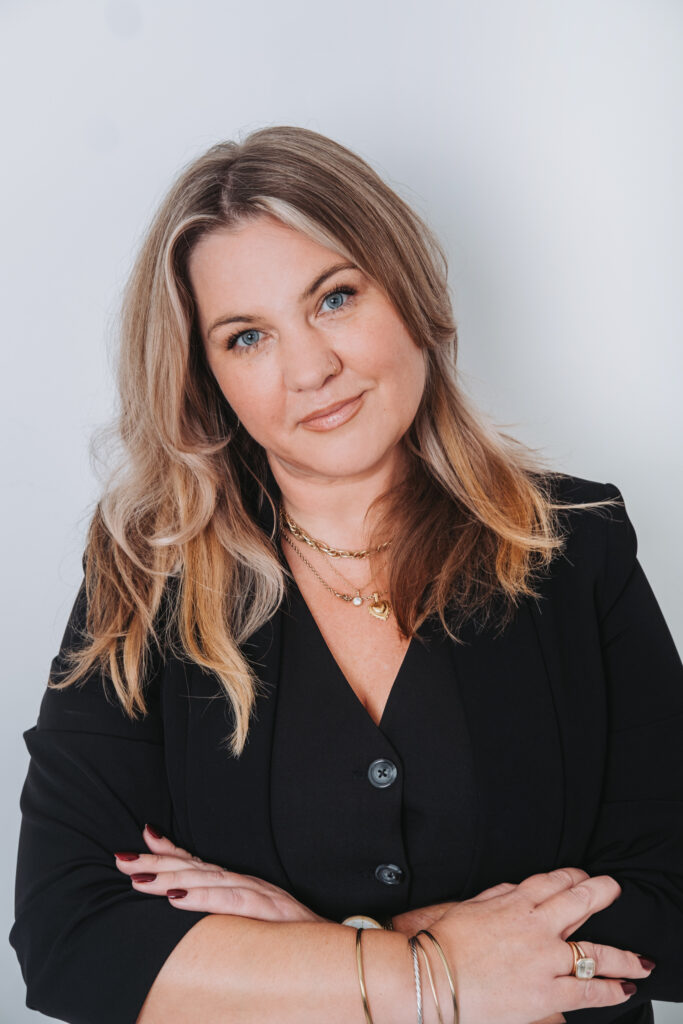
St Albans-born Rosie Moss set up the Widowed AF podcast for women to share their stories after being ainspired by the support and life-changing experiences she had after her husband Ben died tragically in an accident at sea in 2018.
Has she ever felt she had to hide her intelligence in order to be respected by men?
“Yes I have. I’d probably describe it as making myself smaller though. I’ve definitely found myself softening my opinions, apologising before making a point, or using humour to take the edge off my confidence.
“As my profile has grown through my podcast, book and public speaking, I’ve become more aware that confidence is still interpreted differently depending on whether it comes from a man or a woman.”
She said she has also noticed it dating, wondering whether talking about her work too much, or too early, might be seen as intimidating: “That’s quite a sad realisation really,” she reflects. “Why should I worry that being passionate or opinionated could make me less attractive?
“There have been meetings where I’ve chosen not to challenge something because I knew there was a risk of being labelled ‘difficult’, rather than simply knowledgeable. I think many women make that calculation without even realising they’re doing it.”
What would Rosie say to a woman who was worried that her assertiveness or intelligence was holding her back?
“Don’t shrink yourself to fit into someone else’s comfort zone. One unexpected gift widowhood gave me was perspective. When you’ve survived the worst day of your life, you start caring a lot less about whether people think you’re ‘too much’. Life is simply too short to spend it pretending to be less capable, less ambitious or less outspoken than you really are.
“The right employer, friend or partner won’t be intimidated by your intelligence. They’ll value it.”
I ask her if she thinks it is crazy that women today could still feel like they have to act a certain way so as not to intimidate a man?
“I wish it surprised me more than it does. We’ve made huge progress, but there are still unspoken rules.
“Women are expected to be confident, but not too confident. Successful, but effortlessly so. Assertive, but always careful not to come across as bossy. It’s a balancing act that men are far less often expected to perform.”
Does she think men today are willing allies for women or is sexism still huge?
“I think both things are true. Some of the biggest champions in my career have been men, and I’ve met plenty who genuinely celebrate strong, intelligent women.
“But sexism hasn’t disappeared. It’s just become more subtle. It’s less about overt discrimination and more about unconscious bias and the expectations we’ve all grown up with.
“The good news is that I think we’re talking about these things far more openly now. Hopefully that means the next generation of women won’t ever feel they have to make themselves smaller just to be accepted.”
St Albans comedian Bronwyn Sweeney said she noticed that playing down her job seniority had a positive effect during her dating days: “I noticed if I put creative director I got less interactions than when I changed it to copywriter.
“Advertising has changed a lot in the 15 years I’ve been working in the industry. It’s a lot more balanced now but there were definitely times where I was the only woman in a meeting and felt like my opinions weren’t taken seriously until a man had said the same thing.”
Her advice for a woman who felt oppressed in this way would be to “never dim your shine to make someone else feel brighter. I know that sounds like something straight out of a cheesy Instagram post, but it’s helped me remember to speak up and not hold back in moments where I feel shy.”
Referring to her younger self as ‘a real people-pleaser’ Bronwyn said she used to feel uncomfortable in order to keep everyone else comfortable. But now, she says reminds herself that she can maintain her manners and be a good person but also worry less about how her intelligence or confidence is coming across: “I worked really hard to get where I am and it’s OK to own that experience and expertise.”
Bronwyn said that her two industries – advertising and comedy – can be very male-dominated but have become more balanced over the years. She told me how she once went on a date where the man was angry that she offered to pay half as said that it emasculated him. His response turned aggressive, she felt unsafe and for future dates felt like she had to be careful how she talked about money.
She added: “I think there have always been and are many male allies for women just as there are still men and women who don’t understand what feminism is or that sexism is an issue unless they’ve been affected by it. I’ve had discussions with both men and women who don’t think sexism is a problem simply because they don’t think it affects them. I think the internet and social media have both furthered the cause but also created an environment where disenfranchised people can congregate and spread negativity.”
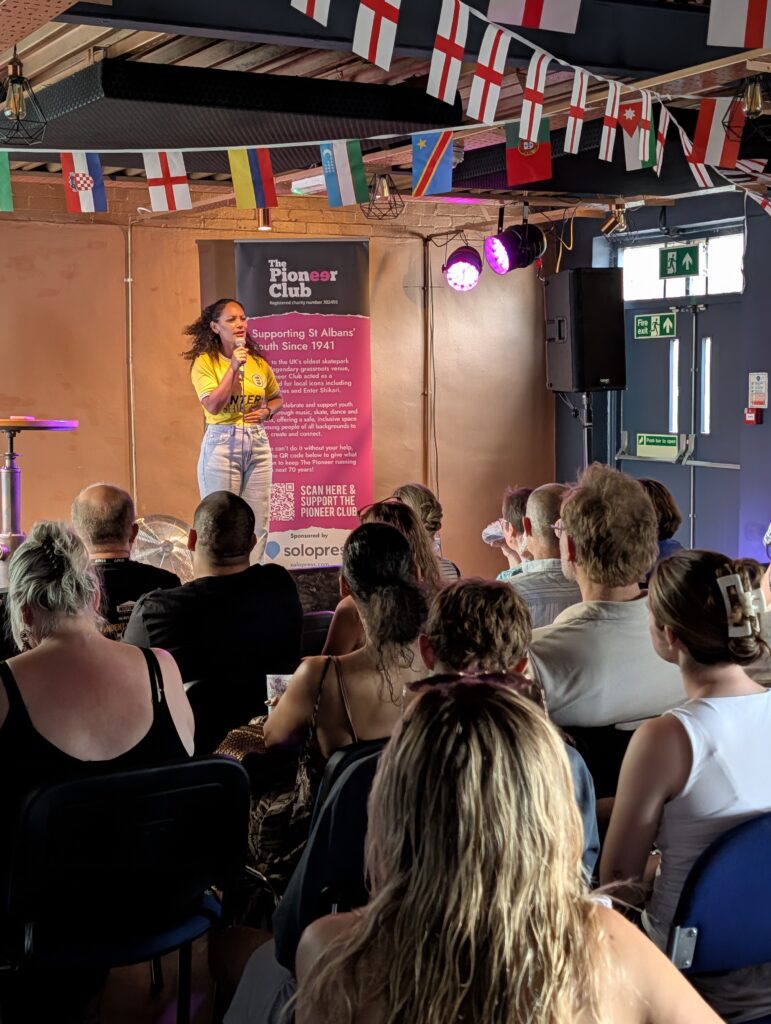
St Albans resident Liz Penney, who has worked in marketing leadership for more than 20 years, says she is all too familiar with this phenomenon. I asked if she feels she hides her intelligence to make men feel more comfortable or to be respected.
She said: “Not so much to be respected, but sometimes to avoid intimidating or emasculating men. In dating, for example, I’ve avoided talking about my salary or financial situation. I don’t tend to make a big deal of my career, and I’ve often found
men are surprised when they discover the level of my education, my professional experience or how passionate I am about learning.
“I’m proud to be a chartered marketer because it reflects years of learning and professional development. I’ve often found a quiet respect from men who hold chartered status within their own professions, whereas others can be more dismissive of formal qualifications, placing greater value on confidence or experience alone.”
Like some of the other women I spoke to, Liz said that gaining professional qualifications gave her the confidence to speak up. She also said though that more recently she has become more conscious of how she presents the amount of experience on her CV because she believes ageism and sexism still influence recruitment decisions.
Her message for women who feel held back in speaking up sometimes is: “Stay assertive, use your intelligence wisely and pick your battles. You don’t have to win every argument to make an impact.”
She added: “It’s disappointing but not surprising that this is still an issue. We’re living through a significant cultural shift around gender equality. Women have often adapted their behaviour to get the job done, but more are now speaking up. That’s encouraging, although it has also led to a backlash from some men while others have become stronger allies.
“There’s definitely still sexism, both in society and in many workplaces. The rise of the manosphere highlights that. It’s encouraging to see more men speaking up for women, particularly when they’re challenging other men, but I think we’re still only at the beginning. We need far more momentum before that becomes the norm.”
I agree. I have found these discussions so helpful. It’s reminded me of how important it is for women to talk to women. Society likes to set women against other women in a competitive way, perhaps, another problem which was no doubt created by men.
Maybe I should take on board Mary’s wisdom and try to check that I’m not appearing obnoxious in a setting where I feel like a show pony. It’s a hard balance, maybe. Age also seems to be something that helps us to be more confident and in turn probably to some folk makes us less appealing.
I still don’t fully understand the point of an interview if you can’t be your best self for fear of coming across as a know-all. Most of the stuff I’ve gone for I could have done very easily. I could also give strong specific examples of how to approach writing a story for a charity or what I would do to ensure a person being interviewed felt comfortable. (Ironic, much?)
I told a recruiter recently that it is a leader with a fragile ego who doesn’t appreciate creativity or pointers that could lead to improvements. I have felt sometimes like I’ve had a lucky escape from some workplaces and definitely don’t want to be somewhere I am not heard. I want a manager who appreciates good ideas and can see energy and enthusiasm as a blessing rather than a threat. Hmmm…lots to ponder.
