


05 Aug 2026
Five hundred years ago, in the German city of Worms, a fugitive English scholar achieved something astounding for the time: William Tyndale’s English New Testament. This was the first ever printed in the language of the common people.
Printed by Peter Schöffer in 1526, it was an act of breathtaking courage, a crime punishable by death, and the beginning of a revolution that would shape the English language, the Protestant Reformation, and the very idea that ordinary people should have access to scripture.
This year, as churches and institutions across Britain mark the quincentenary, a remarkable dramatic performance will bring Tyndale’s story vividly to life. On October 15 at 7pm., St Peter’s Church in St Albans will host ‘The Book That Changed the World: William Tyndale and the Battle for the English Bible’. It will be a one-hour performance written and presented by Professor Tim Boatswain, with the assistance of Bishop Rob Gillion, featuring a powerful staged debate between Tyndale and his inquisitor.
The choice of St Albans is no accident. The city has been twinned with Worms since 1957, and this deep historical connection provides the perfect setting to honour the city where Tyndale’s forbidden New Testament first came off the press. The performance is part of a wider quincentenary programme celebrating the bond between these two ancient cities: St Albans, named for Britain’s first Christian martyr, and Worms, one of Germany’s oldest cities and a crucible of the Reformation.
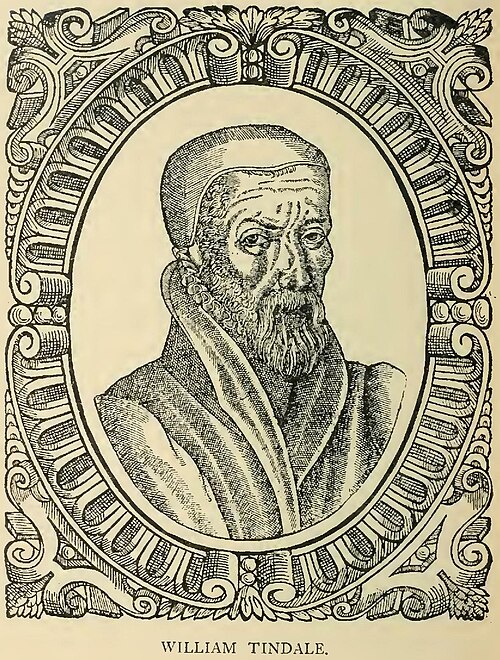
William Tyndale was born around 1494 in Gloucestershire and educated at Oxford, where he proved himself a gifted linguist, excelling in Latin, Greek, and Hebrew. Ordained as a priest, he became chaplain in the house of Sir John Walsh and grew increasingly distressed by the Church’s refusal to make scripture available in English.
When a fellow cleric declared: “We had better be without God’s laws than the Pope’s,” Tyndale famously replied: “If God spare my life, ere many years I will cause a boy that driveth the plough shall know more of the Scripture than thou dost.”
Unable to secure episcopal support for his translation work in England, Tyndale left for the Continent in 1524. He initially began printing his New Testament in Cologne, but authorities raided the workshop, forcing him to flee with the sheets already printed.
He took refuge in Worms, a Free Imperial City that had become an early “stronghold” of the Reformation following the Diet of 1521.
There, in the workshop of Peter Schöffer the Younger, whose father had worked with Johannes Gutenberg, the inventor of the movable-type printing press, Tyndale completed his work. Some 3,000 copies of The Newe Testament were printed and smuggled into England in 1526. Only three complete copies survive today.
The English bishops were horrified. Cuthbert Tunstall, Bishop of London, organised public book burnings at Smithfield. Tyndale’s translation was banned, and owning a copy was illegal. Yet the demand was insatiable so that reprints followed, smuggled across the Channel in bales of cloth and barrels of wine.
Tyndale’s crime, in the eyes of his persecutors, was not merely translation but the principle that underlay it: that ordinary people had the right to read God’s word in their own tongue.
He continued his work, translating the Pentateuch (1530) and the Book of Jonah (1531), all the while evading capture.
But his enemies were relentless. In 1535, Tyndale was betrayed and imprisoned in the castle of Vilvoorde, near Brussels. His three accusers were all professors of theology from the
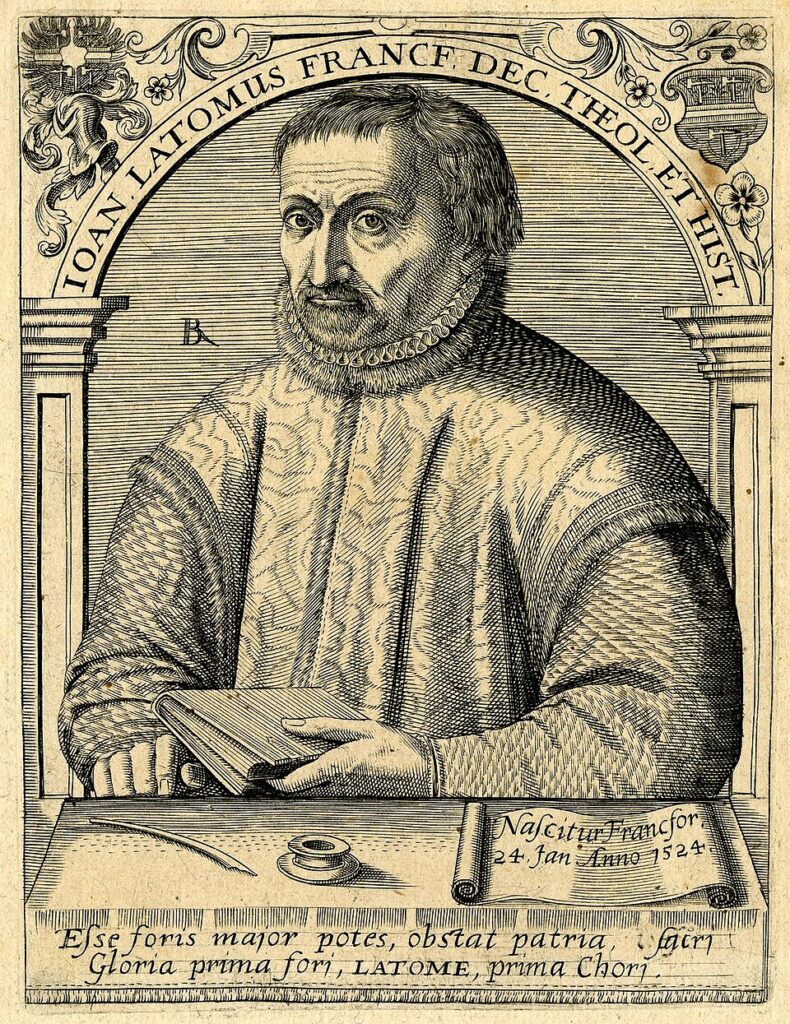
University of Louvain. The most formidable among them was Jacobus Latomus (Jacques Masson). The 60-year-old Latomus was a theological adviser to the Inquisition, and for nearly 20 years a leading controversialist, who rallied against Erasmus and was a fierce opponent of Luther and other European reformers.
Latomus had already attacked Tyndale’s writings in his collected works, including a dialogue ‘De trium linguarum et studii theologici ratione’ (On the three languages and the reason for theological study) which challenged the philological method of Erasmus and opposed it with the authority of ecclesial tradition. Now, he was tasked with examining the imprisoned translator, determining whether his opinions were heretical and whether he would renounce them.
It is this interrogation, which was a clash between authority and conscience, tradition and translation, fear and freedom, that audiences will witness at St Peter’s Church in October. The performance will include an introduction explaining the historical context before the staged debate brings the confrontation to life.
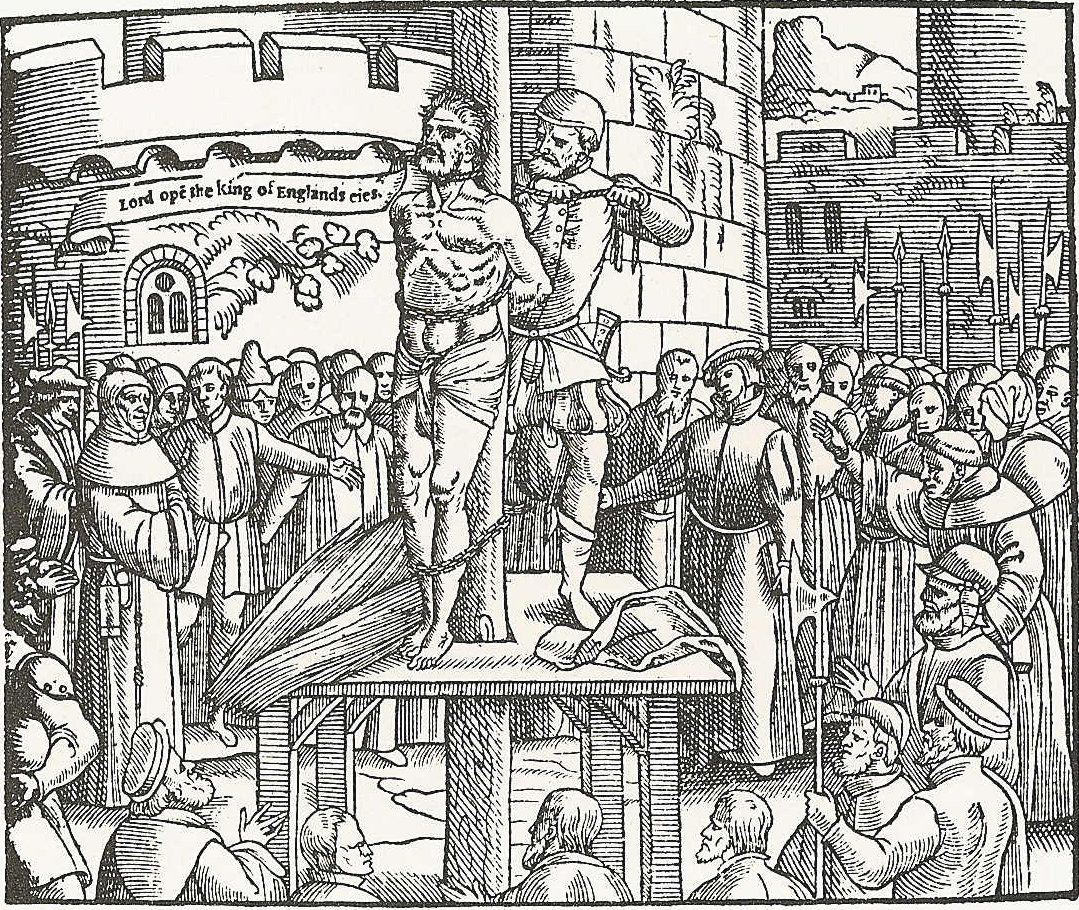
Tyndale refused to recant. In October 1536, he was strangled and then burned at the stake. His last words were reportedly: “Lord, open the King of England’s eyes.”
His prayer was answered. Within four years of his death, Henry VIII authorised the Great Bible, an English translation that drew heavily on Tyndale’s work. When the King James Bible was published in 1611, some 83 per cent of its New Testament was Tyndale’s translation word for word.
The performance at St Peter’s Church is more than a historical re-enactment. It is a celebration of the enduring connection between St Albans and Worms. These two cities are united by history, by the printed word, and by the story of a scholar who believed that the Bible belonged to everyone.
As part of the wider quincentenary, the Peter Schoeffer Foundation in Worms is mounting an exhibition, ‘Made in Worms – William Tyndale’s New Testament 1526′ from September 26 to January 10. The only pristine copy of Tyndale’s 1526 New Testament, which is normally held in Stuttgart, will return to Worms for the first time since it was published. And on October 3 there will be a performance in Worms of ‘The Book
That Changed the World: William Tyndale and the Battle for the English Bible’ for a German audience.
Five hundred years ago, in a German city far from home, one man risked everything to give England its Bible. This October, in an English church twinned with that very city, his story will be told once more so that the boy who drives the plough will be able to read the scripture for himself.
- ‘The Book That Changed the World: William Tyndale and the Battle for the English Bible’ at St Peter’s Church, 7pm, October 15. Tickets available via St Albans Cathedral Box Office (01727 890290). The performance will be followed by refreshments.
