


08 Mar 2026
To coincide with International Women’s Day 2026, Harpenden journalist Charlotte Bateman looks at the careers, interests and aspirations of three former STAGS pupils…
By eleven, Gail’s in St Albans is packed with mums, prams and the smell of warm bread. The coffee machine shrieks as milk is frothed, cups clinking behind the counter.
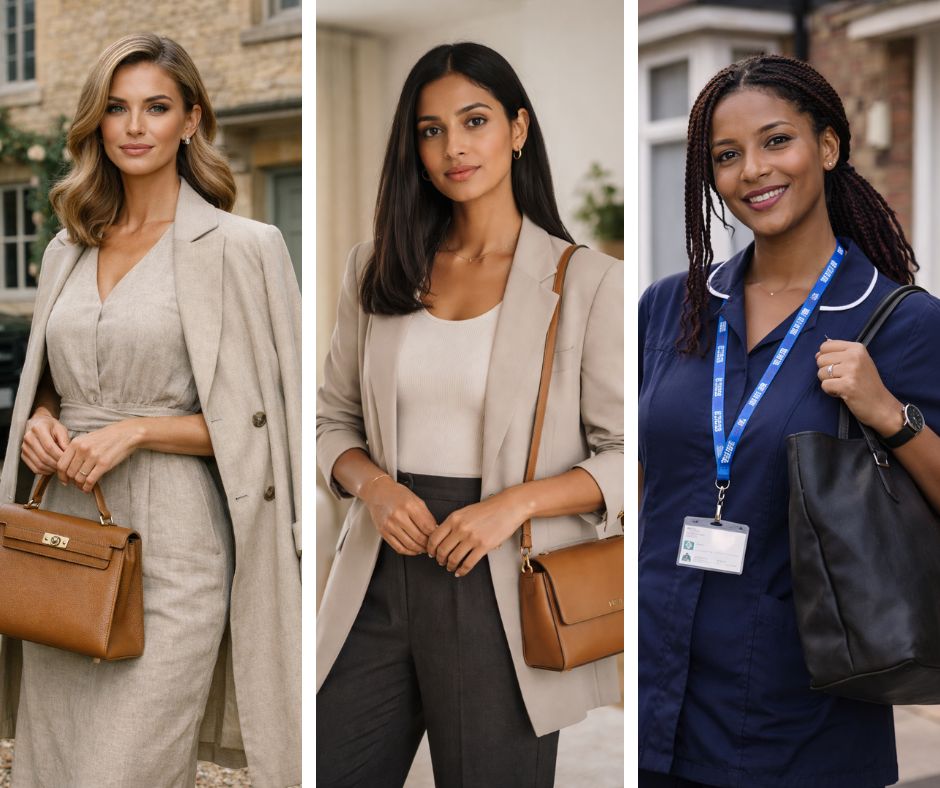
Amara, 35, an athletic woman living in Walthamstow with dark hair cut to her collarbone, sits upright at a small table by the window, scanning overnight sales on her phone. Founder of a sustainable activewear brand stocked in Selfridges, she still checks the numbers herself. An oat milk flat white cools beside her.
The door opens and Donna bustles in, spotting her immediately. “Oh my God, it’s so good to see you,” Donna says, pulling her into a hug. “I saw the awards on Instagram. You looked incredible.”
“Stop,” Amara laughs.
“No, seriously,” Donna says. “You must be buzzing.”
“It still hasn’t sunk in,” Amara replies.
Donna, 36, is an NHS community midwife who has driven down from the West Midlands, where she lives with her husband Jason, an electrician, and their two children. It is her first Saturday off in weeks. Softer in build with burgundy box braids pulled back loosely, she drops into the chair with visible relief.
“If work calls, I’m not answering,” she says.
Sienna, 35, arrives last. Honey blonde waves fall neatly over her camel coat. A tan Hermès Kelly hangs from her wrist. Tall and visibly toned, every detail considered, she lives in a renovated rectory in the Cotswolds with her husband Alistair, who works in private equity, and their two young children. She hosts a popular podcast about modern womanhood.
They join the queue.
“Can I get a large full fat latte and a chocolate muffin please,” Donna says.
“Just an oat milk flat white,” Sienna adds.
“I really fancy an almond croissant,” Amara says cautiously.
“Get it,” Donna tells her.
“Okay, an almond croissant please,” Amara says, smiling at the barista.
They sit. Sienna places her handbag carefully on the spare chair. Her phone vibrates on the table.
“They won’t leave me alone,” she sighs.
“Who won’t?” Donna asks, unwrapping her muffin.
“Women online. Women on X. It’s relentless,” Sienna says.
“What have you said now?” Donna asks.
“It was my International Women’s Day episode,” Sienna replies. “I said maybe the real crisis isn’t the pay gap. Maybe it’s that we’ve told women a baby will hold them back.”
There is a brief pause.
“Apparently I’m anti woman,” Sienna adds.
Donna shrugs lightly. “Trust me, women still want babies. They’re just scared about how they’ll afford them.”
Sienna nods. “I know. And that’s real.”
She glances at Amara. “And I know it’s worked for you. You’re smashing it.”
Amara smiles faintly.
“I just don’t think motherhood should be portrayed as a downgrade,” Sienna continues.
“No one’s actually saying that,” Amara says quietly.
“They are,” Sienna replies. “Every time success is framed as freedom and home is framed as settling, that’s the message.”
The coffee machine shrieks again.
Three friends who once attended St Albans Girls’ School before moving away. They meet back here once a year.
Except they don’t exist.
Amara is the most aspirational woman in 2026 Britain. Donna the most likeable. Sienna the most controversial.
All three are AI generated composites, shaped by the media, cultural and social narratives defining British womanhood in 2026.
The Experiment
Being a fan of artificial intelligence, I wanted to see how AI imagines a prominent woman in Britain today and whether those portraits resemble the women we see in St Albans.
So I set up a small experiment. I created three prompts: the most aspirational, the most likeable and the most controversial woman. I then ran each prompt through three different AI platforms ChatGPT, Gemini and Claude and asked them to generate fully fledged character profiles.
Here is what came back.
Most Aspirational
“I’ll just check the numbers.”
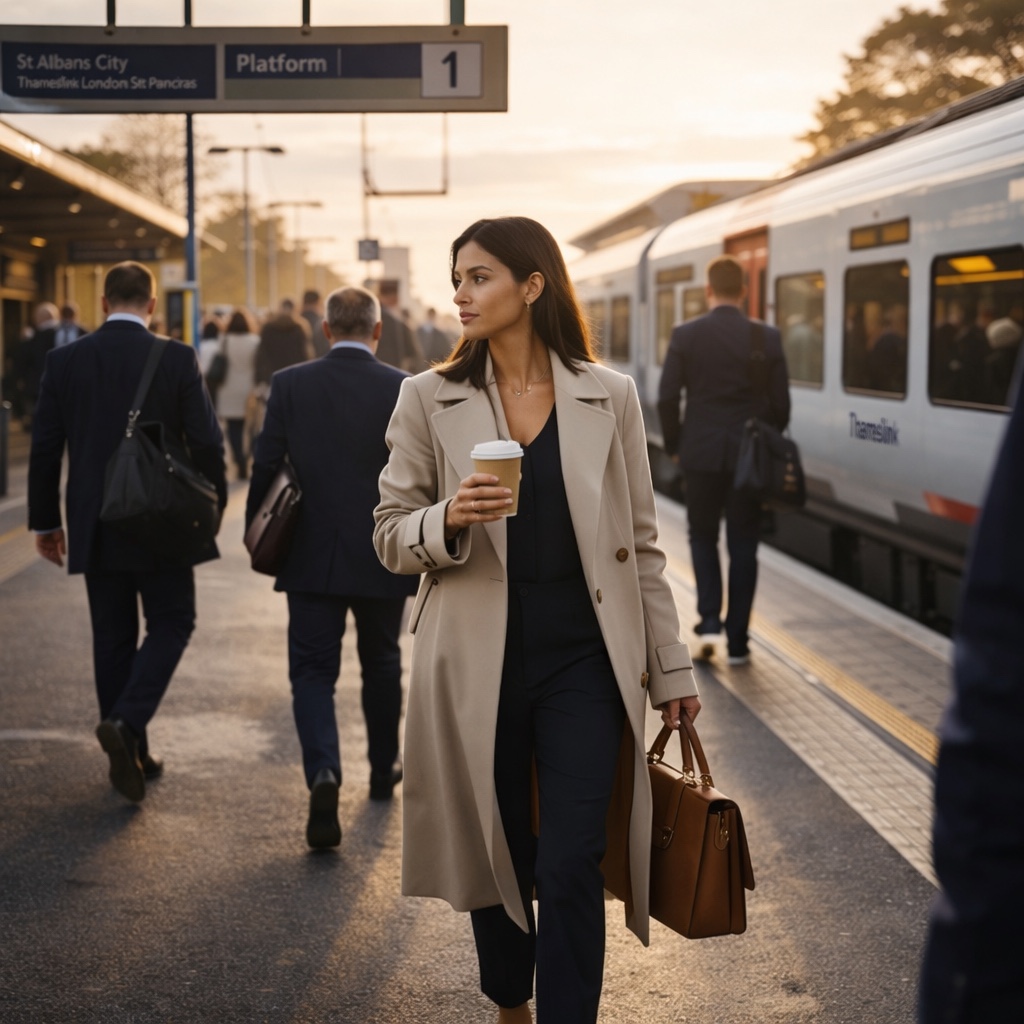
Some names generated included Amara, Maya and Kara. Across multiple runs, the most aspirational woman landed in her mid thirties, mixed heritage and based in London or another major city.
Every version was a founder building a sustainable business, from ethical skincare to activewear to climate tech, with one iteration placing her in artificial intelligence, an ironic detail in itself.
All were politically Labour leaning and socially liberal, environmentally conscious without being overtly activist. Relationship status skewed stable, married or in long term partnerships, with the models split on motherhood.
Lifestyle markers were strikingly consistent: minimal make up, white teeth, lean rather than thin, reformer Pilates, food cooked from scratch, Waitrose shops, electric Volvos and renovated urban terraces. Quiet luxury, signalled subtly.
Each version owned a small, intentional breed dog, most often a miniature dachshund or cockapoo.
The algorithm’s most aspirational woman in 2026 is economically powerful, environmentally responsible, physically disciplined and politically progressive. A portrait of controlled ambition in uncertain times.
How this plays in St Albans:
“Twenty minutes to London. That’s the real luxury.”
This is commuter belt ambition. Bankers, lawyers, consultants and tech managers. Peak time trains to St Pancras and back again by evening. Outstanding schools pushing property ever higher.
Founder energy runs quietly through the town as well, with female led businesses and digital creators building brands from kitchen tables and co working spaces.
The aspirational woman isn’t abstract here. You’ll probably spot her walking a sausage dog in Verulamium Park.
Most Likeable
“I run on caffeine and KitKats.”
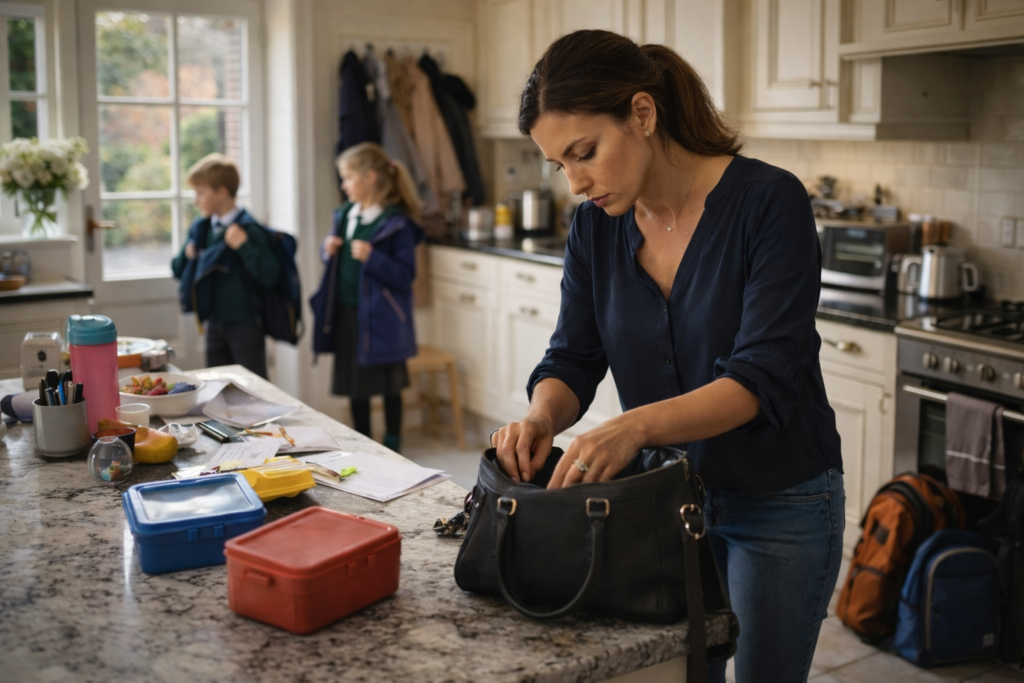
Some names generated included Donna, Sophie and Emma. The most likeable woman appeared in her mid thirties and in places such as the West Midlands, Leeds or Manchester.
Most versions were mixed heritage, with only one white. She worked in visible, people facing roles such as NHS midwife, primary school teacher or local breakfast radio host. Not founder energy, but frontline energy.
Politically she leaned Labour, more from pragmatism than ideology.
Most were married or in long term relationships with children. But what defined her was tone. Slightly chaotic. Self deprecating. Warm without performance.
Her life was lived in rather than curated. Aldi shops, leftovers for lunch, well worn trainers and a home that functions rather than photographs well. Food enjoyed rather than optimised.
Evenings spent watching The Traitors or Love Island without irony.
Body types were soft or average rather than sculpted. When pets appeared, they were rescues.
The algorithm’s most likeable woman in 2026 is publicly employed, emotionally accessible and lightly disorganised. She does not scale. She does not optimise. She copes.
How this plays in St Albans:
“Has anyone seen my car keys?”
On the surface this looks like aspirational Britain. Commuter trains into London and polished lives.
But our city also runs on teachers, NHS staff, retail workers, hospitality staff and the parents juggling work with school life. Forgotten PE kits. Football matches. WhatsApp groups pinging about lifts and cake sales.
In a place that prides itself on high achievement, the likeable woman is the one laughing about the chaos.
And she’s everywhere.
Most Controversial
“Someone has to say it.”
Some names generated included Chloe, Sienna and Charlotte, awkwardly never a great day to see your own name on the most disliked list.
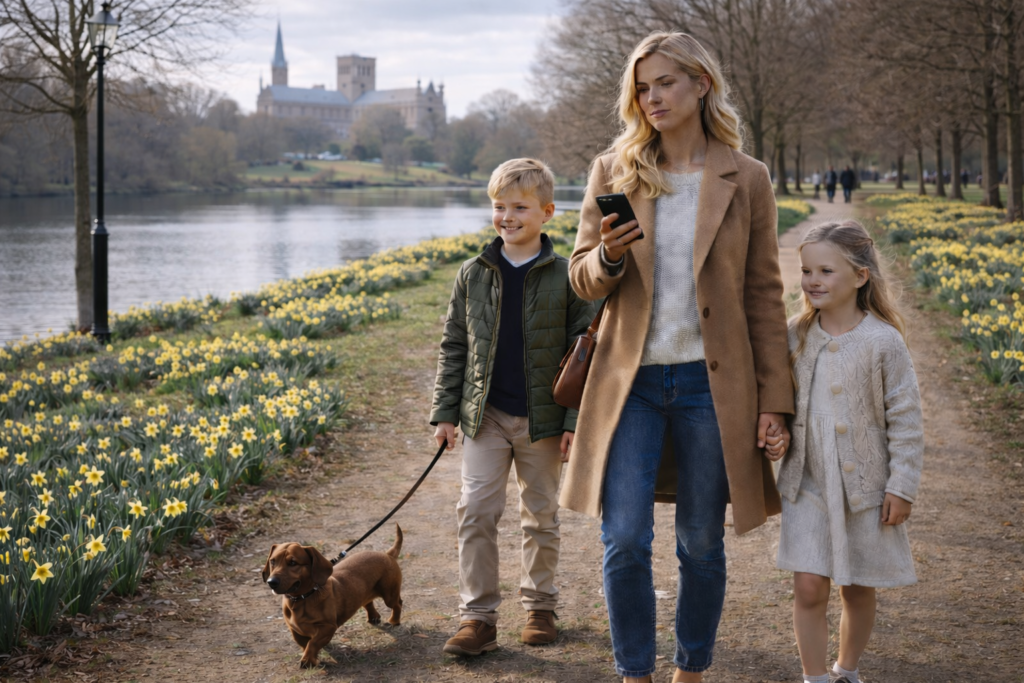
The woman was between 29 and 37 and lived in affluent areas in Essex, south west London or the Cotswolds. She was white. She was blonde, from honey to platinum. She was married with children.
She made her money online as an influencer or podcast host, building a brand around traditional femininity, marriage and motherhood. Her politics leaned conservative, with some profiles openly supportive of Reform style positions.
She spoke about men as providers and women as the anchor at home.
She was extremely slim and highly controlled in her eating and fitness. Her wardrobe signalled quiet wealth. An electric SUV on the drive. A small designer dog, often a dachshund.
A thread of hypocrisy ran through the profiles. She banned screens for her children while building her own career on them. She spoke about running the home alone while employing a nanny. Frugality and discipline were preached from a position of financial comfort.
The most controversial woman in Britain in 2026, according to AI, is polished, certain and unapologetic.
She is not a villain. But she sparks resentment.
How this plays in St Albans:
“Family still matters.”
Since 2019 St Albans has been represented by a Liberal Democrat MP, giving the city a reputation for socially liberal politics.
But beneath that shift many traditional values remain. Marriage rates are high and family life revolves around school catchments managed almost like investment portfolios. Pushy parents on the sidelines, packed school calendars and children pushed hard to succeed are part of the rhythm here.
In a city that mixes progressive politics with quietly traditional lifestyles, the controversial woman might not win the next election.
But she would still have an audience.
Conclusion
Overall the three AI platforms were strikingly consistent in the women they produced. The question is how much reflects reality and how much reflects the patterns the models have absorbed.
One pattern became clear very quickly. Pretty much all of the women generated by the models were in their thirties.
There were geographic patterns too. The most likeable women tended to appear in the North or the West Midlands rather than the South.
Meanwhile the most aspirational women were all founders, which is probably an accurate reflection of how success is often perceived for women in 2026.
But other patterns hint at bias. Across almost all of the profiles the women were married or in long term relationships and often mothers, suggesting the models may associate prominence or influence with family life.
The controversial woman repeatedly appeared white and blonde, raising the question of whether the algorithm is simply reproducing the familiar Karen stereotype.
Then when you look at St Albans, it becomes even more interesting. The city regularly appears on lists of Britain’s most desirable places to live and fits many of the traits the AI identified. Yet it never appeared once in the generated locations.
So perhaps the final question is this.
In a place like St Albans, are women more likely to be the most aspirational, the most likeable or the most controversial?
If the experiment is anything to go by, St Albans already looks a lot like the aspirational model.
That said, there are elements of all three lifestyles, which means that if Amara, Donna and Sienna walked into Gail’s tomorrow morning, they probably wouldn’t stand out at all – just three more women in the Saturday coffee queue.
