


22 Sep 2025
From the age of 16, Heidi Stroud knew she would go on to foster children. And when her own daughter sadly died, she couldn’t bear the thought of having more children of her own because she didn’t want to be a mum to another. But she loved parenting, so it seemed the right time to finally begin fostering.
Foster carer Heidi Stroud, who lives in St Albans, said she was inspired by foster caring when she was a teenager after reading an article about somebody who had fostered 200 young people: Describing herself as “a natural helper” Heidi said she “decided there and then” that she would follow that path when the time was right.
After her daughter tragically passed away after a long term illness when Heidi was in her 30s, she found herself drawn back to the idea of looking after someone else’s youngsters: “I did not want to be anyone else’s ‘mum’ so I decided not to have any more children but I love parenting so fostering seemed right as I had always had that interest in it.
“Everyone deserves to grow up in a stable home and have the chance to reach their potential. If we can model good parenting and empathetic relationships then the young people will go on to have strong parenting skills themselves, if they choose to have children.
“Foster carers come into it for a multitude of reason, perhaps their children have grown up and left home or they do not have children or they just like the idea of giving back.”
She said that a child does not come into foster care without experiencing trauma and adverse childhood experiences and so there are obvious challenges: “It is important to be realistic if you are considering becoming a foster carer, as these young people need a lot of support and care and for some, not all, you may be their first trustworthy adult. Even once the young person is embedded in the care system there are issues that arise with lack of carers, a high number of average placements and lack of trauma awareness within the education system.”

There are approximately one thousand children in care in Hertfordshire but less than 400 fostering households. There is a national decline in new foster carers and Herts County Council urgently needs more foster carers to come forward and volunteer.
HCC executive member for children’s social care, Cllr Anthony Rowlands explained: “The HELP campaign is looking to spread the word about the positive impact foster caring can have on the lives of children who can’t live with their birth parents. Through art and social media, the campaign is amplifying the voices of children and young people in foster care, with the hope of inspiring more people in Hertfordshire to consider this rewarding role.”
Heidi said that there is plenty of training to help foster carers feel prepared for the role, such as trauma awareness, which she found incredibly useful in helping the young people placed with her to succeed.
Each foster carer is given a supporting social worker, separate from the child’s social worker, so they have someone to call on with any questions or for support.
Heidi said it can be difficult when children leave her care, but that does not always need to be the end of their relationship: “As foster carers it is our role to nurture and care for these young people and so it is inevitable that we grow attached. When it is time for them to leave it is sad but the best case scenario, as I have experienced recently, is that we can maintain a relationship and remain a trusted adult in their life.
“This isn’t always possible especially if the child is only in placement for a short time, but it is always important to remember that every positive memory or piece of unconditional regard given to that child will stay with them.”
“I have shared and supported young people through so many challenging moments within my time as a foster carer but that is what makes it rewarding. On a daily basis I feel so proud of my current placement now as I watch him push through adversity with such determination.”
Heidi added that one time that stands out for her was her first year as a carer when she attended the Services for Young People Awards, which recognise local young people for their achievements: “I spent the whole evening in awe and with a lump in my throat at the tenacity and resilience that was displayed.”
Sharon O’Brien has been fostering children in her St Albans home for the last 26 years. She decided to offer her services after seeing a fostering advert and thinking she would love it. She says she did and still does.
But it can be heartbreaking too, she explained, as unplanned endings sometimes happen for a variety for reasons, and can cause great upset to both parties.
Sharon said: “The youngest child I have had placed with me was six hours old. A young person I currently foster is 18-years-old and has just got a job as cabin crew! We are so proud of her. I’m still in touch with one person who I fostered and she’s now 30.
“I would say that you have to have a good sense of humour to do this job. I believe that skills wise everyone has their own skills to bring.
“People tell me within fostering that I’m good with teenagers. I often joke with mine that there isn’t anything they do that I probably didn’t do myself at their age.”
Sharon explained that sometimes a young person comes to them from another placement. In that instance, then they might meet up before the child moves in: “They may come over for dinner or sometimes for a sleepover.
“There is a carers profile – a book where which helps us introduce ourselves to the young person. It has pictures of us in, the house and the young person’s bedroom.
“But when a child or young person comes in an emergency they don’t always have the chance to see it/us in advance.”
It can be easy to overwhelm a child, she said: “A young person will probably be grieving, they might be angry, they may also blame themselves for being removed from their family. We need to give them space.
“We introduce ourselves and members of the family who live in the house. I put a welcome box in their bedroom, which includes items they may need and we would usually go out to eat on the first night – McDonald’s always works! I find that being in a neutral place often helps put them at ease and enables them to ask questions.
“We don’t bombard them with rules but equally it may help to tell them some things. For example. a young person once said that she was worried about putting the light on in the bathroom during the night. It hadn’t occurred to me that she would think this might not be okay.”
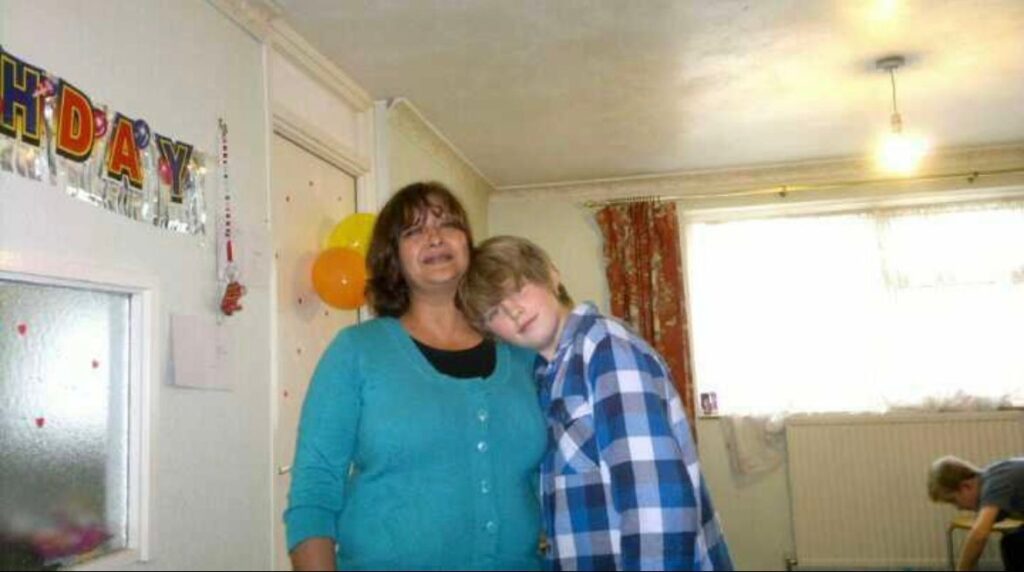
Erica Hutchison is part of a community support system for local foster carers. She supports seven foster families and one young person in a residential setting.
She said: “Although being a foster carer can be challenging it is extremely rewarding to observe the progress made by our young people. During my time fostering I have had three children who were placed with us long term. They are now all in their 20s and have become an extended part of my family.
“All three are employed, one is a chef at Fortnum and Mason, another works with horses which was her goal all along and the third has a job with responsibility which he loves. It is really satisfying to think that I may have played a tiny part in helping them to achieve their goals.”
She said she thinks it is vital for foster carers to have a strong support network including friends and family and that “sometimes you just need an ear to listen to you”. Other carers will almost certainly have gone through similar issues and will be happy to share their experiences, Erica advised.
In Hertfordshire the Fostering Service will ‘buddy-up’ new carers with a more experienced person. They also have Mockingbird Hubs – a wider support model based on the concept “it takes a village to raise a child”.
Erica said hub members receive support at any hour of the day as well as sleepovers for their foster children and can attend monthly group activities and coffee mornings: “For those not in a Mockingbird Hub there are monthly support groups for carers to meet other carers.”
Cllr Rowlands explained what the county council is doing to encourage and support foster carers: “Our trusted not-for-profit fostering service provides training, support and pay allowances to help you provide a loving and stable home for a child in need.
“But even if you aren’t able to consider fostering, you can still get involved in our HELP campaign, from leafleting in your neighbourhood to hosting talks by foster carers in your community or faith groups. We need people to use their local networks to share information about the rewards of foster caring with people who might not traditionally consider it.”
For more information about the campaign and to get involved, visit: www.hertfordshire.gov.uk/fosterHELP
