


28 Aug 2025
Councillors are again being expected to make a crucial decision on plans to build homes on Green Belt land in north St Albans.
Proposals call for approximately 1,100 homes behind the Texaco garage on the Harpenden Road and stretching all the way to the railway line. The area is owned by a number of
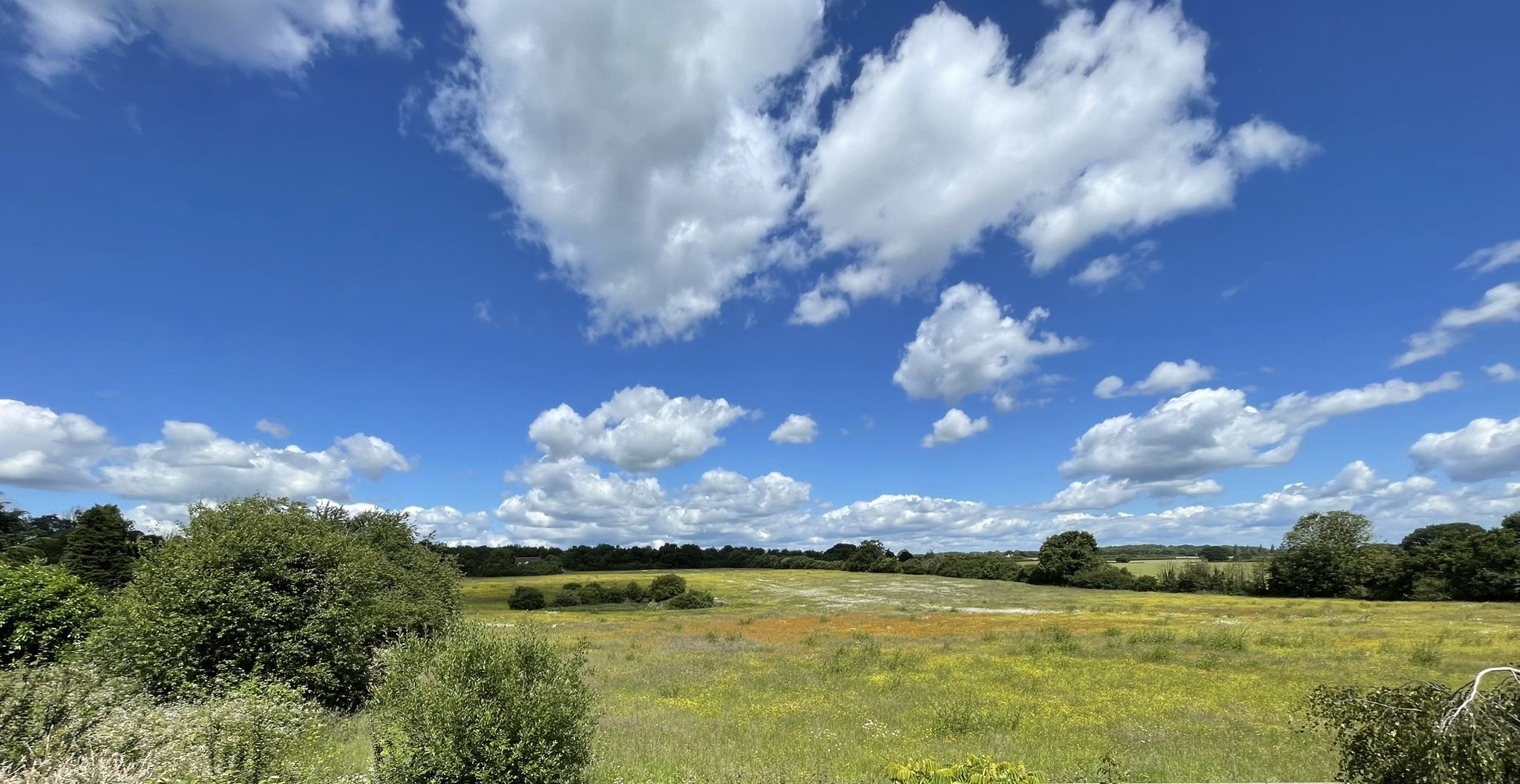
different groups – including St Albans School – and is an area of high quality agricultural land, containing a principal chalk aquifer and wildflower meadows.
There are two main applications for the area.
The first is for Woollam Park, land off Sandridgebury Lane between the railway and the Harpenden Road. This is for a development of approximately 1,000 new dwellings to include market housing, affordable housing and specialist accommodation for elderly persons, plus community facilities including a two-form entry primary school and neighbourhood centre, replacement playing fields and associated green infrastructure and access.
The second, by Cala Homes, is for land to the rear of 112-156B Harpenden Road, and would provide a residential development of 150 homes, and this is the scheme which will go before councillors next Monday.
A reserved matters application has previously been submitted to SADC’s development management committee but has been withdrawn three times. It is now set to be heard for a fourth time.
Gee Smedley, spokesperson for campaign group CLASH, has urged councillors to reject the application.
“Cala and [town planners] DLA have had over six months to come back with a scheme that better services existing and future residents, as well as delivers the appropriate biodiversity net gain on site and an adequate SUDS [Sustainable Drainage Systems] scheme to industry standards.
“Instead they and their consultants continue to fail to deliver on the conditions attached to the outline application and look to justify the serious erosion of policy and standards.”
Housebuilding on the Cala Homes site will be taking place either side of a flood flow path – the route water takes overland when drainage systems are overwhelmed – with the developer installing a water pumping station to tackle any potential problems with flooding.
This increases the risk of flood water being pumped into the sewer system, potentially causing overflow into our rare chalk streams and causing catastrophic environmental damage.
CLASH have also highlighted the consequences to neighbouring properties should the pumping station break down, and claim Cala are ignoring the importance of the flood flow path.
Pumping stations are not permitted in new development as a standard flood defence because they are not deemed sustainable under the new National Planning Policy Framework, but council officers are permitted to waive these rules under what is known as ‘planning judgement’, which means the demand for housing is sufficient to overlook the restrictions.
Gee said there are also issues surrounding Cala and DLA’s approach to ecological assessments.
“In July their consultants claimed orchids on the site were moved to a safe area, but in August they changed the statement, and are now claiming that actually they were never moved after all.
“The Cala ecology surveys state there are no skylarks, whereas the Woollam Park ecological survey states there are indeed skylarks. We have undertaken a bat survey with local wildlife group, Wilderhood Watch. They were able to easily identify endangered and protected bats species, whilst Cala claim there is little bat activity. Not to mention another protected species, badgers, who seem to have simply disappeared…
“The Cala site appears in the Local Nature Recovery Strategy as a site of particular importance for biodiversity, supporting our findings that the land around Heartwood Forest is more biodiverse and should be used to deliver biodiversity net gain and not remove it.
“Cala and their advisors have systematically attempted to destroy the site, with the removal of extensive hedgerow and scraping the earth to below root base when they should have protected the grass base layer and seed bed. They have failed to deliver even the basics of environmental best practice yet St Albans planning officers simply state this is ‘unfortunate’.
“Is this good enough? Does this deliver on any aspect of local or national policy to ensure best practice sustainable development?”
