


04 Jul 2023
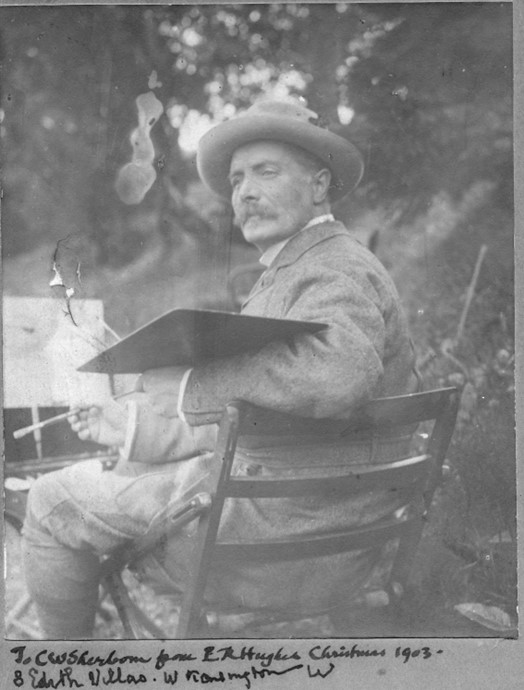
The latest blue plaque to be installed in St Albans will celebrate the life of Pre-Raphaelite painter ER “Ted” Hughes.
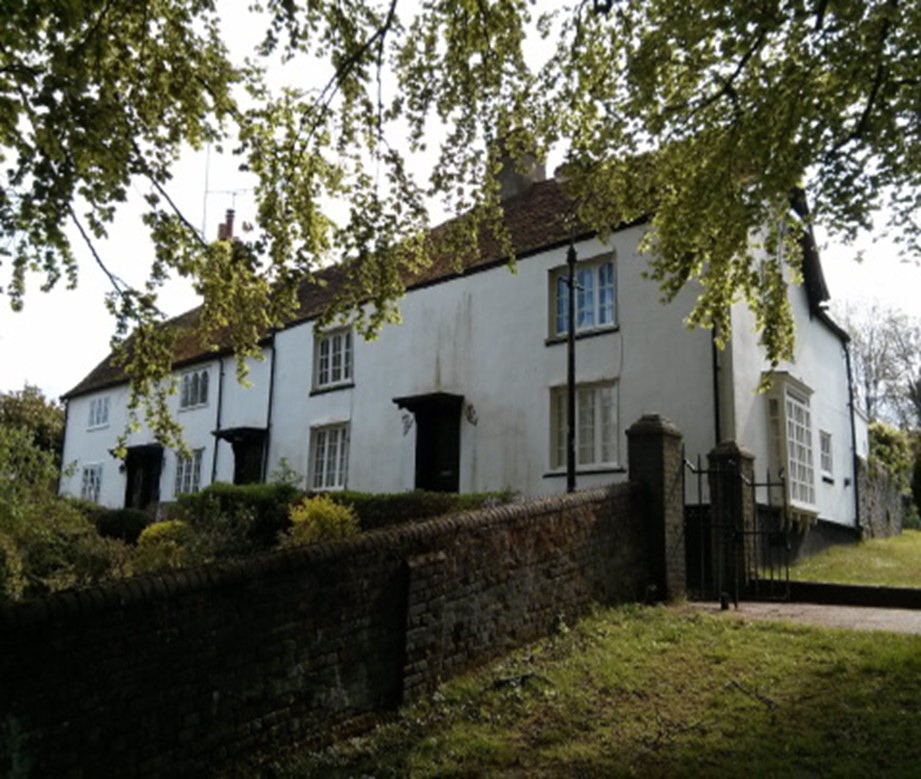
The ceremony will take place on Saturday July 22 at his last home at 3 Romeland.
The plaque will be officially installed by Professor Geraint John, a well-known architect, who is the holder of the Pierre de Coubertin Medal for outstanding services to the Olympic movement.
In 2014, the centenary of Hughes’ death, Professor John organised an exhibition to honour the artist’s memory.
This is the ninth plaque to be installed by Blue Plaques St Albans (BPSA) commemorating famous men and women who have lived and worked in St Albans.
Chairman Professor Tim Boatswain said: “Blue Plaques St Albans are very grateful to Mr and Mrs Morris, the owners of 3 Romeland. for sponsoring this plaque to ER Hughes.
“Hughes is not as well-known as he should be. He grew up under the influence of both his uncle, Arthur Hughes, and William Holman Hunt, who were members of the Pre-Raphaelite Brotherhood.
“Hughes moved to St Albans in 1913 and wrote about how he loved the historical atmosphere of the city. I hope this blue plaque will encourage more people to get to know the works of this talented artist.”
Born in London, Edward Robert Hughes received his first training from his uncle Arthur, and spent much of his childhood surrounded by his uncle’s artistic and literary friends, including Dante Gabriel Rossetti, Ford Madox Brown, John Ruskin and Lewis Carroll.
Hughes took lessons at an art school in London, before entering the Royal Academy schools at the age of 16 where he was an outstanding student, winning a silver medal.
His striking good looks led to his modelling for Rossetti and other artists.
After graduating from the Royal Academy, he established a career as a portrait painter and his sensitive portraits of children were particularly popular. He later produced large, ambitious watercolours, inspired by poetry and literature, exhibiting twice a year at the Royal Watercolour Society.
From the late 1880s Hughes worked as a studio assistant to William Holman Hunt, who was suffering from glaucoma in the last years of his life, progressively losing his sight.
Hughes helped him to complete the painting ‘The Lady of Shalott’.
He is also credited with largely painting the third and final version of the ‘Light of the World’, a hugely popular painting now in St Paul’s Cathedral.
From 1905, Hughes made a series of large watercolours, exploring the themes of twilight, night and dawn, with fairy-like figures. It is perhaps these masterpieces on which the fame and reputation of ER Hughes is based.
In 1913 he moved with his wife, Emily, to St Albans. He loved the city but, sadly, he was stricken with appendicitis and died after surgery on St George’s Day, 23 April 1914. His funeral at the Cathedral drew a huge attendance, reflecting how much his art had been admired. He is buried in Hatfield Road Cemetery.
