


04 Aug 2025
“That first week I kept getting lost, and my favourite thing was when I was with one of my colleagues and we confidently walked into a cupboard thinking it was the tearoom! Some in the corridor laughed at us and said, ‘It’s the next door down!’”
It’s now a year since Lib Dem Victoria Collins was elected as the MP for the new constituency of Harpenden and Berkhamsted and we spoke to her about those formulative first weeks.
Those comments she said back then reflected some of the intensity and mayhem faced when turning up at Westminster for the first time, and having to acclimatise herself not only to the demands of the role, but also the protocols and traditions of Parliament.
“So, yes, I am actually finally truly enjoying it,” she confirms, when questioned about how the past year has gone.
We’re speaking on a blistering hot Friday afternoon at her Harpenden office in Coldharbour Lane, where the fans are desperately trying to make up for the lack of any air conditioning.
“It does take several years to really work out as a new MP, there’s just so much moving at the same time, and the first six months were just, quite frankly, overwhelming at times.
“There was the amount of casework and emails that came through, trying to recruit the right team, find an office and start-up in a new constituency where no-one’s ever been MP before.
“Then it was working out what infrastructure we need to run this seat, and how my diary is planned to make the most of my time, given that it’s a 45-minute drive from one side to the other.”
But despite these reservations, the past 12 months have seen her embrace the role and the opportunities it presents, including holding the district council to account over Harpenden on-street parking charges, fighting for an end to sewage being pumped into our rivers, and campaigning for tighter controls over smartphone use by teenagers.
“I was also very grateful and excited to be given the portfolio of science, innovation and technology. This used to be quite a small portfolio, but has not felt like that for the past six months because we’ve had everything from online safety to AI and creatives.
“But now I finally feel as though we have good systems in place, and I can manage my time and our priorities as a team. I’ve also tried really hard to make sure that we pull Parliament to the seat by making sure we’re bringing forward local issues rather than be directed from the top.
“So yeah I’m enjoying it now. I’m feeling like I’m helping people, like I know what I’m doing. I really love the team around me – both my own staff and my fellow Lib Dem MPs – they’re people who take the work seriously but don’t take themselves seriously.”
So would she say that she has matured as a politician? Obviously making the transition from campaigning candidate to full-time Member of Parliament is not as straightforward as it sounds.
“I think what I’ve really worked on is how to prioritise effectively. What you have to work out when you’re covering 70,000 constituents – 40,000 households – as well as a national portfolio is how you use your time effectively, but also help people feel heard and act on their behalf in a way that doesn’t take anything away from the main campaigns.
“But in all honesty, it’s also knowing when to say no. It’s really tough. Because every yes is a no to something else. Daisy [Cooper, St Albans MP] has been a great inspiration – she said to think about your time in half-hour slots.
“We now look through our stats carefully, and we’ve got through just under 10,000 pieces of political, personal casework over the year. On top of that we get maybe 20 to 50 invitations a day from everything from an ambassador or tech company through to a local group or event.
“I’ve worked to teach my team that the big shiny stuff is actually probably not the most important, and to say no to ambassadors as it’s more important to look after the constituency stuff first, and helping as many people as possible.”
The other aspect, of course, is knowing that free time is also part of the job.
“In the local elections I was working pretty much non-stop, and I realised if this continued I would not be a good MP to my team, my colleagues and most importantly to my constituents, because when you’re tired it’s harder to make decisions.
“I started to go to the gym regularly, which was not something I did before, and also making sure you have time to get away and think is very important.”
As she mentioned earlier, the size of the seat provides its own challenges, as if she had different appointments in Tring, Berkhamsted and Harpenden she could spend up to two hours just driving around.
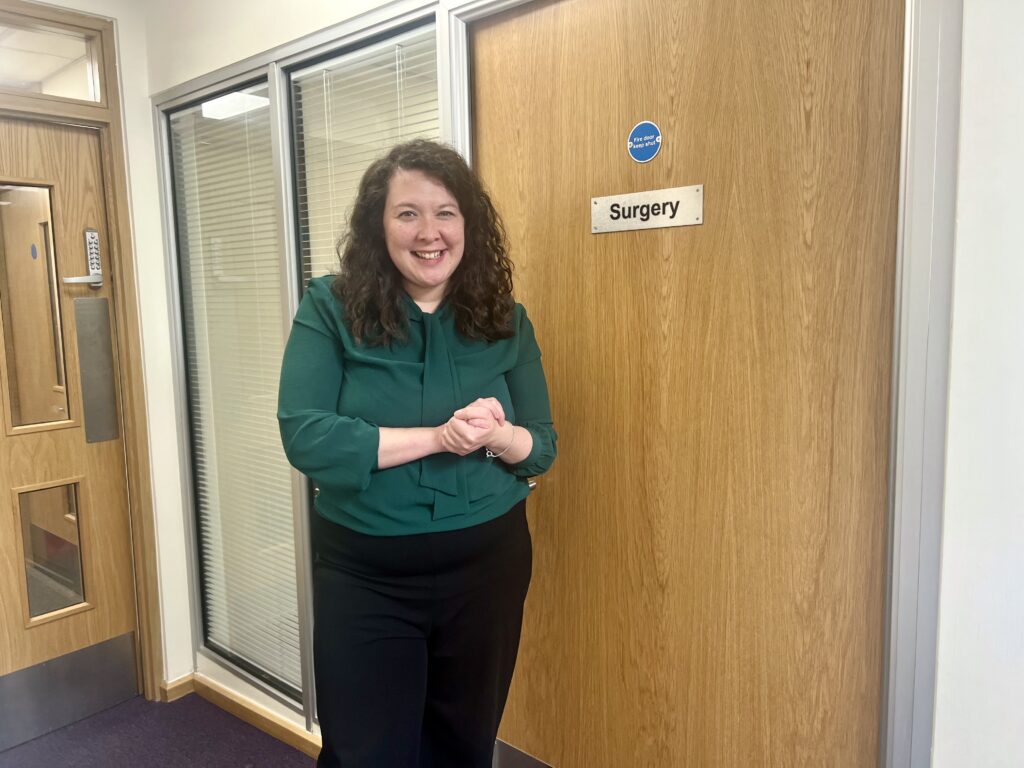
“We had to come up with a system which anchors to a certain area, so filling a day with Harpenden meetings for example, planning my surgery diary to cover all the villages and towns. I also have a challenge each week to make sure I have mentioned at least one constituent, one town and one major issue in Parliament.”
She’s also achieved what might be called ‘brand recognition’, in that people now know her as their MP: “I think it’s the big brown curly hair! I was out recently and I heard a voice behind me saying, ‘I know that hair’. I feel privileged because although you’re on display, if I wasn’t getting recognised then I’d be doing something wrong.”
A year ago, the new Labour Government rode into office on a wave of hope and optimism.
Flash forwards 12 months, and how does she personally feel they’ve performed in this time?
“I’m very disappointed. I wanted them to do well, I still want them to do well, and I think there’s too much at stake for them not to deliver.
“Even those people who are well off are finding it hard because there’s nothing left at the end of the month, and so are businesses as well.
“Obviously employer costs have gone up, and business rates are broken, so the cost has never been so high to run a business, and there’s no incentive anymore to start up or keep going.
“I wanted the Government to do well, but they’ve just made one mistake after enough. For me it’s a real shame they haven’t had a forward-looking vision for this country. The one thing they keep talking about is growth, but at what cost?”
“The expansion of Luton Airport obviously means a lot to people around here, but they’re also excited about AI and want to build these massive data centres, which are energy hungry.
“So there’s a disjointed vision of massive growth, but not building a sustainable future, which would be good for us and our local and national environment and climate.
“We’ve been pushing them for higher environmental standards on planning policy, and they haven’t gone far enough. On top of that, obviously, are all the unfair changes to winter fuels and two-child benefit care to inheritance tax for farmers.”
One of the key policy platforms for the Lib Dems is the link between health and social care, which is seen as intrinsically linked to fixing the NHS, and this is a regular issue in Victoria’s casework.
“People are feeling the cost of social care, but are asking how is it this bad and this expensive? I’ve heard many horrible stories about how badly managed hospital discharges are, and yet the Government is not fixing this either.
“But I do hope they turn it around because we all do deserve better.”
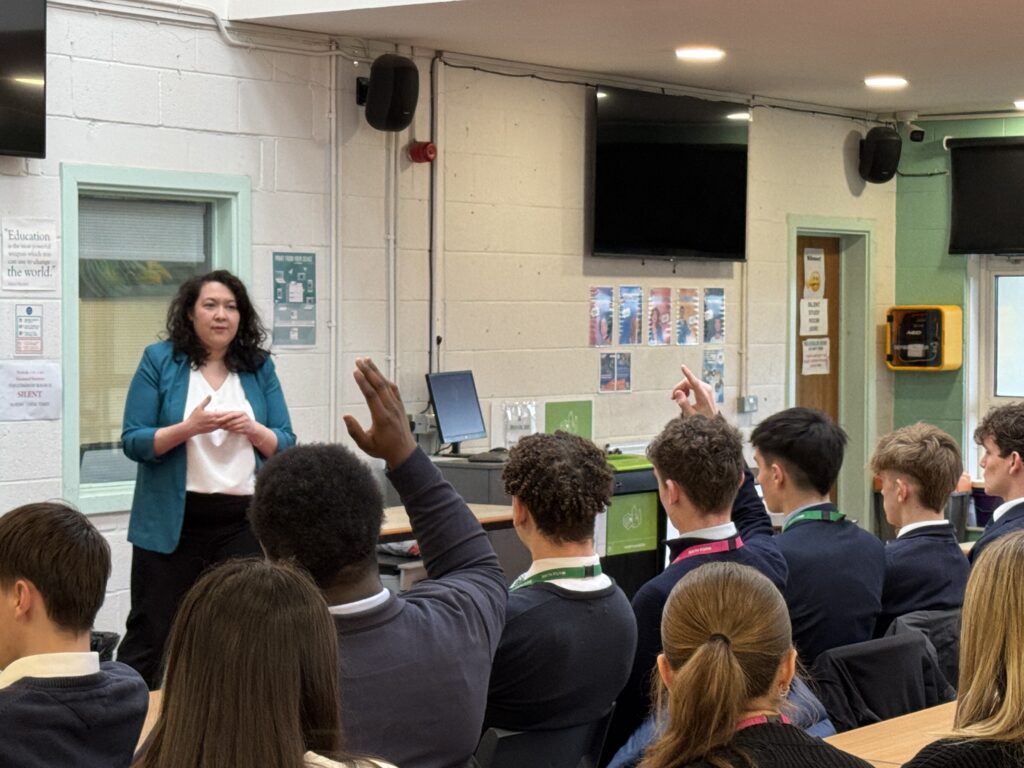
One of the other successes of Victoria’s time in the role has been her work promoting safer phone use among teenagers, including a roadshow around local secondary schools.
“Technology is moving so fast, and now the evidence is mounting about the detrimental impact of screen use. What is really interesting is that it’s not just about explicit content anymore, for example with Snapchat there is peer pressure around sharing your location and what that means for young people in terms of bullying outside or school, or even that lack of privacy when you leave.
“It’s also about the amount of time spent online, including the opportunities lost because they are spending hours at a screen, and that’s why I think parents in this area feel that things need to change.”
One big focus for her second year as MP ties neatly with her work on phones, a drive to help support local mental health challenges: “The roadshow was not only an eye-opener about the way that young people are interacting and feel about social media, but it has also been a proxy conversation about mental health for young people.”
But she also wants to do a lot more work on supporting and promoting our local businesses, including keeping up the pressure over the ongoing issue of parking charges in Harpenden.
“What is really important is that it is part of a bigger picture, which is what we want Harpenden to look like in five or ten years. What kind of town do we want?
“I’m very inspired by these blue zones, which are areas around the world where people are more likely to live to 100 because of shared elements like movement is a natural part of everyday life, as is good quality food and community. So what more can we do to help promote that here in Harpenden?
“But parking is not over, and I will be pushing for that review and making sure that all of the impact and all of the views are taken into account. But I think we should use it as an opportunity to really think about what more we can do for Harpenden – whether it’s childcare, whether it’s feeling like you can enjoy our town centre even more – and make it a happier and healthier place to live.”
