13 Jan 2025
Is one of the city and district’s oldest institutions at risk of vanishing forever?
The ceremonial role of Mayor of St Albans dates back more than 470 years, with 480 individuals holding the title during this time.
But now the future of this historic position remains uncertain under new plans for local government reform.
The Labour Government’s proposals for English devolution would see county and district councils scrapped and replaced by new unitary authorities and elected Mayors, but no clarification has been provided for what this will mean for local civic Mayorships.
The position of Mayor – considered the first citizen of St Albans during their tenure – dates back to the granting of a Royal Charter in 1553, with John Lockey the first incumbent.
When Queen Victoria awarded St Albans city status in 1877, the prefix ‘The Right Worshipful’ was added before the title, making the holder the senior Mayor in Herts.
There have been numerous prominent Mayors over the centuries, with the most famous probably Samuel Ryder (1905), founder of internationally renowned golf tournament the Ryder Cup.
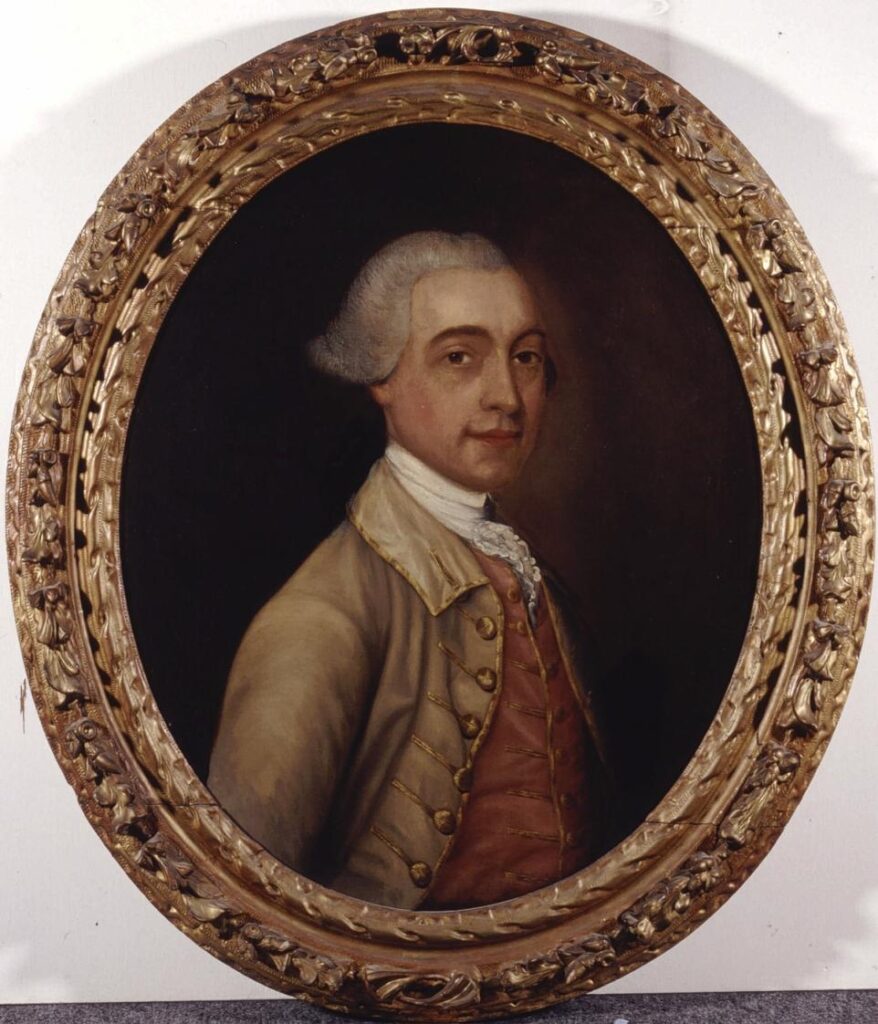
Others include the first Earl Spencer, later Viscount Spencer, Princess Diana’s ancestor John Spencer, who served in the role in 1779, as did his son George in 1790.
The artist Thomas Gainsborough painted a portrait of three times Mayor Joseph Gape (1746, 1791 and 1797), who also served on the city council for a staggering 50-plus years.
The Gapes were one of the city’s oldest families, making their fortune through tanning and building St Michael’s Manor, and at least 16 members served as Mayor over the years.
The first female Mayor was Margaret Wix in 1924, who is commemorated with a Blue Plaque at the site of her home at 40 Holywell Hill, and also gave her name to one of the city’s primary schools.
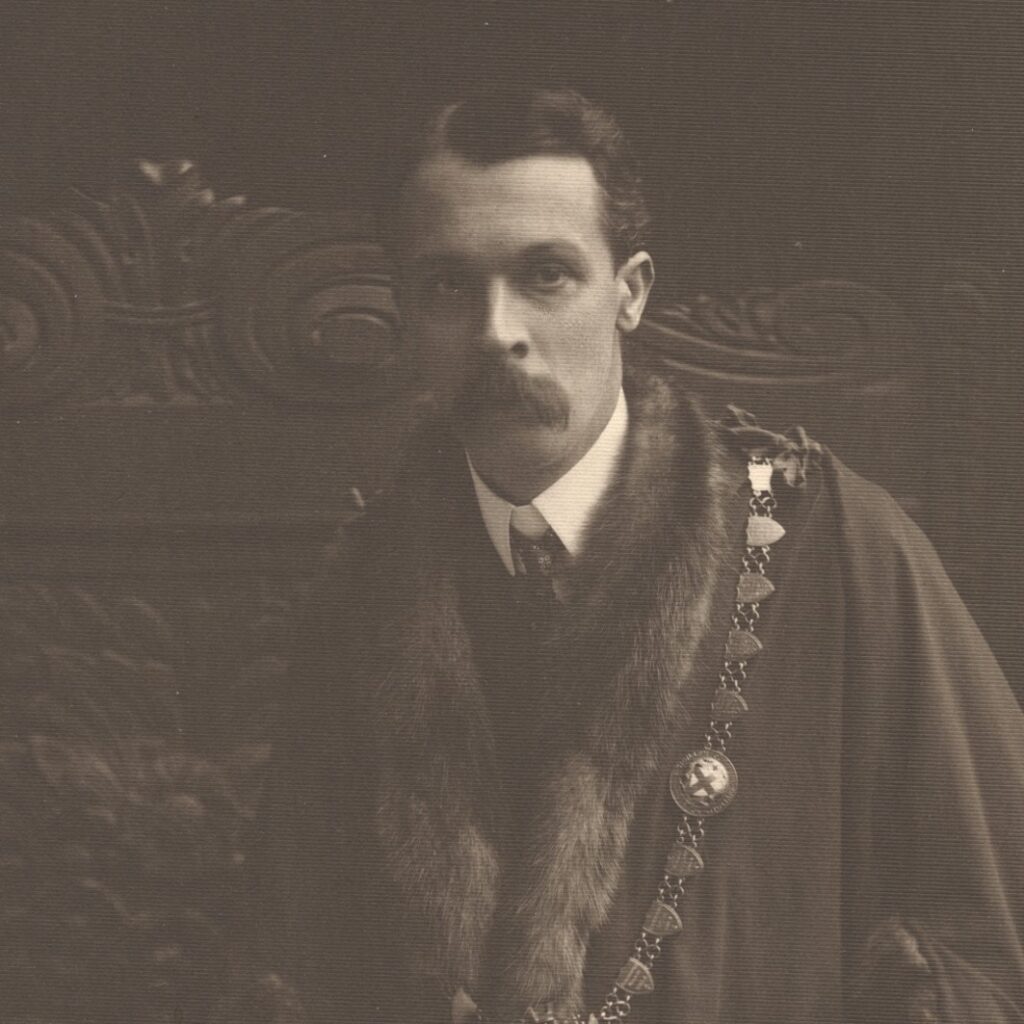
Portrait photographer David Knights-Whittome, whose subjects included Edward VI, George V and Edward VIII, moved to St Albans with his wife upon retirement, and was Mayor from 1940-41, while one of St Albans’ few Labour MPs, Cyril Dumpleton, was Mayor during 1943-1944.
The English Devolution White Paper is a fairly broad brush in its ambition to move from two-tier to single-tier governance across the country, and the roles of civic Mayors have yet to be addressed, but we wanted to gauge the views of both previous title holders and local organisations with a focus on heritage issues as to how the position should be maintained.
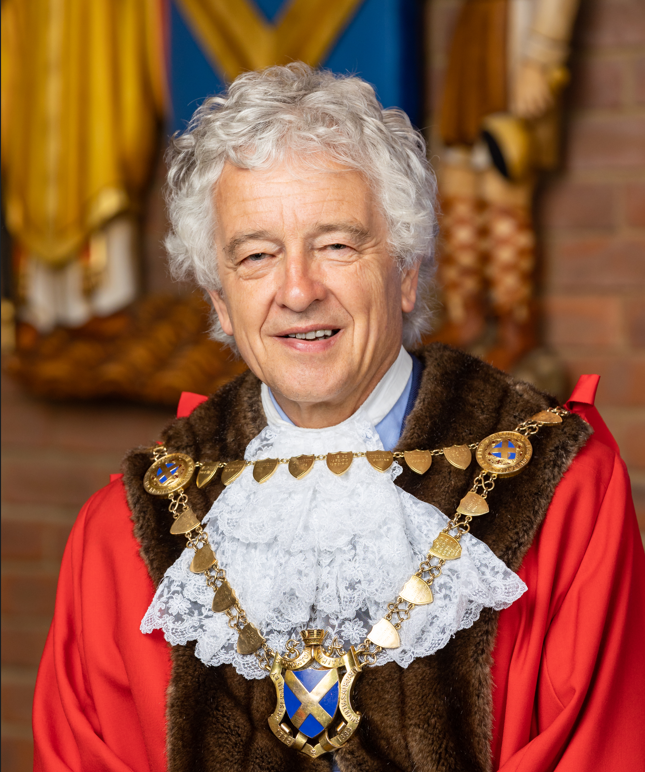
Current Mayor Cllr Jamie Day said: “There has been a St Albans Mayor for nearly 500 years – I believe I am the 480th. So, the office has survived revolution, reformation and the many political upheavals and re-organisations over that time. The present local government structure only goes back 50 years.
“Whatever structure emerges from the government’s English Devolution consultation, there would need to be some sort of local St Albans governance. So there would be an independent chair and ceremonial first citizen role, which the Mayoralty is the obvious institution to continue to fulfill. And of course, as St Albans is the only Cathedral City in Hertfordshire, it would be ideally placed to be the county’s ceremonial centre under any new structure.”
Cllr Edgar Hill (2021-22) agreed: “It would be logistically impossible for a single person to fulfil the current ceremonial duties for the whole of Hertfordshire. It would be a tragedy to lose local representation.”
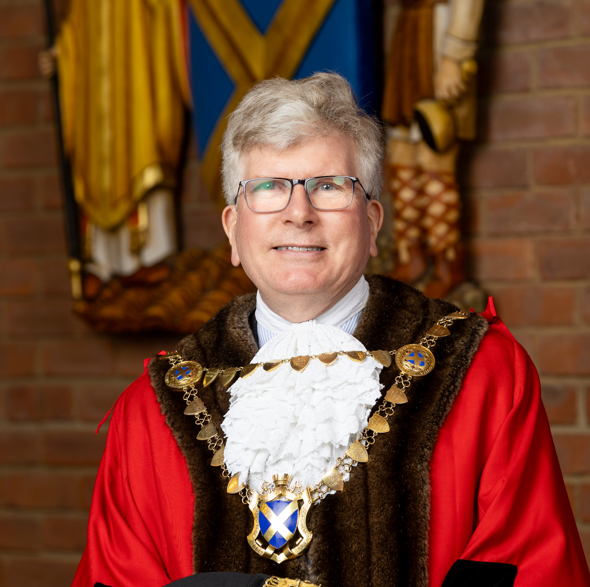
Cllr Anthony Rowlands (Mayor 2023-24) said: “I hope it will be the case that central government listens to the views of residents and organisations about what they value in terms of governance and representation. It is 50 years since the last reorganisation: it could be another half century before the next. We need to get it right.
“Our system of municipal government has always allowed for change and continuity and variations between communities. For approaching 500 years, we have chosen a Mayor in St Albans. It is the senior Mayoralty in Hertfordshire. As with every institution worth its salt, it has evolved and adapted. I was privileged to serve as the 479th Mayor in 2023-2024. It is now almost exclusively a ceremonial role.
On a few occasions the full regalia is rolled out, but most of the time it’s a chain for identification.
“Based on recent experience, I am convinced that there is a crucial and symbolic place for a ceremonial Mayoralty in a modern community. At its heart, the job – and it is a full-time job for a year – of the Mayor is to offer, on behalf of the whole community, recognition, appreciation and acknowledgement: to volunteers and charity workers, to our public servants and to our scout and guide leaders, cadet officers, youth workers, coaches and countless others.
“The list is endless. This all takes time and effort. Constitutionally, it can and should complement executive leadership.
“In a world in which so much is transient, we must stake out our ground and show why a 500-year-old institution continues to strengthen the bonds which hold our community together. If anything, the need will be greater in the future than the past.”
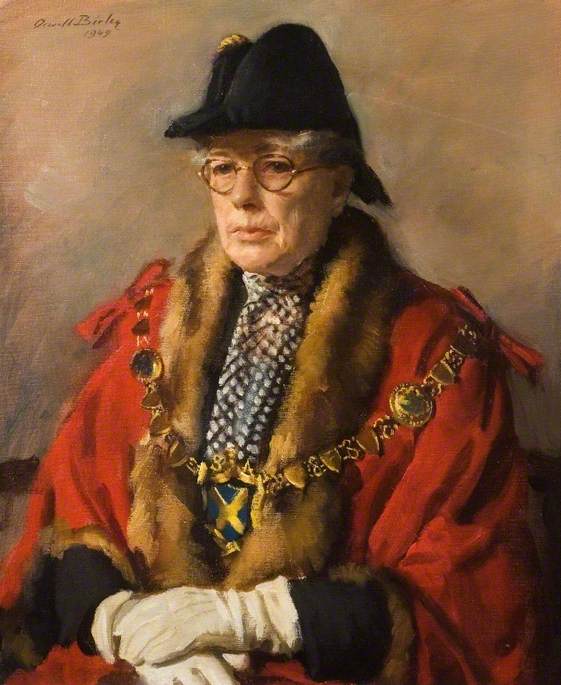
Honorary Alderman Frances Leonard (2016-17) said: “I think that the Mayoralty could and should survive, there will have to be a lower level organisation for St Albans, similar to a parish council, as my understanding is that the parishes will be taking on a greater role. Harpenden Town Council retained their Mayor so I don’t see why St Albans couldn’t.
“The Mayoralty is a very important part of St Albans’ history, it brings the community together and helps give the council a good insight into what goes on in the city, especially the voluntary sector.
“We’ve certainly had a recent council leader who had antipathy towards the institution of the Mayoralty and the civic side of the administration. From recent experience, few councillors attend civic events although, as an Honorary Alderman, I don’t manage to attend all. This is a shame as it does little for community cohesion and our identity as a city.”
Herts High Sheriff Annie Brewster, who was Mayor of St Albans between 2013-2014, added: “There were well over 450 Mayors of St Albans before me. Whilst it is not appropriate, as High Sheriff, to comment upon any future political decisions with respect to tiers of governance, I can most certainly share the significance of the dozen apolitical local civic Mayors (or equivalent) Hertfordshire currently benefits from.
“The joy the role can bring to communities is remarkable. The ability to thank and affirm the armies of volunteers and wonderful organisations who are the backbone of our immediate society is vital.
“Each Mayor sees their own district in person, not just on paper. They learn so much from the myriad of meetings and events they attend, become champions of the great many things they witness, highlighting and enabling good works to further flourish.
“In my personal experience, the public seem to really relish their historical ceremonial figurehead so, whatever happens in the future, I do hope we will continue the tradition for many wonderful generations to come.”
Beyond past and present Mayors, St Albans Civic Society is paying close attention to the proposed reforms, particularly what it wants to achieve for the city’s best interests as the outcome, and not simply the protection of civic Mayorships.
Chair Mary Conneely said: “We should collectively develop a clear set of what we believe the city needs and wants from the re-organisation, in order to ensure we continue to have some clear local governance that’s more than ‘ceremonial’, the future of the mayoralty should be a part of this.
“St Albans is the only place with city status in the whole of Hertfordshire. It’s not the largest population wise, but its position as a city with a Cathedral, proximity to the county’s university and overall cultural history, makes it a significant place.
“What’s ahead is a complex and demanding process, and we should be looking to align with those closest to the decision-making process, having engaged locally with other groups, and in particular have engaged with the residents and taken their concerns seriously and put together, a clear set of demands, that give due consideration to how important the city is.”