03 Dec 2024
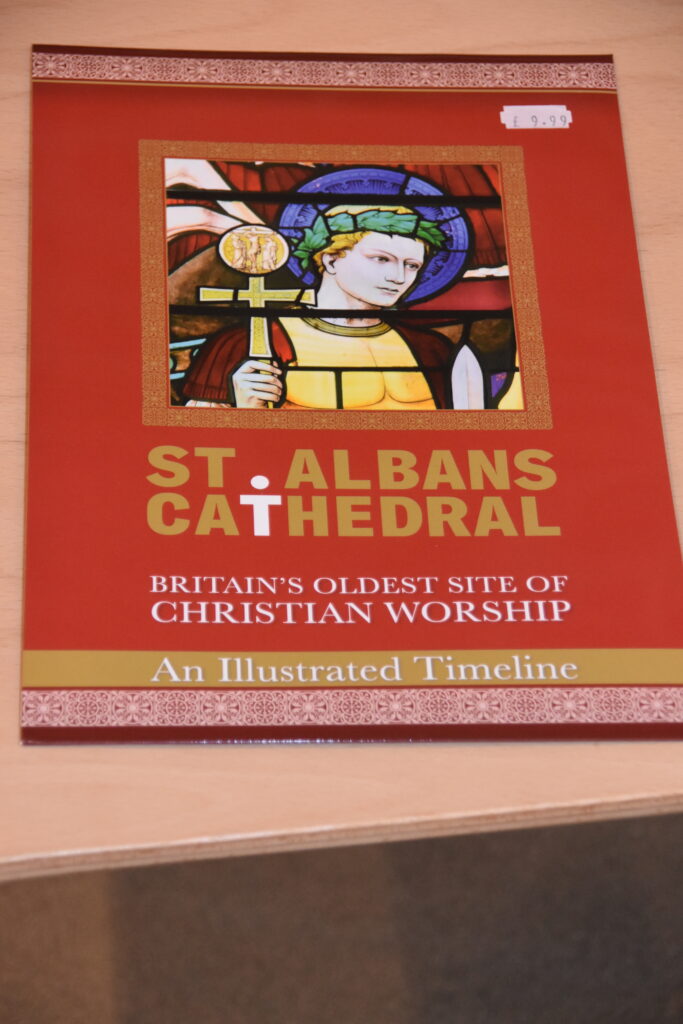
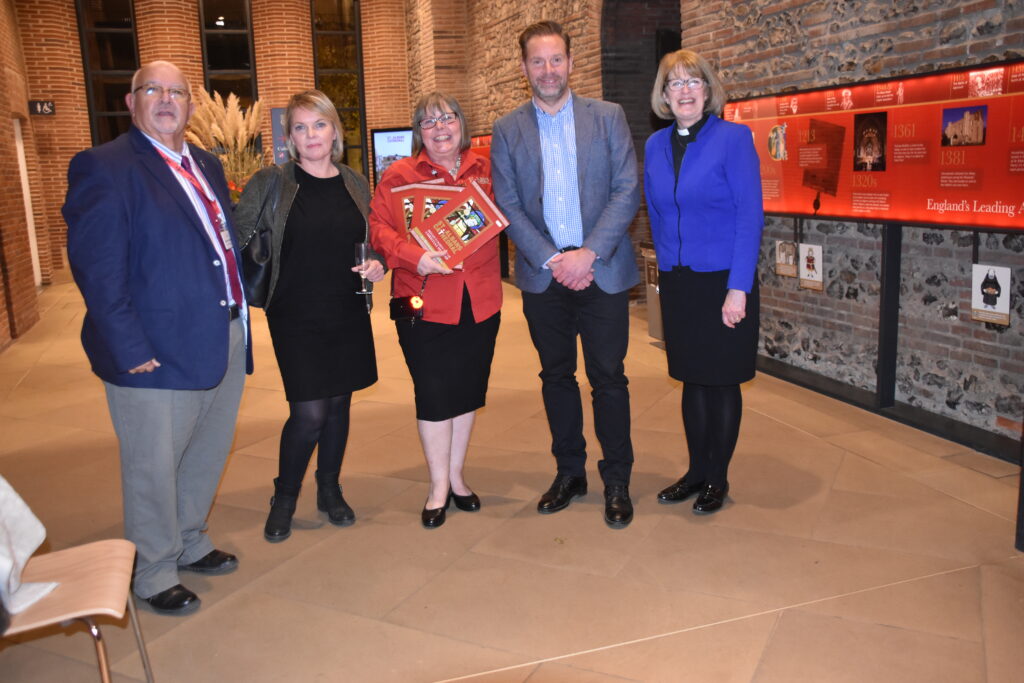
If you’ve ever visited St Albans Cathedral and marvelled at the elaborate historical timeline which unfolds on giant plastic display boards, you can now take home a printed version for your bookshelf.
St Albans Cathedral – An Illustrated Timeline is authored by local legend Stephen De Silva and published by Andrew Humphries.
Stephen has been a respected volunteer and guide at St Albans Cathedral for more 40 years, and was awarded an MBE for his contributions to heritage and community. Known for his deep faith and commitment, he has served as a warden, lay canon, and member of Chapter, helping to shape the Cathedral’s visitor experience, bringing its story to life through engaging displays and interpretation.
He explained how he came to put the book together: “When the new Welcome Centre opened a few years ago, we included a timeline display telling the history of the Cathedral with interesting dates, facts and illustrations.
“Since then lots of visitors and locals have asked if we had a copy of it – so the new Timeline publication responds to those requests. It offers an introduction to our history in a colourful way. It’s geared toward any reader, with bite-sized pieces of information and some of our best stories.”
Working closely with a publisher and design team to make it visually appealing was essential, he explained.
“Physically unfolding the timeline, tracing the narrative across the pages and centuries, and looking at the photos, is quite a different experience from reading a book. The photos often lead the story – and that’s the same for visitors in the Cathedral. They are initially struck by a lovely stained glass window or how different the great arches of the Nave are – and then they want to know more. We’ve worked with Memory Lane publishers before so we know how geared they are toward strong design and colourful images.”
So why is recognising the Cathedral’s long history still so relevant today?
“St Albans Cathedral is at the heart of so many stories. Without it you can’t understand the story of the city, the story of Christianity in the UK, the story of the ups and downs of English social and political history.
“Our history isn’t really just about a building – it’s about the people who have built it, loved it, preserved it.
“There are young people living in St Albans today who will still be alive when that huge Norman tower reaches its millennium in 2088 – I want them to know and love the story of their city’s origins.”
And if he was to choose any stand-out moments from the past thousand years?
“Crumbs, where do you start? Having the only English Pope born around 1100 on an Abbey estate was an early highlight.
“The 1213 meeting in the Chapter House that led to Magna Carta is significant. The Great (or Peasants’) Revolt of 1381 saw the Abbey at the heart of national social upheaval.
“The dispersal of the monks and the closure of the monastery in 1539 must have radically affected how St Albans looked and felt.
“Of course, the old Abbey church becoming a Cathedral in 1877, along with St Albans becoming a city, boosted the status of both. I could choose so many more events, but that gives you a snapshot.”
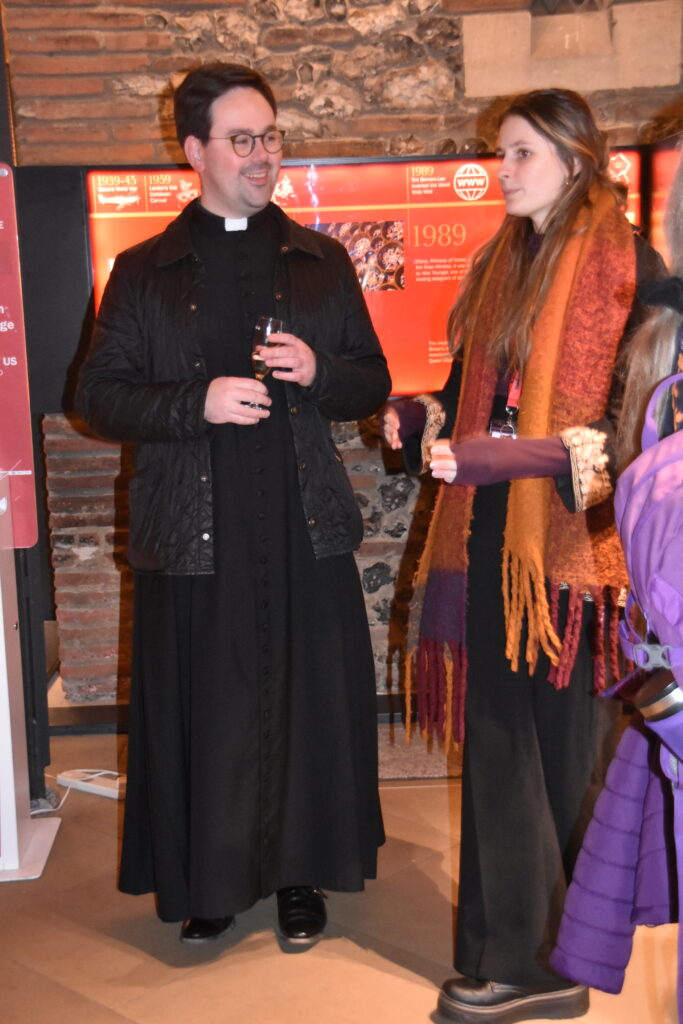
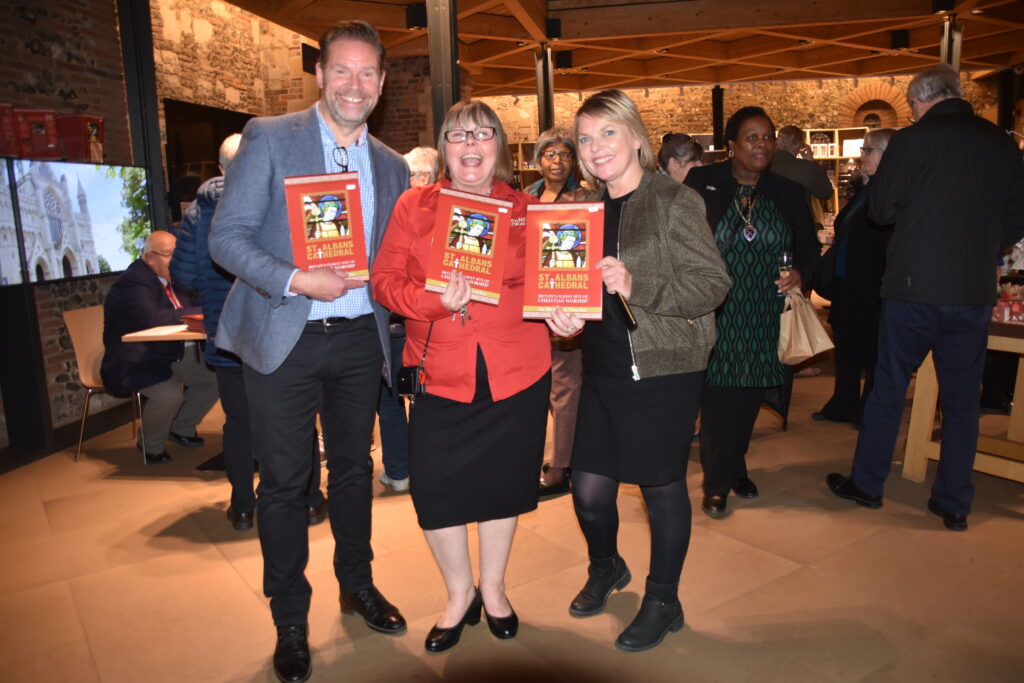
St Albans Cathedral – An Illustrated Timeline was launched at a special evening event – A Celebration of Heritage, Art, and Community Spirit at St Albans Cathedral – which included artisanal gin and beers from Spirit of Hertfordshire, local writers including Stephen Poxon, author of A Pleasant Year with Father Brown, and Andrew Baird, writer of Felipe the Sheep, as well as stained glass artist Fiona Ashley.