


27 Aug 2024
Before the Labour Government dropped a planning bombshell on the last day of Parliament, the St Albans Times had scheduled a catch-up meeting with SADC leader Paul de Kort to discuss some of the ongoing issues affecting the district now that two rounds of election campaigning were over.
The small matter of St Albans’ revised housing targets rather took precedence however, so we’re only now able to return to our original intention of looking at some of the key matters the council is currently embroiled in.
Aside from the Local Plan, one of the most contentious policy dominating discussion across the district is are the proposed charges for on-street parking – was he surprised by the depth of feeling this policy provoked? “Not entirely. It is of course completely natural for people to feel aggrieved or inconvenienced, because when something which has been available at no charge for an extended period, suddenly has to change. The majority of people will be unlikely to welcome having to pay for something they previously did not
“Parking, in particular, is an emotive and complex topic, because people’s concerns about parking are very mixed and charges are only one aspect of this; others include: the availability of parking itself, illegal and inconsiderate parking, parking, parking causing safety and environmental issues around schools.
“However, at the root of this challenge is local government funding. The fact remains that – under the Conservatives – St Albans district council has undergone a 25% cut in central government support since 2015, and has had to absorb substantial inflationary pressures in the past two years whilst being required to hold down council tax increases to much lower levels.
“We Liberal Democrats believe in sound finances and protecting vital public services in a fair way. Whilst we’re taking this measure reluctantly, we believe it is consistent and indeed necessary to achieve these twin goals.”
When the plans were first announced, there was no provision for drop-offs and pick-ups, but after concerns were raised by parents and traders, this was subsequently introduced into the current ongoing consultation.
“We pride ourselves on engaging with the public in a meaningful way through consultation and feedback, and we’re always grateful to all those who take the time to engage with the council.
“All consultation feedback from all sources will be considered and it is anticipated that this could lead to amendments.
Following the abolition of the Audit Commission in 2015, the private sector took over the function of auditing local government accounts, but failed to put enough resources in place. Just last autumn, the Guardian reported that just one per cent of English councils published their audited accounts in time. St Albans was not among them. So what is happening with their accounts?
“We have published draft accounts for all these years. Councils have to produce draft accounts by certain dates that are then audited externally.
“They remain in draft due to the failure of the external auditors to resource sufficiently to complete their audit of our 20/21 accounts; an external failing that has flow through consequences to the two more current years. This is a recognised national issue and is an example of ‘market failure’ as economists would term it.
“Having fully signed off, externally audited accounts, does not by itself deliver financial stability and neither does the opposite prevent it, otherwise, virtually all councils and police authorities would have to be described as financially unstable.
“It is the budget-setting process that sets out the financial stability of a council, and this has been proved to be robust at SADC, as recently recognised by the Local Government Association’s peer review. I repeat that the national problem of substantial external audit delays is a result of the ideological drive of the Conservatives to privatise the work previously carried out by Audit Commission. Under their remit this problem did not exist. The privatisation of the audit of public bodies has worked out no better than the privatisation of rail service or water companies, unfortunately but unsurprisingly.”
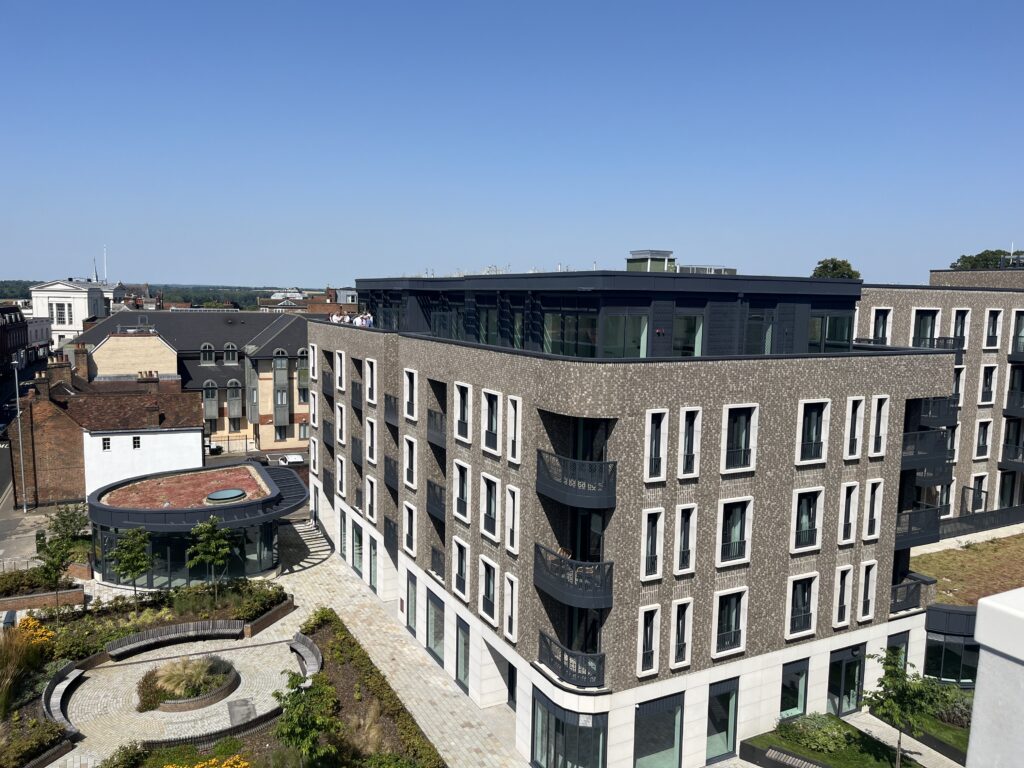
The day after the housing targets announcement, Cllr de Kort was part of a contingent of dignitaries attending the official handover of Jubilee Square, celebrating the completion of a £64m regeneration project to transform a rundown area of the city centre.
But with the scheme substantially delayed, last November SADC was forced to admit that an expected £640,000 rental income from the commercial space during the current financial year would not materialise.
Rather surprisingly, Cllr de Kort suggested that just because no big companies had moved into the district during the extended construction period, then that meant there was no lost income.
“In terms of the revenue for the commercial income, we have been informed by the estate agents marketing this space that no sizeable new commercial tenants have moved into St Albans in the period between the expected completion of the site and now, so there is no revenue loss here, other than that caused by the global switch to hybrid working driven, initially, by the COVID pandemic. There is positive interest in the commercial space which our agents are currently discussing with interested parties.”
He said the sale of the 93 properties on the site to Watford Community Housing not only meant the homes will remain as affordable and social homes to buy and to rent to people on our housing register, but that SADC can use the lump-sum received to pay down council debt, thereby reducing the future cost of debt servicing and repayment.
Exact figures relating to the project’s budget and any lost revenue should be made available to SADC’s regeneration and business committee later this year.
Cllr de Kort stressed that while the administration was proud to have brought Jubilee Square to a successful completion, neither that project or the council’s redevelopment of Harpenden Public Halls, which was halted last year, had been plain sailing.
“It is important to recall that both Jubilee Square and the redevelopment of leisure and cultural centres in Harpenden, of which the repurposing of the Public Halls was a part, were initiatives of the previous Conservative administration.
“A couple of important lessons for them to learn, should they ever come back to power locally, is to never approve a major refurbishment project with just 2% contingency, something that occurred with the Harpenden leisure and cultural centre project. This is basic financial prudence for such schemes.
“They should also learn that any development design process that involves absorbing a wide range of stakeholder opinion is fraught with the risk of unrestricted financial commitment, so this exercise must be balanced against the stated objectives of the wider business case.
“Our proposal to retain a free 20 minute ‘drop and collect” period, available twice a day to any motorist, is an example of a change we have made as a direct result of the continuing consultation we carry out, as residents and businesses have “The Conservatives committed over half a million pounds to this exercise with no clear return. We have learned, on the back of this example, how important it is to stay focused on delivery of a project’s originally approved aims, something we demonstrated by bringing the large Jubilee Square project in on budget.
“Looking forward, we are very ambitious for our area and there are lots of projects we would ideally like to get off the ground, but at the same time, we are financially prudent. So, unless borrowing costs return to the levels seen in the 2017-2021 period, it is hard to see how a financially well-run council, which SADC now is, will be able to launch property developments on its own.
“We will be looking to the Labour government to give well-managed councils, such as ours, the powers and resources to take on new projects that add direct community value by providing access funding streams that are not currently available to us.”
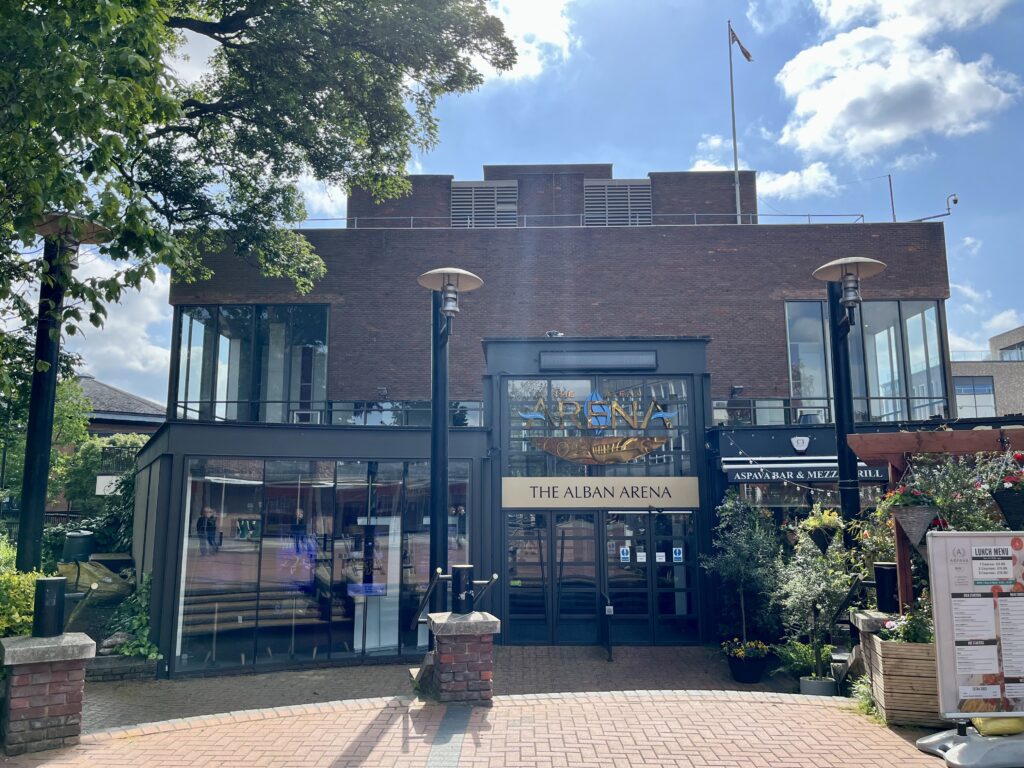
In November 2021, SADC announced plans to demolish the Alban Arena and replace it with a new entertainment venue as part of the CCOS (City Centre Opportunity Site) North project, but this became one of several major capital projects to be placed on hiatus due to budgetary considerations in 2023, with a view to restarting the scheme in the next couple of years once the economic situation improves and a district cultural strategy implemented.
Is this scheme one of those Cllr de Kort feels SADC should pursue? “We are keen to explore options to improve the public space in this area. As things stand, we would need a private partner to provide the funding for the reasons outlined above. But, I repeat, we also wait with anticipation to see whether the Labour government will give us the resources and powers to help facilitate projects like this.”
Going forwards, will public consultation be a priority when making major policy decisions, given the backlash over parking and changes to the Charter Market and street traders?
“As I’ve said, we undertake consultation with the public through a variety of channels. For example, we made changes to the proposals for market traders as a result of feedback from a range of stakeholders. The most important of these was the decision to run a pilot, which is a very effective form of generating evidence-based data around the impact of change.
“The recent district and national elections were decided with knowledge of the consequences of our constrained local council finances. Indeed, opposition parties seemed to focus on nothing else. The evidence is that the electorate overall understood the broader issues at play and that different and deeper concerns for their own circumstances and priorities. We will continue to run the council on the basis of protecting vital services in a fair way and making financially sound decisions.”
Some of the criticisms of the current Liberal Democrat administration on social media include a lack of genuine debate in council meetings, with any opposing voices shouted down. Is that something he believes is happening?
“No, quite the opposite! Under the old cabinet system, used by the Conservatives, there was much less debate. Under the Liberal Democrats, we have moved to a far more democratic system and we now get debate in four separate, public service committees as well as full council.
“We recognise how important challenge and scrutiny is to having a healthy local democracy, and that’s why, two years ago, we Liberal Democrats introduced ‘questions without notice’ so that opposition councillors could challenge the council leader on any issue at all.
“At the most recent full council I addressed eight separate questions from opposition councillors. In the same forum I also addressed a question from a Lib Dem colleague about Harpenden parking.
“We are very humbled by the number of Lib Dem councillors we have, but we also recognise the importance of challenge, which is why we’ve opened up the council for debate and questions.”
On a more positive note to conclude, what is Cllr de Kort looking forwards to implementing over the coming months?
“In the short-term, the most important matter for all our residents on a short time frame is getting our Draft Local Plan to the next stage (the Regulation 19 consultation).
“This is the only way that we can build a shield against speculative, piecemeal developments – the kind of developments that will not deliver ‘the right homes, in the right place with the right infrastructure’.
“At the same time, I am very much looking forward to welcoming the new social housing tenants into Jubilee Square (these homes are allocated to individuals on our housing register) and to welcome the new residents into our Noke Shot development in Harpenden.
“Having secured the largest grant of any council our size to make our homes more energy efficient, we continue to implement, at pace, major energy cost reduction measures. These are focussed on the 20% of our social housing stock which was the least fuel efficient until this very large programme got under way. I look forward to seeing the progress in delivery on this, with the benefits for our social tenants and the global environment being secured.
“I will be following closely the extensive feasibility and design studies being undertake to examine a potentially exciting redevelopment of the sports and community centre in the New Greens area.
“I also expect to see substantial progress with the plans we have to redevelop the Telford Court site, so it can once again house, at social rent levels, many residents who have the need and desire to live in the city centre.
“All of these activities deliver on our aims to enhance communities, play a leading local role in addressing the environment crisis and enable business activity by keeping the district a great place to work and live.”
