16 May 2023
Elena Hogg, founder of local culinary company FOOD by Elena, questions her relationship with fine dining…
So, who had Coronation quiche? You know, the dish personally chosen by the royal couple to gastronomically mark the Coronation, made with spinach, broad beans and tarragon? No?
Me neither. But it sounds nice. And appropriately seasonal, given the King’s advocacy of sustainability and eco-friendly food.
That there’s an official quiche to mark Charles’ ascension to the throne not only makes me chortle, but reminded me of the trusty Coronation chicken served up for the late Queen Elizabeth’s Coronation back in 1953. I wonder if the quiche will have the same success.
There have been quite a few royal comestibles over the centuries. I took a little journey back in time via web browser and discovered how very wrong I am in my obtuse assumption that all things in the past are necessarily ‘worse’ that the present.
Au contraire: the levels of fanciness demanded by King George IV some 200 years ago far out-posh King Charles’ apparently comparatively modest menu. Charles’ 19th century ancestor spent what would these days be several millions of pounds on delectables from quail and sole cooked in Champagne to turtle soup and spun sugar creations for his celebration feast.
There was me thinking maybe they’d have had a pineapple or some fancy cheese after their meat and spuds to elevate the fare.
It’s rather refreshing that the current monarch opted for a low-key private lunch with family and close acquaintances following the Coronation over a large stately affair. Don’t get me wrong: I’m aware of the inordinate costs that the rest of the Coronation will have incurred, but it’s significant nonetheless, I think.
In fact, it makes me question my own relationship with fine dining. My husband and I have indulged in many a Michelin-starred meal over the 15 years we’ve been married, although it’s tailed off a little recently, perhaps because the children are now old enough to join us for a meal rather than stay home and be babysat. This means we’re more likely to opt for pub grub that serves the chips the kids so desperately desire and, when several of them land on the floor or in the water jug, there isn’t the indignant and shocked hush you’d get at a fancy restaurant.
Back to my and my husband’s near obsession with Michelin-starred eateries (the obsession quite possibly stemming from my husband’s penchant for a spreadsheet rather than a soufflé, because all UK Michelin-starred restaurants have been identified, categorised, plotted and, once visited, rated).
When I think about the huge prices commanded by the likes of Le Manoir aux Quat’Saisons or The Dorchester, for example, I’m ashamed to admit how readily we pay them in return for a photo collection so ample, you’d correctly assume we barely exchanged two words all evening.
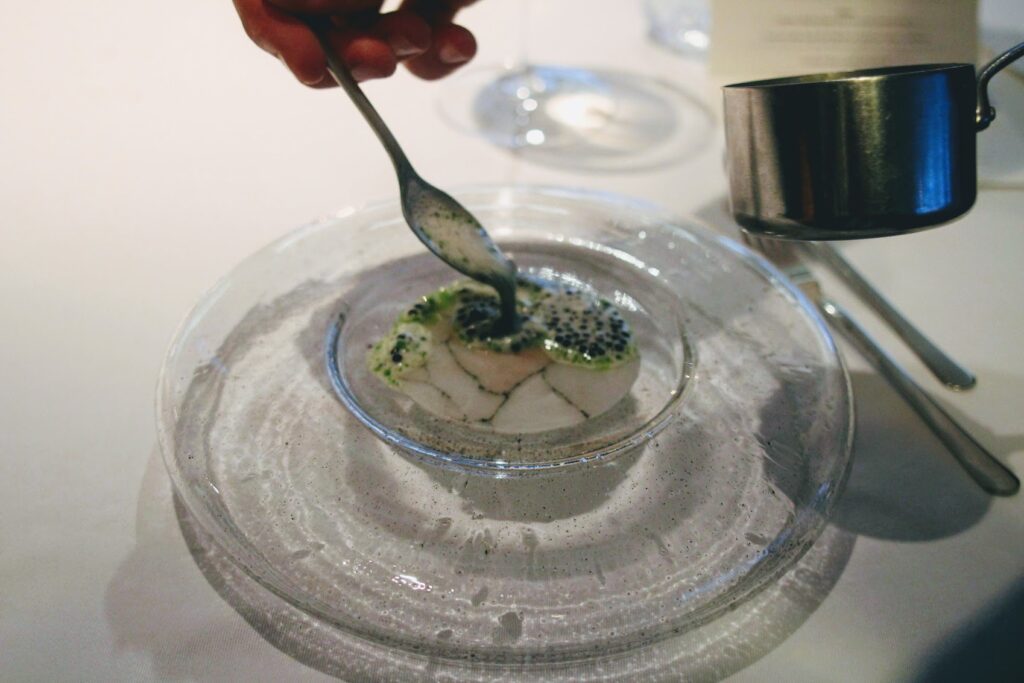
I’ve known my husband ask a waiter to pause as he was spooning some buttermilk foam around a disc of marbled hake so he could take a good photo of it. I mean, honestly.
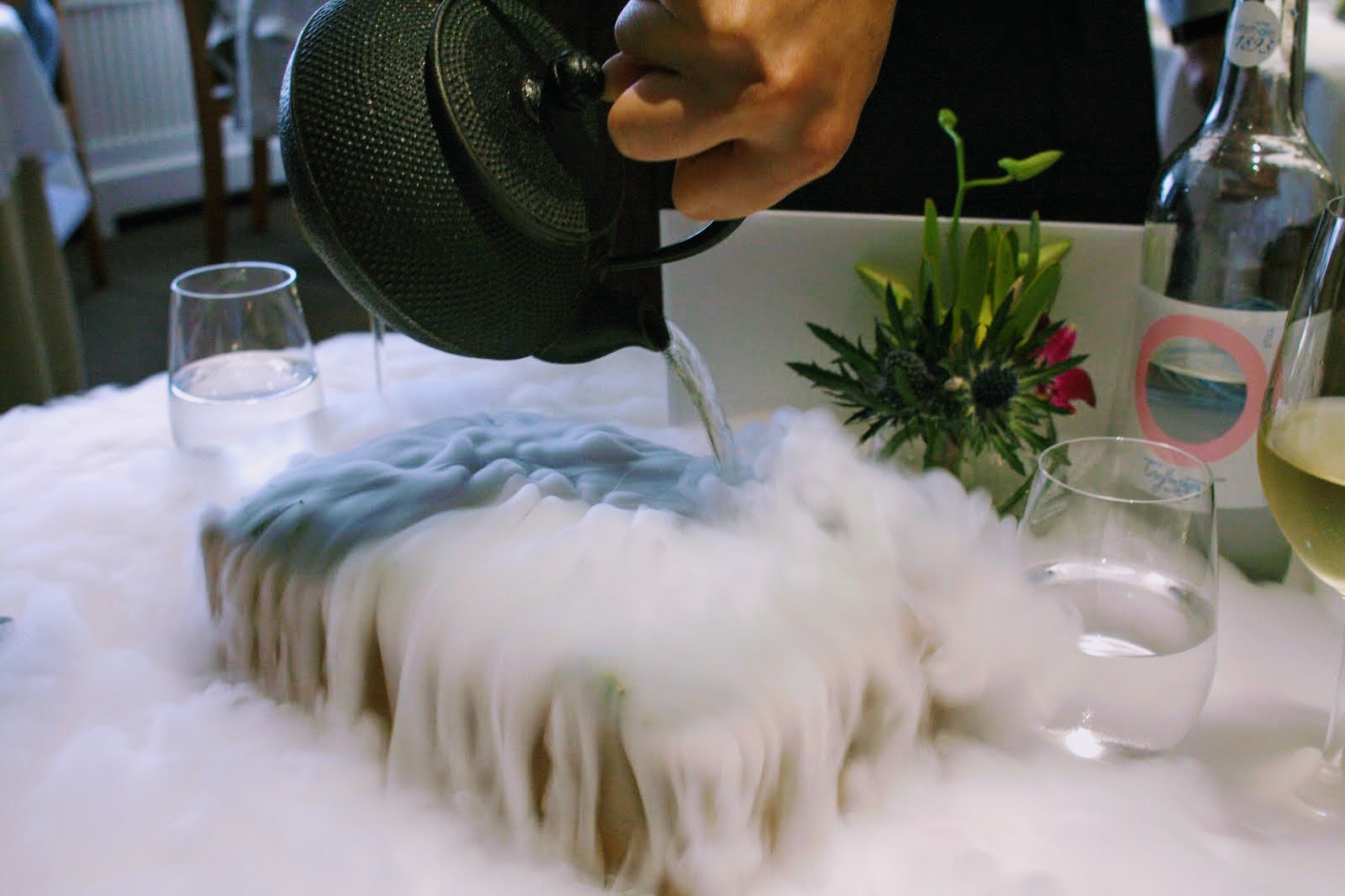
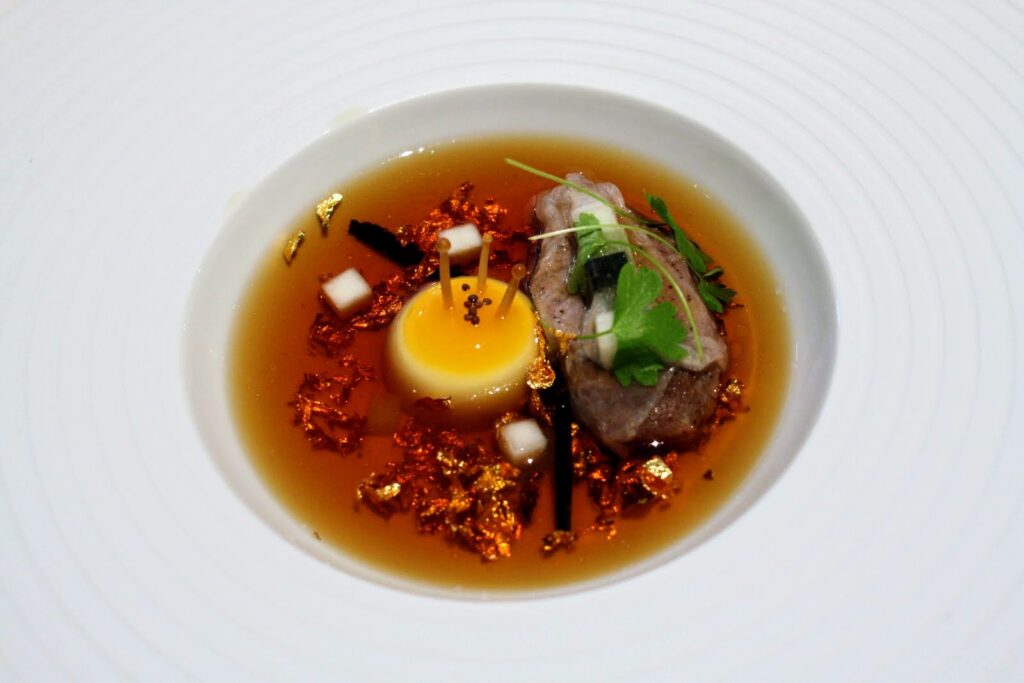
Probably the most memorable meal we’ve had was at The Fat Duck. It’s not a restaurant as much as a theatre. The food and the way it’s served are a spectacle. The dry ice alone rivals the Palladium. Rather conveniently for the purposes of this article, the menu (when we went) even included a mock turtle soup!
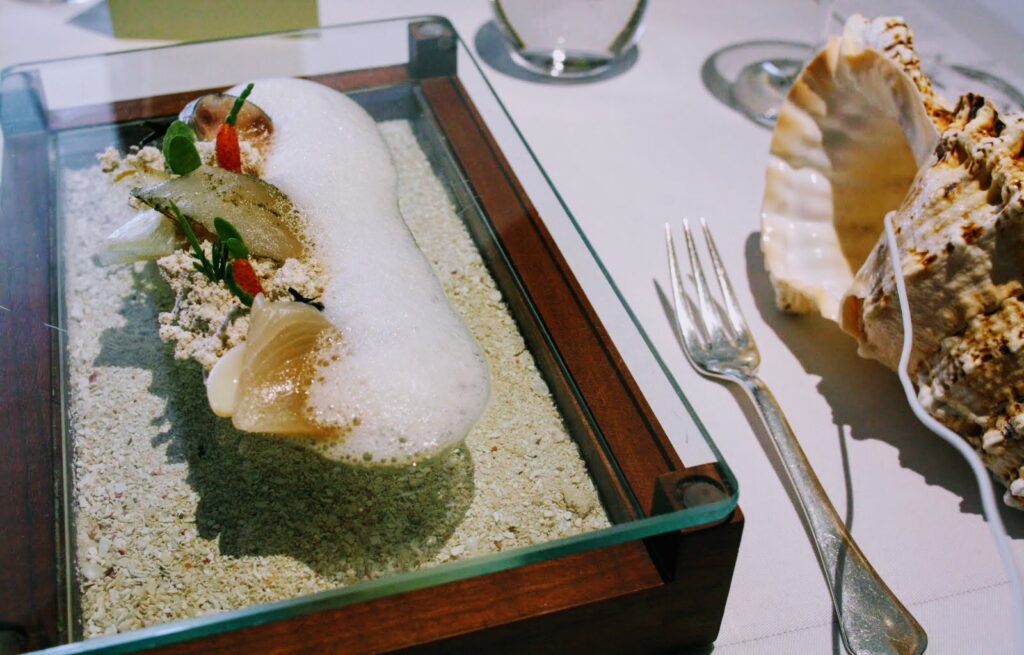
There were sound effects, too: a seashell concealing an iPod Nano accompanied our fish so we could plug in the ear buds and listen to the sounds of the sea as we ate. Another course consisted solely of a small, handle-less glass cup of tea (no milk). It was half hot tea and half ice tea, so when you took a sip, one side of your lips felt cold, and the other side, warm. Mind. Blown.
Something doesn’t sit quite right, though. This exquisite, painstakingly prepared and galactically priced food is so far removed from the basic point of food, isn’t it? Or is it? I can’t make up my mind.
My mum, for example, who’s no stranger to haute cuisine but who grew up in Italy eating food bought fresh daily from the market, cooked extremely well but with flavour rather than frills by my ‘nonna’, finds the pretention and extremes offered up at the nation’s finest restaurants hard to swallow (pun intended) in a world where so many struggle to eat at all.
Perhaps we haven’t come that far from King George IV’s frivolous and fervid feasting while the commoners scrimped.
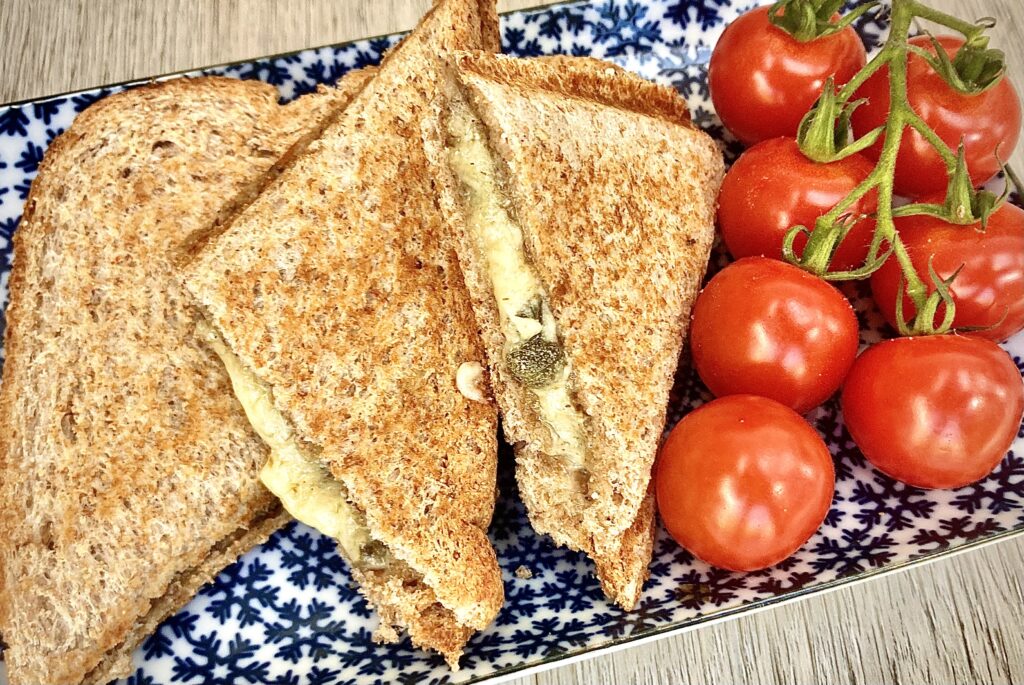
Then again, perhaps I’m overlooking the middle ground: very little surpasses a cheese toastie in the satisfaction stakes and, as much as the gastronomic powerhouses have all offered up a deluxe and de rigueur version of fish and chips, it never quite hits the spot that the local chippy does. Surely even Charles and Camilla sometimes long for a paper-wrapped cod and chips with curry sauce? If not, shouldn’t we mere subjects feel pity? Dare I say there’s a blurring of the line between who’s luckier, if you really squint hard.
What is patently clear, though, whether it’s caviar or chips, whether royalty or not, food and eating are at the centre of our society. Coronation chicken and quiche link the monarchy and the masses – a common denominator; a familiar daily ritual that transcends status. Even Burger King does a chicken royale, right?