


10 May 2023
Two years after starting work in a leading city stockbrokers, I jacked it all in for a career in journalism which has lasted almost 30 years.
I was looking for a vocation which I felt could make a difference, instead of padding out the bank accounts of super-rich investors, and haven’t regretted it for a second.
Back then it was far less common for people to switch careers, with “lifers” often found approaching retirement in the same trade or company where they had started working as an apprentice.
Nowadays we find the situation has reversed, with people of all ages choosing to do something different and embracing the challenges of entirely different jobs. We spoke to a selection of local individuals to find out why they had made the move.
From the stage to the kitchen
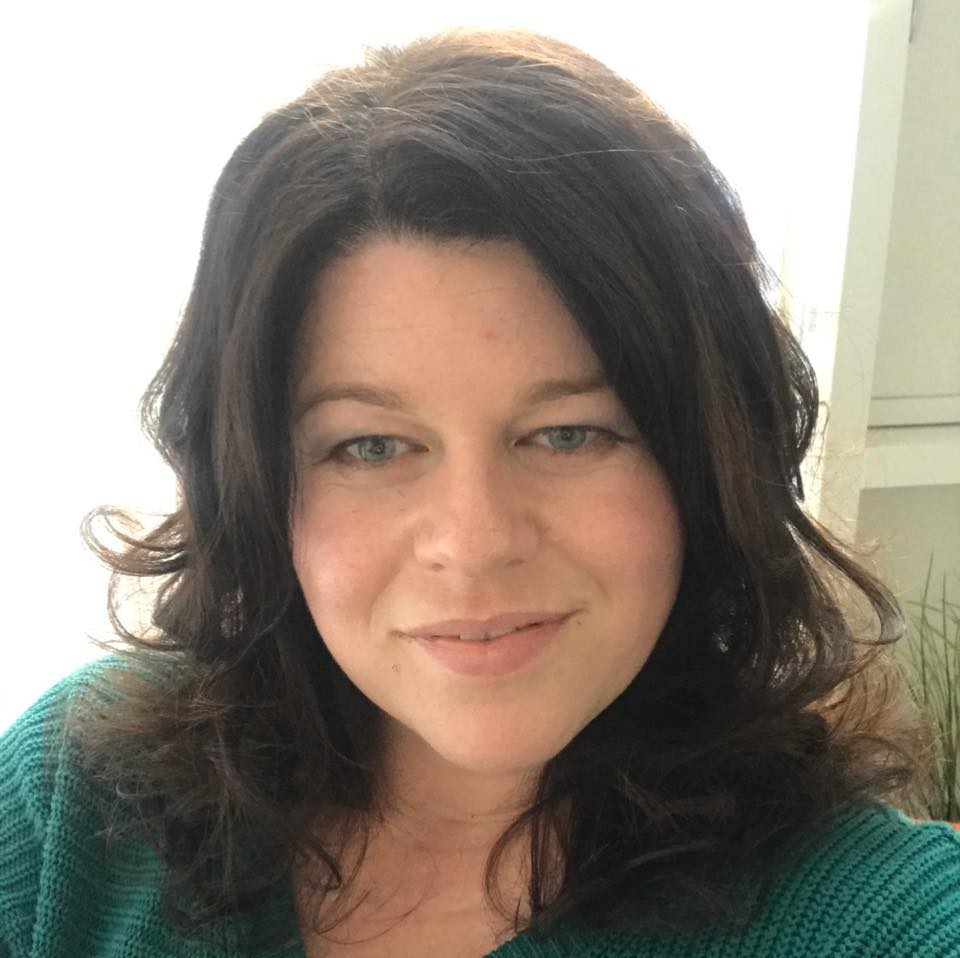
St Albans Times columnist Elena Hogg, founder of catering company FOOD By Elena, came from a background as an actor and singer.
“After completing a regular degree, I applied to the London School of Musical Theatre to do a one-year vocational course. After graduating, I was lucky enough to sign an agent and began touring with small theatre companies across the UK. I also worked at lot at London fringe venues.
“Whilst I auditioned regularly for West End roles, and even got down to the last two for Phantom’s ‘Madame Giry’, I was never quite lucky enough to land a big role. Probably one of my most exciting jobs was the lead for the resident theatre company on a huge cruise ship.
“The theatre capacity was 3,000 and the stage was amazing – revolving, rising, lowering, tilting – you name it!”
But on a practical basis, Elena eventually found it tiresome never knowing where or when her next job might be.
She explained: “There was a lot of living out of a suitcase, with tours taking me all over the place, and I remember not being able to ever book holidays unless they were last-minute ones, because you would never know if you might land a job that would then clash. Pay was also extremely low most of the time.
“On a psychological level, I became very jaded because there’s a lot of rejection in the performing arts.
“You develop a thick skin, because it’s not really an indictment of your ability or talent, but it does get wearying.
“I realised over the course of a year or so that, having got married and having started thinking about moving away from London to start a family, auditioning was no longer my priority.”
Before setting up her catering business, Elena had always loved cooking for friends and family, finding giving pleasure through food hugely rewarding. Eventually, after delays caused by having children and the pandemic, she decided to take the plunge and expand her love of feeding people into a profession.
The transition did not prove as difficult as one might imagine. “There is hygiene and food safety training that needs to be done, but the courses are online and I was able to learn everything in a week. The culinary side of things I’d been doing for decades anyway, just not professionally!”
So what is it about her new job that brings the most satisfaction? “As much as this makes me sound ultra-egocentric, it’s when people tell me how delicious my food is, and how happy their guests were eating it, that I glow inside.
“My first career involved performing on stage, so it’s not a shock I still want to ‘perform’ and be applauded, in some capacity. I find that deeply satisfying. I’m aware I sound like a real show-off!”
She offered advice from her own experiences of switching careers: “I certainly understand the fear there is in change, which puts a lot of people off trying something new. People’s individual circumstances affect how much risk they can afford to take in changing career, too.
“So whilst I wouldn’t want to flippantly urge everyone to throw caution to the wind, I would say don’t allow fear alone to hold you back, because they say that you regret what you don’t do far more than what you do do.”
Shipbroking docked for fitness role
Jessica Chattrabhuti was an operator at a global shipbroking company, in charge of operating more than 30 ships at a time, transporting commodities such as grain, coal, steel, bauxite and wood chips.
She was working up to 80 hours a week and always on call 24/7, which did not prove easily compatible with raising a young family, so started a new career as a personal trainer.
“It would have meant I wouldn’t have been able to spend much time with my first baby, leaving for work at 7.30am and only returning after 6.30pm. The childcare cost would also have made it unprofitable for me to go back.”
Having always wanted to work in the fitness industry, Jess did her base qualification while working in her corporate role.
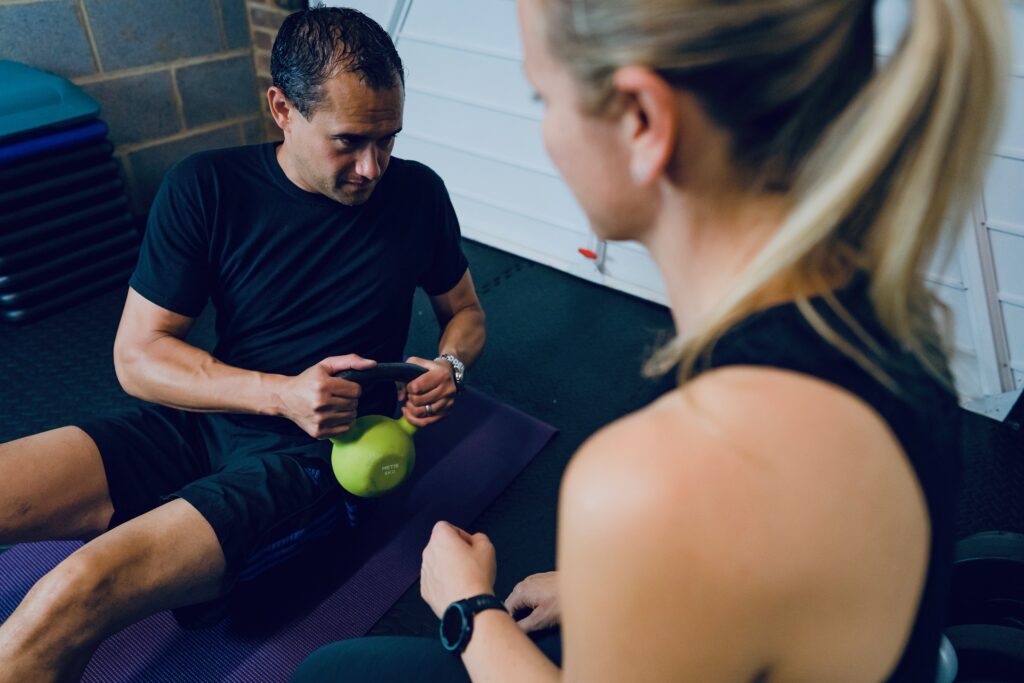
“After my first son was born I was chatting with an instructor – who is now a very close friend – in our local gym and decided to qualify as a spin instructor, which with completion and lots of shadowing him and another instructor friend helped me into teaching classes.
“I undertook a lot of courses, some before and or during maternity leave and others while I already started working in my new career.”
Her new career has not only improved her work-life balance, but brings her much more satisfaction.
“ I enjoy helping others to improve their fitness/strength and wellbeing. Seeing them getting stronger and feeling better mentally and physically brings me absolute joy.
“Now with two children I am able to do school and nursery drop-offs and pick-ups and take them to after-school activities, as well as spending time with the youngest when he is not in nursery.”
She offered her own advice on taking the plunge into a new career: “I’d advise researching and networking with others that already work in the industry you would like to change into. Go and shadow people, as you can learn so much about the job and can take tips and tricks with you on your journey.”
Leaving finance for art
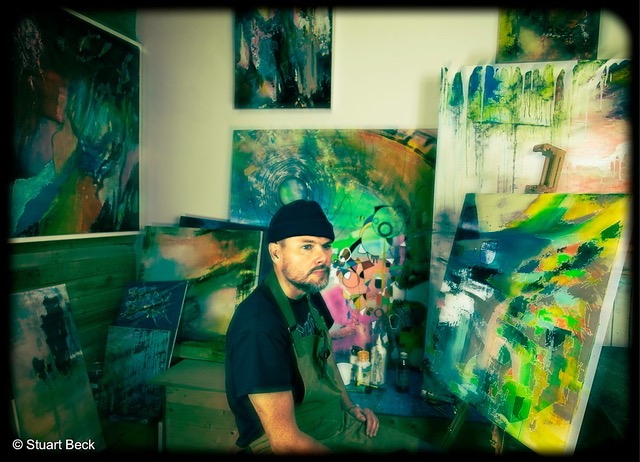
At the end of 2015, Stuart Beck had spent 16 years working for a London-based financial services company, progressing from a technical support position through account management and finally into marketing, but he craved more creativity.
“For someone who prefers the mountains and nature to city life, I felt a little at odds in an industry that I could only describe as a bit nerdy, but also technically challenging. On the flip side it was a long-standing firm that was almost like a family run business, unlike the many other stiff financial institutions of that time. It was also a surprisingly humourous environment during the early time I was there. Lots of laughter, banter and a ton of partying, aided by the fact the office was located bang in the middle of Shoreditch.
“When you compare it to today’s working environment, I would describe the first several years as working in the Wild Wild West! For all that, it actually kept me going because I didn’t have any feelings for the actual industry.
“I have even less now, when you realise how much the world is weighted towards wealth management, because that solves the world’s problems right? Hence we take little care of all our public-related services and our planet that should benefit the majority, in favour of wealth creation for the minority whilst the government pedal the same old story, we will buy our way out of another crisis by spending more money!
“I think the crisis is with humanity and that was the disillusionment on my side, not just that fact I was in the wrong job.”
After the company he worked for was purchased by an equity firm, he found the change brought out the worst in people and the new owners treated it as little more than a commodity to dress up and sell for profit.

“In all honesty, I never wanted to work there in the first place and as things deteriorated I became more disgruntled by the environment I was working in and also at myself for not knowing what I wanted to do instead.
“On the upside, I met my partner of now 21 years at the firm, and we spent every bit of our holiday time travelling in backpacker style around the world, even managing two sabbaticals along the way for some really long road trips.
“In the end I requested the opportunity for redundancy and when it was eventually offered, I grabbed it with open arms and fled!”
Stuart was 48. His partner had also taken redundancy and they had a six month old baby girl to look after. But although he still had no idea what he should be doing with his life, he considered it an open book and a positive opportunity.
“I know from experience that life can be short and so quality of life was important.
“I just wanted to find one thing that I could get paid for that felt like there was some sort of calling for me to do it,” he confessed.
“I took on numerous home and garden projects for people because I have always been very hands-on as a DIY person. I also worked in a business that made furniture for a while and all the time I kept thinking about my hobby of painting and the more I thought about it, the more it became a rational idea. Can I become an artist
“Eventually I realised I simply didn’t have any other ideas where I could work and be happy at the same time. In 2018 I began the process of doing the things that you need to do to become an artist.”
Although he had been painting for a hobby for a long time, turning professional meant allowing his natural feel for abstract art to emerge, and to do so with intent and confidence in a way that was both presentable and saleable.
“To be successful as an artist is to find your audience and build up that audience over time. It is your audience that decides on how successful you are, as much as it is how successful you are at finding your audience. Of course none of this is ever that easy, unless you know the right people or get very, very lucky!
“Painting and selling my work just feels right. The creative process always has ups and downs and that is how it is supposed to work. A bit like life, it can’t be amazing all of the time, otherwise how would you know when it is good?
“Selling the work is the stamp of approval, the payday and coming together with really nice people of whom are happy to share their enthusiasm for what you do, with you. It is amazing and I can’t express it in words any more than that. It isn’t something I have ever experienced as an employee in the many, many jobs I have had over the years.”
Being made redundant provided Stuart with an opportunity to pause and consider priorities for himself, his partner and their little girl, blessing them with the opportunity to spend valuable time with her during her first seven years.
“It is difficult to express how meaningful that is, but I can say it feels like a hugely significant achievement in our life. It hasn’t come without sacrifice, but it is with gratitude that we were able to see forward enough to know what was most important at the time and act accordingly.
“I finally found my calling and when the work is flowing, it’s brilliant. There are also times when I don’t know when or where my next pay cheque will come in, but we find new things to keep us going and life is not dull or regimented or controlled by anyone else.”
From producing to plaiting
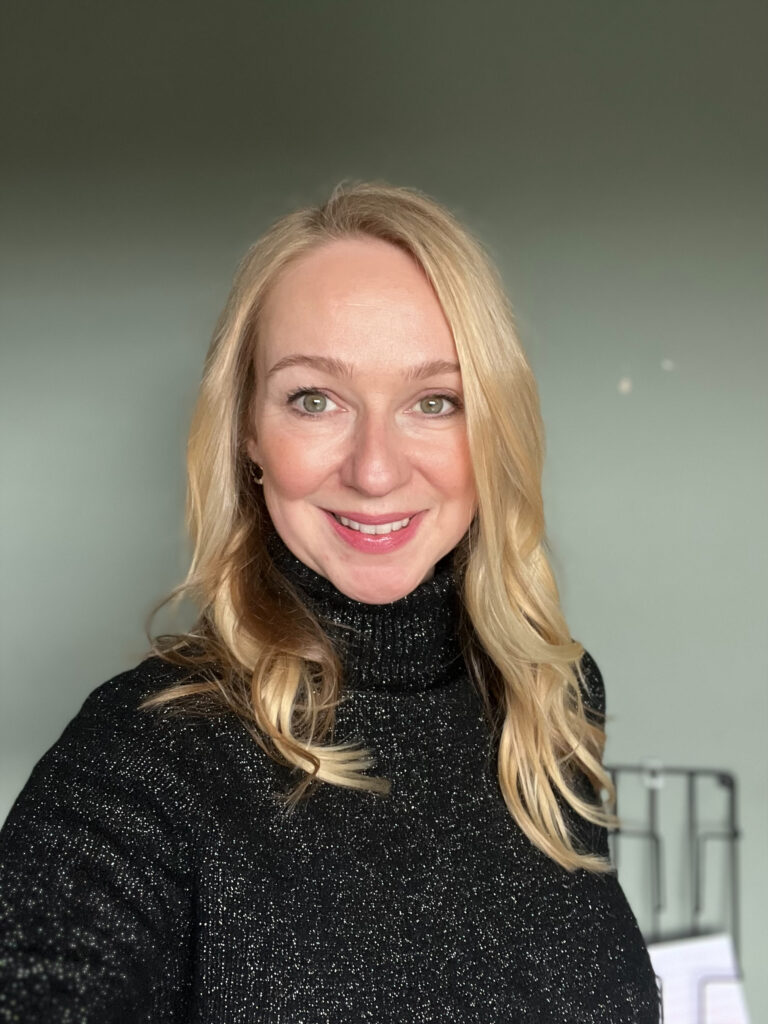
Annis Waugh is the founder of Braid Maidens, offering classes teaching how to braid hair, a venture which has seen her appear on This Morning and BBC News, in The Washington Post and Rob Beckett and Josh Widdicombe’s podcast Parenting Hell.
Before this she had what she described as “a very squiggly career”…
“I studied broadcast journalism with sociology, politics and law and started out in TV production working on Big Brother, Robot Wars and other early noughties shows.
“Wanting a non-freelance life, I went into medical sales (so not me!) and recruitment, then back into production as a digital advertising producer which was a riot, and I started my own recruitment business after I had my daughter.
“After my second maternity leave I needed even greater flexibility. I saw an entrepreneur, Shaa Wasmund, do a talk about creating online courses and found her story so inspiring. I signed up for her course and wrote/made courses for entrepreneurs. It wasn’t what I hoped for financially and after a couple of years I applied for a job with Shaa herself. I didn’t get the job I applied for (thankfully) but instead I became her podcast producer and worked on her course content.”
With all her previous jobs, Annis felt she ended up putting a huge amount of effort into other people’s success and careers instead of looking after her own. She suggests this is why every few years she would have a complete change of role, as she wasn’t personally fulfilled by what she was doing.
“It was actually my husband who called it and said, ‘When are you going to stop spending all your energy making other people look good and spend it on yourself?’ I’d never really felt brave enough before but after working for brave and irreverent people for years – some of it had finally rubbed off!”
Annis had first had the idea for Braid Maidens five years before, but hadn’t done anything serious with the idea. She booked a few workshops just before lockdown but then had to cancel and found herself back at square one.
But as a parting gift, Shaa gave her a place on her female-only business retreat, where she had an epiphany.
“I’ve been learning on the job since the day I started. I’ve taught myself how to teach braiding, not just to be able to braid, and every class and every student or braiding client teaches me something. That ticks a lot of boxes for me.
“I also choose the hours I work and it generally works around term times which is what we need as a family. But, because it is my business I do the classes, generate all the ideas, social media, bookings, EVERYTHING, so it’s hard to switch off from it.
“If we go away I try to have a few days entirely off social and emails. Plus I always have an Out Of Office on so that I can manage expectations and not feel like I have to reply at all hours. I’m a mum, I send messages and emails after the kids are asleep too but I don’t want people to expect a reply at 11pm.
“I had a student recently called Russ. He came into the class and looked a bit freaked out. He’s not the first and he won’t be the last. He said: ‘This is SO WEIRD.’ He had no experience with hair at all and his daughter doesn’t like having it done. He eventually got into it and really applied himself.
“At the end of the class he was so happy with his skills and progress. “This is THE NUTS!” he shouted.
“The next day I got a picture of a ponytail into a plait from the school run. It was a win on so many levels for him; him as a dad, for his daughter. For his partner. THAT gives me a lot of satisfaction. Seeing people leave with confidence and new skills is so uplifting!”
“On the retreat someone asked me how I’d feel if someone else did my idea. I felt a HUGE pang of jealousy and within two weeks had organised my first class and that was that.
“Just ask yourself how you’d feel if you saw someone having great success doing the thing you really want to do. If it moves you enough, you’ll do something about it. Also – it’s not the 1960s, we don’t have jobs for life anymore. If it doesn’t work out, there will be other opportunities. If you don’t believe me, look me up on LinkedIn.”
Her new career has not only provided that personal fulfilment she had unconsciously been searching for, it has proved both satisfying and challenging in a way her other roles had failed to achieve.
